Have you ever followed a recipe and realized you did not have the right herbs? You are not alone. Many beginner cooks feel confused by different herb names, types of herbs, and how to use them in everyday meals.
The good news is that learning about herbs for cooking is much easier than it looks. Once you know a few popular herbs for cooking, you can make simple food taste fresh, rich, and homemade.
In this beginner-friendly guide, you will learn about the most common herbs for cooking, what they taste like, and the best ways to use them. You will also discover which fresh herbs for cooking work best in salads, soups, pasta, chicken, and more.
Whether you cook every day or are just starting out, these cooking herbs can quickly become your kitchen favorites.
What Are Cooking Herbs?
Herbs are plants used to add flavor, smell, and color to food. Most herbs come from the green leafy part of a plant. They can be used fresh or dried.
Some herbs have soft leaves, while others are stronger and woody. Different types of herbs work better with different foods.
For example:
- Basil tastes great with tomatoes and pasta
- Rosemary works well with potatoes and chicken
- Cilantro is popular in tacos and salsa
- Dill adds fresh flavor to seafood dishes
Many of the best herbs for cooking are easy to grow indoors, even on a small kitchen windowsill.
Fresh Herbs vs Dried Herbs for Cooking
Before learning the cooking herbs list, it helps to know the difference between fresh and dried herbs.
Fresh Herbs for Cooking
Fresh herbs have more moisture and a brighter flavor. They are often added near the end of cooking.
Examples:
- Basil
- Cilantro
- Parsley
- Mint
Fresh herbs are perfect for:
- Salads
- Pasta
- Sandwiches
- Garnishes
- Summer meals
Dried Herbs for Cooking
Dried herbs have a stronger and deeper flavor because the water has been removed.
Examples:
- Oregano
- Thyme
- Rosemary
- Sage
Dried herbs work best in:
- Soups
- Stews
- Sauces
- Roasted dishes
A simple rule is to use less dried herbs because their flavor is stronger.
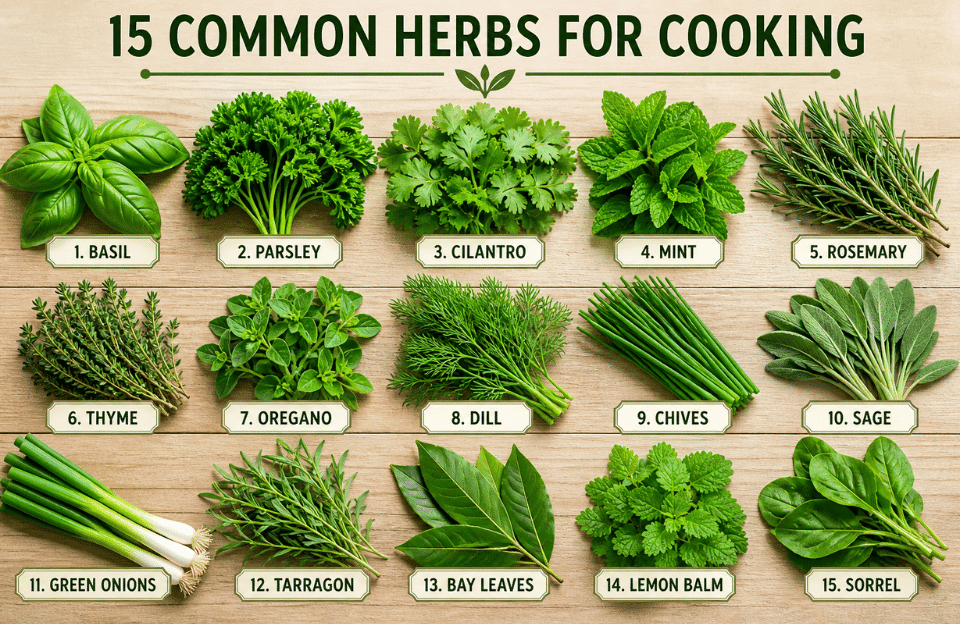
1. Basil
Basil is one of the most common herbs for cooking around the world. It has a sweet and slightly peppery flavor.
This herb is popular in Italian food, but it is also used in some Chinese cooking herbs blends and Asian dishes.
Best Uses
- Pasta sauce
- Pizza
- Pesto
- Tomato salads
- Sandwiches
Beginner Tip
Fresh basil tastes much better than dried basil. Add it at the end of cooking for the best flavor.
2. Parsley
Parsley is one of the easiest green herbs for cooking. It has a clean and fresh taste that works with many meals.
There are two main types:
- Curly parsley
- Flat-leaf parsley
Flat-leaf parsley usually has a stronger flavor.
Best Uses
- Soups
- Rice dishes
- Salads
- Chicken
- Potatoes
Beginner Tip
Parsley is a great starter herb because it goes with almost everything.
3. Cilantro
Cilantro is one of the most popular herbs for cooking in Mexican, Indian, and Asian recipes.
Some people love its fresh citrus-like flavor, while others think it tastes soapy.
Best Uses
- Tacos
- Salsa
- Curry
- Rice bowls
- Noodles
Beginner Tip
Add cilantro right before serving to keep its fresh taste.
4. Rosemary
Rosemary is a woody herb with a strong pine-like smell. It is one of the best herbs for cooking hearty meals.
Both fresh and dried rosemary can add deep flavor to food.
Best Uses
- Roasted potatoes
- Chicken
- Bread
- Steak
- Soup
Beginner Tip
Use rosemary in small amounts because the flavor can become too strong.
5. Thyme
Thyme is one of the most useful cooking herbs for beginners. It has an earthy and slightly minty flavor.
It works well in both fresh and dried forms.
Best Uses
- Soups
- Stews
- Roasted vegetables
- Turkey
- Beans
Beginner Tip
Thyme is easy to grow indoors and does not need much care.
6. Oregano
Oregano is one of the most common herbs for cooking Italian and Mediterranean meals.
It has a bold and warm flavor that becomes even stronger when dried.
Best Uses
- Pizza
- Pasta sauce
- Grilled vegetables
- Marinades
- Greek dishes
Beginner Tip
Dried oregano often tastes stronger than fresh oregano.
7. Mint
Mint is fresh, cool, and sweet. While many people think of tea first, mint can also improve savory meals.
It is one of the easiest herbs to grow at home.
Best Uses
- Tea
- Fruit salad
- Yogurt sauce
- Lamb dishes
- Drinks
Beginner Tip
Mint grows fast, so keep it in its own pot if you grow it indoors.
8. Dill
Dill has a soft flavor with hints of lemon and anise. It is commonly used in seafood dishes.
Fresh dill is more popular than dried dill.
Best Uses
- Salmon
- Pickles
- Potato salad
- Yogurt dips
- Eggs
Beginner Tip
Add dill near the end of cooking to keep its flavor bright.
9. Sage
Sage has a rich and earthy flavor. It is often used in comfort foods and holiday meals.
It is one of the stronger dried herbs for cooking.
Best Uses
- Stuffing
- Turkey
- Brown butter sauce
- Sausage
- Roasted vegetables
Beginner Tip
A little sage goes a long way.
10. Chives
Chives are soft green herbs for cooking with a mild onion flavor.
They are easy to cut and use fresh.
Best Uses
- Eggs
- Baked potatoes
- Soup
- Cream cheese
- Salads
Beginner Tip
Chives are one of the easiest herbs to grow on a kitchen windowsill.
11. Tarragon
Tarragon has a light licorice flavor and is common in French cooking.
It may feel fancy, but it is simple to use once you try it.
Best Uses
- Chicken
- Cream sauces
- Fish
- Salad dressing
- Eggs
Beginner Tip
Use fresh tarragon for a softer flavor.
12. Bay Leaves
Bay leaves are dried leaves added to soups and sauces while cooking.
They do not taste strong alone, but they slowly add depth to meals.
Best Uses
- Soup
- Rice
- Stew
- Chili
- Broth
Beginner Tip
Always remove bay leaves before serving.
13. Lemongrass
Lemongrass is popular in Thai and Chinese cooking herbs recipes.
It has a bright lemon flavor that makes food taste fresh.
Best Uses
- Curry
- Soup
- Stir-fry
- Tea
- Noodles
Beginner Tip
Crush the stalk slightly before cooking to release more flavor.
14. Sage
Another form of sage used fresh can taste softer and less heavy than dried sage.
Fresh sage leaves can even be fried for a crispy topping.
Best Uses
- Pasta
- Butter sauce
- Chicken
- Fall recipes
- Roasted squash
Beginner Tip
Fresh sage pairs very well with butter and garlic.
15. Marjoram
Marjoram is similar to oregano but has a lighter and sweeter taste.
It is one of the less known but very useful herbs for cooking.
Best Uses
- Chicken
- Beans
- Tomato dishes
- Roasted vegetables
- Salad dressing
Beginner Tip
Try marjoram if oregano feels too strong for you.
How to Choose the Best Herbs for Cooking
If you are just starting, you do not need every herb in the store.
Start with these five beginner-friendly herbs:
- Basil
- Parsley
- Thyme
- Oregano
- Chives
These are some of the most common herbs for cooking because they are simple, flexible, and easy to use.
You can use them in:
- Pasta
- Chicken
- Soup
- Vegetables
- Rice
- Salads
Easy Tips for Using Herbs in Cooking
Add Soft Herbs at the End
Soft herbs like basil, cilantro, parsley, and dill lose flavor when cooked too long.
Add Woody Herbs Earlier
Rosemary, thyme, and oregano release more flavor during cooking.
Start Small
Some dried herbs for cooking can become very strong quickly.
Taste as You Cook
The best way to learn herbs is by trying small amounts.
Can You Grow Cooking Herbs Indoors?
Yes, many cooking herbs grow very well indoors.
Some of the best indoor herbs include:
- Basil
- Mint
- Chives
- Parsley
- Thyme
All they need is:
- A sunny window
- Good drainage
- Regular watering
Growing your own fresh herbs for cooking can save money and make meals taste fresher.
Final Thoughts
Learning about herbs does not need to feel difficult. Once you understand a few basic herb names and flavors, cooking becomes much more fun.
The best part is that the most common herbs for cooking are easy to use, easy to grow, and easy to enjoy.
Start with simple cooking herbs like basil, parsley, thyme, and oregano. As you become more comfortable, you can try other types of herbs and build your own favorite cooking style.
Even a small amount of fresh herbs can turn everyday food into something special.
FAQs
What are the most common herbs for cooking?
Some of the most common herbs for cooking are basil, parsley, rosemary, thyme, oregano, cilantro, and mint.
What are the best herbs for beginners?
Basil, parsley, chives, thyme, and oregano are great beginner herbs because they are easy to use and easy to grow.
Are fresh herbs better than dried herbs?
Fresh herbs for cooking usually taste brighter, while dried herbs for cooking have a stronger flavor.
What herbs go best with chicken?
Rosemary, thyme, parsley, oregano, sage, and tarragon all pair well with chicken.
Can I grow herbs indoors all year?
Yes. Many popular herbs for cooking grow well indoors with sunlight and regular watering.
Which herbs are used in Chinese cooking?
Some common Chinese cooking herbs include cilantro, lemongrass, chives, mint, and Thai basil.