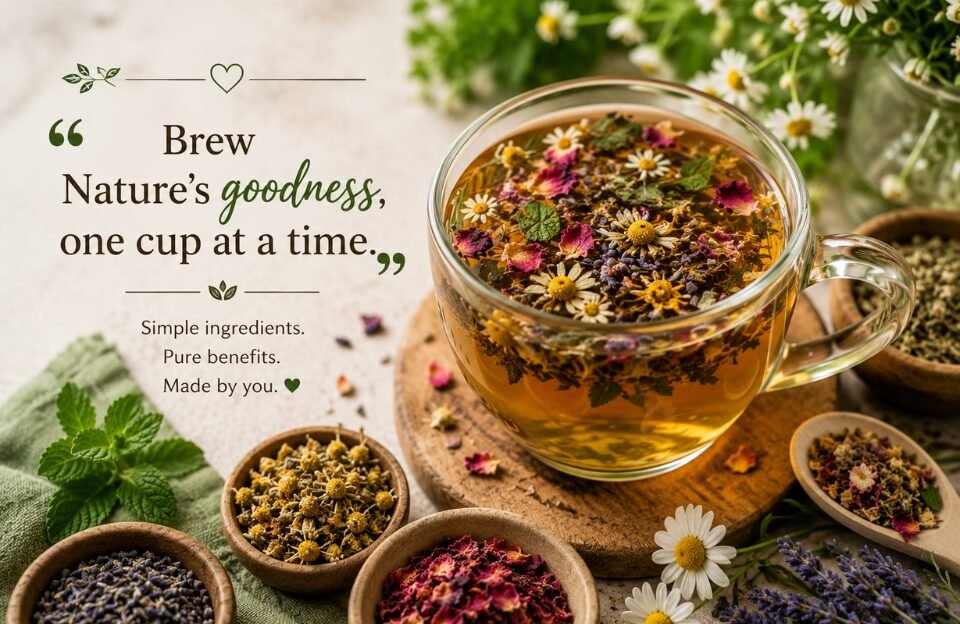
Homemade herbal tea is one of the simplest and most natural ways to support wellness, relaxation, and hydration. Unlike store-bought teas, homemade blends allow you to control the ingredients, flavor, and health benefits.
Whether you want a calming bedtime drink, a refreshing detox tea, or an immunity boost, learning how to make herbal tea at home gives you endless possibilities.
In this guide, you’ll learn:
- The best herbs for herbal tea
- Simple herbal tea-making methods
- Blending ratios used by herbalists
- Easy homemade herbal tea recipes
- Brewing tips for perfect flavor
🌱 What Is Homemade Herbal Tea?
Homemade herbal tea is a caffeine-free drink made by steeping dried or fresh herbs, flowers, roots, or spices in hot water.
Unlike traditional tea (black or green tea), herbal tea does not come from the Camellia sinensis plant. Instead, it uses natural ingredients like:
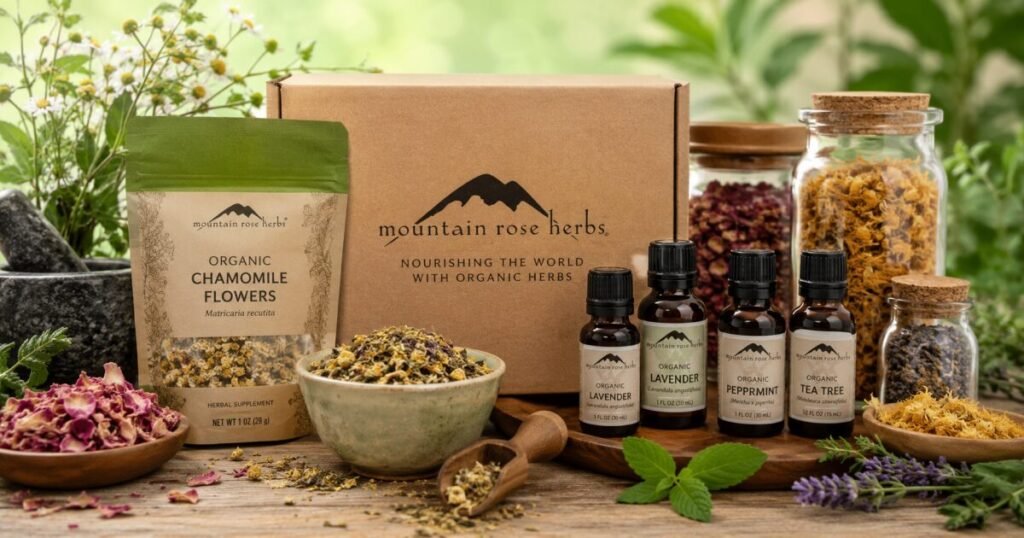
- Chamomile
- Mint
- Ginger
- Lemon balm
- Lavender
These ingredients provide flavor as well as potential wellness benefits.
🌿 Best Herbs for Homemade Herbal Tea
Here are the most commonly used herbs for DIY tea blends:
🌼 Relaxing Herbs
- Chamomile – helps with sleep and calmness
- Lavender – reduces stress and anxiety
- Lemon balm – improves mood and relaxation
🌿 Digestive Herbs
- Peppermint – supports digestion and reduces bloating
- Ginger – helps with nausea and inflammation
- Fennel – supports gut health
🍋 Immunity Boosting Herbs
- Echinacea – supports immune system
- Elderflower – helps with colds
- Turmeric – anti-inflammatory properties
⚖️ Herbal Tea Blending Ratio (Pro Method)
A key secret from herbalists is using a simple blending structure:
🧪 Basic Herbal Tea Formula:
- 70% Base Herb (main flavor + function)
- 20% Supporting Herb (enhances effect)
- 10% Accent Herb (flavor + aroma)
Example:
- 70% chamomile
- 20% lemon balm
- 10% lavender
👉 This creates a balanced and smooth herbal tea blend.
🍵 How to Make Homemade Herbal Tea (Step-by-Step)
✔ Step 1: Choose Your Herbs
Select 2–4 herbs based on your goal (relaxation, digestion, energy).
✔ Step 2: Measure Ingredients
Use the blending ratio above for balance.
✔ Step 3: Heat Water Properly
- Bring water to just below boiling (90–95°C)
- Avoid boiling delicate herbs
✔ Step 4: Steep the Herbs
- Leaves & flowers: 5–10 minutes
- Roots & spices: 10–15 minutes
✔ Step 5: Strain and Serve
Strain herbs and enjoy warm or iced.
🍯 6 Easy Homemade Herbal Tea Recipes
🌙 1. Sleep Well Tea
- Chamomile
- Lavender
- Lemon balm
👉 Best for relaxation and sleep
🌿 2. Digestive Comfort Tea
- Peppermint
- Ginger
- Fennel
👉 Helps bloating and digestion
🍋 3. Immunity Boost Tea
- Ginger
- Turmeric
- Lemon peel
👉 Supports immune health
🌼 4. Stress Relief Tea
- Lemon balm
- Chamomile
- Passionflower
👉 Reduces anxiety
🔥 5. Detox Herbal Tea
- Dandelion root
- Ginger
- Mint
👉 Supports natural detox
❄️ 6. Refreshing Cold Brew Herbal Tea
- Mint
- Hibiscus
- Lemon slices
👉 Hydrating and refreshing
⚠️ Common Mistakes to Avoid
- Using too many herbs at once
- Boiling delicate flowers (ruins flavor)
- Over-steeping (can make tea bitter)
- Not measuring ratios properly
- Using low-quality dried herbs
🍵 Brewing Tips for Perfect Herbal Tea
- Always use fresh or properly dried herbs
- Cover tea while steeping (keeps essential oils)
- Adjust steep time based on strength preference
- Store dried herbs in airtight containers
FAQs
🌿 Can I drink herbal tea every day?
Yes, most herbal teas are safe daily, but rotate herbs for balance.
🌱 What is the best herbal tea for beginners?
Chamomile and peppermint are the easiest and safest starter herbs.
🍵 Can I make herbal tea without tea bags?
Yes, homemade herbal tea is best made using loose dried herbs.
🌿 How long should I steep herbal tea?
Usually 5–15 minutes depending on herb type.
🍋 Is herbal tea caffeine-free?
Yes, most herbal teas are naturally caffeine-free.