Indoor herb plants make any home feel fresh and alive. They also give you easy access to flavorful herbs for cooking. But one of the biggest problems people face is watering them the right way. Too much water can damage the roots, while too little water can dry the plant out quickly.
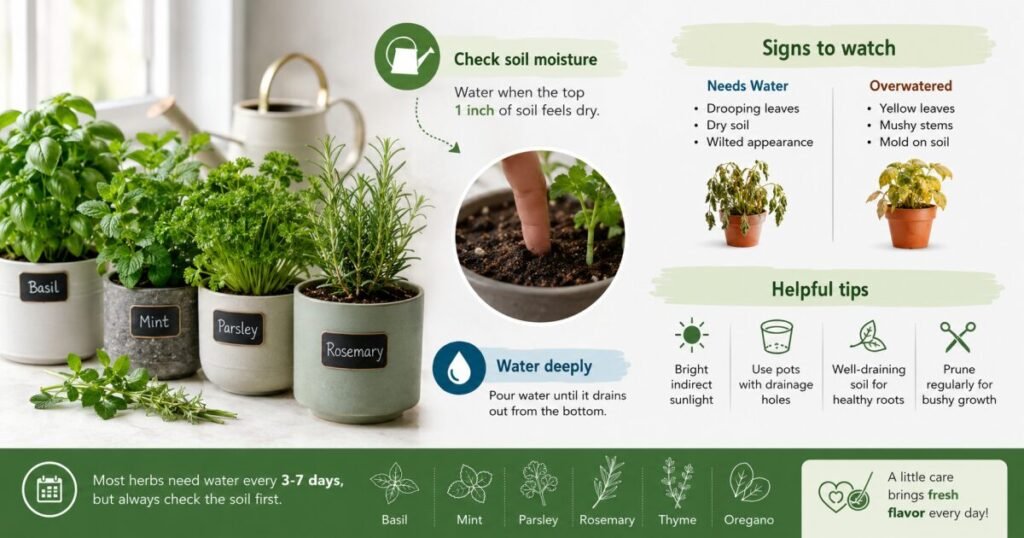
So, how often should you water indoor plants, especially herbs? The answer depends on the type of herb, the size of the pot, sunlight, temperature, and indoor humidity. Most indoor herb plants need watering every 3 to 7 days, but it is always best to check the soil before watering.
In this guide, you will learn how often to water indoor herbs, signs of overwatering and underwatering, and the best ways to keep your herbs healthy all year long.
Why Proper Watering Matters for Herb Plants
Water is essential for healthy herb plants. It helps herbs absorb nutrients from the soil and keeps leaves green and flavorful. However, indoor herbs are more sensitive than outdoor plants because they grow in containers.
When learning how to water indoor plants, balance is very important. Herbs sitting in soggy soil can develop root rot. Dry soil, on the other hand, can stop growth and make leaves turn brown.
Proper watering helps indoor herbs:
- Grow faster
- Produce more leaves
- Stay healthy longer
- Develop stronger flavors
- Prevent disease and pests
How Often Should You Water Indoor Plants?
Many people ask, “How often should you water indoor plants?” There is no single answer because every home environment is different.
For most indoor herb plants, watering once or twice a week is enough. Instead of following a strict schedule, check the soil moisture regularly.
A simple rule is:
- Water when the top 1 inch of soil feels dry
- Avoid watering if the soil still feels moist
This method works better than watering on the same day every week because temperature and humidity change often.
Factors That Affect How Often to Water Indoor Herbs
Several things can change how often to water indoor herbs.
1. Type of Herb
Different herbs need different amounts of water.
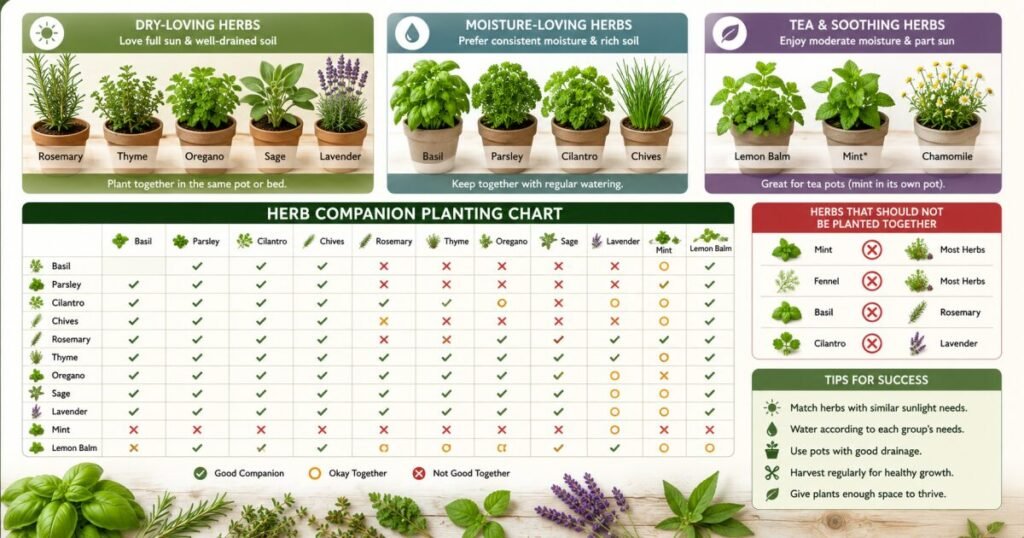
Herbs That Like More Moisture
These herbs prefer slightly moist soil:
- Basil
- Mint
- Parsley
- Cilantro
Herbs That Prefer Drier Soil
These herbs need less water:
- Rosemary
- Thyme
- Sage
- Oregano
Mediterranean herbs naturally grow in dry climates, so they can handle less frequent watering.
2. Pot Size
Small pots dry out faster than large pots. If your herbs are growing in tiny containers, you may need to water them more often.
Larger pots hold moisture longer, reducing watering frequency.
3. Sunlight Exposure
Herb plants placed near sunny windows lose moisture faster. South-facing windows usually create warmer conditions that dry soil quickly.
Plants in lower light areas may need less water.
4. Indoor Temperature
Warm homes increase evaporation. During summer or when heaters are running in winter, herb plants may dry out faster.
Cooler rooms usually keep soil moist longer.
5. Humidity Levels
Dry indoor air can make plants lose water quickly. Homes with air conditioning or heating systems often have lower humidity.
If your indoor air feels dry, your herbs may need more frequent watering.
How to Water Indoor Plants Properly
Learning how to water indoor plants correctly is just as important as knowing when to water them.
Water Slowly
Pour water slowly onto the soil until it drains from the bottom of the pot. This ensures the roots receive enough moisture.
Use Pots With Drainage Holes
Always use containers with drainage holes. Excess water needs a way to escape.
Without drainage, roots can sit in water and rot.
Empty Drain Trays
After watering, empty any extra water from the tray beneath the pot. Letting pots sit in standing water can harm herb plants.
Water the Soil, Not the Leaves
Try to water directly at the base of the plant. Wet leaves may increase the risk of mold or fungal diseases indoors.
Signs Your Herb Plants Need Water
Your herbs will often show signs when they need water.
Common signs include:
- Drooping leaves
- Dry soil
- Crispy leaf edges
- Slow growth
- Wilted appearance
If you notice these signs, check the soil immediately.
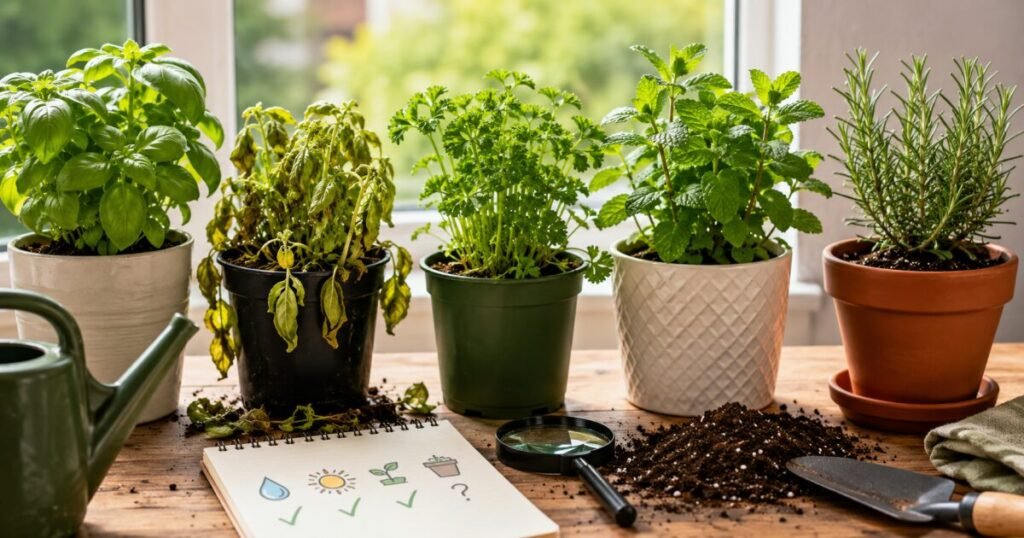
Signs of Overwatering Indoor Herbs
Overwatering is one of the most common mistakes people make with indoor herb plants.
Signs of overwatering include:
- Yellow leaves
- Mushy stems
- Mold on soil
- Bad smell from the pot
- Root rot
- Drooping despite wet soil
If you think your herbs are overwatered, let the soil dry before watering again.
Best Watering Schedule for Popular Indoor Herbs
Here is a general watering guide for common herb plants.
| Herbs | Watering Frequency |
| Basil | Every 2–4 days |
| Mint | Every 2–3 days |
| Parsley | Every 3–5 days |
| Cilantro | Every 3–5 days |
| Rosemary | Every 7–10 days |
| Thyme | Every 5–7 days |
| Oregano | Every 5–7 days |
| Sage | Every 5–7 days |
Remember, these are general guidelines. Always check soil moisture first.
How Seasons Affect Indoor Herb Watering
Spring and Summer
Herbs usually grow faster during warmer months. They often need more water because sunlight and heat increase evaporation.
Fall and Winter
Many indoor herbs grow more slowly during colder months. They may need less water during this time.
Avoid watering on a fixed schedule year-round.
Best Type of Water for Herb Plants
Most indoor herb plants grow well with regular tap water. However, if your tap water contains high levels of chlorine, filtered water may be better.
Room-temperature water is usually safest because extremely cold water can shock plant roots.
Common Mistakes When Watering Indoor Herbs
Avoid these common watering mistakes to keep herb plants healthy.
Watering Too Often
Many beginners water plants every day, even when the soil is still wet. This can suffocate roots.
Ignoring Drainage
Using decorative pots without drainage holes can trap water inside the container.
Following a Strict Schedule
Plants do not always need water on the same day every week. Always check soil moisture first.
Using Too Little Water
Lightly sprinkling the surface may not reach deep roots. Water thoroughly until excess drains out.
Tips to Keep Indoor Herbs Healthy
Proper watering is important, but other care habits also help herb plants thrive.
Give Herbs Enough Sunlight
Most herbs need at least 6 hours of sunlight daily. Place them near bright windows whenever possible.
Rotate Pots
Turning pots every few days helps herbs grow evenly toward sunlight.
Use Good Potting Soil
Choose light, well-draining soil for indoor herbs. Heavy soil can hold too much water.
Prune Regularly
Trimming herbs encourages fuller growth and prevents plants from becoming leggy.
How to Check Soil Moisture Easily
If you are unsure how often to water indoor plants, checking soil moisture is the best method.
Finger Test
Stick your finger about 1 inch into the soil.
- If it feels dry, water the plant
- If it feels moist, wait another day or two
Moisture Meter
You can also use an inexpensive moisture meter for more accurate readings.
Can Indoor Herbs Recover From Overwatering?
Yes, many herb plants can recover if the problem is caught early.
To help overwatered herbs recover:
- Stop watering temporarily
- Remove damaged leaves
- Improve drainage
- Place plants in brighter light
- Repot if the soil stays soggy
Healthy roots can often bounce back with proper care.
Final Thoughts
Knowing how often you should water indoor plants is one of the most important parts of growing healthy herbs indoors. Most indoor herb plants need water every few days, but the best approach is to check the soil before watering.
Understanding how to water indoor plants properly helps prevent common problems like root rot, yellow leaves, and dry soil. Each herb has different needs, so paying attention to your plant’s condition is the key to success.
With proper watering, sunlight, and care, your indoor herbs can stay fresh, flavorful, and healthy throughout the year.
FAQs
How often should you water indoor herb plants?
Most indoor herb plants need water every 3 to 7 days. Always check the top inch of soil before watering.
What is the best way to water indoor plants?
Water slowly at the base of the plant until excess water drains from the bottom of the pot.
Can indoor herbs get too much water?
Yes. Overwatering can cause yellow leaves, root rot, mold, and weak growth in herb plants.
Which herbs need the most water indoors?
Basil, mint, and parsley usually need more frequent watering than herbs like rosemary or thyme.