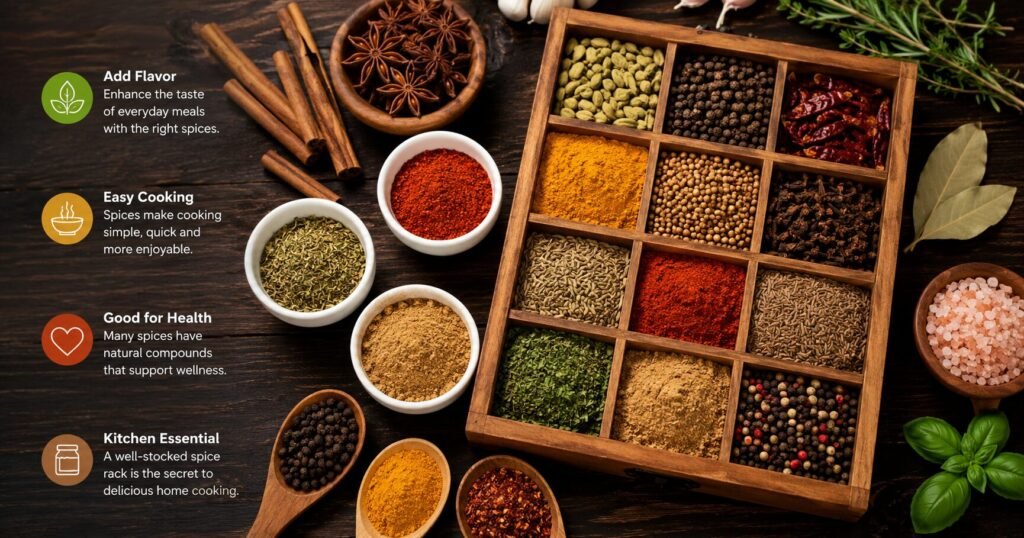
Cooking becomes easier, tastier, and more exciting when you have the right spices at home. A good list of spices can turn simple meals into something rich, warm, and full of flavor. Whether you are making soups, grilled chicken, pasta, rice, or vegetables, spices help bring every dish to life.
Many people keep salt and black pepper in the kitchen, but there are many more spices that can improve your everyday cooking. If you are new to cooking or building your pantry for the first time, this guide will help you create the perfect kitchen spices list for your home.
In this article, you will learn:
- What are spices
- Why spices matter in cooking
- The most important spices every kitchen should have
- An easy alphabetical list of spices
- Tips for storing and using spices correctly
Let’s get started.
What Are Spices?
Before building your pantry, it helps to understand what are spices.
Spices are dried parts of plants used to add flavor, aroma, and color to food. They can come from seeds, bark, roots, berries, or flower buds. Unlike herbs, which usually come from leafy parts of plants, spices often have stronger and warmer flavors.
For example:
- Cinnamon comes from the bark of a tree
- Ginger comes from the roots
- Black pepper comes from dried berries
- Cloves come from flower buds
Spices are used in almost every cuisine around the world. From American barbecue to Indian curry and Mexican tacos, spices make food more delicious and unique.
Read more: Herbs vs Spices: What’s the Real Difference?
Why Every Kitchen Needs a Good Spices List?
Having a complete spices list at home saves time and makes cooking easier. Instead of running to the store every time you try a new recipe, you can cook confidently with what you already have.
A strong list of spices for cooking also helps you:
- Add flavor without extra fat
- Create different cuisines at home
- Improve simple meals
- Reduce boredom in everyday cooking
- Experiment with new recipes
Even basic dishes like eggs, potatoes, rice, or chicken taste much better with the right spices.
List of Spices Every Kitchen Should Have
Below is a practical and beginner-friendly kitchen spices list for everyday cooking.
1. Black Pepper
Black pepper is one of the most important spices in any kitchen. It adds mild heat and depth to food.
Best used in:
- Eggs
- Soups
- Pasta
- Meat dishes
- Salads
Freshly ground black pepper usually tastes better than pre-ground pepper.
2. Garlic Powder
Garlic powder gives food a savory and rich flavor. It works well when you want garlic taste without chopping fresh garlic.
Best used in:
- Marinades
- Roasted vegetables
- Chicken
- Burgers
- Fries
It is one of the easiest spices to use daily.
3. Onion Powder
Onion powder adds sweet and savory flavor to dishes. It blends well into sauces, soups, and seasoning mixes.
Best used in:
- Meat rubs
- Soups
- Dips
- Rice dishes
Many home cooks keep garlic powder and onion powder together because they work so well as a pair.
4. Paprika
Paprika adds color and mild sweetness to food. Some types are smoky while others are spicy.
Best used in:
- Grilled chicken
- Potatoes
- Deviled eggs
- Soups
- BBQ seasoning
Smoked paprika is especially popular in American cooking.
5. Cumin
Cumin has a warm, earthy flavor and is common in Mexican, Middle Eastern, and Indian cooking.
Best used in:
- Tacos
- Chili
- Curry
- Rice dishes
- Beans
A little cumin can completely change the flavor of a meal.
6. Cinnamon
Cinnamon is not only for desserts. It also works well in savory dishes.
Best used in:
- Oatmeal
- Coffee
- Apple pie
- Baked goods
- Moroccan dishes
Its sweet and warm aroma makes it one of the most loved spices in the world.
7. Chili Powder
Chili powder adds heat and bold flavor. Different blends may include garlic, cumin, and paprika.
Best used in:
- Chili
- Tacos
- Soups
- Meat rubs
- Mexican recipes
You can adjust the amount depending on how spicy you like your food.
8. Turmeric
Turmeric is known for its bright yellow color and earthy taste.
Best used in:
- Curry
- Rice
- Soups
- Smoothies
- Lentil dishes
Many people also use turmeric because of its health benefits.
9. Oregano
Oregano is one of the most common seasonings in Italian and Mediterranean cooking.
Best used in:
- Pizza sauce
- Pasta
- Roasted vegetables
- Salad dressing
Dried oregano has a strong flavor, so you only need a small amount.
10. Basil
Basil adds a sweet and fresh flavor to food.
Best used in:
- Pasta sauce
- Pizza
- Tomato dishes
- Chicken recipes
Dried basil is useful, but fresh basil gives even more flavor.
11. Thyme
Thyme has a mild earthy taste and works well in slow-cooked meals.
Best used in:
- Chicken
- Soups
- Stews
- Roasted potatoes
It blends easily with many other spices.
12. Rosemary
Rosemary has a strong pine-like flavor and smell.
Best used in:
- Roasted meat
- Potatoes
- Bread
- Vegetables
Use small amounts because the flavor can become overpowering.
13. Ginger
Ground ginger adds warmth and spice to both sweet and savory foods.
Best used in:
- Tea
- Cookies
- Stir-fry
- Asian dishes
- Curry
Fresh ginger gives stronger flavor, but ground ginger is very convenient.
14. Nutmeg
Nutmeg has a sweet and slightly nutty flavor.
Best used in:
- Baking
- Cream sauces
- Coffee drinks
- Mashed potatoes
A small pinch can make dishes taste richer.
15. Red Pepper Flakes
Red pepper flakes are perfect for adding quick heat to meals.
Best used in:
- Pizza
- Pasta
- Soups
- Stir-fry
Many people keep them on the dinner table for extra spice.
List of Spices in Alphabetical Order
Here is a simple alphabetical list of spices you can keep as a quick kitchen reference.
- Allspice
- Basil
- Bay Leaf
- Black Pepper
- Cardamom
- Cayenne Pepper
- Chili Powder
- Cinnamon
- Cloves
- Coriander
- Cumin
- Dill
- Fennel
- Garlic Powder
- Ginger
- Mustard Seed
- Nutmeg
- Onion Powder
- Oregano
- Paprika
- Parsley
- Red Pepper Flakes
- Rosemary
- Saffron
- Sage
- Sesame Seeds
- Star Anise
- Tarragon
- Thyme
- Turmeric
This list of spices in alphabetical order can help beginners organize their spice rack more easily.
Best Spice Combinations for Everyday Cooking
Once you build your pantry, you can start mixing spices together. Here are some easy combinations for daily meals.
For Chicken
Try:
- Garlic powder
- Paprika
- Black pepper
- Onion powder
This mix creates a smoky and savory flavor.
For Vegetables
Try:
- Rosemary
- Thyme
- Black pepper
Great for roasted potatoes, carrots, and broccoli.
For Mexican Dishes
Try:
- Cumin
- Chili powder
- Paprika
- Garlic powder
Perfect for tacos, burritos, and rice bowls.
For Italian Cooking
Try:
- Basil
- Oregano
- Garlic powder
- Red pepper flakes
Excellent for pasta and pizza sauce.
How to Store Spices Properly
Even the best spices list will not help if your spices lose flavor. Proper storage is important.
Keep Spices Away From Heat
Do not store spices directly beside the stove. Heat can reduce their flavor quickly.
Use Airtight Containers
Always close lids tightly after use. Air and moisture can damage spices over time.
Store in a Dark Place
Light can weaken spices. A cool pantry or cabinet works best.
Replace Old Spices
Most ground spices stay fresh for about 1 to 3 years. If a spice has little smell, it may be time to replace it.
Ground Spices vs Whole Spices
You may notice that some recipes ask for whole spices instead of ground ones.
Ground Spices
These are easier and faster to use.
Examples:
- Ground cinnamon
- Garlic powder
- Chili powder
Best for quick everyday cooking.
Whole Spices
Whole spices often stay fresh longer and have stronger flavor.
Examples:
- Cinnamon sticks
- Whole cloves
- Peppercorns
Many cooks grind them fresh for better taste.
Healthy Benefits of Common Spices
Besides flavor, many spices may support overall wellness.
Turmeric
Contains compounds linked to reducing inflammation.
Ginger
Often used to help with digestion and nausea.
Cinnamon
May help support healthy blood sugar levels.
Garlic
Known for possible heart health benefits.
Beginner Tips for Using Spices
If you are new to cooking, spices may feel confusing at first. These simple tips can help.
Start Small
You can always add more spice later, but removing too much spice is difficult.
Taste While Cooking
Tasting food helps you understand how spices change flavor.
Learn Basic Pairings
Some spices naturally work well together, like:
- Garlic + paprika
- Basil + oregano
- Cinnamon + nutmeg
Experiment Slowly
Try one new spice each week. This helps you discover what flavors you enjoy most.
Building the Perfect Kitchen Spices List
You do not need hundreds of spices to cook great meals. Start with basic essentials and slowly grow your collection.
A smart kitchen spices list should include:
- Everyday basics
- Sweet spices
- Savory spices
- Mild and spicy options
Focus first on spices you will use often.
For most beginners, these are enough:
- Black pepper
- Garlic powder
- Paprika
- Cumin
- Oregano
- Basil
- Cinnamon
- Chili powder
As you cook more, you can add advanced spices later.
Final Thoughts
A well-stocked spice rack can completely change the way you cook. With the right list of spices for cooking, even simple meals become more flavorful and exciting.
Understanding what are spices and how to use them gives you more confidence in the kitchen. Whether you are making pasta, soup, grilled chicken, or homemade sauces, spices help create delicious results without much effort.
This guide covered:
- Essential kitchen spices
- An alphabetical list of spices
- Storage tips
- Spice combinations
- Beginner cooking advice
Start small, experiment often, and enjoy discovering new flavors in your everyday meals.
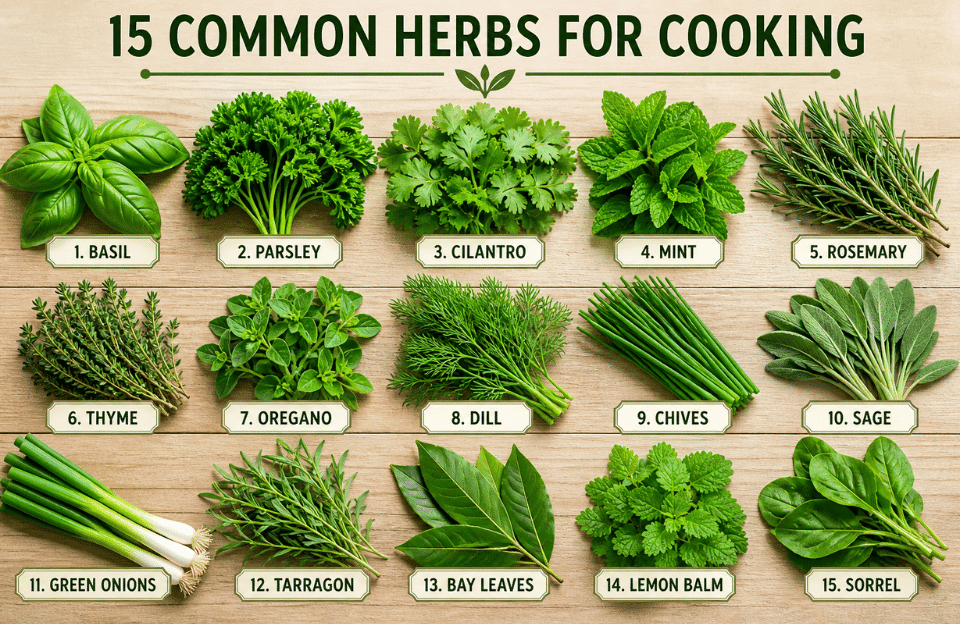
Read more: 15 Common Herbs for Cooking Every Beginner Should Know
FAQs
1. What are the most important spices every kitchen should have?
Most kitchens should have black pepper, garlic powder, paprika, cumin, oregano, basil, cinnamon, and chili powder. These spices work well in many everyday recipes.
2. What are spices used for in cooking?
Spices are used to add flavor, aroma, heat, sweetness, and color to food. Different spices can completely change the taste of a dish.
3. How should spices be stored?
Spices should be stored in airtight containers away from heat, light, and moisture. A cool kitchen cabinet or pantry is usually the best place.