Fresh herbs can instantly improve soups, sauces, pasta, salads, roasted vegetables, teas, and homemade remedies. But if you grow herbs indoors or buy large bunches from the grocery store, you already know the problem: fresh herbs spoil quickly.
The good news is that learning how to dry herbs at home is simple, affordable, and one of the best ways to preserve flavor for months.
When dried properly, herbs keep much of their aroma, color, and essential oils. The key is choosing the right drying method for each herb type and avoiding common mistakes that cause flavor loss.
In this guide, you’ll learn:
- The best ways to dry herbs.
- Which herbs dry best?
- How to preserve flavor and aroma?
- How to dry herbs without a dehydrator?
- And the best drying method for every herb type.
Whether you grow herbs indoors, on a balcony, or in an outdoor garden, these methods will help you keep your harvest fresh for longer.
Why Dry Herbs at Home?
Drying herbs is one of the oldest and easiest preservation methods. Properly dried herbs can last for months while saving money and reducing food waste.
Benefits of Drying Herbs
- Preserves herbs for long-term use
- Helps reduce waste from excess harvests
- Keeps herbs available year-round
- Concentrates the flavor in many herbs
- Saves freezer space
- Great for indoor herb gardeners
Dried herbs are especially useful during winter when fresh herbs may be expensive or difficult to grow indoors.
Which Herbs Dry Best?
Some herbs retain flavor better than others after drying.
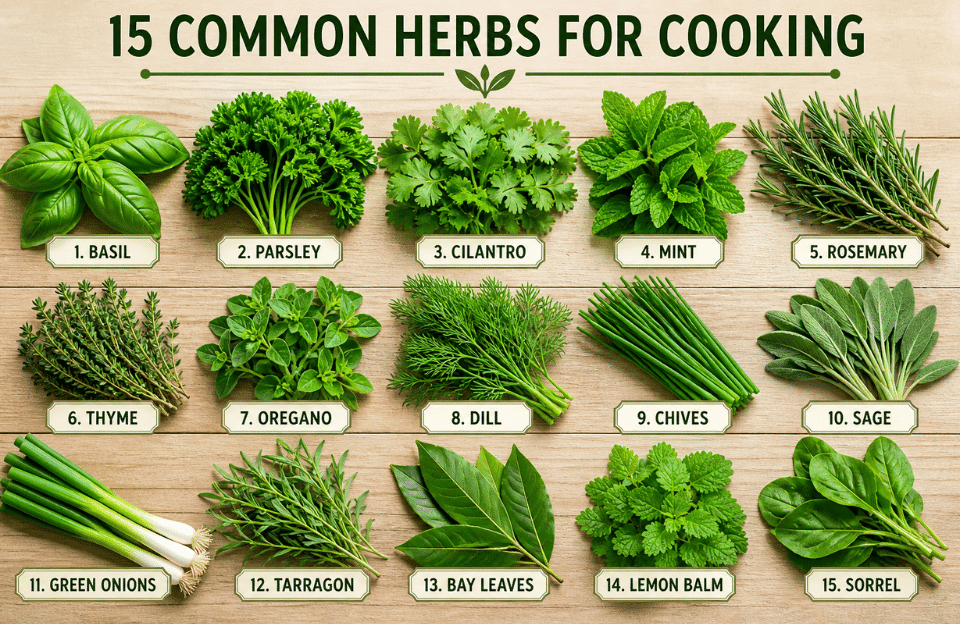
Herbs That Dry Extremely Well
These herbs keep their strong flavor and aroma after drying:
- Rosemary
- Thyme
- Oregano
- Sage
- Bay leaves
- Marjoram
- Lavender
These are woody herbs with lower moisture content, making them ideal for air drying.
Herbs That Need More Care
Soft herbs contain more moisture and can lose flavor faster if dried incorrectly.
Examples include:
- Basil
- Mint
- Parsley
- Cilantro
- Dill
- Chives
- Tarragon
These herbs often dry best using a dehydrator or low-temperature oven.
Best Time to Harvest Herbs for Drying
The timing of harvest affects flavor more than most people realize.
For maximum flavor:
- Harvest herbs in the morning after the dew evaporates
- Pick herbs before flowering
- Choose healthy leaves without yellowing
- Avoid harvesting after heavy rain
Herbs contain the highest concentration of essential oils before flowering begins.
How to Prepare Herbs Before Drying
Before drying herbs, proper preparation helps preserve flavor and prevents mold.
Step 1: Wash the Herbs
Rinse herbs gently under cool water to remove:
- dirt,
- insects,
- and debris.
Step 2: Dry Them Thoroughly
Pat herbs dry with paper towels or use a salad spinner.
Extra moisture can cause mold during drying.
Step 3: Remove Damaged Leaves
Discard:
- yellow leaves,
- black spots,
- or damaged stems.
Now your herbs are ready for drying.
4 Best Ways to Dry Herbs at Home
There’s no single best method for every herb. Each technique works differently depending on moisture content and leaf size.
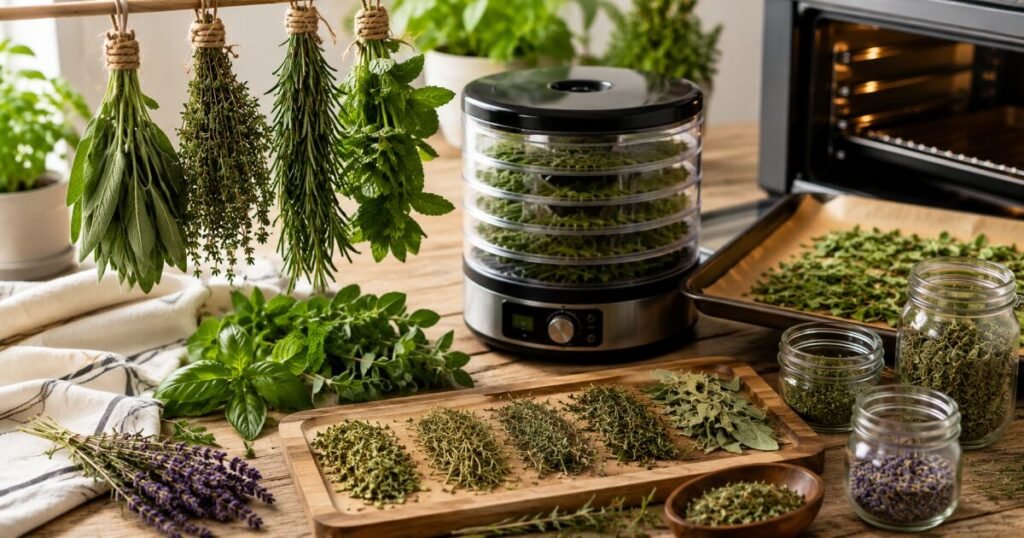
1. Air Drying Herbs
Air drying is the easiest and most traditional method.
It works best for:
- rosemary,
- thyme,
- oregano,
- sage,
- and lavender.
How to Air Dry Herbs
Step-by-Step
- Gather herbs into small bundles
- Tie stems with string or rubber bands
- Hang bundles upside down
- Keep them in a warm, dry, dark area
- Allow 1–2 weeks for drying
Good airflow is essential.
Avoid direct sunlight because UV exposure reduces flavor and color.
Pros
- No equipment needed
- Preserves oils well
- Very affordable
Cons
- Slow process
- Not ideal in humid climates
- Can develop mold if the airflow is poor
2. Drying Herbs in a Dehydrator
A food dehydrator is one of the best ways to dry herbs while preserving flavor.
It works especially well for:
- basil,
- mint,
- parsley,
- dill,
- and cilantro.
How to Use a Dehydrator
- Spread herbs in a single layer
- Set dehydrator to 95°F–115°F
- Dry for 1–4 hours, depending on herb type
- Check regularly to avoid overdrying
Low temperatures help preserve essential oils.
Pros
- Fast and reliable
- Excellent flavor retention
- Great for humid environments
Cons
- Requires equipment
- Uses electricity
3. Oven Drying Herbs
If you don’t own a dehydrator, your oven can work well.
Best Herbs for Oven Drying
- Basil
- Mint
- Parsley
- Oregano
- Tarragon
How to Dry Herbs in the Oven
- Preheat oven to the lowest temperature
- Place herbs on a baking sheet
- Keep the oven door slightly open
- Dry for 1–3 hours
- Turn herbs occasionally
The goal is low heat, not baking.
High temperatures destroy oils that give herbs their flavor.
Pros
- Fast method
- Convenient
- No special equipment needed
Cons
- Easy to overdry herbs
- Some flavor loss is possible
4. Microwave Drying Herbs
Microwave drying is the fastest method, but it should be used carefully.
Best Herbs for Microwave Drying
- Small amounts of mint
- Parsley
- Basil
- Dill
How to Microwave Dry Herbs
- Place herbs between paper towels
- Microwave in 20-second intervals
- Check frequently
- Stop once herbs become crisp
Pros
- Extremely fast
- Good for small batches
Cons
- Easy to burn herbs
- Can reduce flavor significantly
Use this method only when speed matters.
Best Drying Method for Every Herb Type
Here’s a simple guide to help choose the best method.
| Herb | Best Drying Method |
| Rosemary | Air drying |
| Thyme | Air drying |
| Oregano | Air drying |
| Sage | Air drying |
| Basil | Dehydrator |
| Mint | Dehydrator |
| Parsley | Dehydrator or oven |
| Cilantro | Dehydrator |
| Dill | Dehydrator |
| Lavender | Air drying |
How to Know When Herbs Are Fully Dry
Herbs should feel:
- crisp,
- crumbly,
- and dry to the touch.
If leaves bend instead of crumble, they still contain moisture.
Never store partially dried herbs because trapped moisture can cause mold.
Common Mistakes That Ruin Dried Herbs
Many people lose flavor because of simple mistakes.
1. Using High Heat
Too much heat destroys essential oils quickly.
Always dry herbs slowly at low temperatures.
2. Drying in Direct Sunlight
Sunlight fades color and weakens flavor.
Dry herbs in a shaded area instead.
3. Poor Air Circulation
Lack of airflow can cause mold.
Use fans or proper spacing if needed.
4. Storing Herbs Before Fully Dry
Even slight moisture can ruin an entire jar.
Always test herbs before storage.
How to Store Dried Herbs Properly
Correct storage matters just as much as drying.
Best Storage Tips
Store dried herbs in:
- airtight glass jars,
- dark containers,
- or sealed spice jars.
Keep them away from:
- sunlight,
- moisture,
- and heat.
A cool pantry works well.
How Long Do Dried Herbs Last?
Most dried herbs stay flavorful for:
- 6–12 months for best flavor
- up to 2 years if stored properly
Woody herbs usually last longer than soft leafy herbs.
If herbs lose their aroma, it’s time to replace them.
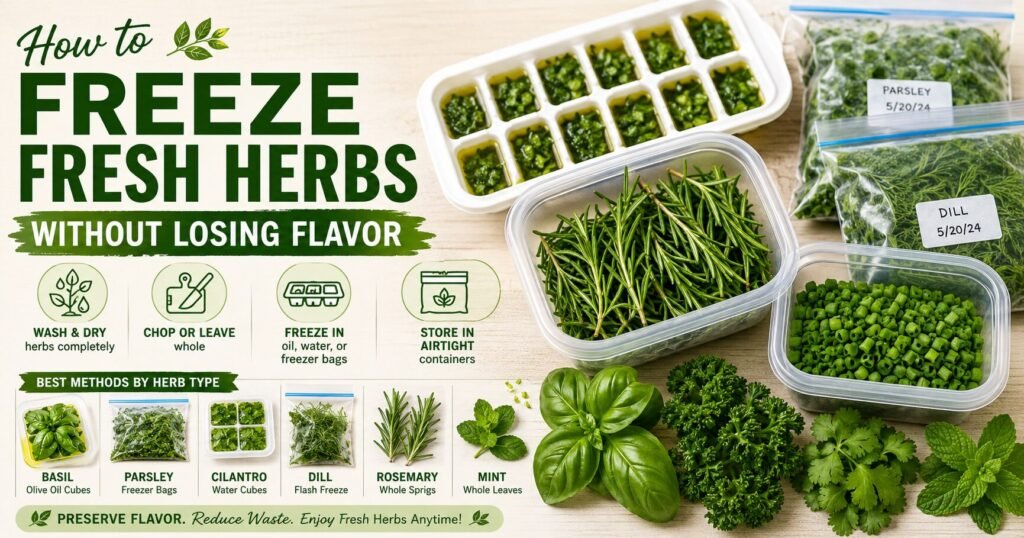
Should You Freeze or Dry Herbs?
Both methods work well, but each has advantages.
Drying Herbs Is Best For:
- long-term pantry storage,
- spice blends,
- teas,
- and seasoning mixes.
Freezing Herbs Is Best For:
- sauces,
- soups,
- pesto,
- and recipes needing fresher flavor.
Many indoor gardeners use both methods together.
Frequently Asked Questions
What is the best way to dry herbs without losing flavor?
Using a dehydrator at low temperatures usually preserves the most flavor and aroma.
Can you air dry herbs indoors?
Yes. Herbs can air dry indoors if airflow is good and humidity is low.
Is it better to dry herbs in the oven or air dry them?
Air drying preserves flavor better for woody herbs, while ovens work faster for soft herbs.
Should herbs be washed before drying?
Yes. Wash herbs gently and dry them thoroughly before starting the drying process.
Can dried herbs go bad?
Dried herbs rarely spoil completely, but they lose flavor over time.
Final Thoughts
Learning how to dry herbs at home is one of the easiest ways to preserve fresh flavor from your garden year-round.
The best drying method depends on the herb you’re using:
- woody herbs usually air dry beautifully,
- while soft herbs benefit from dehydrators or gentle oven drying.
The secret to flavorful dried herbs is simple:
- low heat,
- good airflow,
- darkness,
- and proper storage.
Once you start drying your own herbs, you’ll save money, waste less food, and always have flavorful herbs ready for cooking.
If you grow herbs indoors, drying extra harvests is also one of the smartest ways to make your indoor herb garden more productive throughout the year.