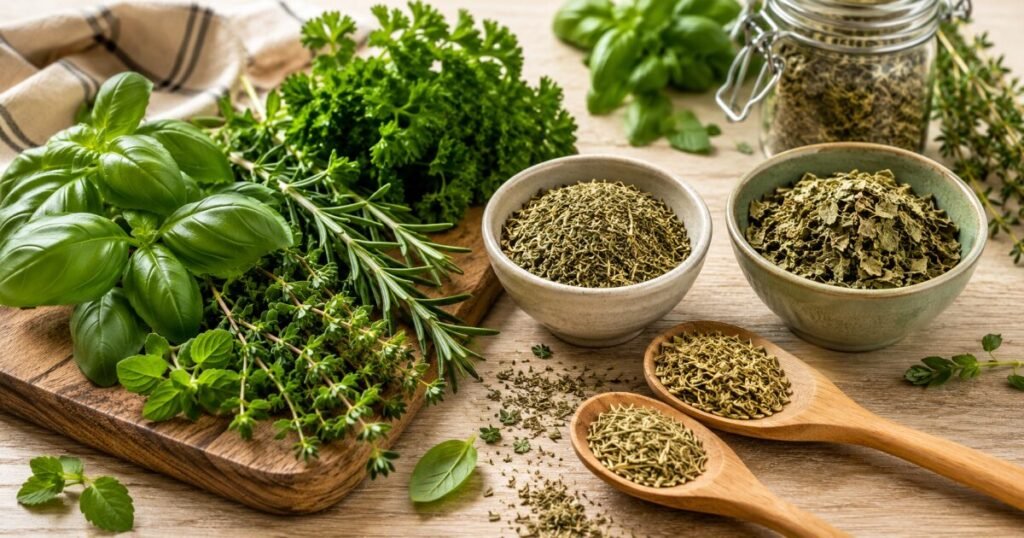
If you’ve ever followed a recipe and wondered whether you should use fresh or dried herbs, you’re not alone. Many home cooks struggle to understand the difference between the two, especially when it comes to flavor, measurements, and nutrition.
The truth is that both fresh and dried herbs have their place in the kitchen. Some dishes taste brighter with fresh herbs, while others benefit from the concentrated flavor of dried ones.
In this guide, you’ll learn:
- The real difference between fresh vs dried herbs
- The correct fresh vs dried herbs ratio
- How to measure fresh vs dried herbs
- Which option is healthier
- When to use each one for the best cooking results
By the end, you’ll know exactly which herbs work best in soups, sauces, salads, roasted dishes, and everyday cooking.
What’s the Difference Between Fresh and Dried Herbs?
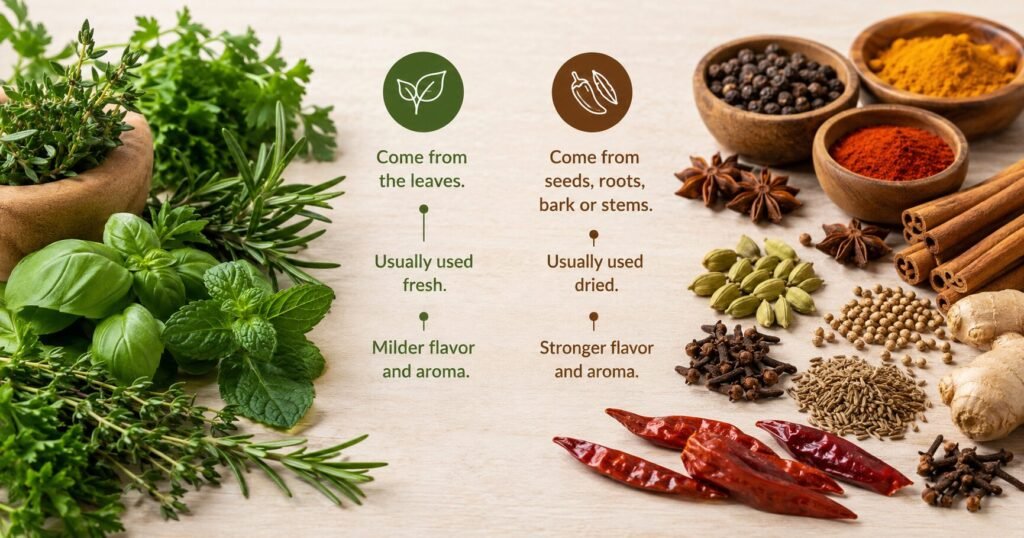
Fresh herbs are picked directly from the plant and contain natural moisture, delicate oils, and bright flavors. Dried herbs are dehydrated versions of those same plants, giving them a more concentrated and earthy taste.
Fresh herbs usually taste:
- lighter
- brighter
- more aromatic
Dried herbs tend to taste:
- stronger
- deeper
- more concentrated
Because dried herbs lose water during the drying process, their flavor becomes more powerful by volume.
That’s why you cannot use the same amount of dried herbs as fresh herbs in recipes.
Fresh vs Dried Herbs Ratio
One of the most important cooking rules is understanding the correct herb conversion ratio.
Standard Fresh to Dried Herb Conversion
The general rule is:
1 tablespoon fresh herbs = 1 teaspoon dried herbs
This is commonly known as the 3:1 conversion rule.
That means dried herbs are about three times stronger than fresh herbs.
Quick Conversion Chart
| Fresh Herbs | Dried Herbs |
| 1 tablespoon fresh | 1 teaspoon dried |
| 2 tablespoons fresh | 2 teaspoons dried |
| ¼ cup fresh | 1 tablespoon + 1 teaspoon dried |
| 1 teaspoon fresh | ⅓ teaspoon dried |
This fresh vs dried herbs ratio works well for most herbs including:
- oregano
- thyme
- basil
- rosemary
- parsley
However, stronger herbs like rosemary and sage may require slightly less dried seasoning because their flavors are naturally intense.
How to Measure Fresh vs Dried Herbs
Many cooking mistakes happen because herbs are measured incorrectly.
Measuring Fresh Herbs
Fresh herbs should usually be:
- washed
- dried with a towel
- finely chopped before measuring
Measure fresh herbs loosely in measuring spoons or cups unless the recipe says “packed.”
Example:
- 1 tablespoon chopped basil
- 2 teaspoons chopped parsley
Measuring Dried Herbs
Dried herbs should be measured:
- crushed lightly between fingers first
- leveled in measuring spoons
Crushing dried herbs helps release essential oils and improves flavor during cooking.
Why Dried Herbs Taste Stronger
When herbs dry, most of their water evaporates while essential oils remain concentrated.
This creates:
- stronger aroma
- deeper flavor
- more intense seasoning
That’s why adding too many dried herbs can quickly overpower a dish.
Fresh herbs provide a softer and more natural flavor profile, especially in delicate recipes.
When Fresh Herbs Are Better
Fresh herbs work best in recipes where brightness and aroma matter most.
Best Uses for Fresh Herbs
Fresh herbs are ideal for:
- salads
- pasta toppings
- sandwiches
- fresh sauces
- garnishes
- dips
- spring and summer dishes
Examples:
- fresh basil in pesto
- cilantro on tacos
- parsley in tabbouleh
- mint in drinks and desserts
Fresh herbs are usually added near the end of cooking to preserve their flavor and color.
When Dried Herbs Are Better
Dried herbs perform better in dishes cooked slowly over time.
Best Uses for Dried Herbs
Dried herbs are perfect for:
- soups
- stews
- roasted vegetables
- marinades
- meat rubs
- casseroles
- slow cooker meals
Because dried herbs need time to rehydrate and release flavor, they should be added earlier during cooking.
Examples:
- dried oregano in pizza sauce
- thyme in soup
- rosemary in roasted potatoes
- Italian seasoning in pasta sauce
Fresh vs Dried Herbs Nutrition
Many people assume fresh herbs are always healthier, but both forms offer nutritional benefits.
Fresh Herbs Nutrition
Fresh herbs often contain:
- more vitamin C
- more water-soluble nutrients
- natural enzymes
- fresh antioxidants
Because they are less processed, fresh herbs can provide slightly higher levels of certain vitamins.
Dried Herbs Nutrition
Dried herbs may actually contain:
- concentrated antioxidants
- more minerals by weight
- stronger plant compounds
However, some nutrients decrease during drying.
Since dried herbs are concentrated, small amounts can still deliver powerful health benefits.
Which Herbs Taste Better Fresh?
Some herbs lose flavor quickly when dried.
Herbs Best Used Fresh
These herbs usually taste better fresh:
- basil
- cilantro
- parsley
- mint
- dill
- chives
Drying can weaken their delicate flavor and aroma.
Which Herbs Work Well Dried?
Woody herbs keep their flavor very well after drying.
Herbs That Work Great Dried
These herbs are excellent in dried form:
- oregano
- thyme
- rosemary
- sage
- bay leaves
These herbs develop richer and deeper flavors after drying.
Common Mistakes When Using Herbs
Avoid these common cooking errors:
Using Too Many Dried Herbs
Dried herbs are concentrated. Overusing them can make food bitter.
Adding Fresh Herbs Too Early
Fresh herbs lose flavor if cooked too long.
Not Crushing Dried Herbs
Crushing helps release oils and improves flavor.
Using Old Dried Herbs
Dried herbs lose potency over time. Replace them every 6–12 months for best flavor.
Can You Substitute Fresh Herbs for Dried Herbs?
Yes, absolutely.
Just remember the 3:1 rule:
- 3 parts fresh herbs
- 1 part dried herbs
Example:
If a recipe calls for:
- 1 teaspoon dried oregano
You can substitute:
- 1 tablespoon fresh oregano
This works for most everyday recipes.
Fresh vs Dried Herbs: Which Is Better?
There’s no single winner because both serve different purposes.
Choose Fresh Herbs If You Want:
- bright flavor
- fresh aroma
- vibrant color
- garnish appeal
Choose Dried Herbs If You Want:
- convenience
- stronger flavor
- longer shelf life
- slow-cooked seasoning
Professional cooks often use both together for layered flavor.
Final Thoughts
Understanding the difference between fresh vs dried herbs can completely improve your cooking.
Fresh herbs bring brightness, freshness, and color to meals, while dried herbs offer convenience and concentrated flavor for slow-cooked dishes.
The key is knowing:
- when to use each type
- how to measure them correctly
- the proper fresh vs dried herbs ratio
Once you master herb substitutions, your recipes will taste more balanced, flavorful, and professional.
Whether you grow herbs indoors or buy them from the store, both fresh and dried herbs deserve a place in every kitchen.
FAQs
What is the ratio of fresh herbs to dried herbs?
The standard ratio is:
- 1 tablespoon fresh herbs = 1 teaspoon dried herbs
This is known as the 3:1 conversion rule.
Are fresh herbs healthier than dried herbs?
Fresh herbs usually contain more vitamin C and water-based nutrients, while dried herbs may contain more concentrated antioxidants and minerals.
Both can be healthy additions to meals.
Can I use dried herbs instead of fresh herbs?
Yes. Dried herbs can replace fresh herbs in most recipes using the proper conversion ratio.
Why are dried herbs stronger than fresh herbs?
Drying removes water and concentrates essential oils, making dried herbs more powerful in flavor.
Which herbs should always be used fresh?
Basil, cilantro, parsley, dill, and mint usually taste best fresh because their flavors weaken when dried.