Are Chives and Green Onions the Same?
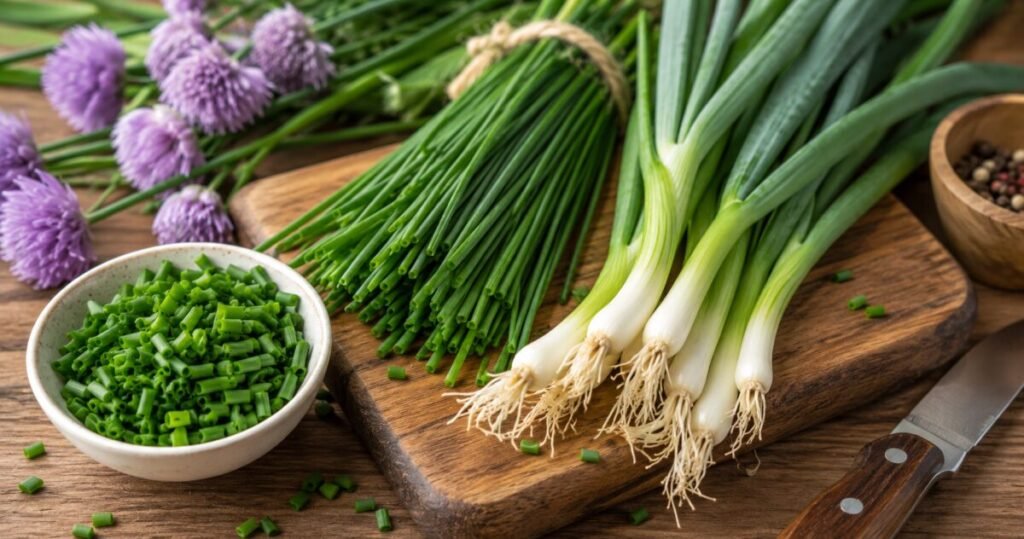
The short answer is no, chives and green onions are not the same plant. Although both belong to the onion family (Allium), they are different species and serve different purposes in cooking. Chives are considered an herb and are mainly used as a garnish or flavor enhancer. Green onions, also known as scallions, are a vegetable with thicker stalks and a small bulb that can be eaten raw or cooked. Because both have a mild onion flavor and green stems, many people mistakenly assume they are identical. However, once you compare their appearance, texture, and flavor, the differences become obvious.
If you’ve ever stood in the produce aisle wondering, “Are chives the same as green onions?”, you’re not alone. These two popular ingredients belong to the onion family and share a similar flavor profile, which often confuses home cooks and gardeners alike.
While chives and green onions may look somewhat alike at first glance, they are actually different plants with distinct appearances, flavors, and culinary uses. Understanding the differences can help you choose the right ingredient for your recipes and even decide which one to grow in your indoor herb garden.
In this complete guide, you’ll learn whether chives and green onions are the same, what chives are, what they look like, how to grow chives, how to harvest chives, how to use fresh chives, and how to dry chives for long-term storage.
What Is Chives?
Chives are one of the most popular culinary herbs grown in home gardens.
They belong to the Allium family, which also includes onions, garlic, leeks, and shallots. Unlike traditional onions, chives are grown primarily for their slender green leaves rather than their bulbs.
The most common type is known as common chives (Allium schoenoprasum). These plants produce thin, hollow green leaves and attractive purple flowers that are also edible.
Chives are perennial herbs, meaning they return year after year when properly cared for. This makes them a favorite choice for indoor herb gardens and outdoor kitchen gardens.
What Do Chives Look Like?
If you’re wondering what do chives look like, imagine a cluster of thin green grass-like leaves growing upright from the soil.
Chives typically have:
- Thin, hollow green stems
- Bright green color
- Grass-like appearance
- Purple edible flowers in spring and summer
- Clumping growth habit
- Height of 12–24 inches
Unlike green onions, chives do not develop noticeable white bulbs at the base.
Their delicate appearance makes them easy to identify once you know what to look for.
Visual Differences at a Glance
| Feature | Chives | Green Onions |
| Stem Thickness | Very thin | Thick |
| Bulb | None | Small white bulb |
| Growth Habit | Dense clumps | Individual stalks |
| Use | Herb | Vegetable |
| Flavor | Mild onion | Stronger onion flavor |
| Flowers | Purple edible blooms | Rarely used for flowers |
Chives vs Green Onions: Key Differences
Let’s explore the major differences between chives and green onions.
Appearance
Chives resemble long blades of grass. Their leaves are narrow, smooth, and hollow.
Green onions have thicker green stalks and a noticeable white base that resembles a small onion bulb.
Taste
Chives provide a subtle onion flavor with a mild sweetness.
Green onions have a stronger, sharper onion taste that becomes more pronounced when cooked.
Texture
Chives are soft and delicate.
Green onions are firmer and crunchier, making them suitable for salads, stir-fries, and soups.
Culinary Uses
Chives are commonly used as a finishing herb on:
- Baked potatoes
- Soups
- Omelets
- Cream cheese spreads
- Salads
Green onions are often used in:
- Stir-fries
- Asian dishes
- Salsas
- Salads
- Grilled recipes
Growing Requirements
Chives grow as perennial herbs and require minimal maintenance.
Green onions are generally grown as annual vegetables and are harvested whole.
Can You Substitute Chives for Green Onions?
Yes, but only in certain situations.
If a recipe calls for a small amount of green onion as a garnish, chives can often be used successfully.
However, if green onions are a major ingredient, chives may not provide enough texture or flavor.
Good Substitutions
- Garnishes
- Egg dishes
- Creamy dips
- Potato dishes
- Salad toppings
Less Suitable Substitutions
- Stir-fries
- Grilled dishes
- Soups requiring substantial onion texture
As a general rule, use more chives when replacing green onions because their flavor is milder.
How to Grow Chives
One reason chives are so popular is that they’re among the easiest herbs to grow.
Whether you have a backyard garden or a sunny kitchen windowsill, chives can thrive with minimal effort.
Growing Chives Indoors
Indoor gardeners love chives because they adapt well to containers.
Choose a pot with drainage holes and place it near a window that receives at least six hours of sunlight daily.
If natural light is limited, consider using a grow light.
Soil Requirements
Chives prefer:
- Well-draining soil
- Organic-rich potting mix
- Slightly acidic to neutral pH
Adding compost can improve growth and overall plant health.
Sunlight Needs
For best results, provide:
- 6–8 hours of sunlight per day
- Bright indirect light indoors
- Partial shade in extremely hot climates
Read more: 11 Best Herbs That Grow in Low Light Apartments (Beginner Friendly Guide)
Watering Tips
Chives enjoy consistently moist soil but dislike waterlogged conditions.
Water when the top inch of soil feels dry.
Avoid overwatering, which can lead to root problems.
Read more: How Often Should You Water Indoor Herb Plants?
How to Harvest Chives
Knowing how to harvest chives correctly helps ensure continuous growth throughout the season.
When to Harvest
Most chive plants are ready for harvesting when the leaves reach about 6 inches tall.
Established plants can be harvested multiple times each year.
How to Harvest Chives Properly
Use clean scissors or garden snips.
Cut leaves about 1–2 inches above the soil line.
Never remove the entire plant.
This method encourages new growth and keeps your plant productive.
Common Harvesting Mistakes
Avoid:
- Pulling leaves by hand
- Cutting too close to the roots
- Harvesting immature plants
- Removing more than one-third of the plant at once
Following these guidelines will keep your chive plant healthy and productive.
Fresh Chives: Best Ways to Use Them
Fresh chives are valued for their mild onion flavor and bright green color.
They are best added near the end of cooking to preserve their delicate taste.
Popular uses include:
- Scrambled eggs
- Mashed potatoes
- Soups
- Cream sauces
- Sandwiches
- Salads
- Herb butter
- Cottage cheese
Because fresh chives lose flavor when exposed to prolonged heat, they’re usually added just before serving.
How to Store Fresh Chives
Fresh chives can remain usable for up to two weeks when stored correctly.
Refrigerator Method
Wrap chives in a slightly damp paper towel and place them in a sealed container or plastic bag.
Freezing Method
Chop the chives and freeze them in airtight containers or ice cube trays.
Frozen chives retain much of their flavor and are convenient for cooking.
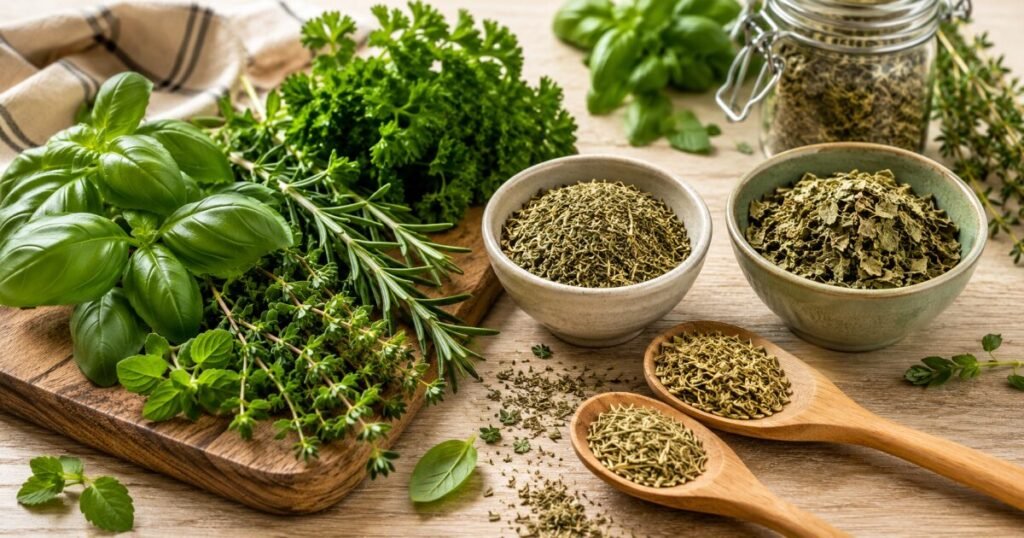
How to Dry Chives
If your garden produces more chives than you can use, drying them is an excellent preservation method.
Air Drying
Bundle small stems together and hang them upside down in a warm, dry location with good airflow.
This method takes one to two weeks.
Oven Drying
Spread chopped chives on a baking sheet.
Dry them at the lowest oven temperature for one to two hours.
Keep the oven door slightly open to allow moisture to escape.
Dehydrator Method
A food dehydrator provides the most consistent results.
Dry chives at approximately 95°F to 115°F until completely crisp.
Storing Dried Chives
Once dried:
- Store in airtight containers
- Keep away from sunlight
- Label with the drying date
Properly stored dried chives can remain flavorful for up to one year.
Are Chives Better Than Green Onions?
Neither is necessarily better; each has its own strengths.
Choose chives if you want:
- A mild onion flavor
- Elegant garnishes
- Easy-to-grow perennial herbs
- Indoor herb garden plants
Choose green onions if you want:
- Stronger onion flavor
- More texture in recipes
- Larger edible portions
- Versatile cooking applications
Many gardeners grow both because they complement each other beautifully in the kitchen.
Frequently Asked Questions
Are chives and green onions the same thing?
No. Chives are herbs with thin grass-like leaves, while green onions are vegetables with thicker stalks and small white bulbs.
What do chives taste like?
Chives have a mild onion flavor that is lighter and more delicate than green onions.
Can I use chives instead of green onions?
Yes, especially as a garnish or in recipes where texture is not important.
Do chives regrow after cutting?
Yes. Chives are perennial herbs and quickly regrow after harvesting when cut correctly.
Can chives grow indoors year-round?
Yes. With sufficient sunlight or grow lights, chives can thrive indoors throughout the year.
How often should I harvest chives?
You can harvest mature chives every few weeks during the growing season.
How do you dry fresh chives?
Fresh chives can be air-dried, oven-dried, or preserved using a food dehydrator.
Final Thoughts
So, are chives the same as green onions? Not quite. While both belong to the onion family and share a similar flavor profile, they differ significantly in appearance, texture, culinary uses, and growth habits.
Chives are delicate perennial herbs prized for their mild onion flavor and easy-growing nature, while green onions are more robust vegetables that offer stronger flavor and crunch. Understanding these differences can help you make better choices in the kitchen and garden.
If you’re building an indoor herb garden, chives are an excellent beginner-friendly plant. They grow quickly, require minimal maintenance, and provide fresh harvests throughout the year. Whether you enjoy them fresh, frozen, or dried, chives are a versatile herb worth adding to your gardening collection.