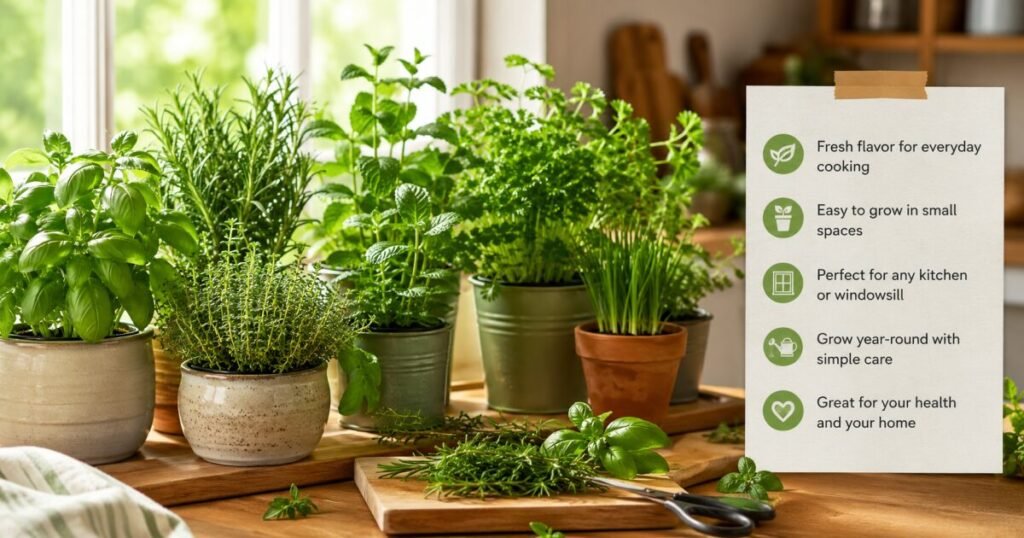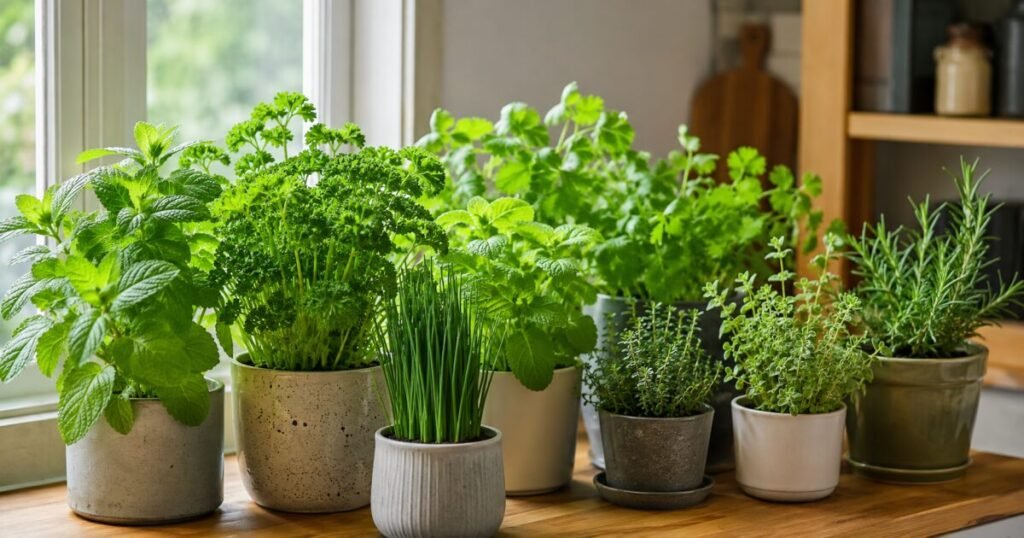
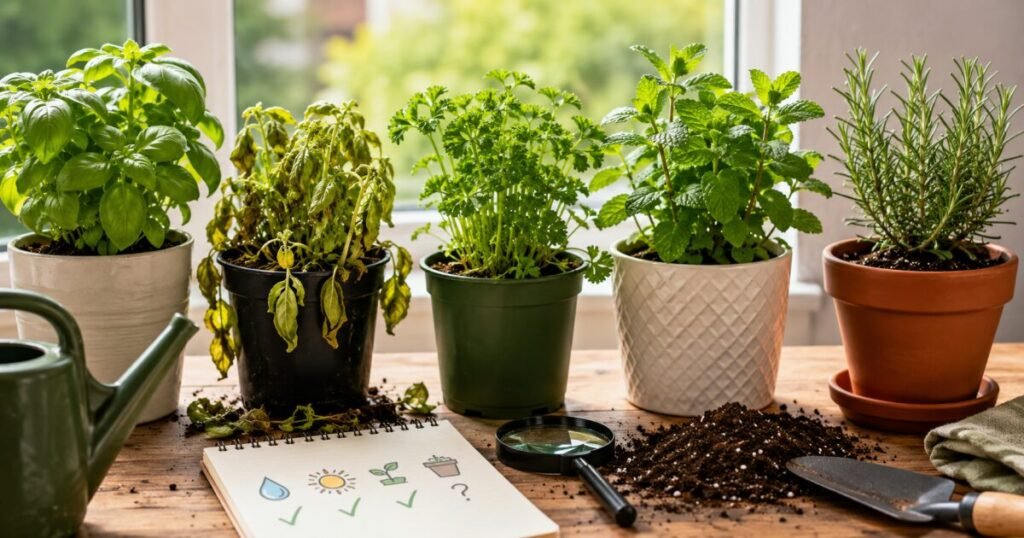
Why do my indoor herbs keep dying? Indoor herbs usually die because they don’t receive enough sunlight, are watered too much or too little, have poor drainage, lack proper airflow, or are grown in the wrong containers. Most beginner problems are easy to fix by improving light, watering only when the soil needs it, and choosing the right potting mix and growing conditions.
Indoor herb gardens look simple on Instagram. A few pots on a sunny kitchen windowsill, fresh basil for pasta, mint for tea, and rosemary that smells amazing year-round. But for many beginners, the reality is frustrating.
Your basil turns yellow. Mint becomes limp. Parsley dries out overnight. Before long, you’re asking yourself:
Why do my herbs keep dying?
The good news is that most indoor herbs die for a few predictable reasons, and nearly all of them are fixable. Once you understand what herbs actually need indoors, keeping them alive becomes much easier.
In this guide, you’ll learn:
- Why your indoor herbs keep dying
- The most common indoor herb mistakes
- How to revive struggling herbs
- The best soil for indoor herbs
- Easy long-term fixes for healthy growth
Whether you grow basil, cilantro, parsley, mint, thyme, rosemary, or oregano indoors, these tips will help you keep your herb garden alive and thriving.
Why Do My Indoor Herbs Keep Dying?
Most indoor herbs die because of:
- Too much water
- Not enough sunlight
- Poor drainage
- Incorrect soil
- Low airflow
- Choosing herbs that struggle indoors
Unlike outdoor plants, indoor herbs depend completely on the environment you create. Small mistakes add up quickly inside the home.
The good news? Once you identify the problem, the herbs often recover surprisingly fast.
Quick Indoor Herb Problem Diagnosis Chart
| Symptom | Likely Cause | Quick Fix |
| Yellow leaves | Overwatering | Let soil dry before watering |
| Brown crispy leaves | Underwatering or heat stress | Water deeply and move from heat |
| Weak leggy stems | Lack of sunlight | Increase direct light |
| Mold on soil | Poor airflow or overwatering | Improve drainage and airflow |
| Drooping leaves | Root stress | Check watering routine |
| Slow growth | Poor soil or low nutrients | Use fresh herb potting mix |
| Black stems near soil | Root rot | Repot immediately |
1. Overwatering Is Killing Your Herbs
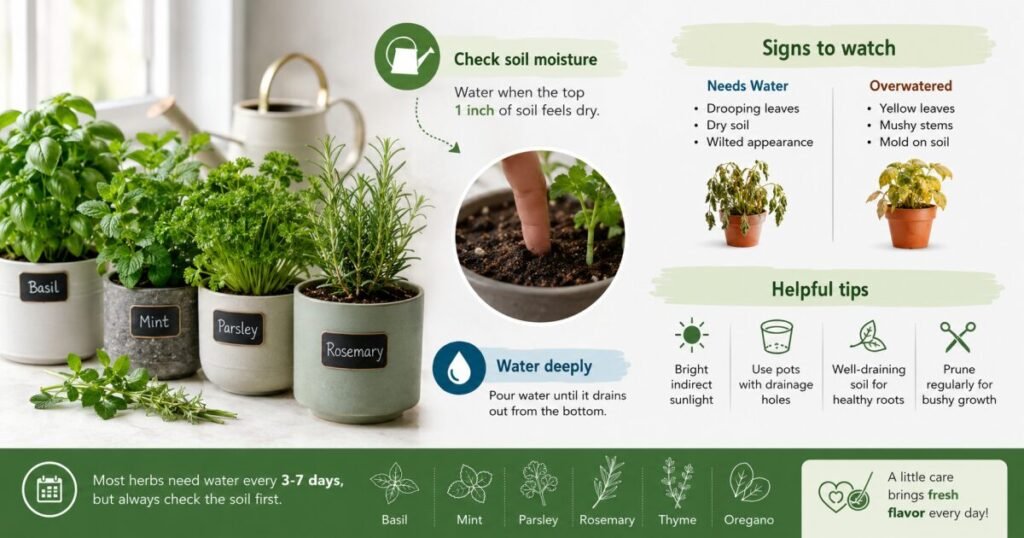
The number one reason indoor herbs die is overwatering.
Many beginners water herbs every day because the soil surface looks dry. But underneath, the roots may still be soaking wet.
Indoor herbs hate constantly wet roots.
Too much moisture leads to:
- Root rot
- Yellow leaves
- Fungus gnats
- Mold growth
- Wilting despite wet soil
How to Fix It
Before watering:
- Stick your finger 1–2 inches into the soil
- Only water when the top layer feels dry
Also:
- Empty drainage trays
- Never let pots sit in standing water
- Use pots with drainage holes
Pro Tip
Most herbs prefer slightly dry soil over constantly wet soil.
2. Your Herbs Are Not Getting Enough Sunlight
If your herbs look tall, weak, pale, or stretched, lack of sunlight is probably the problem.
Most culinary herbs need:
- 6–8 hours of direct sunlight daily
Indoor light is much weaker than outdoor light, even near windows.
Signs of Low Light
- Thin stems
- Slow growth
- Small leaves
- Leaning toward the window
- Weak flavor
How to Fix It
Place herbs:
- Near a south-facing window
- In the brightest room possible
If natural light is limited:
- Use LED grow lights
- Keep lights on 12–14 hours daily
Best Herbs for Lower Light
Some herbs tolerate indoor conditions better:
- Mint
- Chives
- Parsley
- Lemon balm
3. You’re Using the Wrong Soil
Heavy garden soil suffocates indoor herb roots.
One of the biggest mistakes beginners make is using outdoor soil or dense potting mixes that hold too much water.
If you’re wondering about the best soil for indoor herbs, it should be:
- Light
- Fast-draining
- Airy
- Nutrient-rich
Best Soil for Indoor Herbs
Use a quality indoor potting mix with:
- Coconut coir or peat moss
- Perlite
- Compost
- Worm castings
Avoid:
- Dense clay soil
- Backyard soil
- Moisture-retaining mixes
How to Improve Drainage
Mix in:
- Perlite
- Pumice
- Coarse sand
This keeps roots healthy and prevents rot.
4. Your Pots Don’t Have Proper Drainage
Even perfect soil fails without drainage holes.
Without drainage:
- Water stays trapped
- Roots suffocate
- Fungus develops quickly
Decorative containers often look beautiful but secretly kill herbs.
How to Fix It
Always use:
- Pots with drainage holes
- Saucers underneath
- Breathable containers like terracotta
Terracotta pots are excellent because they help excess moisture evaporate naturally.
5. Indoor Temperatures May Be Stressing Your Herbs
Indoor herbs dislike sudden temperature swings.
Common hidden problems include:
- Air conditioner drafts
- Heating vents
- Cold windows
- Hot kitchen appliances
Signs of Temperature Stress
- Curling leaves
- Sudden drooping
- Dry leaf edges
- Slow growth
Ideal Temperature for Indoor Herbs
Most herbs prefer:
- 65°F–75°F (18°C–24°C)
Keep herbs away from:
- Radiators
- Oven heat
- Freezing windowsills
- Strong indoor drafts
6. You’re Harvesting Too Much Too Soon
New herb gardeners often overharvest young plants.
Removing too many leaves weakens the plant and slows recovery.
How to Harvest Correctly
Never remove:
- More than one-third of the plant at once
Instead:
- Trim regularly
- Pinch above leaf nodes
- Encourage bushier growth
Frequent light harvesting is healthier than heavy cutting.
7. Your Herbs Need Better Airflow
Indoor air can become stagnant, especially in kitchens and apartments.
Poor airflow encourages:
- Mold
- Mildew
- Fungal disease
- Weak growth
How to Fix It
Improve circulation by:
- Spacing pots apart
- Opening windows occasionally
- Using a small fan nearby
Good airflow keeps leaves dry and healthy.
8. Your Herbs May Be Root Bound
If herbs stop growing even with proper care, roots may have outgrown the container.
Signs of Root Bound Herbs
- Roots circling the bottom
- Water draining too quickly
- Slow growth
- Wilting despite watering
How to Fix It
Repot into a slightly larger container:
- About 1–2 inches wider
Avoid oversized pots because they hold too much moisture.
9. Some Store-Bought Herbs Are Designed to Die Fast
Many grocery store herbs are overcrowded on purpose.
You may see:
- 20–30 seedlings packed into one small pot
They look lush initially but compete for:
- Water
- Nutrients
- Root space
Eventually, they collapse.
How to Fix It
Separate crowded herbs into multiple pots.
This single step often saves supermarket basil and cilantro.
10. Pests Can Destroy Indoor Herbs Quickly
Even indoor plants get pests.
Common herb pests include:
- Spider mites
- Aphids
- Fungus gnats
- Whiteflies
Signs of Pests
- Sticky leaves
- Tiny insects
- Holes in leaves
- White webbing
How to Fix It
Use:
- Neem oil spray
- Mild insecticidal soap
- Sticky traps for gnats
Also:
- Avoid overwatering
- Remove dead leaves promptly
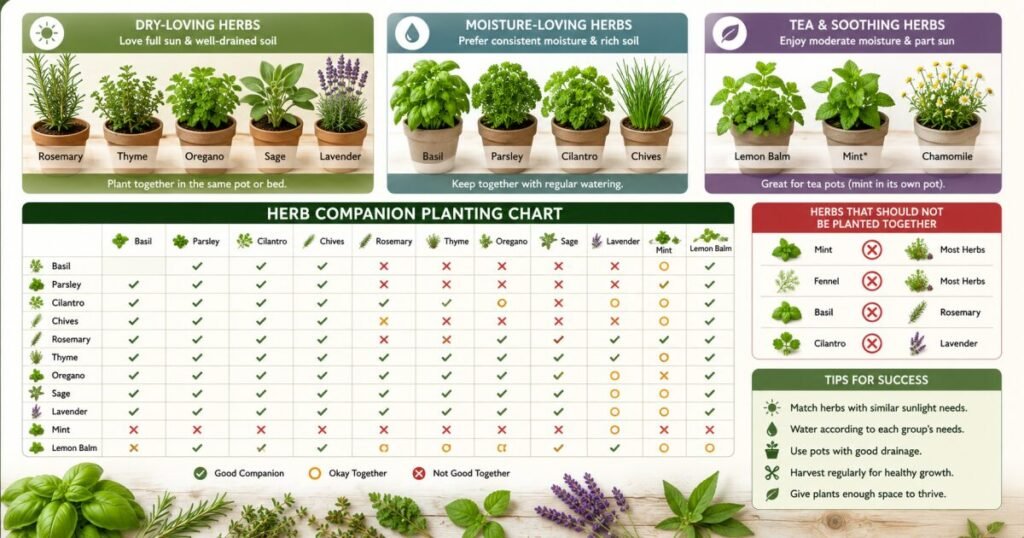
11. You’re Growing Difficult Herbs Indoors
Some herbs naturally struggle indoors.
The hardest indoor herbs include:
- Dill
- Cilantro
- Lavender
These herbs prefer:
- Cooler temperatures
- Outdoor airflow
- Deep roots
- Strong sunlight
Best Beginner-Friendly Indoor Herbs
Start with:
- Basil
- Mint
- Chives
- Parsley
- Thyme
- Oregano
These adapt much better to indoor environments.
How to Revive Dying Indoor Herbs
If your herbs already look unhealthy, don’t panic.
Many herbs recover quickly once conditions improve.
Step-by-Step Recovery Plan
1. Check Soil Moisture
Dry? Water deeply.
Soaked? Let it dry completely.
2. Inspect the Roots
Healthy roots:
- White or light tan
Rotten roots:
- Brown
- Mushy
- Smelly
Trim damaged roots before repotting.
3. Improve Sunlight
Move herbs to brighter light immediately.
4. Replace Old Soil
Fresh soil restores oxygen and nutrients.
5. Prune Dead Growth
Remove yellow, black, or crispy leaves.
Healthy growth usually returns faster afterward.
Best Indoor Herb Care Tips for Long-Term Success
Want herbs that thrive year-round indoors?
Follow these simple rules:
Water Less Than You Think
Most herbs prefer slight dryness.
Use Bright Light
Sunlight solves many herb problems.
Rotate Pots Weekly
This prevents leaning.
Feed Monthly
Use diluted liquid fertilizer during active growth.
Avoid Tiny Decorative Pots
Herbs need root space.
Watch Your Herbs Daily
Early signs help prevent major problems.
Frequently Asked Questions
Why do my indoor herbs keep dying even when I water them?
Overwatering is often the issue. Herbs can wilt from root rot even when the soil is wet.
What is the best soil fo indoor herbs?
The best soil for indoor herbs is light, well-draining potting mix with perlite and organic matter.
Can herbs recover after overwatering?
Yes. Many herbs recover if root rot hasn’t become severe. Let the soil dry and improve drainage.
Which herbs grow best indoors?
Basil, mint, parsley, chives, thyme, and oregano are among the easiest indoor herbs for beginners.
How often should I water indoor herbs?
Most indoor herbs need watering only when the top inch of soil feels dry.
Final Thoughts
If your herbs keep dying, you’re not alone. Indoor herb gardening has a learning curve, especially for beginners.
The key is understanding that herbs indoors behave differently than outdoor plants. Light, drainage, airflow, and watering habits matter far more inside the home.
Once you fix those basics, indoor herbs become surprisingly easy to grow.
Start small. Watch your plants closely. Adjust slowly.
Before long, you’ll have healthy herbs growing right in your kitchen year-round.