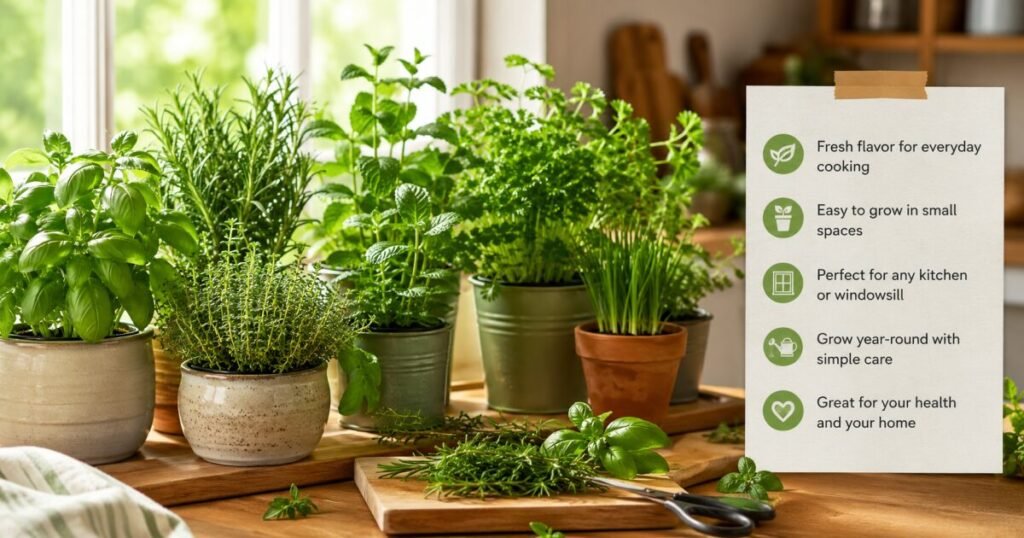
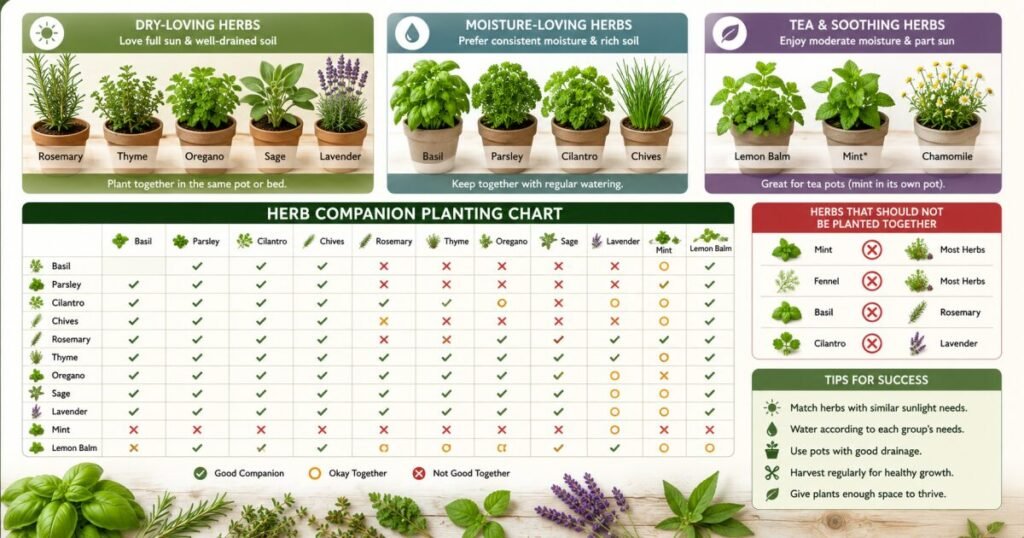
Growing herbs together is one of the easiest ways to create a thriving indoor or outdoor herb garden. But not all herbs make good neighbors. Some herbs prefer dry soil and full sun, while others need constant moisture and cooler conditions. Planting the wrong combinations together can lead to weak growth, poor flavor, root competition, and even disease.
The good news is that many herbs grow beautifully together when you match their sunlight, watering, and soil needs correctly.
In this guide, you’ll learn:
- which herbs can be planted together,
- the best herb combinations for pots and indoor gardens,
- which herbs should never share a container,
- and a simple herb companion planting chart you can follow as a beginner.
Whether you’re growing herbs on a sunny kitchen windowsill, balcony, patio, or raised bed, these combinations will help your plants stay healthier and more productive.
Why Companion Planting Matters for Herbs
Companion planting means growing plants together that benefit each other or have similar growing needs.
With herbs, companion planting mainly helps by:
- simplifying watering routines,
- improving airflow,
- preventing overcrowding,
- maximizing container space,
- reducing plant stress,
- and making herb care easier for beginners.
When herbs share the same preferences for sunlight, moisture, and soil, they usually grow better together.
For example:
- Rosemary, thyme, and oregano all love dry soil and lots of sun,
- while basil and parsley prefer more moisture and richer soil.
Grouping herbs correctly is especially important in containers and indoor gardens where space is limited.
Quick Herb Companion Planting Chart
| Herbs That Grow Well Together | Why They Work |
| Basil + Parsley | Both enjoy moist soil and regular watering |
| Rosemary + Thyme + Oregano | Prefer dry soil and full sun |
| Sage + Lavender | Thrive in low-moisture conditions |
| Cilantro + Parsley + Chives | Like cooler conditions and consistent moisture |
| Thyme + Sage | Similar watering and sunlight needs |
| Oregano + Rosemary | Mediterranean herbs with matching care requirements |
| Basil + Chives | Good moisture compatibility and pest-repelling benefits |
| Lemon Balm + Mint | Fast-growing herbs that enjoy moisture |
| Dill + Chives | Similar growth habits and care |
| Tarragon + Thyme | Prefer well-drained soil and moderate watering |
Best Herbs That Grow Well Together
Mediterranean Herbs That Thrive Together
Mediterranean herbs are among the easiest herbs to plant together because they naturally prefer:
- full sunlight,
- dry conditions,
- and well-draining soil.
These herbs usually grow best in terra cotta pots or raised beds with excellent drainage.
Best Mediterranean Herb Combinations
- Rosemary
- Thyme
- Oregano
- Sage
- Lavender
These herbs dislike overly wet soil. Planting them with moisture-loving herbs can quickly lead to root rot.
Why This Combination Works
All of these herbs:
- prefer at least 6–8 hours of sunlight,
- tolerate drought,
- need less frequent watering,
- and grow well in sandy or fast-draining soil.
This makes them ideal for:
- sunny balconies,
- kitchen windows,
- patio containers,
- and low-maintenance herb gardens.
Moisture-Loving Herbs That Grow Well Together
Some herbs need more frequent watering and richer soil to stay healthy.
These herbs are ideal for indoor herb gardens because they generally prefer slightly cooler and more humid conditions than Mediterranean herbs.
Best Moisture-Loving Herb Combinations
- Basil
- Parsley
- Cilantro
- Chives
These herbs usually grow best in:
- nutrient-rich potting mix,
- containers with consistent moisture,
- and partial to full sunlight.
Why These Herbs Pair Well
They all:
- dislike dry soil,
- grow quickly,
- and need more frequent watering than woody herbs like rosemary or thyme.
Basil and parsley are especially popular together in indoor kitchen herb gardens.
Best Herbs to Grow Together in One Pot
If you only have a few containers, choosing compatible herbs becomes even more important.
Here are some of the best herb combinations for pots.
Pot Combination #1: Pizza Herb Pot
- Oregano
- Thyme
- Rosemary
These herbs enjoy dry conditions and full sun, making them perfect for one large container.
Pot Combination #2: Fresh Cooking Herb Pot
- Basil
- Parsley
- Chives
This combination works well near kitchen windows because all three herbs enjoy regular watering.
Pot Combination #3: Tea Herb Container
- Lemon Balm
- Mint
- Chamomile
These herbs prefer slightly moist soil and are often used in homemade herbal teas.
Important: Mint spreads aggressively, so it’s best to grow it in a separate inner pot if possible.
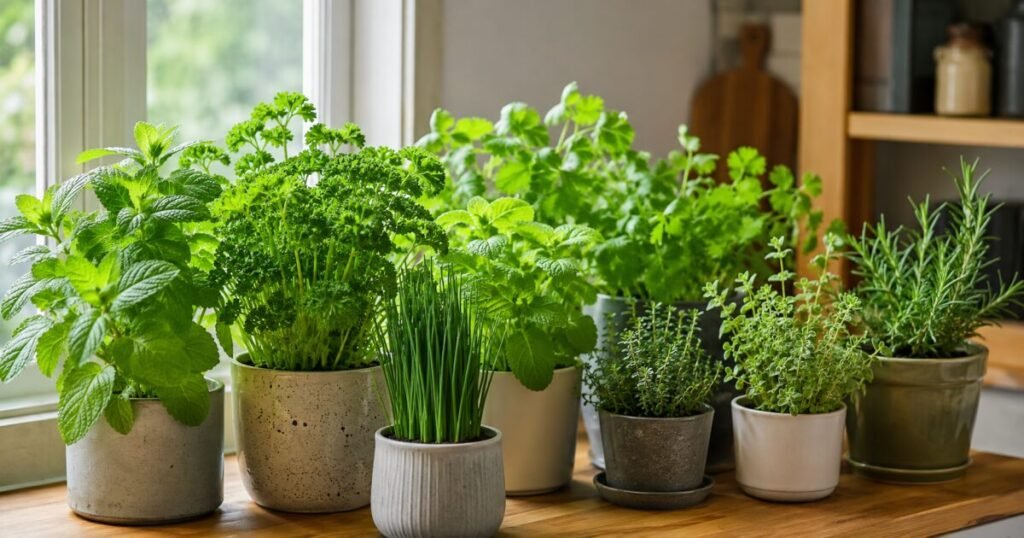
Best Herbs for Indoor Companion Planting
Indoor herb gardens have different growing conditions than outdoor gardens. Airflow is lower indoors, and containers dry out differently.
The best indoor herb combinations are herbs with similar:
- light needs,
- humidity preferences,
- and watering schedules.
Best Indoor Herb Pairings
Basil + Parsley
A classic kitchen herb combination that thrives in bright windows.
Thyme + Oregano
Both prefer drier soil and lots of sunlight.
Chives + Parsley
Easy for beginners and adaptable to indoor containers.
Cilantro + Parsley
Good for cooler indoor environments with moderate sunlight.
Herbs That Should NOT Be Planted Together
One of the biggest herb gardening mistakes is mixing herbs with opposite growing needs.
Here are some herbs that should usually be planted separately.
Mint
Mint spreads aggressively and can quickly take over containers or garden beds.
Avoid planting mint with:
- rosemary,
- thyme,
- sage,
- oregano,
- or lavender.
It’s usually best to grow mint in its own pot.
Fennel
Fennel is known for inhibiting the growth of many nearby plants.
Avoid planting fennel near most herbs and vegetables.
Basil and Rosemary
Although both are popular cooking herbs, they prefer very different watering conditions.
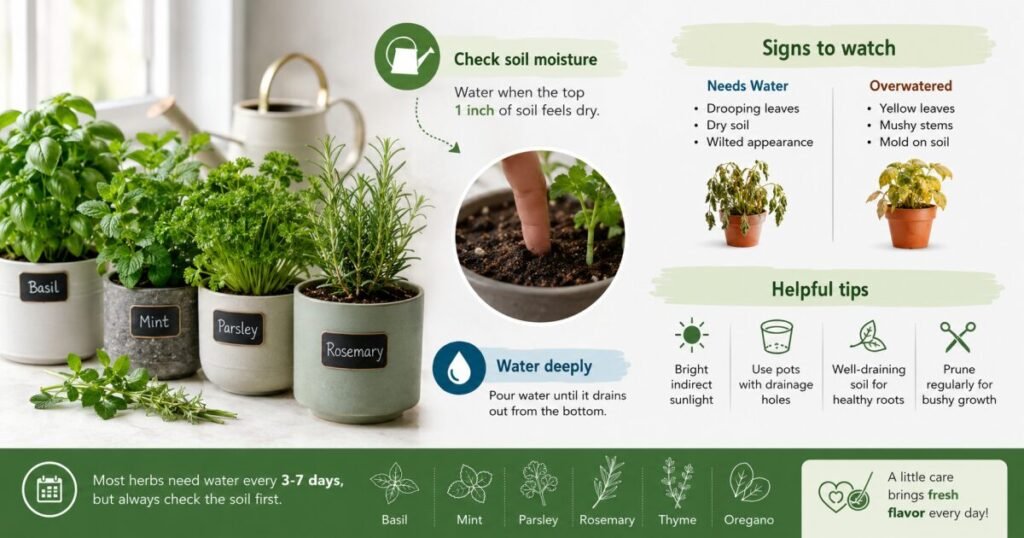
- Basil likes consistently moist soil.
- Rosemary prefers dry soil between waterings.
Growing them together often causes one plant to struggle.
Cilantro and Lavender
Cilantro prefers cooler temperatures and more moisture, while lavender thrives in dry heat.
They rarely perform well in the same container.
Common Herb Companion Planting Mistakes
Even beginner-friendly herbs can struggle when planted incorrectly.
Overcrowding Containers
Too many herbs in one pot can reduce airflow and increase disease problems.
Always leave enough space for mature growth.
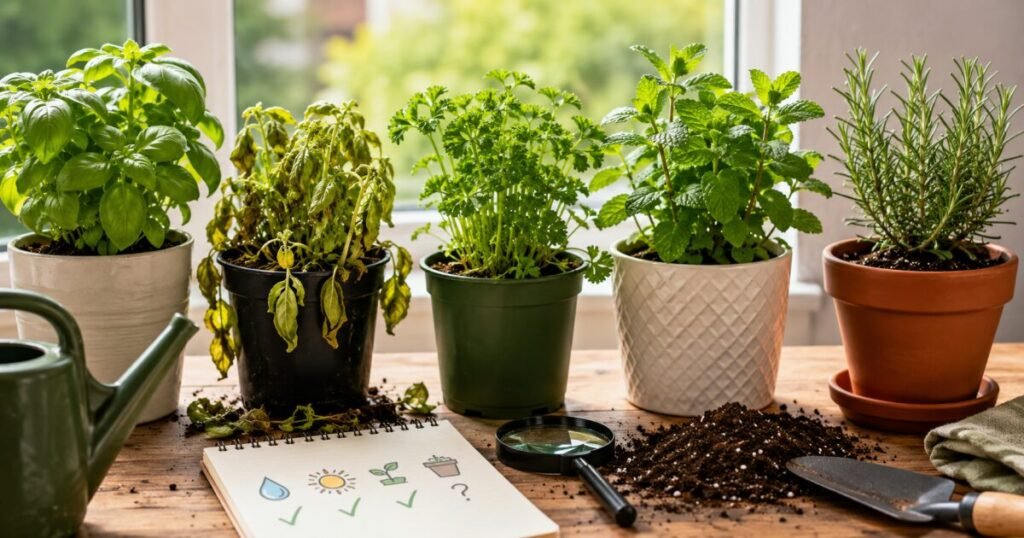
Mixing Water Needs
This is the most common mistake.
Grouping dry-loving herbs with moisture-loving herbs usually leads to:
- yellow leaves,
- root rot,
- or stunted growth.
Using Poor Drainage
Most herbs hate soggy roots.
Use containers with drainage holes and quality potting mix.
Ignoring Sunlight Requirements
Most culinary herbs need at least 6 hours of sunlight daily.
Indoor gardeners may need grow lights during the winter months.
Tips for Successful Herb Companion Planting
Group Herbs by Water Needs
This is more important than flavor compatibility.
Use Larger Containers
Larger pots help stabilize moisture and reduce root competition.
Harvest Regularly
Frequent harvesting encourages fuller growth and prevents herbs from becoming leggy.
Rotate Indoor Pots
Turn containers every few days so herbs grow evenly toward sunlight.
Frequently Asked Questions
Can all herbs be planted together?
No. Herbs have different sunlight, soil, and watering requirements. Grouping herbs with similar growing needs works best.
Can basil and rosemary grow together?
Usually not. Basil likes consistently moist soil, while rosemary prefers dry conditions.
What herbs grow best together indoors?
Some of the best indoor herb combinations include:
- basil and parsley,
- thyme and oregano,
- chives and parsley.
Should mint be planted alone?
Yes. Mint spreads aggressively and can quickly overpower nearby herbs.
What herbs grow well together in pots?
Good container herb combinations include:
- rosemary, thyme, and oregano,
- basil, parsley, and chives,
- cilantro and parsley.
Final Thoughts
Knowing what herbs can be planted together makes herb gardening much easier, especially in small indoor spaces and containers.
The secret is simple:
- group herbs with similar sunlight needs,
- match watering requirements,
- and avoid aggressive growers like mint and fennel.
For beginners, starting with compatible herb groups such as basil and parsley or rosemary and thyme can lead to healthier plants, better harvests, and less maintenance.
With the right combinations, even a small windowsill herb garden can become productive, beautiful, and easy to manage year-round.