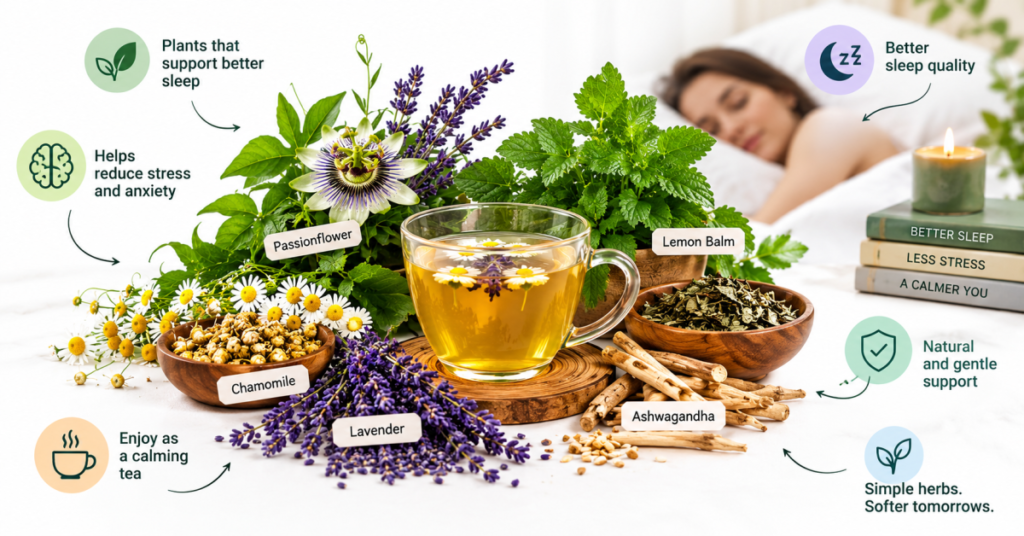
If you’re looking for the best herbs for sleep, the evidence is more complicated than most online lists suggest. Among commonly studied herbs, ashwagandha has some of the clearest evidence for improving sleep, particularly in adults with insomnia or high stress. Passionflower and oral lavender extract also show promise, especially when anxiety or mental tension is interfering with sleep. Chamomile and lemon balm are popular gentle options, but the clinical evidence is more limited. Valerian root, despite being one of the most widely marketed herbal sleep aids, has inconsistent evidence and did not show convincing efficacy for insomnia in a 2024 umbrella review.
That doesn’t mean one herb is universally “best.” The most appropriate choice depends on why you’re not sleeping. Stress-related sleep problems may call for a different approach than difficulty falling asleep, frequent nighttime waking, or occasional restlessness.
This guide looks at the natural herbs for sleep that have actually been studied in humans, explains what the research says, discusses herbs for sleep and anxiety, covers Chinese herbs for sleep, and explains how to use herbs for sleep tea safely.
Quick answer: Ashwagandha currently has some of the stronger evidence for improving sleep, while passionflower and oral lavender may be particularly useful when anxiety or stress is involved. Chamomile and lemon balm are reasonable gentle options, especially as tea. Valerian is widely used but has weaker evidence than its reputation suggests.
What Herbs Are Good for Sleep?
The answer depends on the type of sleep problem you’re experiencing. There is no single herb that consistently works for everyone, and studies often use different preparations, doses, and treatment periods.
Here is how the most commonly discussed herbs compare:
| Herb | Evidence for sleep | May be most useful for | Common form |
| Ashwagandha | Moderate | Stress-related sleep problems and insomnia | Standardized extract/capsule |
| Passionflower | Limited to moderate | Sleep problems involving restlessness or anxiety | Tea, extract |
| Lavender | Moderate for anxiety-related symptoms; less direct sleep evidence | Anxiety or mental tension affecting sleep | Oral standardized extract, aromatherapy |
| Chamomile | Limited | Gentle bedtime routine and relaxation | Tea, extract |
| Lemon balm | Limited | Relaxation, stress and combination sleep formulas | Tea, extract |
| Valerian root | Weak/inconsistent | Traditional short-term use when expectations are modest | Root, tea, extract |
| Suan Zao Ren | Promising but limited by study quality | Traditional Chinese approaches to insomnia | Herbal preparations/formulas |
1. Ashwagandha
Ashwagandha (Withania somnifera) is one of the more interesting herbs for sleep because research has examined it specifically in adults experiencing sleep problems.
A systematic review and meta-analysis of five randomized controlled trials involving 400 adults found that ashwagandha extract produced a small but statistically significant improvement in overall sleep. Benefits appeared more pronounced in people with diagnosed insomnia and in studies using doses of at least 600 mg per day for eight weeks or longer. The review also found improvements in anxiety and morning mental alertness.
This makes ashwagandha particularly relevant if your sleep problems seem connected to stress, an overactive mind, or difficulty winding down at night.
However, “natural” does not automatically mean risk-free. The National Center for Complementary and Integrative Health (NCCIH) notes that some ashwagandha preparations may help with insomnia and stress, but studies vary considerably in preparation and quality. Short-term use appears reasonably well tolerated, while long-term safety is less certain. Ashwagandha can also interact with thyroid, blood-pressure, diabetes, immune-suppressing, sedative and other medications. Rare cases of liver injury have also been reported.
Bottom line: Among natural herbs for sleep, ashwagandha is one of the more promising choices when stress and insomnia occur together.
2. Passionflower
Passionflower (Passiflora incarnata) has traditionally been used as a calming herb and is often included in herbal sleep teas and combination formulas.
The evidence is promising but smaller than many internet articles imply. NCCIH reports that a small amount of research suggests oral passionflower may increase total sleep time in adults with insomnia, while results for falling asleep and staying asleep are mixed.
That distinction is important. It is more accurate to say that passionflower may help some aspects of sleep than to claim that it is a proven treatment for insomnia.
Passionflower may be especially appealing for people whose sleep is affected by mental tension, restlessness or anxiety, although the evidence for anxiety itself is not strong enough to make definitive treatment claims.
It is available as tea, capsules and extracts. Short-term studies suggest that passionflower tea may be reasonably tolerated, but possible side effects include drowsiness, dizziness and confusion. It can also interact with medications used around surgery and should not be used during pregnancy.
Bottom line: Passionflower is a promising option for occasional sleep difficulties, particularly when relaxation is part of the goal, but the clinical evidence remains limited.
3. Lavender
Lavender is one of the most recognizable herbs associated with relaxation and sleep, but it is important to distinguish aromatherapy from oral lavender extract.
Some of the strongest clinical evidence involves a standardized oral lavender oil preparation known as Silexan, rather than simply drinking lavender tea or smelling lavender oil.
In a randomized controlled trial involving adults with anxiety and disturbed sleep, 80 mg per day of Silexan improved both anxiety symptoms and Pittsburgh Sleep Quality Index scores compared with placebo over 10 weeks.
NCCIH also notes that oral lavender products have shown benefits for anxiety, while evidence for lavender overall still needs further high-quality research. Aromatherapy may improve sleep quality, but the evidence is less definitive.
This makes lavender particularly interesting when anxiety is keeping you awake.
One important caution: don’t assume that a lavender essential oil intended for a diffuser is safe to swallow. Oral lavender supplements used in research are specific preparations with defined doses.
Bottom line: Lavender has useful evidence for anxiety, and some clinical research suggests improvements in anxiety-related sleep problems. Oral standardized extracts should not be confused with ordinary lavender essential oil.
4. Chamomile
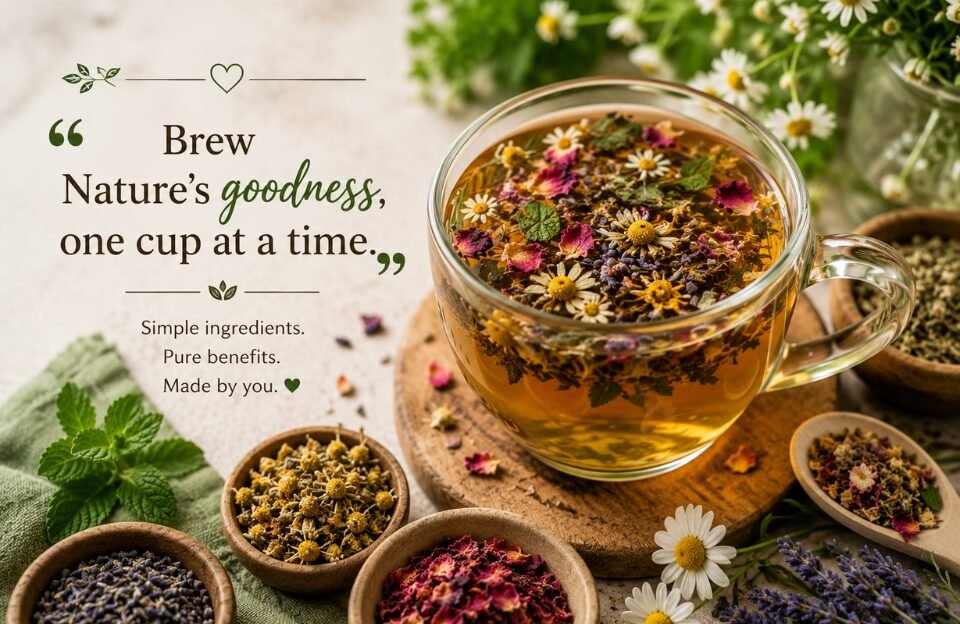
Chamomile is one of the simplest herbs to incorporate into a bedtime routine, particularly as a caffeine-free tea.
It is traditionally used for relaxation and sleep, but the scientific evidence is not as strong as its popularity might suggest. Research has produced some encouraging findings, but studies vary in design, population and preparation.
Chamomile may make sense when you want a mild, relaxing bedtime beverage rather than a concentrated supplement.
It is generally well tolerated, but people allergic to plants in the daisy family—including ragweed, chrysanthemums, marigolds and daisies—may be more likely to experience an allergic reaction. Chamomile may also interact with warfarin and potentially with sedative medicines. Pregnancy and breastfeeding safety is not well established.
Bottom line: Chamomile is a practical choice for a calming bedtime routine, but it should not be presented as a strongly proven insomnia treatment.
5. Lemon Balm
Lemon balm (Melissa officinalis) has traditionally been used for relaxation, nervous tension and digestive discomfort. It is also increasingly studied for anxiety and sleep-related outcomes.
A systematic review and meta-analysis of clinical trials found that lemon balm may improve anxiety and depressive symptoms, although the researchers emphasized substantial differences between studies and the need for better trials.
Sleep studies have also examined lemon balm in combination with other herbs, particularly valerian. That makes it difficult to determine exactly how much of the effect comes from lemon balm alone.
Lemon balm is especially convenient as a caffeine-free herbal tea, making it a reasonable option for people who prefer a gentle evening ritual. If your home doesn’t receive much sunlight, you can also explore our guide to herbs that grow in low light.
Bottom line: Lemon balm is promising for relaxation and may support sleep, but the evidence for lemon balm alone remains limited.
6. Valerian Root
Valerian root (Valeriana officinalis) may be the most famous herb on a traditional “best herbs for sleep” list—but popularity and evidence are not the same thing.
A 2024 umbrella review examined existing systematic reviews of valerian for sleep disturbances and concluded that the evidence did not provide convincing support for valerian as a treatment for insomnia. The researchers noted that valerian may improve people’s subjective perception of sleep quality, but objective and quantitative measures have not consistently confirmed an effect.
That is a more accurate conclusion than simply saying “valerian does not work.”
Valerian has a long history of use, and some regulatory authorities recognize certain valerian preparations for traditional or medicinal use in sleep disorders. However, different extracts and preparations are not interchangeable, which may partly explain why research results vary.
NCCIH considers valerian generally safe for short-term use in most adults, but long-term safety is unknown. It should not be combined with alcohol or sedatives because of the possibility of increased sleepiness.
Bottom line: Valerian is widely used and generally considered reasonably safe for short-term use, but current evidence does not justify calling it one of the strongest herbs for sleep.
The Strongest Herbs for Sleep: How Should You Rank Them?
If by “strongest” you mean the herbs with the most convincing human clinical evidence, a more careful ranking would look like this:
More promising
Ashwagandha: Has randomized-trial and meta-analysis evidence showing improvements in sleep, particularly among people with insomnia and higher stress.
Oral lavender extract: Has useful clinical evidence for anxiety and anxiety-related sleep problems, although the evidence is stronger for anxiety than for insomnia itself.
Promising but less certain
Passionflower: Some evidence suggests improvements in total sleep time, but findings for other sleep measures are mixed.
Suan Zao Ren: Increasing clinical research suggests potential benefits for sleep quality, but the number and quality of trials remain limitations.
Gentle or less established options
Chamomile and lemon balm: Useful traditional options with some clinical support, but not enough high-quality evidence to describe them as powerful insomnia treatments.
Valerian: Widely used, but current evidence for treating insomnia is inconsistent and weaker than its reputation suggests.
Herbs for Sleep and Anxiety
Sleep and anxiety often reinforce each other. Worry can make it difficult to fall asleep, while poor sleep can make stress and anxiety feel worse the next day.
If anxiety appears to be part of your sleep problem, the herbs worth paying particular attention to are:
- Ashwagandha: Research suggests some preparations may improve sleep and stress-related symptoms.
- Lavender: Oral Silexan has particularly useful evidence for anxiety, with studies also reporting improvements in sleep quality.
- Passionflower: Has some evidence for sleep benefits, although the anxiety evidence is less conclusive than popular articles often suggest.
- Lemon balm: Clinical studies suggest possible benefits for anxiety and psychological stress, but more rigorous research is needed.
The important point is that an herb may help indirectly. If anxiety is the reason you cannot relax at bedtime, reducing that mental arousal may make sleep easier without the herb acting as a conventional sleeping pill.
Chinese Herbs for Sleep
Traditional Chinese Medicine (TCM) approaches insomnia differently from many Western herbal lists. Instead of choosing one “sleep herb,” practitioners may select individual herbs or combinations based on the person’s symptoms and traditional diagnostic pattern.
One of the most important Chinese herbs associated with sleep is Suan Zao Ren, also known as sour jujube seed.
Suan Zao Ren
Suan Zao Ren is the seed of Ziziphus jujuba var. spinosa and has a long history of traditional use for sleep and restlessness.
Modern research is beginning to support its use. A systematic review and meta-analysis published in 2023 included nine randomized trials involving people with insomnia or sleep disturbances. Compared with placebo, Suanzaoren was associated with improved subjective sleep quality, although the researchers noted small sample sizes and variability between studies.
A 2024 systematic review of the Chinese herbal formula Zao Ren An Shen also found promising effects, but the overall certainty of evidence ranged from very low to low because of limitations in the available studies.
So while Suan Zao Ren is one of the more interesting Chinese herbs for sleep, it would be misleading to present it as definitively proven.
Fu Ling
Fu Ling (poria) is another commonly encountered ingredient in traditional Chinese herbal formulas. It is often combined with other herbs rather than used as a standalone sleep supplement.
Long Yan Rou
Long Yan Rou, or longan fruit, is traditionally used in TCM formulas for patterns involving fatigue, restlessness and poor sleep. However, evidence for longan alone as a treatment for insomnia is much less developed.
What Does the Research Say About Chinese Herbal Medicine Overall?
The broader research picture is promising but complicated.
Older systematic reviews found that Chinese herbal medicine may improve subjective sleep measures, but substantial differences between formulas and significant methodological limitations make it difficult to identify one universally effective treatment.
More recent research is encouraging, but the same problem remains: Chinese herbal medicine is not one single treatment. Different formulas can contain very different combinations of herbs.
That is why traditional use and modern clinical evidence should be discussed separately rather than treating them as interchangeable.
How to Use Herbs for Sleep Tea
For people who prefer a food-based or garden-based approach, herbs for sleep tea can be an appealing way to create a relaxing nighttime routine. If you want to learn more about preparing and blending herbs at home, see our guide to how to make homemade herbal tea.
The most practical herbs for tea include:
- Chamomile
- Lemon balm
- Passionflower
- Valerian root
- Certain traditional calming herbal blends
A simple bedtime tea routine can look like this:
- Choose a caffeine-free herbal tea.
- Use the preparation instructions on the product rather than assuming every dried herb has the same strength.
- Drink it roughly 30–60 minutes before bedtime if that timing fits your routine.
- Avoid very large amounts immediately before bed if nighttime bathroom trips are already a problem.
- Start with one herb rather than combining several concentrated extracts at once.
- Pay attention to how your body responds over several nights.
Can You Grow Your Own Sleep Herbs?
For a gardening-focused site, this is also where herbs become especially interesting.
Chamomile and lemon balm are practical choices for a home herb garden and can be harvested for caffeine-free tea. Lavender is another useful garden plant, although not every lavender product is appropriate for oral use. If you’re building a collection of useful plants, see our guide to herbs you can grow indoors.
Growing an herb yourself does not make its medicinal effects stronger or automatically make it safe to consume. Correct plant identification, preparation and dosage still matter.
For concentrated supplements, the amount of active compounds can be very different from the amount found in a cup of homemade tea.
Tea vs. Capsules: Which Is Better for Sleep?
There is no universal winner.
Herbal tea
Tea may be preferable when you want:
- A calming bedtime ritual
- A mild amount of an herb
- A warm caffeine-free drink before bed
- An easy way to use chamomile or lemon balm
The downside is that the amount of active compounds can vary considerably depending on the plant material, preparation and steeping time.
Capsules or standardized extracts
Capsules and standardized extracts can provide a more consistent amount of an herbal preparation.
This is particularly important when discussing research because clinical trials usually use specific extracts at specific doses, not whatever amount happens to be present in a homemade cup of tea.
For example, research on ashwagandha has often involved standardized extracts and doses around 600 mg per day, while valerian studies have used a variety of preparations and doses.
Don’t automatically assume that a clinical-trial dose applies to every commercial product.
How Long Do Herbs Take to Work for Sleep?
This varies by herb and preparation.
Some people may notice a calming effect relatively quickly, while studies of other herbs evaluate outcomes over several weeks.
Ashwagandha studies showing sleep benefits often lasted at least eight weeks, while valerian is traditionally used over a period of weeks rather than as an instant sleeping pill.
This is one reason it is misleading to compare herbs directly with prescription sleeping medications. Herbal products may have modest effects and may work differently depending on the underlying cause of poor sleep.
Are Natural Herbs for Sleep Safe?
“Natural” is not the same as “risk-free.”
Herbal products can contain pharmacologically active compounds and can interact with medications.
Some of the most important cautions include:
Ashwagandha
Ashwagandha may interact with thyroid medications, sedatives, diabetes medications, blood-pressure medications, immunosuppressants and some other drugs. It should be avoided during pregnancy and is not recommended during breastfeeding. Rare liver injuries have also been reported.
Valerian
Valerian may cause headache, stomach upset, mental dullness or vivid dreams. It should not be combined with alcohol or sedative medications. Long-term safety is uncertain.
Passionflower
Passionflower can cause drowsiness, dizziness or confusion and may interact with medicines used around surgery. It should not be used during pregnancy without medical advice.
Chamomile
Chamomile can cause allergic reactions, particularly in people who react to ragweed, chrysanthemums, marigolds or other related plants. Interactions with warfarin and some other medications have been reported.
Lavender
Oral lavender products may cause gastrointestinal side effects such as nausea, headache or burping, and there are reasons to be cautious when combining lavender with sedative medications.
Pregnancy and breastfeeding
Pregnancy is an especially important reason not to experiment with concentrated herbal sleep supplements without professional advice.
Safety information is inadequate for many sleep herbs, while some—such as ashwagandha and passionflower—are specifically advised against during pregnancy.
If you are pregnant, breastfeeding, preparing for surgery, taking prescription medication, or managing a chronic medical condition, talk with a qualified healthcare professional before using concentrated herbal products.
What About Taking Sleep Herbs Every Night?
This is where expectations should remain realistic.
Some herbs have reasonable short-term safety data, but that does not mean every herb has been proven safe for indefinite nightly use.
For example, NCCIH reports that valerian has been studied with apparent safety for up to six weeks, while long-term safety remains unknown. Ashwagandha also has insufficient long-term safety data.
If you find that you need an herbal sleep aid every night for months, it is worth asking why your sleep is consistently poor rather than simply increasing the dose or adding more herbs.
Persistent insomnia can be associated with anxiety, depression, sleep apnea, medications, chronic pain, restless legs syndrome, irregular sleep schedules and other conditions.
For chronic insomnia in adults, cognitive behavioral therapy for insomnia (CBT-I) is recommended as a first-line treatment by the American Academy of Sleep Medicine.
Herbs may be part of a bedtime routine, but they should not replace appropriate evaluation when sleep problems persist.
Pros and Cons of Herbal Sleep Aids
Potential benefits
- Some herbs have clinical research supporting improvements in sleep or anxiety.
- Several can be consumed as caffeine-free teas.
- They can be incorporated into a relaxing nighttime routine.
- Some people prefer them as a complementary option rather than immediately using medication.
- Certain herbs, particularly ashwagandha, lavender and Suan Zao Ren, have interesting areas of ongoing research.
Limitations
- Effects are generally modest and vary between individuals.
- Evidence differs substantially from one herb to another.
- Clinical studies often use standardized extracts that are not equivalent to homemade teas.
- Herbal supplements can interact with prescription medications.
- Long-term safety has not been established for many products.
- Product quality and potency can vary by manufacturer and country.
- An herb that helps one type of sleep problem may not help another.
So, What Are the Best Herbs for Sleep?
If you want the shortest evidence-based answer, start with the reason for your sleep problem rather than simply choosing the most popular herb.
For stress-related sleep problems:
Ashwagandha has some of the clearest evidence among the herbs discussed here, although long-term safety and individual suitability still matter.
For anxiety-related sleep disruption:
Lavender, particularly standardized oral lavender preparations, has useful evidence for anxiety and related sleep symptoms. Passionflower may also be worth considering, although its sleep evidence is less consistent.
For a gentle bedtime tea:
Chamomile and lemon balm are practical choices, while passionflower can also be used as a tea. Their evidence is less robust than their popularity suggests, but they can fit comfortably into a relaxing nighttime routine.
For traditional Chinese medicine:
Suan Zao Ren is one of the most extensively studied Chinese herbs for sleep, with recent reviews showing promising short-term improvements but continued concerns about study quality and long-term evidence.
For valerian:
It remains popular and has a long history of use, but current high-level evidence does not support calling it one of the strongest proven herbs for insomnia.
Key Takeaways
- The best herbs for sleep depend on what is causing your sleep difficulty.
- Ashwagandha has some of the strongest evidence among commonly studied herbs for improving sleep, particularly in adults with insomnia or stress.
- Lavender appears particularly useful when anxiety contributes to sleep problems, although evidence is stronger for anxiety than for insomnia itself.
- Passionflower may improve total sleep time, but research on other sleep measures is mixed.
- Chamomile and lemon balm are reasonable gentle choices for a caffeine-free bedtime routine, but their clinical evidence is limited.
- Valerian root is widely used, but a 2024 umbrella review found no convincing evidence that it treats insomnia, despite some evidence for subjective improvements in sleep quality.
- Suan Zao Ren is one of the most promising Chinese herbs for sleep, although more high-quality research is needed.
- Herbal teas are generally milder and less standardized than concentrated extracts.
- “Natural” does not mean risk-free. Herbs can interact with medications and may not be appropriate during pregnancy or before surgery.
- Persistent or chronic insomnia deserves attention to its underlying cause. CBT-I is a first-line evidence-based treatment for chronic insomnia in adults.
Frequently Asked Questions
What are the best herbs for sleep?
Ashwagandha, lavender, and passionflower are among the more promising herbs for sleep based on human research. Chamomile and lemon balm may also support relaxation and sleep quality, but the evidence is more limited. Valerian is widely used, although recent reviews suggest its effectiveness for insomnia is less certain than its popularity implies.
What herbs help with sleep and anxiety?
Ashwagandha and oral lavender extract have useful research supporting improvements in both anxiety-related symptoms and sleep. Passionflower may also help with relaxation and anxiety, although the evidence is less conclusive.
What is the best herbal tea for sleep?
Chamomile, lemon balm, and passionflower are commonly used in caffeine-free bedtime teas. They can be used alone or combined as part of a relaxing nighttime routine. Valerian is also available as tea, but its strong taste and inconsistent evidence for insomnia make it a less appealing choice for many people.
How long does it take for herbs to help with sleep?
The timeframe varies by herb, preparation, and individual. Some herbs may have a calming effect relatively quickly, while studies of supplements such as ashwagandha often evaluate sleep improvements after several weeks of regular use. Herbal sleep aids should not be expected to work like an immediate prescription sleeping pill.
Are herbal sleep aids safe during pregnancy?
Not necessarily. Safety information is inadequate for many sleep herbs. Ashwagandha should be avoided during pregnancy, while NCCIH advises against passionflower during pregnancy. Valerian also lacks sufficient pregnancy safety information. Anyone who is pregnant or breastfeeding should consult a qualified healthcare professional before using herbal sleep supplements.