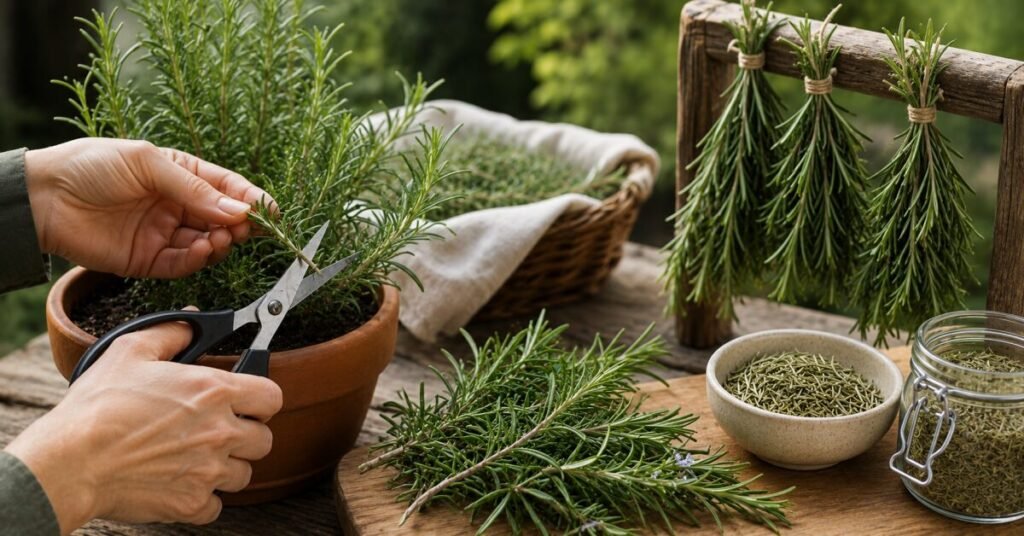
To harvest rosemary, snip tender green stem tips with clean shears any time the plant is actively growing, taking no more than a third of the plant at once. Cut just above a leaf node to encourage new branching. Rosemary is a perennial in most of the U.S., so light, regular harvesting all season actually helps the plant grow fuller and bushier.
Rosemary is one of the most forgiving herbs to harvest, but it’s also easy to overdo it and stress a plant that took a year or two to fill out. Here’s how to cut it correctly, keep it thriving long-term, what “harvesting seeds” actually means for rosemary specifically, and how to dry it for storage.
When to Harvest Rosemary
Rosemary can be harvested nearly year-round in warmer zones (7 and up), since it’s an evergreen perennial there. In colder zones, potted rosemary brought indoors for winter can still be harvested lightly. The ideal time for a larger harvest is just before the plant flowers, when its aromatic oils are most concentrated; this timing shifts by climate, typically late spring to early summer in temperate regions.
How to Harvest Rosemary So It Keeps Growing
The rule that matters most: never remove more than about a third of the plant at once. Taking more than that stresses the root system and can set growth back significantly, especially on younger plants.
- Use sharp, clean pruning shears or herb snips. Dull tools crush stems instead of cutting cleanly, which slows healing and invites disease.
- Cut just above a leaf node (the point where leaves emerge from the stem). This is where new growth branches out, so cutting here encourages a fuller, bushier plant instead of one long bare stem.
- Harvest the tender green tips for immediate use. These are the newest growth, softest in texture, and best for cooking fresh.
- Harvest older, woodier stems if you want longer branches for drying, skewers, or infusions; just strip the leaves off afterward rather than eating the woody stem itself.
- Spread harvests across the whole plant rather than repeatedly cutting the same spot, so growth stays even.
Why light, regular harvesting helps: rosemary responds to pruning the way most woody herbs do; cutting stimulates new branching at the node below the cut. A plant that’s never harvested tends to get leggy and sparse at the base over time.
How to Strip Rosemary Leaves From Woody Stems
Hold the top of a woody stem between your fingers (fingernails work best) and pull downward in one motion. The needle-like leaves strip off cleanly, leaving a bare stem you can discard, use for skewers, or add to a smoker for flavor.
Can You Harvest Rosemary Seeds?
Technically yes, but it’s rarely worth it. Rosemary seeds have notoriously low and slow germination rates, often well under 20%, and can take three to four weeks just to sprout, with inconsistent results even under ideal conditions. This is the detail most guides skip, and it matters: if your goal is more rosemary plants, propagating from a 4–6 inch stem cutting rooted in water or moist soil is faster and far more reliable than growing from seed.
If you still want to try harvesting seeds, let a few flower stalks stay on the plant until the small seed pods dry and turn brown, then collect and store them in a paper envelope in a cool, dry place.
How to Harvest and Dry Rosemary
- Refrigerator (short-term): stand cut stems in a glass of water like fresh-cut flowers; keeps for about a week.
- Air-drying: bundle several stems with twine and hang upside down in a dry, well-ventilated spot out of direct sun for 1–2 weeks.
- Oven or dehydrator: spread stems on a tray at the lowest heat setting (around 170°F) for 1–4 hours, checking frequently, until leaves crumble easily.
- Storage: once fully dry, strip leaves and store whole (not crushed) in an airtight jar out of light; whole leaves hold their essential oils and flavor longer than pre-crushed rosemary.
Learn more: How to Dry Herbs at Home Without Losing Flavor (Best Methods for Every Herb Type)
Rosemary Oil for Hair
Rosemary oil for hair growth has become a popular search topic, largely from a small 2015 clinical trial that compared rosemary oil to minoxidil for androgenetic alopecia and found comparable results with fewer reported side effects (source). That’s a genuinely interesting finding, but it’s one modest trial, not the kind of large-scale evidence needed to call rosemary oil a proven hair-growth treatment. If you’re interested in trying it, a basic approach is diluting a few drops of rosemary essential oil into a carrier oil (like jojoba or coconut oil) and massaging it into the scalp a few times a week, or steeping fresh rosemary in hot water to cool for a rinse. This topic deserves its own deeper, properly sourced guide rather than a rushed paragraph here; we’ll be covering it in full separately.
Key Takeaways
- Harvest no more than a third of the plant at a time, cutting just above a leaf node to encourage new growth.
- Regular light harvesting keeps rosemary bushy; neglecting it leads to legginess.
- Growing rosemary from seed is technically possible, but unreliable cuttings are the more dependable propagation method.
- Air-drying or low-heat oven drying both work well; store dried leaves whole, not crushed, for better flavor retention.
- Rosemary oil’s hair-growth evidence is promising but limited to small studies — treat it as an emerging finding, not a proven remedy.
FAQs
1. Why won’t my rosemary seeds germinate?
Rosemary seeds naturally have low, slow germination rates, often under 20%, which is why most growers propagate new plants from stem cuttings instead of seed.
2. What’s the best way to dry rosemary for long-term storage?
Air-drying in small bundles or using a dehydrator on low heat both work well; store the dried leaves whole in an airtight container to preserve flavor longer than pre-crushed rosemary.
3. Is rosemary safe for cats?
Yes, the ASPCA lists rosemary as non-toxic to cats, and nibbling a small amount of the fresh plant isn’t considered dangerous. Large quantities can still cause mild digestive upset, and concentrated rosemary essential oil is a separate risk that shouldn’t be applied to or ingested by cats.
4. Is rosemary safe for dogs?
Yes, the ASPCA also lists rosemary as non-toxic to dogs, and small amounts of fresh or dried rosemary in food are generally considered safe. As with cats, overdoing it can cause stomach upset, and concentrated essential oil forms carry more risk than the whole plant.
5. Does rosemary oil actually help hair growth?
A small clinical trial found rosemary oil performed comparably to minoxidil for hair regrowth, but the evidence is limited to that one modest study, so it’s best treated as a promising early finding rather than a proven treatment.