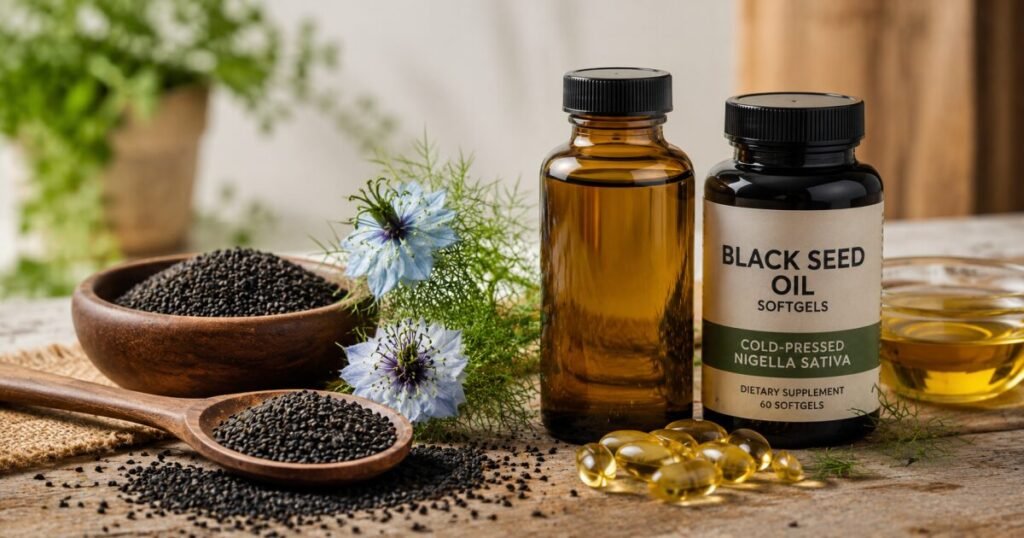
Amazing Herbs is a nutritional supplement brand that sells cold-pressed black seed oil (Nigella sativa) in liquid, capsule, and whole-seed form. The company markets it for digestive, immune, joint, and general wellness support. Independent research on Nigella sativa shows real, evidence-backed effects in some areas, but the brand’s own marketing claims go further than current clinical evidence fully supports.
Black seed oil has one of the longer histories in herbal supplements, and Amazing Herbs is one of the older, more established brands selling it in the U.S. If you’ve found this page while comparing “Amazing Herbs black seed oil capsules” against the liquid version, or looking for a straight answer on whether the reviews hold up, here’s the independent context the brand’s own product pages don’t provide.
What Is Black Seed Oil?
Black seed oil comes from the seeds of Nigella sativa, a flowering plant native to South Asia, the Middle East, and parts of Europe. It’s also called black cumin seed oil or kalonji oil. The seeds contain thymoquinone, the compound most researchers point to as the source of the plant’s anti-inflammatory and antioxidant activity.
Amazing Herbs Brand
Amazing Herbs was founded in 1990 and says it was the first company to bring black seed oil into the U.S. supplement market, later pioneering cold-pressed extraction for its liquid and softgel products. The company has since expanded into major retailers, including Whole Foods, Vitamin Shoppe, and GNC, and sells three main formats:
- Liquid oil the traditional format, taken by the spoonful
- Softgel capsules a no-taste alternative to the liquid
- Whole seeds for grinding, cooking, or brewing
The brand states its seeds are sourced from Turkey and Egypt and grown without synthetic pesticides, though as with any supplement brand’s sourcing claims, this isn’t independently verified by a third party in the product listings themselves.
What the Research Actually Shows
This is the part every ranking product page skips. Peer-reviewed research on Nigella sativa is genuinely active, but the strength of evidence varies a lot by claim:
| Claimed Benefit | Evidence Strength | What Research Actually Shows |
| Digestive comfort | Moderate | Small clinical trials show reduced bloating and indigestion symptoms with regular use |
| Anti-inflammatory effects | Moderate | Multiple studies link thymoquinone to reduced inflammatory markers |
| Blood pressure/cardiovascular support | Emerging | Some randomized trials show modest improvements; not yet conclusive |
| Immune support | Weak-to-moderate | Mostly preclinical and small human studies; promising but early |
| Weight/metabolic effects | Weak | Mixed results across trials; not established |
| Hair, skin, joint claims | Weak | Largely traditional-use based, limited controlled human trials |
In plain terms: black seed oil has more research behind it than most trendy supplements, but “may support” and “clinically proven” are not the same thing. Most of the stronger evidence points to digestive and inflammatory support specifically, not the full list of conditions often listed on supplement packaging.
What Buyers Should Know Before Trying It
- Typical dosage in studies ranges from 1 to 3 grams of seed or roughly 1 teaspoon of oil daily. Check this against the specific product’s serving size rather than assuming more is better.
- Drug interactions are possible. Black seed oil may affect blood clotting and blood sugar, so it’s worth a conversation with a doctor or pharmacist if you take blood thinners, diabetes medication, or blood pressure medication.
- Not recommended during pregnancy without medical guidance, since safety data in pregnant and breastfeeding people is limited.
- Supplements aren’t FDA-evaluated for efficacy. Like all dietary supplements in the U.S., Amazing Herbs’ products carry the standard disclaimer that claims haven’t been evaluated by the FDA and aren’t intended to diagnose, treat, cure, or prevent disease.
- Taste and format matter for consistency. Reviewers across retail sites consistently mention the liquid oil has a strong, pungent taste; this is why the capsule format exists, though capsules typically cost more per serving.
Liquid vs. Capsules: Which to Choose
| Factor | Liquid Oil | Capsules |
| Taste | Strong, pungent, an acquired taste | Neutral — no taste |
| Dosage precision | Requires measuring | Pre-measured per capsule |
| Cost per serving | Usually lower | Usually higher |
| Versatility | Can be used in cooking, on skin, or in hair | Oral use only |
| Absorption speed | Slightly faster | Slightly slower (digestion time) |
If you’re new to black seed oil, capsules are the easier starting point. If you already know you tolerate the taste, the liquid is more cost-effective long-term.
Key Takeaways
- Amazing Herbs is a long-established black seed oil brand with real market history, not a newcomer supplement.
- Research on Nigella sativa is genuinely promising for digestive comfort and inflammation, but weaker for many of the broader claims often listed on packaging.
- Capsules and liquid oil deliver the same active compound — the choice comes down to taste tolerance and cost per serving.
- Check with a healthcare provider before use if you’re on blood thinners, diabetes medication, or are pregnant.
FAQs
Is Amazing Herbs black seed oil FDA approved?
No, like all dietary supplements sold in the U.S., it is not FDA-evaluated for efficacy, and its claims have not been reviewed or approved by the FDA.
Do Amazing Herbs black seed oil capsules work the same as the liquid oil?
Yes, both deliver the same active compound (thymoquinone) from the same seed source — the difference is taste, cost per serving, and how precisely the dose is measured.
What do reviews of Amazing Herbs black seed oil generally say?
Across retailer listings, recurring themes include satisfaction with digestive comfort and product quality, alongside frequent mentions that the liquid oil’s strong taste takes some getting used to.
How much black seed oil should I take daily?
Clinical studies commonly use doses in the 1–3 gram range (roughly 1 teaspoon of oil), but the right amount depends on the specific product’s concentration, so following the label and checking with a healthcare provider is the safer approach.
Can black seed oil interact with medications?
Yes, it may affect blood clotting and blood sugar levels, so it’s worth discussing with a doctor or pharmacist before use if you take blood thinners, diabetes medication, or blood pressure medication.