Quick Answer:
Agrimony (Agrimonia eupatoria) is a perennial, yellow-flowered herb in the rose family that has been used for centuries as a digestive bitter, gentle astringent, and traditional wound-care remedy. Home gardeners grow it for its tall “church steeple” flower spikes and harvest the leaves and flowering tops to dry for tea. It’s easy to grow in USDA zones 4–9, tolerates poor soil, and needs little more than full sun and good drainage.
If you’ve stumbled across agrimony while browsing seed catalogs or old herbalism books, you’ve found one of the most quietly useful plants a home garden can hold. It isn’t flashy like lavender or trendy like ashwagandha. Still, it has a 1,500-year paper trail in European and North American folk medicine, a modern research base that’s starting to catch up with the folklore, and from a gardener’s point of view it’s almost impossible to kill.
This guide covers what agrimony actually is, what current evidence says about its traditional uses, how to grow it from seed to harvest in a US or Canadian backyard or container garden, and how to prepare it safely as a tea. We’ll also flag where the research is thin, where popular claims outpace the evidence, and what to watch for if you decide to try it.
What Is Agrimony?
Definition
Agrimony is the common name for plants in the genus Agrimonia, part of the Rosaceae (rose) family. The species most often grown and used medicinally is common agrimony, Agrimonia eupatoria, a perennial herbaceous plant with small yellow star-shaped flowers. North America has several native relatives, including A. gryposepala, A. parviflora, A. pubescens, and A. striata, which look similar and are sometimes used interchangeably by foragers, though A. eupatoria is the species with the most research behind it.
Where the Name Comes From?
The genus name likely traces to the Greek argemone, referring to plants used to treat eye ailments, and the species name eupatoria honors Mithridates VI Eupator, an ancient king credited with popularizing herbal antidotes. Over the centuries agrimony picked up a long list of folk nicknames church steeples, cocklebur, sticklewort, liverwort, philanthropos, and garclive among them mostly describing either its tall flower spikes or its historical uses.
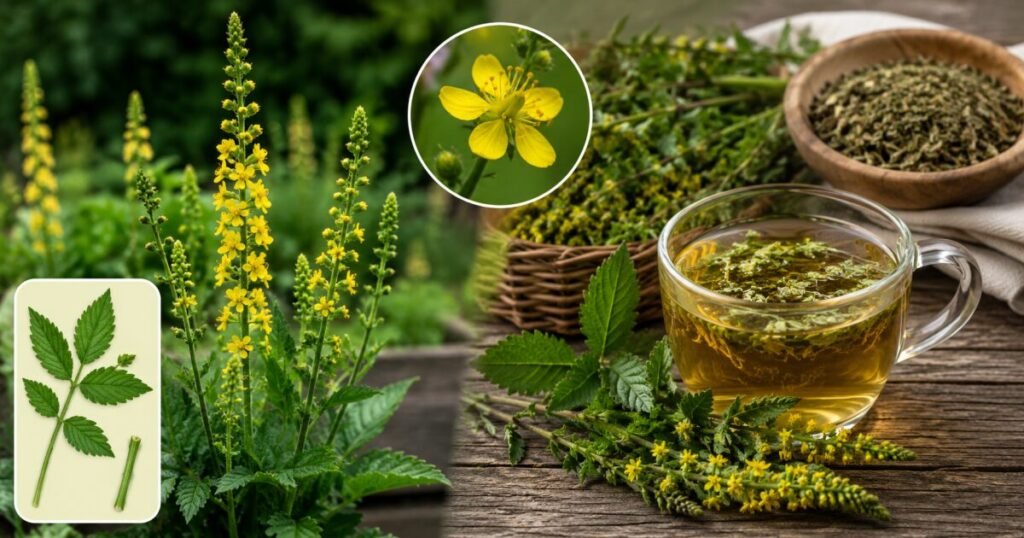
What the Plant Looks Like
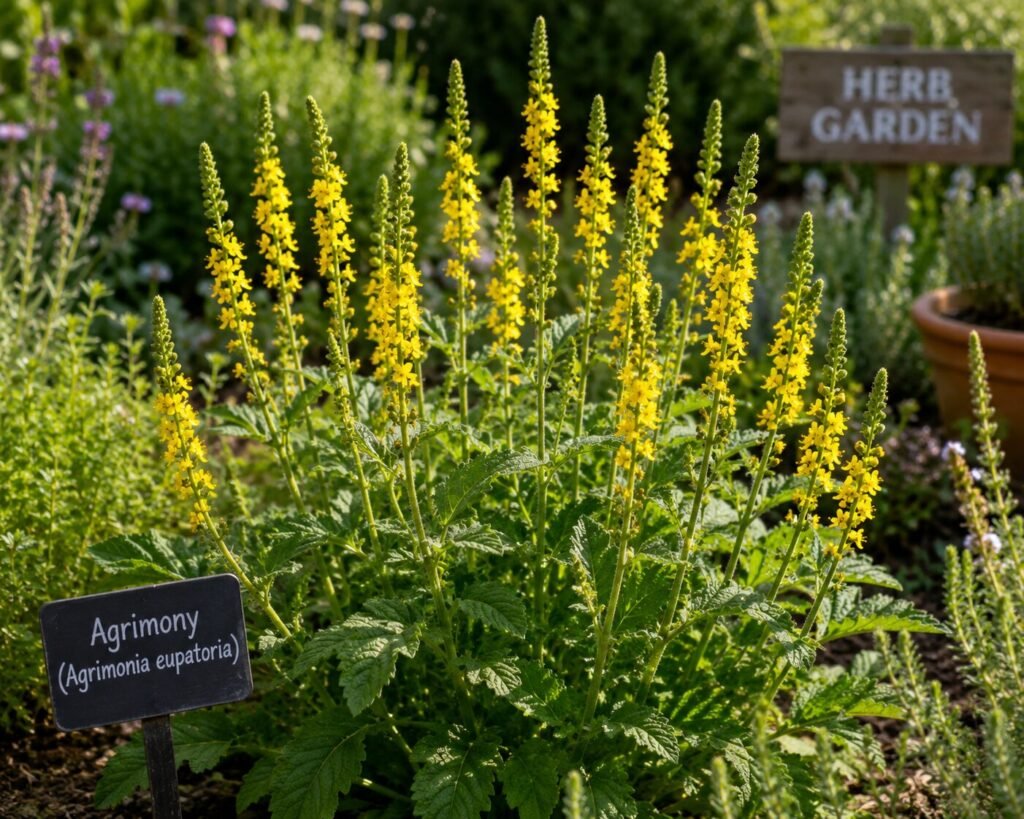
- Height: 2–4 feet tall, occasionally up to 5 feet in ideal conditions
- Leaves: Pinnate (feather-like), with 5–8 serrated leaflets per stem, silvery-green and slightly hairy underneath
- Flowers: Small, five-petaled, bright yellow, packed densely along narrow terminal spikes that bloom from early summer into early fall
- Fruit: Small burred seed capsules (“achenes”) that hook onto animal fur or clothing for seed dispersal; this is also why agrimony spreads easily in the wild
- Root: A short, tough rhizome with fibrous roots
Agrimony vs. Look-Alike Herbs
People sometimes confuse agrimony with other yellow-flowered roadside herbs. Here’s a quick way to tell them apart.
| Herb | Family | Flower | Leaf Shape | Common Confusion |
| Agrimony (Agrimonia eupatoria) | Rose (Rosaceae) | Small yellow, 5 petals, tall spike | Pinnate, serrated, 5–8 leaflets | Confused with mullein or goldenrod at a glance |
| Mullein | Figwort (Scrophulariaceae) | Larger yellow, on a thick single stalk | Large, fuzzy, undivided basal leaves | Both have tall yellow flower spikes |
| Goldenrod | Aster (Asteraceae) | Plume-like clusters, not spiked | Long, narrow, undivided | Both bloom late summer in similar habitats |
| Tormentil (Potentilla erecta) | Rose (Rosaceae) | Small yellow, 4 petals | Palmate, toothed | Also an astringent Rosaceae herb, easily mixed up in old herbals |
Agrimony Herb Benefits: What Tradition and Research Say
Agrimony’s reputation rests mostly on centuries of traditional use, with a growing but still limited body of modern lab and animal research. Written accounts of its beneficial effects date back as far as the 4th to 5th centuries, and it was mentioned in the Old English Herbarium from the 10th century (source). Here’s what’s actually behind the reputation, organized by how strong the evidence is.
1. Digestive Support
Agrimony is classified as a bitter herb. Bitter compounds stimulate saliva and stomach acid production, which is the traditional reasoning behind using it before meals to support digestion (source). Its water extracts, prepared as infusions and decoctions, are traditionally used for digestive tract diseases, and it has folk use in gallbladder complaints and mild diarrhea.
2. Astringent, Wound-Supporting Properties
This is agrimony’s oldest and best-documented traditional role. The leaves are rich in tannins, plant compounds that tighten tissue and reduce minor bleeding when applied topically. Historically, crushed leaves or strong decoctions were used as washes or poultices on cuts, scrapes, and skin irritations. This lines up with modern phytochemical work confirming that agrimony’s dominant secondary metabolites are polyphenols including flavonoids, phenolic acids, and tannins, with reported antioxidant, antiviral, hepatoprotective, and antimicrobial effects (source).
3. Sore Throat and Mild Cough
Agrimonia eupatoria water extracts are traditionally used for treating airway and urinary system diseases. As a gargle or tea, agrimony’s astringent, mildly anti-inflammatory nature was traditionally thought to soothe an irritated throat, though this hasn’t been tested in controlled human trials.
4. Antioxidant and Anti-Inflammatory Activity (Lab Evidence)
A peer-reviewed study on agrimony infusion found measurable antioxidant activity along with anti-inflammatory and pain-reducing effects in animal models. The study focused on the anti-inflammatory and analgesic potential of agrimony infusion, evaluating antioxidant potential using DPPH, superoxide anion, hydroxyl radical, and SNAP assays, plus anti-inflammatory activity in LPS-stimulated macrophages and a mouse paw-edema model (source). This is meaningful preclinical evidence but it’s lab and animal data, not proof of the same effect in people drinking a cup of tea.
5. Blood Sugar Interest (Early-Stage Research)
Agrimony has a documented history as a traditional anti-diabetic plant, with published research on its actions on hyperglycemia, cellular glucose metabolism, and insulin secretion. Laboratory studies have also shown agrimony extracts can inhibit the enzyme α-glucosidase in the intestines, which in turn slows glucose absorption. This is a genuinely interesting research direction, but it is not a reason to substitute agrimony for prescribed diabetes medication.
6. Antimicrobial and Antiviral Activity (Lab Evidence)
A review of recent studies found agrimony’s antiviral activity is fairly well documented, with an ethanolic extract showing inhibitory effects against mengovirus (Columbia SK virus) as well as activity against negative-sense RNA viruses. Separate phytochemical work testing agrimony extracts against a range of bacteria and yeasts confirmed measurable antimicrobial potential linked to its polyphenol content, though the researchers noted that activity varies significantly depending on the plant’s growing conditions, harvest timing, and how it’s processed after harvest a useful reminder that not all dried agrimony is chemically identical.
7. Liver and Gallbladder Support (Traditional Use)
Agrimony’s bitter compounds have traditionally been used in Germany to support liver and gallbladder function, including in cases of gallstones and cirrhosis, and in gallbladder disease linked to excess stomach acid. This remains a traditional indication rather than a clinically proven one.
Where the Evidence Runs Out
It’s worth being direct about this: a comprehensive scientific review of agrimony’s therapeutic effects concluded that there is a real lack of clinical studies on this plant in human subjects, even while the available research suggested meaningful potential. Almost everything above comes from traditional use, lab (in vitro) work, or animal studies — not large human clinical trials. That doesn’t make the traditional use worthless, but it does mean agrimony should be treated as a supportive, gentle herb rather than a proven treatment for any medical condition.
What Is Agrimony Used For? Common Preparations
| Preparation | How It’s Made | Traditional Use |
| Tea / infusion | Dried leaves and flowering tops steeped in hot water, 10–15 minutes | Digestive support, sore throat, general tonic |
| Decoction | Dried herb simmered in water for 10–20 minutes | Stronger extraction for topical washes or gargles |
| Tincture | Herb steeped in alcohol for several weeks | Concentrated dose, longer shelf life |
| Poultice | Fresh or rehydrated leaves crushed and applied directly | Minor cuts, scrapes, bruises |
| Wash/compress | Strong decoction cooled and applied with a cloth | Skin irritation, minor wounds |
| Dried herb in potpourri | Dried flowering tops | The apricot-like scent of the flowers is used in sachets and, historically, to flavor homemade beer |
Agrimony Tea: How to Brew It
Agrimony tea is the most common way home gardeners actually use what they grow. Here’s a simple, safe method.
What you need:
- 1–2 teaspoons dried agrimony leaf and flower (or a small handful of fresh, chopped)
- 1 cup (240 ml) boiling water
- A tea strainer or infuser
- Honey or lemon, optional
Steps:
- Place the dried agrimony in a strainer or directly in a mug.
- Pour boiling water over it.
- Cover and steep for 10–15 minutes. Agrimony is a bitter herb, so a longer steep brings out more of the astringent, tannic flavor some people prefer a shorter 5-minute steep for a milder cup.
- Strain and drink. The flavor is grassy, slightly bitter, and tea-like, closer to a black tea than a floral herbal blend.
- Add honey or lemon if the bitterness is too strong for your taste.
How much to drink: Traditional use suggests one to three cups a day. One small study on agrimony’s effect on lipid profile and antioxidant status had participants drink an infusion made from 1 gram of dried aerial parts steeped in 200 mL of boiled water, twice daily for one month a useful real-world reference point, though it was a small study and not a substitute for individualized medical advice.
How to Grow Agrimony at Home
This is where agrimony really shines for a home gardener: it’s one of the lowest-maintenance perennial herbs you can plant.
Growing Conditions at a Glance
| Factor | Requirement |
| USDA Hardiness Zone | 4–9 (most sources cite 5–9 or 6–9; it tolerates a wide range) |
| Sunlight | Full sun (6–8 hours); tolerates light afternoon shade in hot climates |
| Soil type | Loamy, sandy, or average soil; tolerates poor and alkaline soil |
| Soil pH | 6.0–7.5, slightly acidic to neutral is ideal |
| Drainage | Must be well-drained standing water is the main way to kill this plant |
| Watering | Regular watering while establishing; drought-tolerant once mature |
| Mature size | 2–4 feet tall, roughly 1–3 feet wide |
| Spacing | 12–18 inches apart |
| Bloom time | Early summer through early fall |
| Fertilizer | Not required; agrimony actually prefers lean soil |
Starting Agrimony From Seed
Agrimony seeds need a period of cold before they’ll germinate a process called cold stratification. You have two options:
Option 1: Fall direct-sow (simplest)
- In autumn, sow seeds directly in the garden, about ¼ inch deep, spaced 6–12 inches apart.
- Let winter cold do the stratification work for you.
- Seedlings emerge naturally in spring once the soil warms.
Option 2: Cold-stratify indoors, then start early
- Mix seeds into a small bag of moist seed-starting mix.
- Seal and refrigerate for about 4–8 weeks, checking periodically to keep the mix from drying out.
- Remove from the fridge, sow into trays or small pots, and place in a warm, bright spot.
- Transplant outdoors after your last frost date, once seedlings are at least 4 inches tall.
Propagating by Root Division
Established agrimony plants can also be divided:
- Dig up a section of an established plant in spring or fall.
- Cut a 3-inch section of root.
- Replant the mother plant immediately.
- Lay the cut root section on top of moist potting mix, cover lightly, mist, and keep in bright indirect light (not direct sun) until new shoots appear, usually within a few weeks.
Container Growing
Agrimony can be grown in pots, though it typically stays more compact than garden-grown plants. Use a container at least 12 inches deep with drainage holes, a well-draining potting mix, and place it somewhere that gets several hours of direct sun. Note: agrimony is a poor houseplant candidate; it’s too tall and too sun-hungry for most indoor spaces, so treat container growing as an outdoor patio or balcony option rather than a windowsill herb.
Ongoing Care
- Watering: Keep soil consistently moist while plants establish (first 4–6 weeks). After that, water only when the top couple of inches of soil are dry. Overwatering is the most common cause of failure, leading to root rot and powdery mildew.
- Fertilizing: Skip it unless growth looks stunted. Agrimony genuinely does better in lean soil.
- Pruning: Cut back spent flower stalks after blooming to tidy the plant and reduce self-seeding, since the burred seed pods spread readily.
- Pests and disease: Generally trouble-free. Watch for powdery mildew in overly damp conditions and occasional gall midge.
- Companion planting: Works well alongside other low-maintenance perennial herbs and in wildflower or pollinator borders — the flowers attract bees and hoverflies.
Harvesting Agrimony
For the best balance of flavor and traditional medicinal compounds, harvest the leaves and flowering tops in mid-summer, just as the flower spikes begin to open. Cut whole stems, bundle a few together, and hang them upside down in a dry, dark, well-ventilated space for about a week until crisp. Store the dried herb in an airtight jar away from light, where it will keep its potency for roughly a year.
Agrimony: Pros and Cons for the Home Gardener and Herb User
Pros
- Extremely low-maintenance once established
- Tolerates poor, dry, or alkaline soil
- Long bloom period that supports pollinators
- Easy to propagate from seed or root division
- Long history of traditional use as a mild digestive and topical remedy
- Dual-purpose plant: ornamental in the border, functional in the tea cupboard
Cons
- Needs full sun and doesn’t perform well as an indoor plant
- Seeds require cold stratification, adding an extra step for beginners
- Burred seed pods stick to clothing and pet fur and can self-seed aggressively if not managed
- Safety in pregnancy and breastfeeding hasn’t been well studied, so it’s best avoided in those cases
- Agrimony has reportedly caused photodermatitis (skin sensitivity to sunlight) in some cases
- Human clinical research is limited, so most benefits remain traditional rather than clinically proven
Common Misconceptions About Agrimony
“Agrimony is a cure for diabetes.”
Not accurate. It has a documented traditional and early lab-research history around blood sugar, but this doesn’t mean it can replace medication or manage diabetes on its own. Anyone managing blood sugar should talk to a doctor before adding agrimony and should never stop prescribed treatment in favor of it.
“All yellow-flowered roadside herbs with tall spikes are agrimony.”
Mullein and goldenrod are frequently mistaken for it. Check the leaf shape (agrimony’s pinnate, serrated leaflets are the giveaway) before harvesting anything from the wild.
“Because it’s traditional and natural, it’s automatically safe for everyone.”
No contraindications have been formally identified, but that’s largely because safety and efficacy data, especially in pregnancy and lactation is lacking</cite>, not because it’s been proven safe. “No data” and “confirmed safe” are not the same thing.
“Agrimony and evening primrose (sometimes marketed loosely as ‘agrimony oil’) are the same thing.”
They’re not related. Stick to the botanical name Agrimonia eupatoria when buying seeds or dried herb to avoid confusion with unrelated products sold under similar-sounding names.
Key Takeaways
- Agrimony (Agrimonia eupatoria) is a hardy perennial herb in the rose family, best known for its yellow “church steeple” flower spikes.
- Traditional uses center on digestion, mild throat and skin irritation, and wound care, backed mainly by centuries of folk use plus emerging lab and animal research.
- Human clinical trials are limited, so treat agrimony as a gentle, traditional support herb rather than a proven medical treatment.
- It’s one of the easiest herbs to grow in a US or Canadian garden: full sun, well-drained soil, minimal fertilizing, and it tolerates poor soil better than most plants.
- Seeds need cold stratification before they’ll germinate fall direct-sowing is the simplest method.
- Agrimony tea is bitter and tea-like; steep 10–15 minutes and adjust time to taste.
- Avoid use in pregnancy and breastfeeding due to lack of safety data, and be aware of possible sun sensitivity (photodermatitis).
Frequently Asked Questions
Can you eat agrimony leaves raw?
The leaves are not typically eaten raw in Western culinary tradition; they’re bitter and astringent. Agrimony is almost always prepared as a tea, decoction, or tincture rather than eaten fresh.
Does agrimony tea taste good?
It’s bitter and grassy, closer to a strong black tea than a floral herbal blend. Many people add honey or lemon, or shorten the steep time to soften the bitterness.
Is agrimony safe to drink every day?
There’s no strong human research establishing a definitive daily safety threshold. Traditional use suggests one to three cups a day for limited periods, but anyone with a medical condition, who is pregnant or breastfeeding, or who takes regular medication should check with a healthcare provider first, especially since safety in pregnancy hasn’t been well studied.
Where does agrimony grow naturally in North America?
Common agrimony (A. eupatoria) was introduced from Europe, but several native Agrimonia species including A. gryposepala, A. parviflora, A. pubescens, and A. striata grow wild across much of the US and Canada, often in fields, woodland edges, and disturbed soil.
Can I grow agrimony indoors?
Not well. It grows too tall and needs too much direct sun for most indoor spaces. It’s better suited to an outdoor garden bed or a sunny patio container.
What part of the agrimony plant is used?
The aerial parts leaves and flowering tops- are what’s harvested and dried for tea, tinctures, and topical preparations. The root isn’t typically used medicinally; it’s mainly relevant for propagation by division.
Is agrimony invasive?
It can self-seed readily thanks to its burred seed pods, which catch on clothing, fur, and feathers for dispersal. Deadhead spent flower spikes after bloom