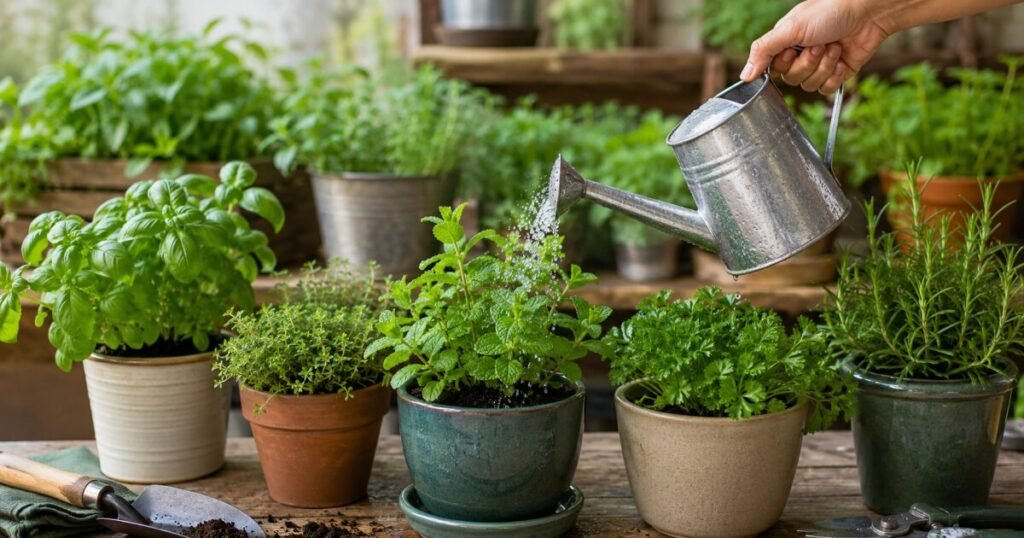
How often to water herbs?
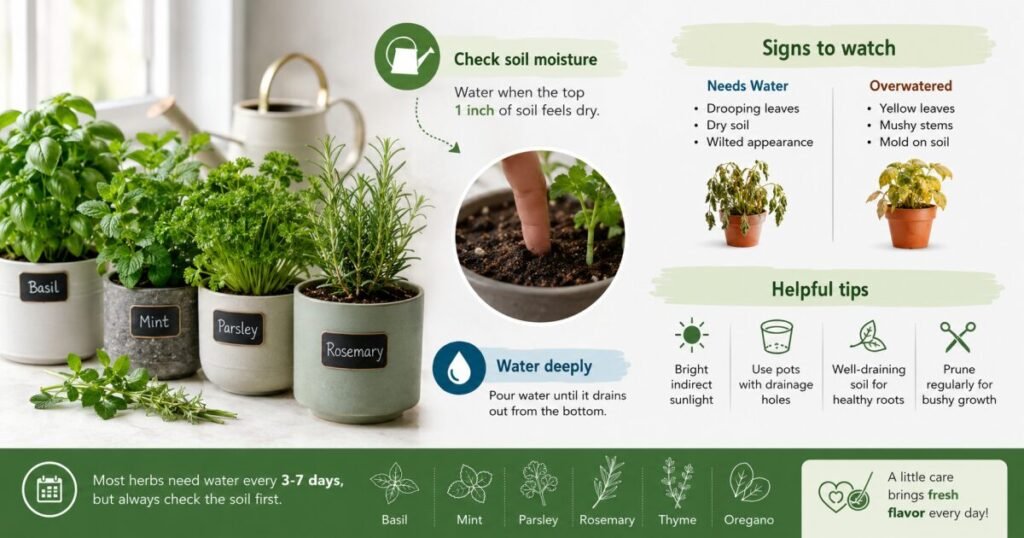
Most herbs need watering 1–3 times per week, depending on whether they are grown indoors, outdoors, or in pots. Instead of following a strict schedule, water herbs when the top 1–2 inches of soil feel dry. Potted herbs usually need more frequent watering than herbs planted in the ground, while drought-tolerant varieties like rosemary and thyme require less water than basil, parsley, or mint.
| Growing Condition | Watering Frequency |
| Indoor herbs | Every 3–7 days |
| Outdoor herbs in garden beds | 1–3 times per week |
| Herbs in pots | Every 1–4 days |
| Herbs in pots outside during the summer | Daily or every other day |
| Drought-tolerant herbs | Every 5–10 days |
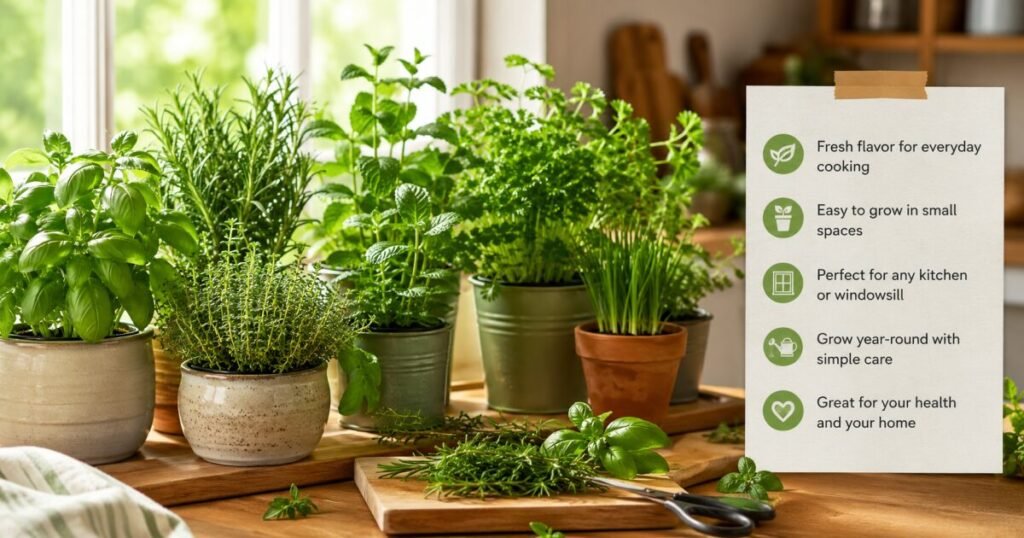
Growing herbs is one of the easiest and most rewarding ways to enjoy fresh flavors at home. Whether you’re cultivating basil on a sunny windowsill, mint in a container on your patio, or rosemary in your garden, proper watering is essential for healthy growth. One of the most common questions gardeners ask is: How often to water herbs?
The answer depends on several factors, including the type of herb, whether it’s grown indoors or outdoors, the weather, and the size of the container. Some herbs thrive in consistently moist soil, while others prefer to dry out between waterings.
In this complete guide, you’ll learn how often to water herbs indoors, outdoors, and in pots, along with expert tips to prevent overwatering and underwatering.
Why Proper Watering Matters for Herbs
Herbs are sensitive to both overwatering and underwatering.
Proper watering helps:
- Promote healthy root development
- Encourage lush leaf growth
- Improve flavor and aroma
- Reduce disease risk
- Increase harvest yields
Too much water can suffocate roots, while too little water can stunt growth and cause herbs to become bitter or woody.
How Often to Water Herbs Indoors
Many people grow herbs on kitchen windowsills, shelves, or under grow lights. Indoor environments tend to have less airflow and slower evaporation than outdoor gardens.
General Indoor Watering Schedule
Most indoor herbs need watering every 3–7 days.
Popular indoor herb watering frequencies:
| Herb | Watering Frequency |
| Basil | Every 2–4 days |
| Mint | Every 2–4 days |
| Cilantro | Every 3–5 days |
| Parsley | Every 3–5 days |
| Chives | Every 4–6 days |
| Oregano | Every 5–7 days |
| Thyme | Every 5–7 days |
| Rosemary | Every 7–10 days |
Tips for Indoor Herb Watering
- Check soil before watering.
- Use containers with drainage holes.
- Empty saucers after watering.
- Avoid letting pots sit in standing water.
- Increase monitoring during winter heating seasons.
How Often to Water Herbs Outdoors
Outdoor herbs are exposed to wind, sunlight, and temperature fluctuations, causing soil to dry faster.
Most outdoor herbs need watering 1–3 times per week.
Factors affecting outdoor watering include:
- Rainfall
- Sun exposure
- Soil type
- Temperature
- Wind conditions
Sandy soils require more frequent watering, while clay soils retain moisture longer.
Outdoor Watering Guidelines
| Weather Condition | Watering Frequency |
| Mild weather | Once or twice weekly |
| Hot summer weather | Every 1–2 days |
| Rainy periods | Water only when needed |
| Drought conditions | Increase watering frequency |
How Often to Water Herbs Outdoors During Summer
Summer is when many gardeners struggle to maintain healthy herbs.
High temperatures can quickly dry out soil, especially in containers.
During summer:
- Basil may need daily watering.
- Mint often requires watering every 1–2 days.
- Parsley and cilantro may need water every 2–3 days.
- Rosemary and thyme can usually tolerate less frequent watering.
Always water deeply rather than giving plants a light sprinkle.
Deep watering encourages roots to grow downward, improving drought resistance.
How Often to Water Herbs in Pots
Container-grown herbs dry out much faster than herbs planted directly in the ground.
For most potted herbs, watering every 1–4 days is typical.
The exact frequency depends on:
- Pot size
- Pot material
- Plant size
- Weather conditions
Pot Material Matters
| Pot Type | Moisture Retention |
| Plastic | High |
| Ceramic glazed | Moderate |
| Terracotta | Low |
| Fabric pots | Low |
Terracotta pots allow water to evaporate through their walls, requiring more frequent watering.
How Often to Water Herbs in Pots Outside
If you’re wondering how often to water herbs in pots outside, the answer is usually more often than indoor plants.
Outdoor containers can dry out quickly due to:
- Direct sunlight
- Wind exposure
- Warm temperatures
Typical Schedule
| Season | Frequency |
| Spring | Every 2–4 days |
| Summer | Daily or every other day |
| Fall | Every 3–5 days |
| Winter | As needed |
Small pots may need watering every day during hot weather.
Large containers retain moisture longer and require less frequent watering.
Watering Schedule for Popular Herbs
Every herb has slightly different moisture requirements.
| Herb | Water Preference |
| Basil | Consistently moist soil |
| Mint | Moist soil |
| Parsley | Even moisture |
| Cilantro | Moderate moisture |
| Chives | Moderate moisture |
| Dill | Moderate moisture |
| Oregano | Slightly dry soil |
| Sage | Dry between waterings |
| Thyme | Dry between waterings |
| Rosemary | Prefers dry soil |
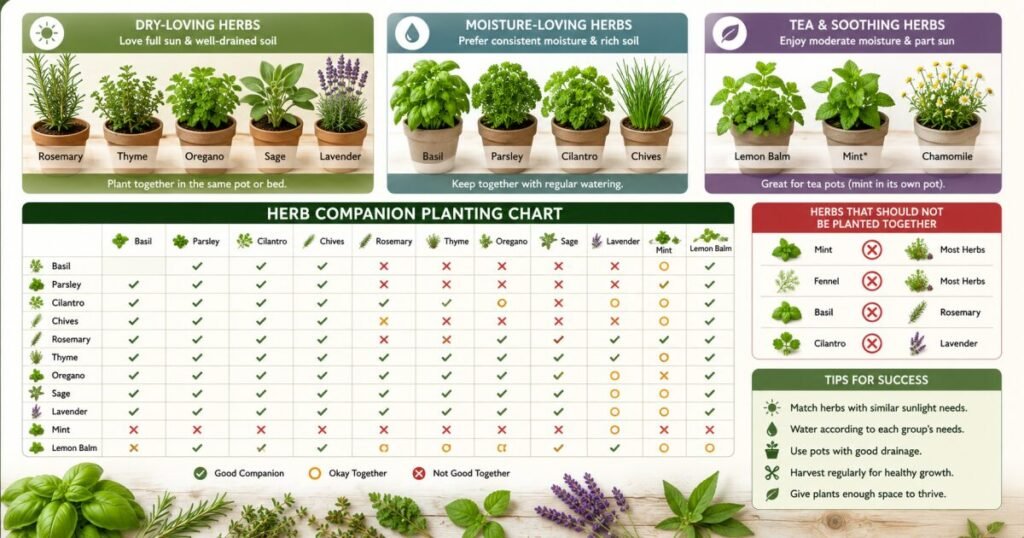
Mediterranean herbs such as rosemary, thyme, sage, and oregano generally need less water than leafy herbs like basil and mint.
How to Check if Your Herbs Need Water
Instead of relying on a calendar, use these methods:
Finger Test
Insert your finger about 1–2 inches into the soil.
If the soil feels:
- Dry → Water the plant.
- Slightly moist → Wait another day.
- Wet → Do not water.
Lift the Pot
A lightweight container often indicates dry soil.
Over time, you’ll learn to recognize the difference between a dry pot and a freshly watered one.
Moisture Meter
A soil moisture meter provides accurate readings and is especially useful for beginners.
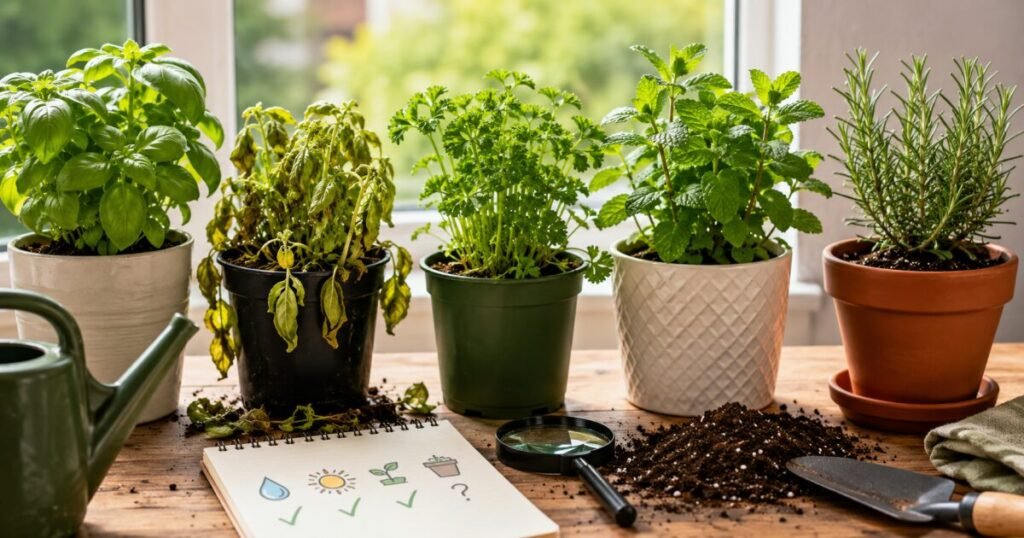
Signs Your Herbs Need More Water
Underwatered herbs often show visible symptoms.
Common signs include:
- Wilting leaves
- Drooping stems
- Dry soil
- Slow growth
- Yellow lower leaves
- Leaf drop
Most herbs recover quickly if watered promptly.
Signs You’re Overwatering Herbs
Overwatering is one of the biggest causes of herb plant failure.
Watch for:
- Yellow leaves
- Soft stems
- Mushy roots
- Moldy soil
- Fungus gnats
- Root rot
- Persistent wet soil
If you notice these symptoms, reduce watering and improve drainage immediately.
Best Time of Day to Water Herbs
Morning is generally the best time to water herbs.
Benefits of morning watering include:
- Reduced evaporation
- Better moisture absorption
- Lower disease risk
- Stronger growth throughout the day
Avoid watering during the hottest part of the afternoon.
Evening watering is acceptable but may increase fungal disease risk in humid climates.
Common Herb Watering Mistakes
Many herb gardeners unknowingly damage their plants through poor watering habits.
1. Watering on a Fixed Schedule
Always check soil moisture first.
2. Using Pots Without Drainage
Drainage holes are essential.
3. Watering Too Frequently
Most herbs prefer slight drying between waterings.
4. Watering Too Shallowly
Deep watering encourages stronger roots.
5. Ignoring Weather Changes
Adjust watering based on temperature and rainfall.
Seasonal Herb Watering Tips
Spring
- Begin increasing watering frequency.
- Monitor new growth carefully.
Summer
- Check the soil daily.
- Water the container herbs more frequently.
Fall
- Reduce watering as temperatures cool.
Winter
- Water sparingly.
- Allow the soil to dry more between waterings.
Indoor herbs near heaters may still require regular moisture checks.
Frequently Asked Questions
How often should I water herbs in pots?
Most potted herbs need water every 1–4 days, depending on pot size, weather, and plant type. Check soil moisture regularly rather than following a fixed schedule.
How often should I water herbs indoors?
Indoor herbs generally require watering every 3–7 days. Herbs grown under grow lights or near sunny windows may need more frequent watering.
Read more: How Often Should You Water Indoor Herb Plants?
How often should I water herbs outside?
Outdoor herbs typically need watering 1–3 times per week, though hot summer weather may require more frequent watering.
Can herbs be overwatered?
Yes. Overwatering can cause root rot, yellow leaves, fungal diseases, and plant decline. Always allow soil to dry slightly between waterings.
Which herbs need the least water?
Rosemary, thyme, sage, and oregano are among the most drought-tolerant herbs and prefer soil that dries between waterings.
Should herbs be watered every day?
Not usually. Daily watering is mainly necessary for small outdoor containers during hot summer weather.
Final Thoughts
Understanding how often to water herbs is one of the most important skills for successful herb gardening. While there isn’t a one-size-fits-all watering schedule, checking soil moisture regularly is the best way to determine when your plants need water.
Whether you’re learning how often to water herbs indoors, how often to water herbs outdoors, how often to water herbs in pots, or how often to water herbs in pots outside, the key is to balance moisture without keeping the soil constantly wet.
By adjusting your watering routine based on the season, weather, container size, and herb variety, you’ll enjoy healthier plants, larger harvests, and more flavorful herbs throughout the year.