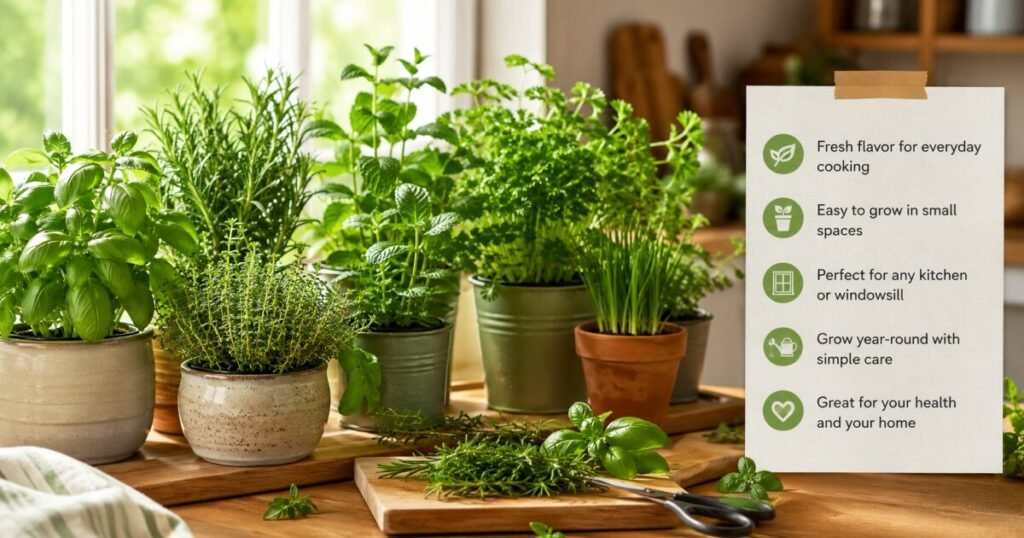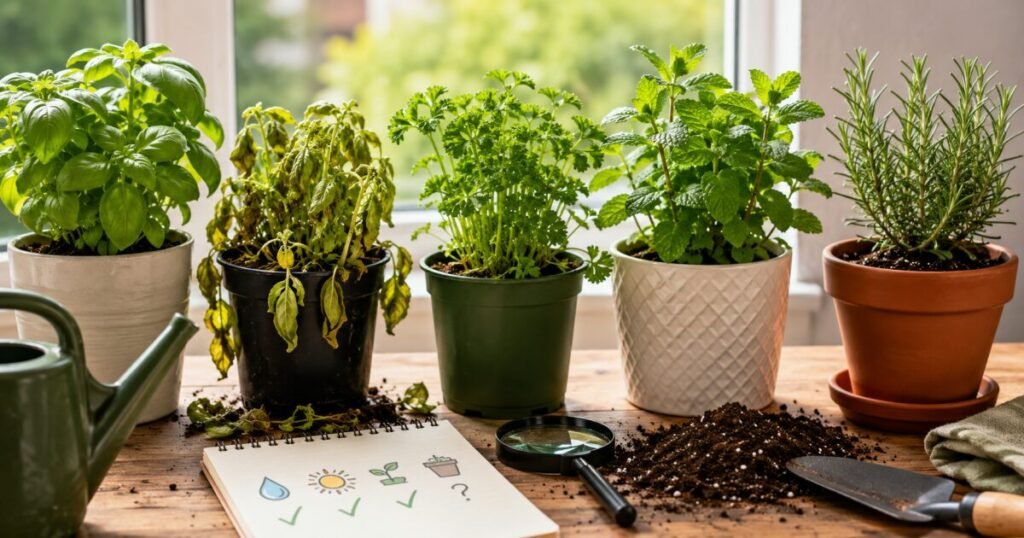
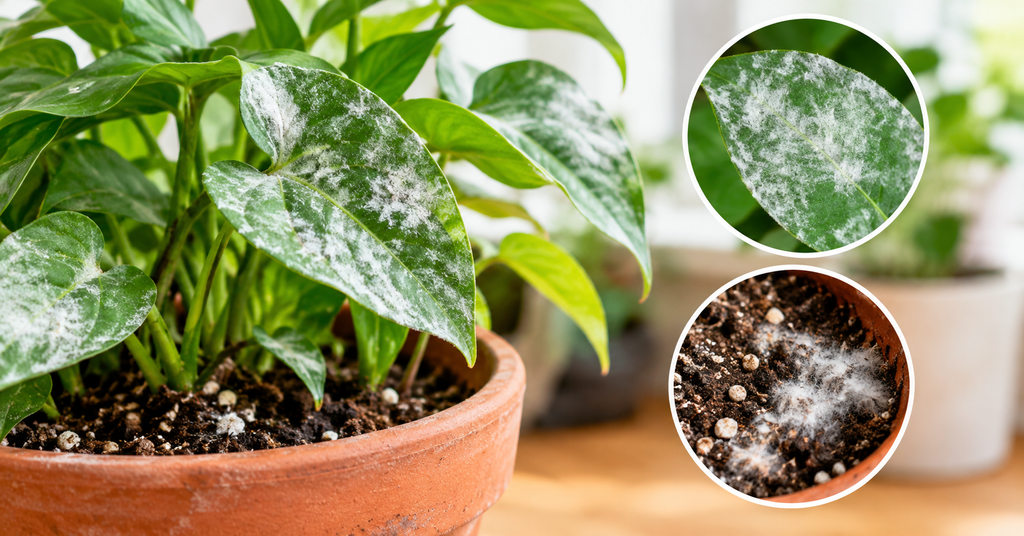
White mold on plants can be confusing, especially when it suddenly appears on potting soil, leaves, or stems. You might notice a white, fuzzy layer across the soil surface, powdery patches on green leaves, or cotton-like growth around the base of a plant. Although these symptoms can look similar, they do not always have the same cause.
White mold on plants is often manageable once you identify what is causing it. White growth on potting soil may be a fungus feeding on organic material, while white powder on leaves could indicate powdery mildew, a fungal disease that can spread across plant tissue.
The most effective treatment depends on where the growth appears, how it looks, and whether the plant shows other symptoms. Removing surface growth, correcting watering problems, improving airflow, and identifying plant diseases early can help protect your indoor garden.
In this guide, you will learn how to identify white mold on plants, understand its common causes, remove it safely, treat affected leaves, and prevent it from returning.
Quick Answer: How Do You Get Rid of White Mold on Plants?
To remove white mold from plants, first determine whether it’s on the soil, leaves, stems, or another surface.
- White mold on soil: Remove the affected soil, clear away decaying leaves, and improve drainage and watering.
- White powder on leaves: Check for powdery mildew, isolate the affected plant when appropriate, and remove heavily infected leaves if necessary.
- White cotton-like patches: Inspect for mealybugs, which are insects that can resemble mold.
- White crusty deposits: Consider mineral residue from hard water or fertilizer rather than fungal growth.
- Recurring white growth: Review the plant’s growing conditions and reconsider the diagnosis if the problem continues.
Avoid treating every type of white growth with the same product. Correct identification is the first step toward choosing an effective solution.
What Is White Mold on Plants?
White mold on plants is a general description of white, fuzzy, powdery, or cotton-like growth found on plants or their growing medium. It does not refer to one specific fungus or plant disease.
One common possibility is a saprophytic fungus growing on potting soil. These fungi break down dead plant material and other organic matter. They may become visible when the soil surface remains damp and suitable organic material is available.
Another possibility is powdery mildew, a fungal disease that produces white or grayish patches on leaves, stems, and sometimes flowers. Unlike surface fungi on potting soil, powdery mildew can affect living plant tissue and spread across the foliage.
Other substances, including mineral deposits and insect infestations, can also look like white mold.
Understanding these differences is important because the appropriate treatment for soil mold is not necessarily the same as the treatment for a fungal disease affecting leaves.
What Does White Mold on Plants Look Like?
The appearance and location of white growth can provide useful clues about its cause.
1. White Fuzzy Mold on Soil
White fuzzy mold on soil may look like a thin, cottony layer spread across the surface of a pot. It often appears around pieces of decaying leaves, bark, compost, or other organic material.
This growth can occur when the upper layer of the potting mix remains damp for extended periods.
If the plant otherwise looks healthy, the growth may be a surface fungus rather than a disease affecting the roots.
2. White Powder on Plant Leaves
Powdery mildew often begins as small white spots on leaves. These spots may gradually expand into larger patches that resemble flour or fine powder.
As the disease progresses, affected leaves may become yellow, distorted, or weakened. The growth can also spread to stems and flowers.
Powdery mildew is different from the fuzzy growth that sometimes appears on potting soil, so it should be identified and managed separately.
For additional background, consult the Royal Horticultural Society’s guide to powdery mildews.
3. White Cotton-Like Growth on Stems
White cotton-like patches around stems, leaf joints, and the undersides of leaves may indicate mealybugs rather than mold.
Look carefully for small insects underneath the white material. Mealybugs feed on plant sap and require appropriate pest management.
Applying a fungal treatment without identifying the cause may not solve the problem.
4. White Crust on Potting Soil
A hard, crusty white layer on soil or around the rim of a container may be caused by mineral deposits from irrigation water or accumulated fertilizer salts.
Unlike many fungal growths, mineral residue usually looks more granular or crystalline.
If the substance is crusty rather than fuzzy, review your water quality and fertilizer practices before treating it as mold.
What Causes White Mold on Plants?
Several factors can contribute to white growth on indoor plants. Identifying the likely cause helps you determine which changes are necessary.
1. Consistently Damp Potting Soil
One common reason white fungal growth appears on soil is that the surface stays moist for too long.
Potting mixes often contain organic materials that fungi can use as food. When moisture and other environmental conditions are suitable, these fungi may become visible.
Frequent watering, poor drainage, and containers that hold excess water can contribute to the problem.
To reduce the likelihood of recurring growth, check the soil before watering, remove decaying debris, and ensure excess water can escape from the container.
2. Poor Drainage
When excess water cannot escape, the growing medium may remain saturated. This can reduce the amount of oxygen available to roots and contribute to root damage.
Poor drainage is particularly important when growing herbs indoors because containers may dry more slowly than outdoor garden beds.
Choosing an appropriate growing medium is equally important. Our guide to the best soil for herbs explains how soil structure, aeration, and moisture retention affect the health of container-grown herbs.
3. Dead Leaves and Organic Debris
Fungi naturally break down dead leaves, old roots, and other organic material.
When these materials accumulate on damp potting soil, they may provide suitable conditions for visible fungal growth.
Remove dead foliage regularly and keep the soil surface reasonably clean. Avoid disturbing healthy roots when removing debris.
4. Poor Air Circulation
Plants placed too closely together may have limited airflow around their leaves and stems.
This can contribute to conditions that favor certain fungal diseases, particularly when combined with suitable humidity and temperature conditions.
Powdery mildew can develop even when leaves are not wet, so simply reducing watering is not always enough to manage it.
Give plants sufficient space and avoid overcrowding your indoor growing area.
5. Unsuitable Watering Habits
Watering too frequently can keep potting soil damp for longer than necessary. However, the correct watering routine depends on the plant species, pot size, growing medium, temperature, and available light.
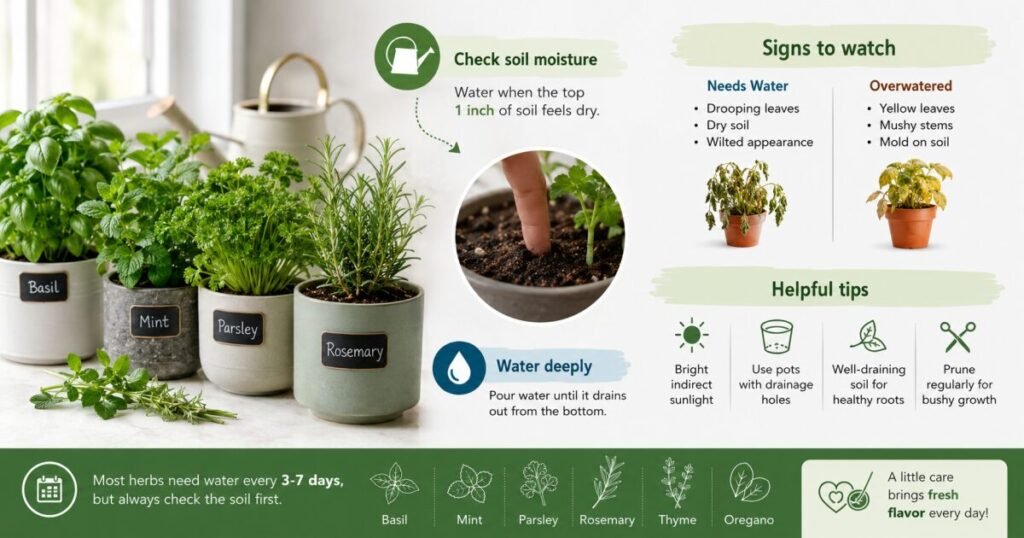
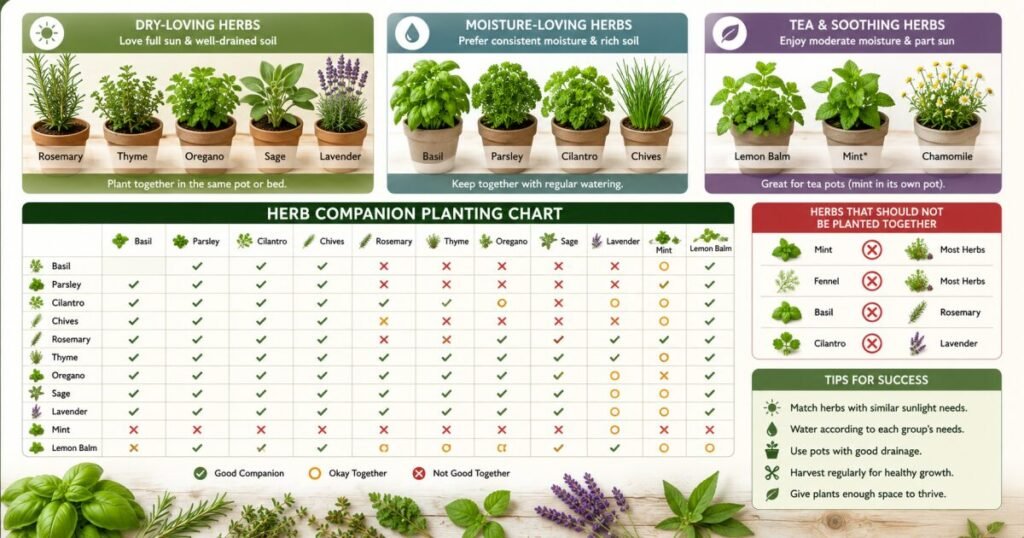
Different herbs also have different moisture requirements. Rosemary and thyme generally tolerate more drying between waterings than basil and mint.
If you grow several herbs indoors, our guide to how often to water indoor herb plants can help you understand why checking soil moisture is more reliable than following a rigid watering schedule.
6. Unsuitable Light and Growing Conditions
Insufficient light can slow plant growth and reduce water use, meaning the soil may remain wet for longer.
However, not all white fungal growth is caused by low light. Powdery mildew, for example, can occur under a range of environmental conditions.
Provide light appropriate for the plant species, maintain suitable airflow, and avoid making sudden environmental changes that could stress the plant.
How to Get Rid of White Mold on Plants
Once you have identified the likely cause, follow these practical steps to manage the problem.
Step 1: Identify Where the Growth Appears
Examine the plant carefully before removing anything.
Ask yourself:
- Is the growth limited to the soil surface?
- Does it appear as white powder on leaves?
- Are there cotton-like patches around stems?
- Is the white material hard and crusty?
- Are the leaves yellowing, wilting, or becoming distorted?
These observations can help you decide whether you are dealing with surface fungi, a possible plant disease, insects, or mineral deposits.
Step 2: Remove Visible Growth From the Soil
If the white growth is limited to the soil surface and the plant appears healthy, carefully remove the affected upper layer of potting mix.
Use a clean spoon or small gardening tool, taking care not to damage the roots. Dispose of the removed material instead of spreading it across other pots.
If necessary, replace the removed material with fresh potting mix suitable for the plant.
Removing visible growth can improve the appearance of the container, but it will not prevent recurrence if the underlying conditions remain unchanged.
Step 3: Improve Drainage
Check whether the container has drainage holes and whether water can escape freely.
If you use a decorative pot without drainage, consider placing the plant in a nursery pot with drainage holes and using the decorative container as an outer cover.
After watering, allow excess water to drain completely and empty any standing water from the saucer or outer pot.
Our guide to whether indoor herbs need drainage holes explains why proper drainage helps reduce waterlogged soil and supports healthier roots.
Step 4: Adjust Your Watering Routine
Check the moisture level of the potting mix before watering again.
Many indoor plants benefit from thorough watering followed by a suitable drying period. However, do not allow moisture-sensitive plants to become excessively dry just to eliminate surface fungal growth.
Follow these practices:
- Avoid watering automatically every day.
- Check the soil before adding more water.
- Adjust watering according to the plant’s needs.
- Avoid leaving containers in standing water.
- Consider seasonal changes in light and temperature.
Remember that the aim is to maintain suitable moisture, not to keep all plants as dry as possible.
Step 5: Improve Airflow and Provide Appropriate Light
Move crowded plants apart when possible and ensure air can circulate their foliage.
Provide suitable light for the plant species. Avoid suddenly moving a shade-loving plant into intense direct sunlight, as this may cause additional stress.
For herbs that are struggling because of limited natural light, our guide to herbs that grow in low-light apartments explains which plants may tolerate lower-light conditions better than others.
Step 6: Manage Powdery Mildew on Leaves
If the white growth appears on leaves and is consistent with powdery mildew, isolate the affected plant temporarily when appropriate.
Remove heavily infected leaves if doing so will not seriously weaken the plant. Use clean pruning tools, and avoid transferring plant debris between containers.
If the infection is extensive, identify the plant species and choose a treatment specifically labeled for that plant and disease.
Not every plant requires a fungicide. The appropriate approach depends on the severity of the infection, the plant’s condition, and the treatment options available.
Step 7: Monitor the Plant
Continue checking the affected plant over the following days and weeks.
Look for new white patches, changes in leaf color, excessive soil moisture, or signs of root damage.
If the growth returns, reconsider the diagnosis and growing conditions rather than repeatedly removing the visible material without addressing its cause.
How to Remove White Mold From Houseplant Soil
White mold on houseplant soil can be particularly concerning because it sometimes appears even when the leaves look healthy.
In many cases, the growth is caused by fungi feeding on organic material rather than an infection of the living plant.
Try the following approach:
- Remove visible fungal growth and decaying organic debris.
- Check whether the container drains properly.
- Adjust watering to the plant’s moisture requirements.
- Allow the upper layer of the soil to dry appropriately between waterings.
- Improve airflow around the container.
- Review the condition of the potting mix.
- Consider repotting if the soil structure has deteriorated or drainage remains poor.
Should You Replace All the Soil?
Not necessarily.
If the plant is healthy and the growth is confined to the surface, replacing the entire potting mix may be unnecessary.
Repotting may be more appropriate when the growing medium remains waterlogged, drainage is inadequate, the soil has become compacted, or the plant shows signs of root problems.
If roots appear dark, soft, or mushy, the plant may have a root-related problem that requires more attention than removing surface growth alone.
White Mold on Leaves vs. White Mold on Soil
Understanding the difference between these two common problems can help you avoid using the wrong treatment.
| Feature | White Growth on Soil | Powdery Mildew on Leaves |
| Typical appearance | Fuzzy or cotton-like | White or gray powdery patches |
| Main location | Surface of potting mix | Leaves, stems, or flowers |
| Possible cause | Fungi decomposing organic material | Fungal disease |
| Main concern | Growing conditions and moisture management | Disease spread and foliage damage |
| Initial response | Remove affected debris and review watering | Inspect, isolate if appropriate, and manage infected foliage |
| Does it always require fungicide? | No | Not always |
These are general identification clues rather than a definitive diagnostic test. Mineral deposits and insect infestations can also resemble fungal growth.
Is White Mold on Plants Harmful?
The answer depends on what is causing the white growth and how severely the plant is affected.
Is White Mold on Soil Bad for Plants?
Surface fungi on potting soil are often not directly harmful to a healthy plant. They may simply be breaking down organic material.
However, visible growth can indicate that the growing conditions need attention. Persistently saturated soil can contribute to root problems, particularly when drainage is poor.
Focus on the plant’s overall condition instead of assuming that every patch of white growth indicates a serious disease.
Can Powdery Mildew Damage Plants?
Yes. Powdery mildew can spread across leaves and stems, affect plant appearance, and reduce plant vigor. Severe infections may cause leaf distortion, yellowing, or leaf loss.
Early identification and appropriate management can help limit the problem.
Can White Mold on Plants Affect People or Pets?
The risks depend on the organism, the amount of growth, and individual sensitivities. Avoid deliberately inhaling or ingesting moldy plant material.
When cleaning affected soil, avoid stirring up dust, wash your hands afterward, and keep plant debris away from children and pets. People with mold allergies or respiratory sensitivities may prefer to have someone else handle significant mold growth.
If you are concerned about substantial indoor mold growth or anyone experiences concerning symptoms, seek appropriate professional advice.
How to Prevent White Mold on Plants
Prevention starts with maintaining suitable growing conditions and identifying problems early.
1. Water According to Plant Needs
Avoid watering every plant on the same fixed schedule.
Different herbs and houseplants have different moisture requirements. Check the growing medium and consider pot size, drainage, temperature, and available light.
2. Use a Suitable Potting Mix
Choose a growing medium appropriate for the plant species.
Indoor herbs generally benefit from a potting mix that retains enough moisture for healthy roots while allowing excess water to drain. Heavy, compacted soil can make moisture management more difficult.
3. Make Sure Containers Drain Properly
Drainage holes allow excess water to escape. Avoid leaving pots in standing water for extended periods.
If you use decorative outer pots, check that water is not accumulating at the bottom.
4. Remove Dead Leaves and Debris
Clear away dead foliage and decaying plant material before it accumulates.
Regularly inspect the soil surface, stems, and leaf joints for unusual growth or signs of insects.
5. Space Plants Appropriately
Allow enough room for air to move around leaves and stems. Crowded plants can make it more difficult to manage certain fungal diseases.
6. Provide Appropriate Light
Match the light conditions to the plant’s needs. Insufficient light may slow growth and affect how quickly the soil dries.
Avoid sudden, drastic changes that could stress the plant.
7. Inspect New Plants
Check new plants for white powdery patches, cotton-like insects, damaged foliage, and unusual growth.
If you suspect a pest or disease problem, keep the plant separate temporarily and monitor it before placing it near other susceptible plants.
8. Clean Reused Pots and Gardening Tools
Remove old soil and plant debris from containers and tools. Clean and appropriately disinfect equipment between plants when dealing with suspected disease.
These practices can help reduce the spread of certain plant problems.
Common Mistakes to Avoid When Treating White Mold on Plants
Several mistakes can make the problem harder to manage.
Watering less without checking the plant. Reducing water may help when soil remains excessively wet, but powdery mildew on leaves has different management needs.
Using fungicide without identifying the problem. Mineral deposits and mealybugs will not be resolved by treating them as fungal diseases.
Removing all the potting soil unnecessarily. Surface growth alone does not automatically mean the entire growing medium is diseased.
Ignoring drainage problems. If water cannot escape the container, fungal growth and root problems may continue even after visible material is removed.
Applying untested homemade sprays. Some substances can damage leaves or roots without solving the underlying problem.
Expecting instant results. Removing visible growth does not guarantee that the cause has been corrected. Continue monitoring the plant and adjust its care when necessary.
Frequently Asked Questions
1. How Do You Get Rid of White Mold on Plants Naturally?
Start by identifying whether the growth is on the soil or foliage. For surface growth on potting soil, remove affected debris, improve drainage, and adjust watering. For suspected powdery mildew, isolate the plant when appropriate, remove heavily affected leaves if necessary, and improve airflow. Avoid untested household mixtures.
2. Why Is White Mold Growing on My Houseplant Soil?
White mold may develop when fungi feed on organic material in the potting mix. Persistently damp soil, decaying leaves, and unsuitable growing conditions can contribute to visible growth. It does not automatically mean the plant is diseased, but you should review watering and drainage.
3. Is White Fuzzy Mold on Plant Soil Dangerous?
White fuzzy growth on soil is often caused by decomposer fungi that may not directly harm a healthy plant. However, recurring growth deserves attention, particularly if the soil remains waterlogged or the plant begins to decline. Avoid inhaling moldy dust during cleanup.
4. Can Plants Recover From Powdery Mildew?
Many plants can recover from mild or moderate powdery mildew when the problem is identified early and managed appropriately. Remove affected tissue when suitable, improve growing conditions, and use a labeled treatment if necessary. Recovery depends on the plant species, infection severity, and overall health.
5. Should I Throw Away a Plant With White Mold?
Not automatically. White growth limited to the soil surface may be manageable without discarding the plant. Consider more extensive intervention if the plant is severely affected, continues to decline, or has substantial root damage. Identify the cause before deciding whether the plant can be saved.
6. Does White Mold on Plant Soil Mean I Am Overwatering?
Not always, but consistently damp soil can encourage surface fungal growth. Check the plant’s watering requirements, drainage, light, and growing medium. A plant may also experience fungal growth on the surface while having different moisture requirements deeper in the pot.
7. Is White Mold the Same as Powdery Mildew?
No. White mold is a broad description of visible growth, while powdery mildew is a group of fungal diseases affecting plant surfaces. White fuzzy growth on soil and powdery patches on leaves may have different causes and require different management.
8. How Do I Stop White Mold From Returning?
Identify and address the underlying cause. Remove decaying debris, maintain appropriate watering, use a suitable potting mix, ensure proper drainage, provide adequate airflow, and monitor the plant. If the white growth is powdery mildew, manage the affected foliage and conditions that favor the disease.
Final Thoughts
White mold on plants can look alarming, but it does not always indicate a serious plant disease. The most useful first step is to identify where the growth appears and distinguish surface fungi on potting soil from powdery mildew, mineral deposits, and insect activity.
For white growth on soil, start by removing affected debris and reviewing moisture levels and drainage. For powdery mildew on leaves, focus on identifying the disease, managing affected foliage, and improving growing conditions.
With careful observation, appropriate plant care, and early intervention, many common white-growth problems can be managed without replacing all the potting mix or discarding a healthy plant.