Fresh herbs can instantly improve soups, pasta, sauces, salads, and roasted dishes. But if you grow herbs indoors or buy large bunches from the grocery store, you already know the problem, they spoil fast.
The good news is that you can freeze fresh herbs successfully and keep their flavor for months when you use the right method.
In this guide, you’ll learn:
- The best ways to freeze fresh herbs,
- which herbs freeze best,
- common mistakes to avoid,
- and the best freezing method for each herb type.
Whether you grow herbs in your kitchen or harvest them from your garden, these methods help reduce waste and keep herbs ready for cooking year-round.
What Is the Best Way to Freeze Fresh Herbs?
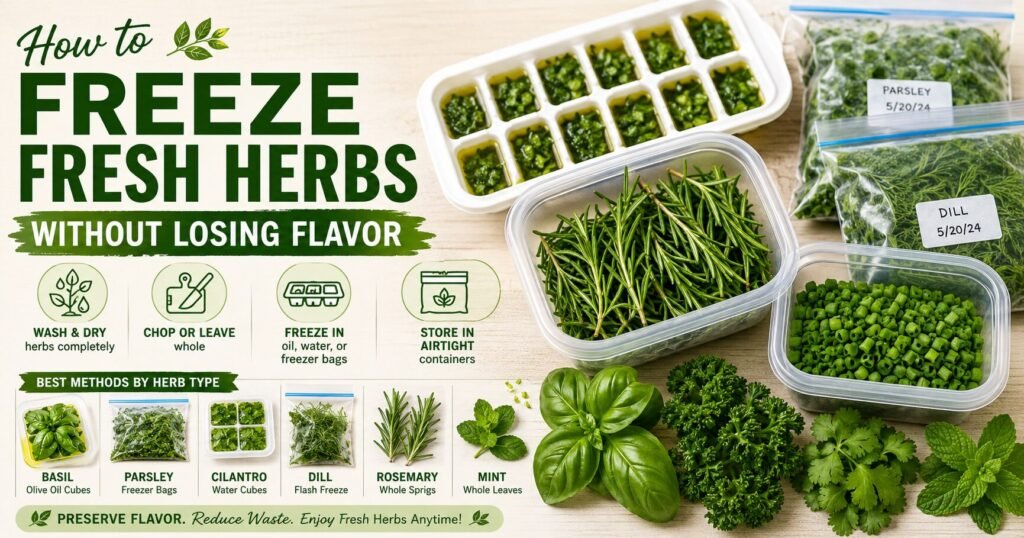
The best way to freeze fresh herbs without losing flavor is to:
- Wash and dry the herbs completely
- Chop or leave whole, depending on the herb
- Freeze them in olive oil, water, or airtight freezer bags
- Store them in airtight containers to prevent freezer burn
Soft herbs like basil, cilantro, parsley, and dill freeze especially well.
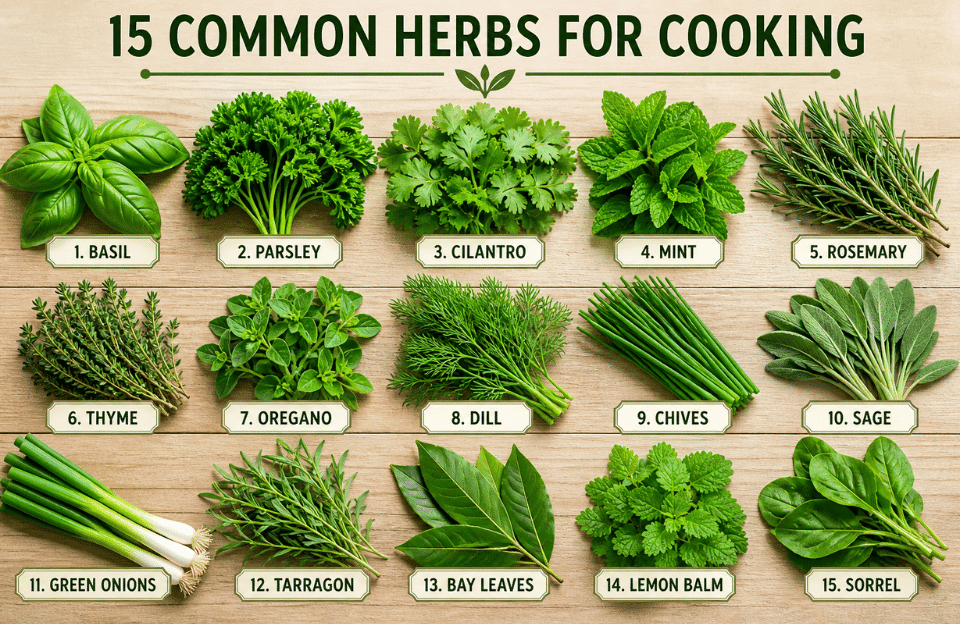
Read more: 15 Common Herbs for Cooking Every Beginner Should Know
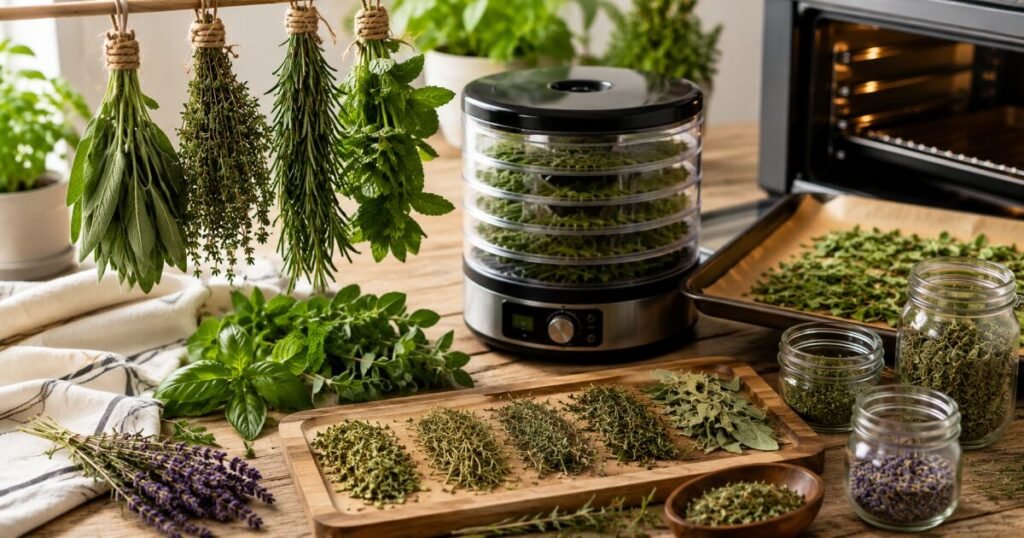
Why Freezing Herbs Works Better Than Drying
Drying herbs is popular, but it doesn’t work equally well for every herb.
Soft leafy herbs often lose much of their aroma when dried. Freezing helps preserve:
- Flavor
- Color
- Essential oils
- Freshness
Freezing is especially effective for:
- Basil
- Parsley
- Cilantro
- Dill
- Chives
- Mint
- Tarragon
Woody herbs like rosemary and thyme can also be frozen, although they already dry well naturally.
Which Fresh Herbs Freeze Best?
Here are the herbs that freeze exceptionally well:
| Herb | Freezes Well? | Best Freezing Method |
| Basil | Yes | Olive oil cubes |
| Parsley | Yes | Chopped freezer bags |
| Cilantro | Yes | Ice cube trays |
| Dill | Yes | Flash freezing |
| Chives | Yes | Dry-chopped freezing |
| Mint | Yes | Whole leaves or cubes |
| Rosemary | Yes | Whole sprigs |
| Thyme | Yes | Whole sprigs |
| Oregano | Yes | Airtight bags |
| Sage | Yes | Olive oil freezing |
Herbs That Do Not Freeze Well
Some herbs become limp or watery after thawing.
These herbs are usually better fresh:
- Lettuce herbs
- Delicate microgreens
- Herbs with extremely high water content
Still, even herbs that soften after freezing usually work perfectly in:
- Soups
- Sauces
- Casseroles
- Cooked dishes
Before You Freeze: Important Preparation Tips
Proper preparation makes a huge difference in flavor and texture.
1. Wash Carefully
Rinse herbs under cool water to remove dirt and insects.
2. Dry Completely
This step is critical.
Excess moisture causes:
- Freezer burn
- Ice crystals
- Mushy herbs
Use:
- Paper towels
- Clean kitchen towels
- Or a salad spinner
3. Remove Damaged Leaves
Discard yellow, wilted, or bruised leaves before freezing.
Method 1: Freeze Fresh Herbs in Olive Oil
This is one of the best methods for preserving flavor.
It works especially well for:
- Basil,
- Sage,
- Oregano,
- Thyme,
- and Rosemary.
How to Do It
Step 1
Chop the herbs finely.
Step 2
Fill ice cube trays about two-thirds full with herbs.
Step 3
Pour olive oil over the herbs until covered.
Step 4
Freeze until solid.
Step 5
Transfer cubes to freezer bags or airtight containers.
Why This Method Works
Olive oil protects herbs from air exposure, helping preserve:
- Aroma,
- Flavor
- and Color.
Best Uses
These cubes are perfect for:
- Pasta sauces,
- Sautéed vegetables,
- Soups,
- Marinades,
- and Roasted dishes.
Method 2: Freeze Herbs in Water
Freezing herbs in water is another simple and effective method.
This method works best for:
- Parsley,
- Cilantro,
- Chives,
- and Dill.
Steps
- Chop herbs finely
- Add herbs to ice cube trays
- Fill with water
- Freeze completely
- Transfer cubes to freezer bags
Best For
This method is ideal when adding herbs to:
- Soups,
- Stews,
- Stocks,
- and Sauces.
Method 3: Flash Freeze Whole Herbs
If you want herbs to stay separated instead of clumping together, flash freezing works very well.
Best Herbs for Flash Freezing
- Dill,
- Parsley,
- Mint,
- Cilantro,
- Rosemary,
- Thyme.
How to Flash Freeze Herbs
Step 1
Spread herbs in a single layer on a baking sheet.
Step 2
Place the tray in the freezer for 1–2 hours.
Step 3
Once frozen, transfer herbs into airtight freezer bags.
Advantages
- Prevents sticking,
- Easy portion control,
- Preserves whole leaves better.
Method 4: Freeze Herbs in Freezer Bags
This is the easiest and fastest method.
Best Herbs for This Method
- Chives,
- Parsley,
- Oregano,
- Thyme,
- Rosemary.
Steps
- Chop herbs if desired
- Place in freezer-safe zip bags
- Remove as much air as possible
- Freeze flat for easier storage
Pro Tip
Use a straw to remove extra air from the bag before sealing.
Less oxygen helps herbs retain flavor longer.
Best Freezing Method by Herb Type
Here’s the easiest way to decide how to freeze each herb.
| Herb | Best Method | Flavor Retention | Shelf Life |
| Basil | Olive oil cubes | Excellent | 6 months |
| Parsley | Freezer bags | Very good | 8 months |
| Cilantro | Water cubes | Very good | 6 months |
| Dill | Flash freeze | Excellent | 6 months |
| Chives | Dry chopped freezing | Good | 4–6 months |
| Mint | Whole leaf freeze | Very good | 6 months |
| Rosemary | Whole sprigs | Excellent | 8 months |
| Thyme | Whole sprigs | Excellent | 8 months |
| Sage | Oil freezing | Excellent | 6 months |
How Long Do Frozen Herbs Last?
Most frozen herbs maintain the best flavor for:
- 4 to 8 months.
They remain safe longer if continuously frozen, but flavor gradually weakens over time.
For best quality:
- Label bags with dates,
- Keep freezer temperature stable,
- And avoid repeated thawing.
Common Mistakes When Freezing Fresh Herbs
Avoid these common problems if you want better results.
Freezing Wet Herbs
Too much moisture creates ice crystals and mushy texture.
Using Thin Plastic Bags
Cheap bags allow air exposure and freezer burn.
Storing Herbs Too Long
Old frozen herbs lose aroma and flavor intensity.
Freezing Large Clumps
Herbs freeze more evenly when spread out or portioned.
Thawing Before Cooking
Most frozen herbs should go directly into cooking without thawing.
Do Frozen Herbs Lose Flavor?
Frozen herbs usually keep most of their flavor when stored properly.
In fact, freezing preserves flavor better than drying for many soft herbs.
However:
- Texture changes after thawing,
- Leaves soften,
- and herbs become less suitable for fresh garnishes.
Frozen herbs are best used in cooked dishes rather than salads.
How to Use Frozen Herbs in Cooking
Frozen herbs are incredibly convenient.
You can add them directly to:
- Soups,
- Sauces,
- Pasta,
- Rice dishes,
- Scrambled eggs,
- Casseroles,
- Roasted vegetables,
- and Marinades.
There’s usually no need to thaw them first.
Oil-based herb cubes are especially useful for quick weeknight cooking.
Can You Freeze Fresh Herbs Without Ice Cube Trays?
Yes.
You can:
- Flash freeze whole herbs,
- Roll herbs into freezer logs,
- Or freeze chopped herbs in zip bags.
Ice cube trays simply make portioning easier.
Are Frozen Herbs as Good as Fresh?
Frozen herbs are very close to fresh in cooked recipes.
While they lose some crisp texture, they retain much of their:
- Flavor,
- Aroma
- and Color.
For cooking purposes, frozen herbs are often far better than dried herbs.
Final Thoughts
Learning how to freeze fresh herbs properly can save money, reduce waste, and make cooking easier year-round.
The best method depends on the herb:
- Basil freezes best in olive oil,
- Parsley works well in freezer bags,
- And dill benefits from flash freezing.
If you grow herbs indoors or harvest herbs from your garden regularly, freezing is one of the simplest ways to preserve flavor without complicated equipment.
Once you start keeping frozen herbs ready in your freezer, it becomes much easier to add fresh flavor to everyday meals.
Frequently Asked Questions
Can you freeze fresh herbs whole?
Yes. Many herbs like rosemary, thyme, mint, and dill freeze well whole.
Should herbs be washed before freezing?
Yes. Always wash and completely dry herbs before freezing.
Can you freeze herbs in olive oil?
Yes. Olive oil is one of the best ways to preserve herb flavor and aroma.
What herbs freeze best?
Basil, parsley, cilantro, dill, mint, rosemary, thyme, and chives all freeze well.
Is it better to dry or freeze herbs?
Soft herbs usually keep more flavor when frozen, while woody herbs can be dried successfully.