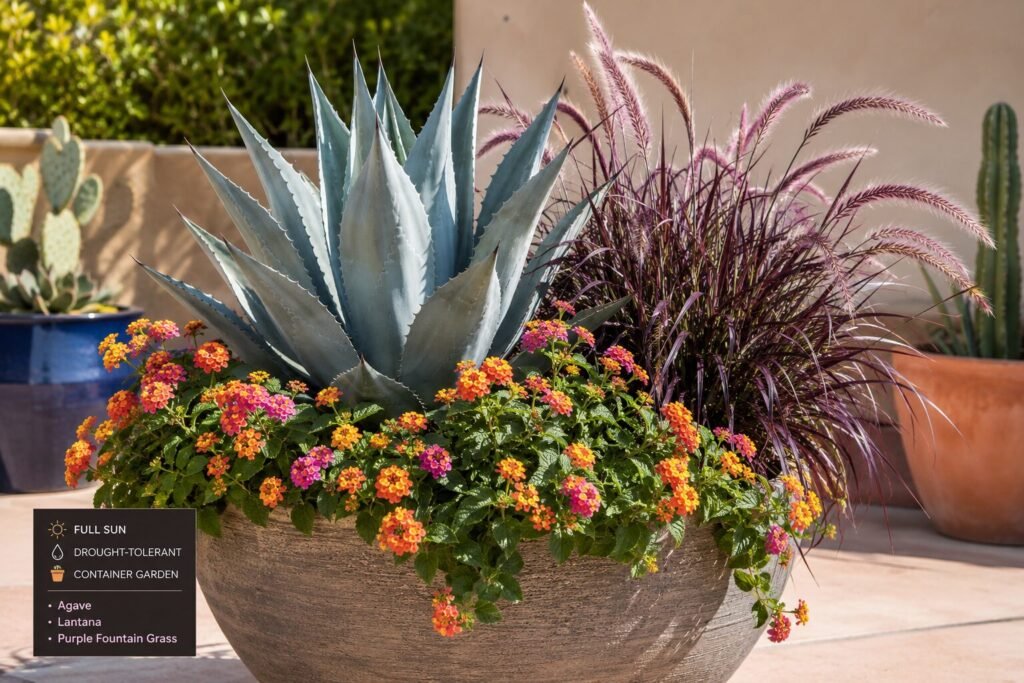
Quick Answer: Drought-tolerant plants survive long dry spells with little or no extra watering once established. They do this through deep taproots, thick or waxy leaves, silvery fuzzed foliage, or water-storing tissue. Good choices include rosemary, thyme, sage, and lavender for indoor herb gardens, and succulents, ornamental grasses, and Mediterranean shrubs for outdoor beds and containers.
Key Takeaways
- Drought tolerance is a plant’s ability to survive extended dry periods using traits like taproots, succulent leaves, or reduced leaf surface area.
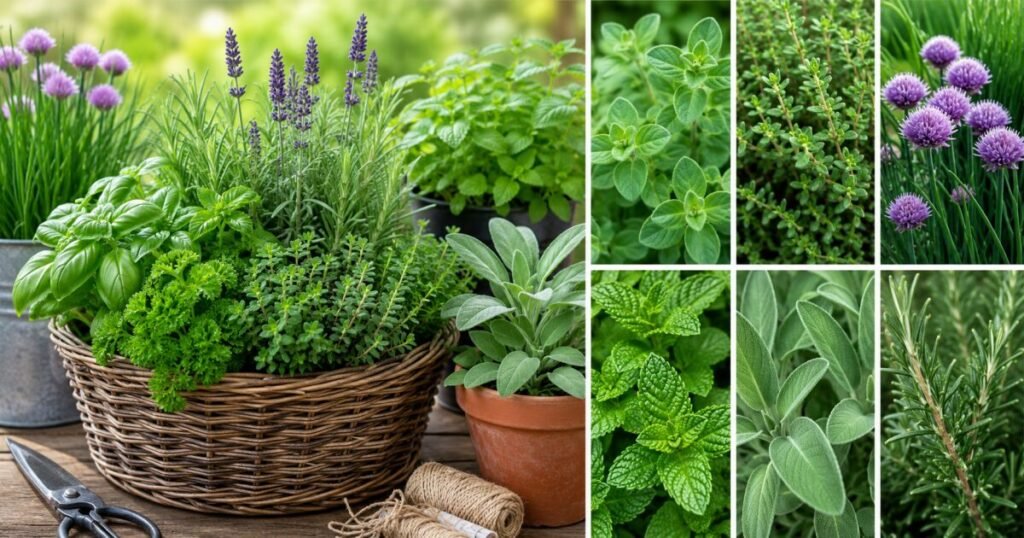
- Most drought-tolerant culinary herbs — rosemary, thyme, oregano, sage, lavender — come from the Mediterranean, where dry summers are normal.
- Indoors, drought-tolerant herbs still need bright light (6+ hours) and fast-draining soil; the “drought-tolerant” label refers to watering frequency, not light or soil needs.
- Containers dry out faster than garden beds, so even drought-tolerant plants in pots need more frequent (though still light) watering.
- A budget xeriscape can cost 30–50% less than a traditional lawn-and-flowerbed landscape over time, mainly by cutting water bills and replacing turf with mulch, gravel, and low-water perennials.
- Overwatering, not underwatering, kills most drought-tolerant plants. Root rot is the number one cause of failure.
What “Drought-Tolerant” Actually Means
A drought-tolerant plant can survive weeks without rain or irrigation once it has developed an established root system, typically after its first full growing season. This is different from “drought-resistant” or “xeric,” terms often used interchangeably but with slightly different technical meanings in botany.
- Drought-tolerant plants can survive dry conditions but may show stress (wilting, slowed growth) during extreme drought.
- Drought-resistant plants actively resist water loss through physical adaptations and show little visible stress.
- Xeric or xerophytic plants are adapted to arid environments as their natural habitat, such as cacti and agave.
- Drought-avoidant plants dodge drought stress by going dormant or dropping leaves, then regrowing when water returns.
In everyday gardening language, all four get lumped together under “drought-tolerant,” and that’s how this guide uses the term.
The Physical Traits That Make a Plant Drought-Tolerant
Plants that handle dry conditions well tend to share a few physical features. Recognizing these traits helps you spot a drought-tolerant plant at the nursery even if you don’t know its name.
| Trait | How It Helps | Example Plants |
| Deep taproot | Reaches groundwater far below the surface | Echinacea, baptisia, butterfly weed |
| Silvery or fuzzy leaves | Reflects sunlight and traps a layer of still air, cutting water loss | Lavender, sage, lamb’s ear |
| Small or needle-like leaves | Reduces surface area for water evaporation | Rosemary, thyme, juniper |
| Thick, waxy cuticle | Seals in moisture like a natural raincoat | Succulents, ivy-leaved geranium |
| Succulent tissue | Stores water in leaves or stems for later use | Sedum, portulaca, agave |
| Gray-green foliage | Lower chlorophyll concentration reduces heat absorption | Artemisia, dusty miller |
Drought-Tolerant Herbs Indoors
Growing drought-tolerant herbs indoors is one of the easiest ways to keep fresh seasonings on hand without babysitting a watering can. Because these herbs evolved in the dry, rocky hillsides of the Mediterranean, they naturally prefer to dry out between waterings, which makes them forgiving for beginners and travelers alike.
Best Drought-Tolerant Herbs for Indoor Growing
| Herb | Light Needs | Watering | Growth Habit |
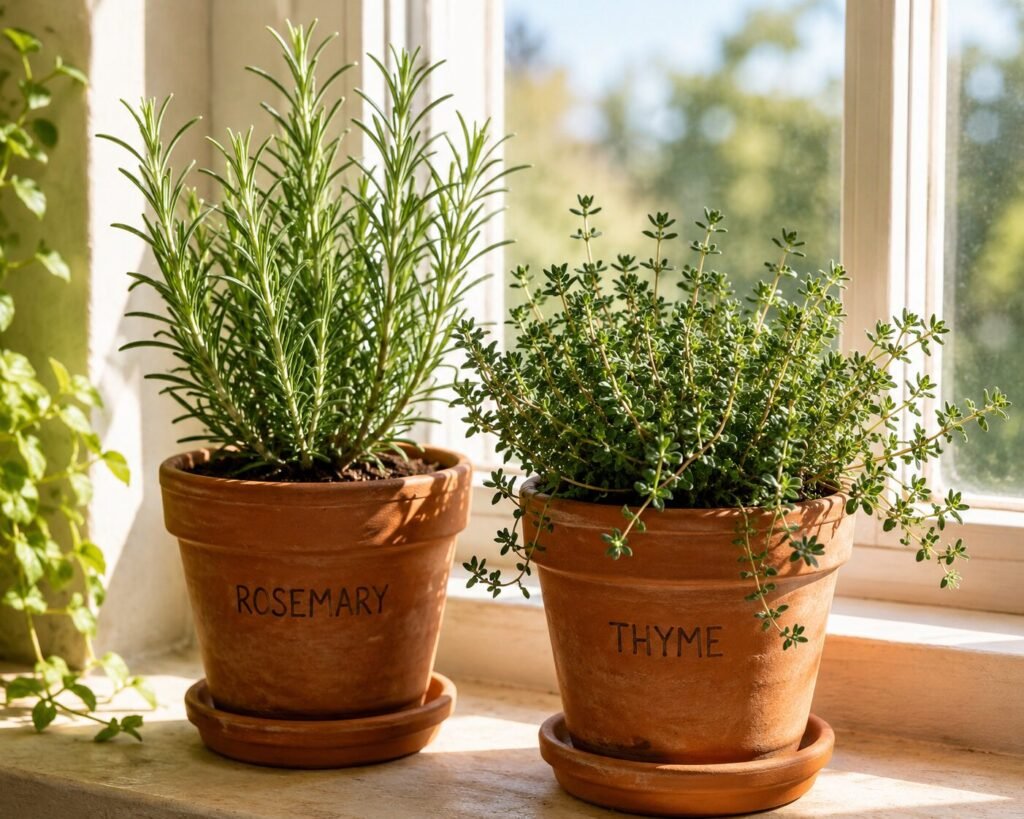
| Rosemary | 6+ hours direct or bright grow-light | Every 1–2 weeks; let top 2 in of soil dry | Upright, woody, slow first year |
| Thyme | 6+ hours direct sun | Every 10–14 days | Low, spreading, compact |
| Sage | 6+ hours direct sun | Every 1–2 weeks | Bushy, wide leaves |
| Oregano | 6+ hours direct sun | Every 10–14 days | Sprawling, vine-like |
| Lavender | 6–8 hours direct sun | Every 2 weeks; very sensitive to overwatering | Upright, fragrant spikes |
| Marjoram | 6 hours direct or bright light | Every 10–14 days | Compact, bushy |
Why Indoor Drought-Tolerant Herbs Fail (and How to Fix It)
The single biggest reason indoor drought-tolerant herbs die isn’t lack of water — it’s the opposite. People treat them like basil or mint, watering on a fixed schedule, and the roots rot in soggy soil.
To grow these herbs successfully indoors:
- Use a fast-draining mix. Combine regular potting soil with perlite, coarse sand, or pumice at roughly a 2:1 ratio.
- Choose a pot with a drainage hole. Without one, excess water has nowhere to go, no matter how careful you are.
- Water deeply, then wait. Soak the soil until water runs from the drainage hole, then don’t water again until the top inch or two feels dry.
- Maximize light. A south-facing window is ideal in the Northern Hemisphere. If natural light is limited, use a full-spectrum grow light for 10–12 hours a day.
- Avoid misting. Unlike tropical houseplants, Mediterranean herbs prefer dry air circulation, not humidity.
- Skip the saucer, or empty it. Standing water in a drip tray keeps roots wet from below even if you water correctly from above.
Common Misconception: “Drought-Tolerant” Doesn’t Mean “No Water”
A common mistake is assuming these herbs can be ignored entirely. Drought tolerance describes how long a plant can go between waterings, not a plant that needs no water at all. Newly potted herbs still need regular watering for the first few weeks while roots establish. After that, you can stretch the interval.
Drought-Tolerant Container Plants for Full Sun and Heat
Container gardens face a unique challenge: pots heat up faster than garden soil and dry out sooner, even with drought-tolerant plants inside them. A terracotta pot in full sun can lose noticeably more moisture than the same plant grown in the ground, simply from evaporation through the container walls.
Top Picks by Plant Type
Succulents and architectural plants
- Agave — striking rosette form, tolerates extreme heat, hardy to zone 8–11 depending on variety
- Sedum (stonecrop) — spreading, ground-hugging, stores water in fleshy leaves
- Portulaca (moss rose) — annual, blooms heavily in poor, dry soil
Flowering annuals and perennials
- Lantana — nonstop blooms through summer heat, attracts pollinators
- Zinnia (especially narrowleaf types) — drought-tolerant and long-blooming
- Blackfoot daisy — native to the Southwest, blooms all season in full sun
- Coneflower (Echinacea) — deep taproot, container-hardy to roughly zone 6
Grasses and foliage plants
- Purple fountain grass — adds height and movement, thrives on minimal water
- Blue fescue — compact, silvery-blue clumping grass
Herbs (see indoor herb table above — most also excel in outdoor containers)
Container-Specific Watering Tips
- Water in the early morning so plants have moisture before peak afternoon heat.
- Group plants with similar water needs in the same pot; mixing a thirsty plant with a xeric one usually kills one or the other.
- Use a light-colored container when possible — dark pots absorb more heat and dry out faster.
- Add a 1-inch layer of mulch or decorative gravel on top of the soil to slow evaporation.
Drought-Tolerant Plants for Garden Beds and Landscaping
Beyond containers and indoor pots, drought-tolerant plants are the backbone of low-water landscaping, sometimes called xeriscaping. Once established, these plants can go through an entire summer with rainfall alone in most temperate climates in USDA zones.
Drought-Tolerant Perennials
| Plant | USDA Zones | Height | Notes |
| Coneflower (Echinacea) | 3–9 | 2–3 ft | Long taproot; choose native species for best drought tolerance |
| Yarrow | 3–9 | 1–3 ft | Feathery foliage, attracts beneficial insects |
| Russian sage | 4–9 | 3–5 ft | Silvery foliage, purple flower spikes |
| Catmint | 3–8 | 1–2 ft | Long bloom season, deer-resistant |
| Sedum | 3–9 | 4 in–2 ft | Succulent leaves store water |
| Baptisia | 3–9 | 3–4 ft | Needs supplemental water the first year only |
Drought-Tolerant Shrubs
| Plant | USDA Zones | Height | Notes |
| Juniper | 3–9 | Varies widely | Needle-like foliage minimizes water loss |
| Butterfly bush | 5–9 | 5–10 ft | Fast-growing, attracts pollinators |
| Blue fescue | 4–8 | 8–12 in | Compact ornamental grass |
| Feather reed grass | 4–9 | 3–5 ft | Upright, vertical accent |
| Rosemary (grown as a hedge) | 8–10 | 2–4 ft | Doubles as a culinary herb |
Inexpensive Drought-Tolerant Landscaping
Replacing a thirsty lawn or flowerbed with drought-tolerant landscaping is one of the most effective ways to cut both water bills and maintenance time — and it doesn’t require a large budget if you plan carefully.
Step-by-Step: Budget Xeriscaping
- Start small. Convert one problem area first, such as a strip along a driveway or a slope that’s hard to mow, instead of the whole yard.
- Kill existing turf without chemicals. Lay cardboard or newspaper over grass, then cover it with mulch. The grass dies and decomposes, adding organic matter to the soil for free.
- Group plants by water need. This “hydrozoning” approach means you’re never overwatering low-need plants to keep thirsty ones alive nearby.
- Choose small starter plants over mature ones. A 4-inch perennial costs a fraction of a 1-gallon plant and often catches up in size within a season or two.
- Divide and propagate. Many drought-tolerant perennials, like yarrow and sedum, can be divided every few years, turning one plant purchase into several free ones.
- Use mulch generously. A 2–3 inch layer of wood mulch, gravel, or decomposed granite cuts evaporation and weed competition, reducing how often you need to water or weed.
- Skip the irrigation system at first. Hand-watering with a hose during the establishment period (roughly the first year) is free; a full drip system can be added later once you know the layout works.
- Ask local extension offices about rebates. Many U.S. water utilities and Canadian municipalities offer cash-back programs for replacing lawn with drought-tolerant plantings.
Cost-Saving Materials Comparison
| Material | Approximate Cost | Water Savings | Best Use |
| Wood mulch | Low | Moderate | Garden beds, around shrubs |
| Gravel/decorative rock | Moderate | High | Pathways, xeric plant beds |
| Decomposed granite | Moderate | High | Southwest-style landscaping |
| Native perennial plugs | Low | High (once established) | Filling large areas affordably |
| Drip irrigation | Higher upfront, saves long-term | High | Established beds needing occasional water |
Pros and Cons of Drought-Tolerant Gardening
| Pros | Cons |
| Lower water bills | Slower to fill in than water-hungry plants |
| Less frequent watering and maintenance | Some varieties look sparse in their first year |
| Fewer pest and fungal problems (dry conditions discourage rot and mildew) | Not all drought-tolerant plants tolerate cold winters equally |
| Better for the environment in water-stressed regions | Poor drainage soil requires amending before planting |
| Often lower long-term cost than turf lawns | Limited color palette compared to tropical or cottage-garden plants |
Common Misconceptions About Drought-Tolerant Plants
- “Drought-tolerant means no water at all.” Every plant needs regular water while its roots are establishing, typically the first growing season.
- “Succulents and cacti are the only drought-tolerant options.” Many familiar perennials, herbs, and even ornamental grasses qualify.
- “Drought-tolerant plants can’t be colorful.” Lantana, coneflower, zinnia, and Russian sage all provide season-long color.
- “You can’t grow drought-tolerant plants in containers.” Containers just require more attention to soil mix and watering frequency than in-ground beds.
- “All Mediterranean herbs have the same needs.” Basil, cilantro, and parsley are not drought-tolerant and need consistently moist soil, unlike rosemary, thyme, and sage.
Frequently Asked Questions
What are the easiest drought-tolerant herbs to grow indoors for beginners?
Rosemary, thyme, and oregano are the most forgiving. They tolerate irregular watering better than lavender, which is more sensitive to soggy soil.
Do drought-tolerant plants need full sun?
Most do. The traits that make a plant drought-tolerant, like silvery foliage and thick leaves, typically evolved to handle intense sun exposure, so these plants usually perform best with 6 or more hours of direct light.
How often should I water drought-tolerant plants in containers?
Water when the top 1–2 inches of soil feel dry, typically every 1–2 weeks outdoors in summer. Check more often during heat waves, since containers dry out faster than garden beds.
Read more: How Often to Water Herbs? Indoor, Outdoor, and Potted Herb Watering Guide
Can drought-tolerant plants survive without any water during a drought?
Established plants can survive extended dry periods, but “drought-tolerant” doesn’t mean “no water ever.” Extreme, prolonged drought can still stress or kill even well-adapted plants.
What’s the difference between drought-tolerant and low-maintenance?
They overlap but aren’t identical. A plant can be drought-tolerant yet still need regular pruning, deadheading, or pest management. Low-maintenance refers to overall care, while drought-tolerant refers specifically to water needs.
Is xeriscaping the same as drought-tolerant landscaping?
Xeriscaping is a design approach built entirely around minimizing water use through plant choice, mulch, and layout. Drought-tolerant landscaping is one part of that approach — you can use drought-tolerant plants without following every xeriscape principle, such as strict hydrozoning.
What herbs should I avoid if I want a drought-tolerant indoor garden?
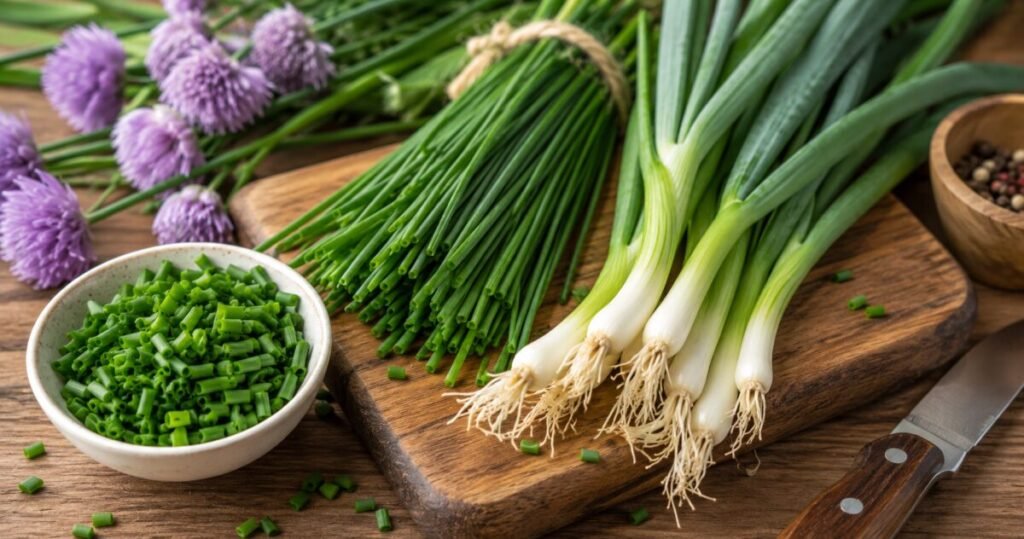
Basil, mint, cilantro, parsley, and chives need consistently moist soil and will struggle if you water them on a drought-tolerant schedule.
How long does it take for a drought-tolerant plant to become established?
Most perennials and shrubs need one full growing season, sometimes up to a year, before their root systems are developed enough to handle drought stress without extra watering.
What USDA zones are best for drought-tolerant gardening?
Drought-tolerant plants exist for nearly every USDA zone, but zones 5–10 have the widest selection of Mediterranean herbs and xeric perennials that thrive with minimal water.