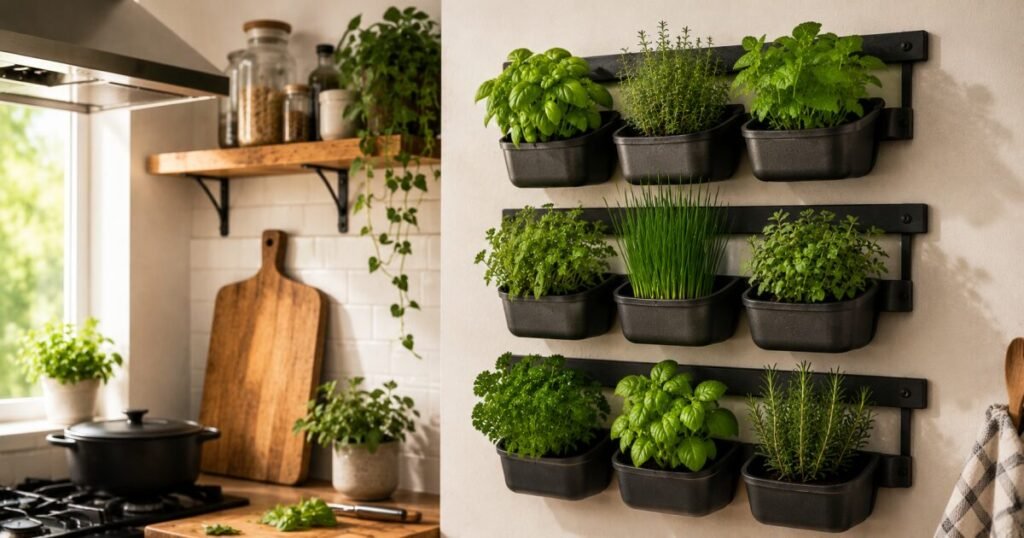
Quick Answer: A vertical herb garden wall is a wall-mounted planting system that holds multiple herbs in pockets, pots, or shelves attached directly to an indoor wall, usually in the kitchen. It saves counter space, keeps herbs within easy reach while cooking, and works with felt pockets, resin planters, floating shelves, or modular panel systems, depending on your wall type and budget.
Key Takeaways
- A vertical herb garden wall mounts planters directly onto a wall surface, unlike a general vertical garden, which can also include freestanding shelves or hanging systems that don’t attach to the wall itself.
- Wall type determines your mounting method. Drywall needs anchors and weight limits checked carefully; mounting into a stud is always the sturdiest option for anything holding wet soil.
- Moisture protection is the most overlooked step. Any wall-mounted planter touching drywall, paint, or wallpaper needs a barrier, like plastic sheeting or a waterproof backing, to prevent staining, mold, or wall damage.
- Kitchen walls near stoves or sinks need extra planning for heat exposure, grease buildup, and humidity, which affect both plant health and long-term wall condition.
- Felt or fabric pocket planters are the cheapest and easiest to install; resin and modular panel systems cost more but last longer and handle water better.
- Most systems can hold 6 to 12 herb plants in the same wall space that a single shelf would otherwise use.
What Is a Vertical Herb Garden Wall?
A vertical herb garden wall is a planting system in which herbs grow in containers mounted directly on a wall, rather than sitting on a shelf, counter, or floor. The wall itself becomes the support structure, whether that’s through hanging brackets, adhesive-backed pockets, or a full modular panel system screwed into studs.
This is a more specific setup than the broader category of “vertical gardening,” which can also include freestanding ladder shelves or hanging jars that never actually touch the wall. A true wall herb garden is fixed to the wall surface itself, which changes the practical considerations involved; mounting hardware, wall material, moisture protection, and weight limits become central to getting it right.
Why Choose a Wall Herb Garden Over Other Options?
- Zero counter or floor footprint. Every inch of growing space comes from wall area you weren’t otherwise using.
- Consistent, fixed positioning near your cooking area. Unlike a freestanding shelf, a wall-mounted system stays exactly where you put it, which matters in a busy kitchen.
- A strong visual design element. A well-planned herb wall doubles as a piece of kitchen decor, something that’s harder to achieve with a cluttered row of pots.
- Easier to keep clean underneath. With nothing sitting directly on the counter, wiping down surfaces during cooking is simpler.
Types of Wall Herb Planters
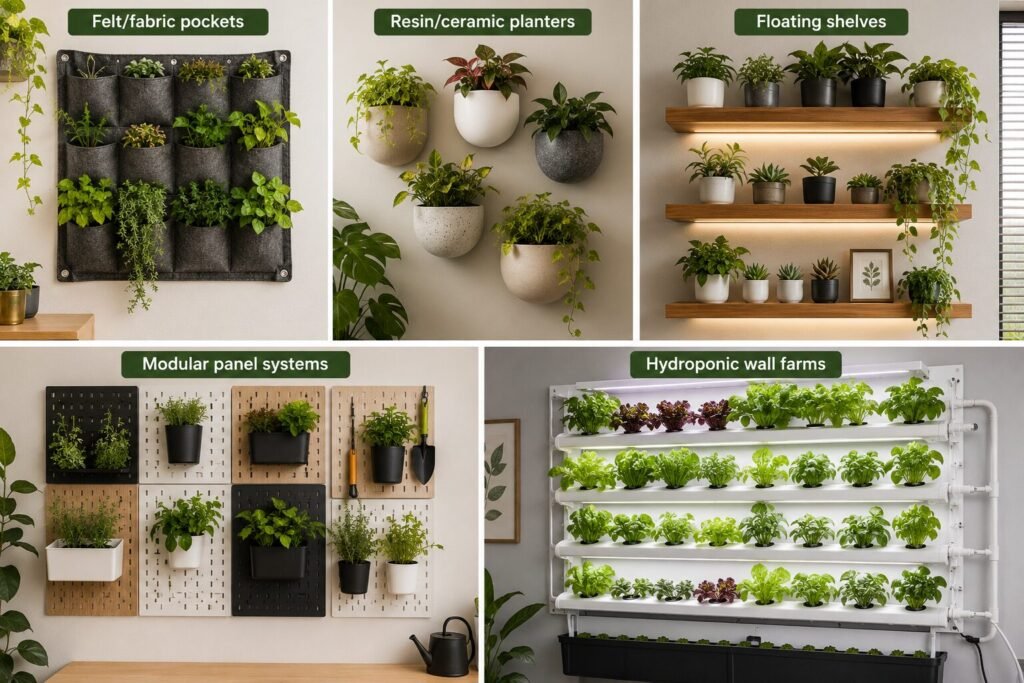
1. Felt and Fabric Pocket Planters
These lightweight panels have several sewn pockets, each holding one herb plant in soil. They’re inexpensive and easy to hang using grommets or hooks.
Pros:
Low cost, easy to install, widely available.
Cons:
Fabric retains moisture against the wall if not sealed properly; shorter lifespan than rigid planters.
2. Resin or Ceramic Wall Planters
Individual rigid containers mount to the wall using keyhole brackets or drywall anchors, either as single units or in a coordinated row.
Pros:
Durable, weather- and moisture-resistant, often self-watering.
Cons:
Heavier than fabric options, so mounting hardware and wall strength matter more.
3. Floating Shelf Planters
Small shelves, mounted with hidden brackets or French cleats, hold individual pots rather than built-in planting compartments.
Pros:
Flexible, lets you swap or rearrange individual pots easily.
Cons:
Takes up more wall depth than flush-mounted pocket systems.
4. Modular Panel/Living Wall Systems
Interlocking planting modules, sometimes called “living wall” systems, connect into a larger grid on the wall, often used for denser herb or plant walls.
Pros:
Scalable, can start small and expand over time.
Cons:
Higher upfront cost; heavier when fully planted, so wall reinforcement is often necessary.
5. Self-Contained Hydroponic Wall Farms
Wall-mounted units that combine planting pods with a built-in water reservoir, pump, and sometimes an LED grow light, eliminating manual soil watering.
Pros:
Minimal maintenance, consistent watering and lighting.
Cons:
Highest upfront cost of the wall-mounted options; requires nearby power access.
Comparing Wall Planter Types
| Type | Approx. Cost | Weight When Planted | Water Management | Best For |
| Felt/fabric pockets | $15–$40 | Light | Manual, needs moisture barrier | Renters, budget setups |
| Resin/ceramic planters | $30–$80 each | Moderate | Often self-watering | Long-term kitchen installs |
| Floating shelves | $20–$60 | Moderate to heavy | Manual, standard pots | Flexible, changeable displays |
| Modular panel systems | $100–$400+ | Heavy | Varies by system | Larger herb or living walls |
| Hydroponic wall farms | $150–$400+ | Moderate | Automated | Hands-off, tech-forward growers |
How to Mount a Herb Garden Wall: Step-by-Step
Step 1: Identify Your Wall Type
Drywall, plaster, tile, and brick all require different mounting hardware. Use a stud finder to locate wall studs before you commit to a mounting plan, since anything holding wet soil is safer anchored into a stud than into drywall alone.
Step 2: Choose the Right Mounting Hardware
- Into a stud: standard wood screws are sufficient for most planter weights.
- Into drywall without a stud: use rated drywall anchors matched to the planter’s filled weight, not its empty weight. Wet soil is significantly heavier than it looks.
- Into tile or brick: use masonry anchors and a masonry drill bit; standard drywall anchors won’t hold in these materials.
Step 3: Add a Moisture Barrier
This is the step most tutorials skip, and it’s the one that prevents long-term wall damage. Attach a layer of plastic sheeting, a waterproof liner, or a sealed backing board behind any fabric or unsealed planter before mounting it. Even “drip-resistant” designs can transfer moisture into paint or drywall over months of watering.
Step 4: Check Weight Limits Before Planting
Calculate the fully planted weight (container plus wet soil plus mature plant) before mounting, not after. A single 6-inch pot of wet potting soil can weigh 3–5 pounds; a full panel of 8–12 pockets can easily exceed 25–40 pounds once watered.
Step 5: Position for Light and Reach
Mount your herb wall where it gets at least 6 hours of bright light daily, ideally near a window, and at a height you can comfortably reach for regular watering and harvesting, typically between waist and eye level.
Step 6: Water from the Top, Check for Runoff
Water slowly from the top row down, and check underneath your first watering to confirm your moisture barrier and drainage setup is actually working before you rely on it long-term.
Special Considerations for Kitchen Walls
Kitchen walls come with a few extra factors that a bedroom or living room herb wall doesn’t need to deal with.
Heat Exposure Near Stoves
Herbs mounted too close to a stove or oven can dry out quickly from ambient heat, and some plastics or resins used in budget planters can warp near consistent heat sources. Keep wall-mounted herb gardens at least 18–24 inches from a stovetop’s direct heat zone.
Grease and Humidity
Cooking releases airborne grease and steam, which can build up on leaves over time and affect both plant health and appearance. Herbs mounted directly above a stove need more frequent leaf wiping than those mounted elsewhere in the kitchen.
Water Splashing Near Sinks
A herb wall positioned near a sink benefits from convenient access for watering, but it also faces a higher risk of accidental splashing, which can damage wall paint or drywall if a moisture barrier isn’t in place.
Best Herbs for a Vertical Herb Garden Wall
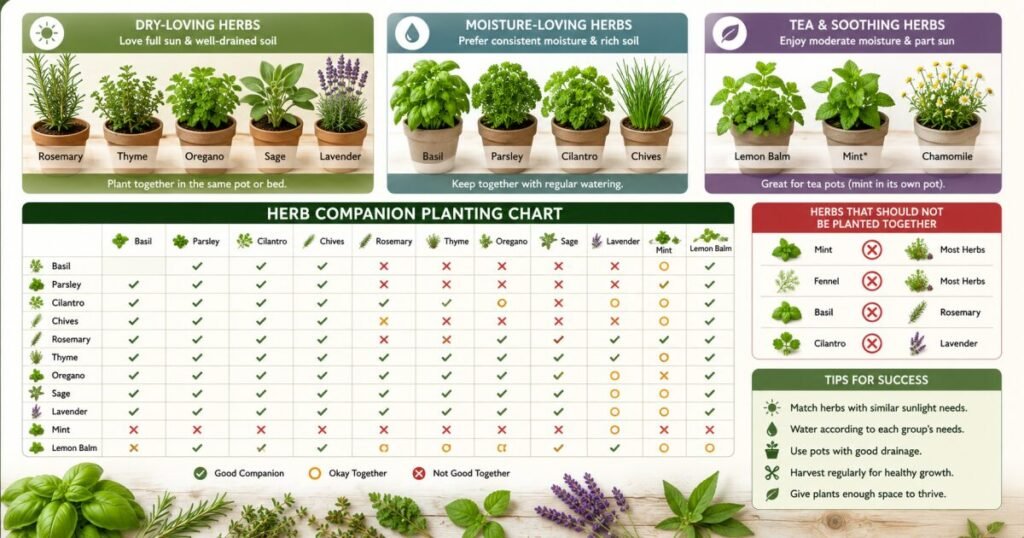
| Herb | Light Needs | Notes for Wall Mounting |
| Basil | 6+ hours bright light | Fast-growing, benefits from a lower, easily reachable pocket |
| Thyme | 6+ hours direct sun | Drought-tolerant, does well in drier, sunnier top positions |
| Rosemary | 6+ hours direct sun | Needs excellent drainage; avoid fabric pockets that trap moisture |
| Mint | Moderate to bright light | Vigorous grower; give it its own pocket so it doesn’t crowd neighbors |
| Chives | Bright light | Compact, well-suited to smaller wall pockets |
| Parsley | Moderate to bright light | Tolerates slightly less direct light than Mediterranean herbs |
Pros and Cons of a Vertical Herb Garden Wall
| Pros | Cons |
| Saves counter and floor space entirely | Requires proper mounting hardware and wall assessment |
| Keeps herbs within easy reach while cooking | Moisture protection is essential to avoid wall damage |
| Can hold many herb varieties in one compact area | Heavier systems may need stud mounting or reinforcement |
| Doubles as a decorative kitchen feature | Renters may need removable or low-damage mounting options |
| Scalable, from a single pocket panel to a full living wall | Upper and lower sections may need different watering attention |
Common Misconceptions About Wall-Mounted Herb Gardens
“Any wall can hold a herb garden without extra prep.”
Wall material and stud location directly affect what mounting hardware you need and how heavy a planted system can safely be.
“Waterproof planters don’t need a wall barrier.”
Even self-watering or waterproof containers can transfer condensation or minor drips to the wall behind them over time; a barrier is still good practice.
“Renters can’t have a wall herb garden.”
Tension-mounted shelving, removable adhesive hooks rated for the planter’s weight, and freestanding ladder alternatives all allow a wall-style herb garden without permanent damage.
“Fabric pocket planters last as long as rigid ones.”
Fabric is more prone to mold, mildew, and breakdown from repeated watering, and typically needs replacing sooner than resin or ceramic options.
“More pockets always mean more successful herbs.”
An oversized system without adequate light or careful watering attention across every pocket often performs worse than a smaller, well-maintained one.
Frequently Asked Questions
What is the best way to mount a herb garden on a kitchen wall?
For any planter holding wet soil, mounting into a wall stud with standard screws is the most secure option. If you must mount into drywall alone, use anchors rated for the planter’s fully planted weight, not its empty weight.
Do wall-mounted herb planters damage the wall?
They can, if there’s no moisture barrier between the planter and the wall surface. Adding plastic sheeting or a waterproof backing behind fabric or unsealed planters prevents staining, mold, and paint damage over time.
How many herbs can fit on a vertical herb garden wall?
Most panel or pocket systems hold 6 to 12 plants in a compact space, though modular living wall systems can hold significantly more if you’re willing to expand the setup over time.
Can I put a herb garden wall near my stove?
Yes, but keep it at least 18 to 24 inches from the stove’s direct heat zone to prevent the herbs from drying out too quickly and to avoid warping plastic or resin planters.
What’s the difference between a vertical herb garden wall and a regular vertical herb garden?
A vertical herb garden wall is mounted directly onto a wall surface. The broader term “vertical herb garden” also includes freestanding shelves, hanging systems, and towers that don’t attach to a wall at all.
Meta Description:
URL Slug: /vertical-herb-garden-wall