Quick Answer: An indoor vertical herb garden grows herbs upward instead of outward, using wall-mounted planters, tiered shelves, hanging pockets, or hydroponic towers to fit fresh herbs into a small kitchen, apartment, or windowsill. It’s the most space-efficient way to grow several herbs indoors without dedicating counter or floor space to individual pots.
Key Takeaways
- A vertical herb garden indoor setup uses height instead of floor space, making it ideal for small kitchens, apartments, and rentals.
- The four main types are wall-mounted pocket planters, tiered shelf stands, hanging systems, and hydroponic towers, each with different cost, maintenance, and space trade-offs.
- Light and gravity both work against lower rows. Upper tiers get more light and dry out faster; lower tiers stay shadier and wetter, so herb placement should match each plant’s needs.
- A basic DIY vertical herb garden can be built for under $30–50 using materials like a shoe organizer, mason jars, or a simple shelf ladder.
- Avoid using old wooden shipping pallets indoors. Many are chemically treated for pest control during shipping, and that residue is not something you want near edible plants in an enclosed indoor space.
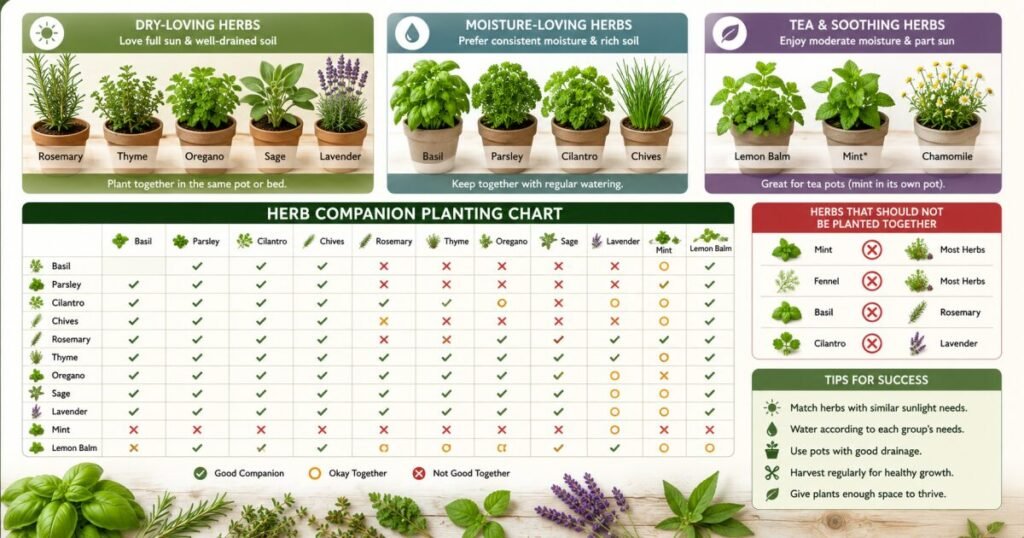
- Drought-tolerant Mediterranean herbs (thyme, oregano, rosemary) do best in the driest, best-lit top rows; moisture-loving herbs (mint, parsley, chives) do better lower down.
What Is a Vertical Herb Garden?
A vertical herb garden is a growing system that arranges multiple herb plants in a stacked or upward-facing layout rather than spreading them across a flat surface. Indoors, this usually means mounting planters on a wall, stacking tiers on a shelf unit, hanging pockets from a rod, or using a self-contained hydroponic tower.
The core advantage is simple: square footage indoors is expensive and limited, but wall space and vertical air space are usually free. A vertical system can fit 8 to 15 herb plants in the same footprint that a single traditional pot would use on a counter.
Why Grow Herbs Vertically Indoors?
- Space efficiency. A vertical system uses wall or shelf space instead of counters, which matters most in apartments, small kitchens, and rentals.
- Better organization for multiple herbs. Instead of a cluttered row of separate pots, a vertical system keeps everything in one visual, easy-to-reach spot.
- Easier light management. Many vertical designs let you position sun-loving herbs on the top rows and shade-tolerant herbs lower down, matching each plant to its ideal light exposure.
- A stronger visual and design element. A well-built vertical herb garden doubles as kitchen decor, something a row of plastic pots on a windowsill rarely achieves.
Types of Indoor Vertical Herb Gardens
1. Wall-Mounted Herb Garden
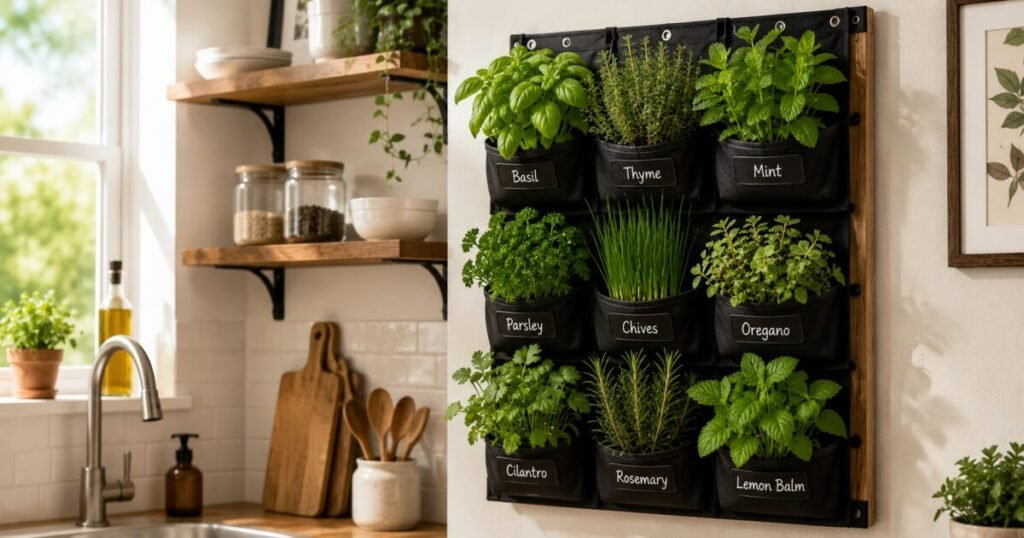
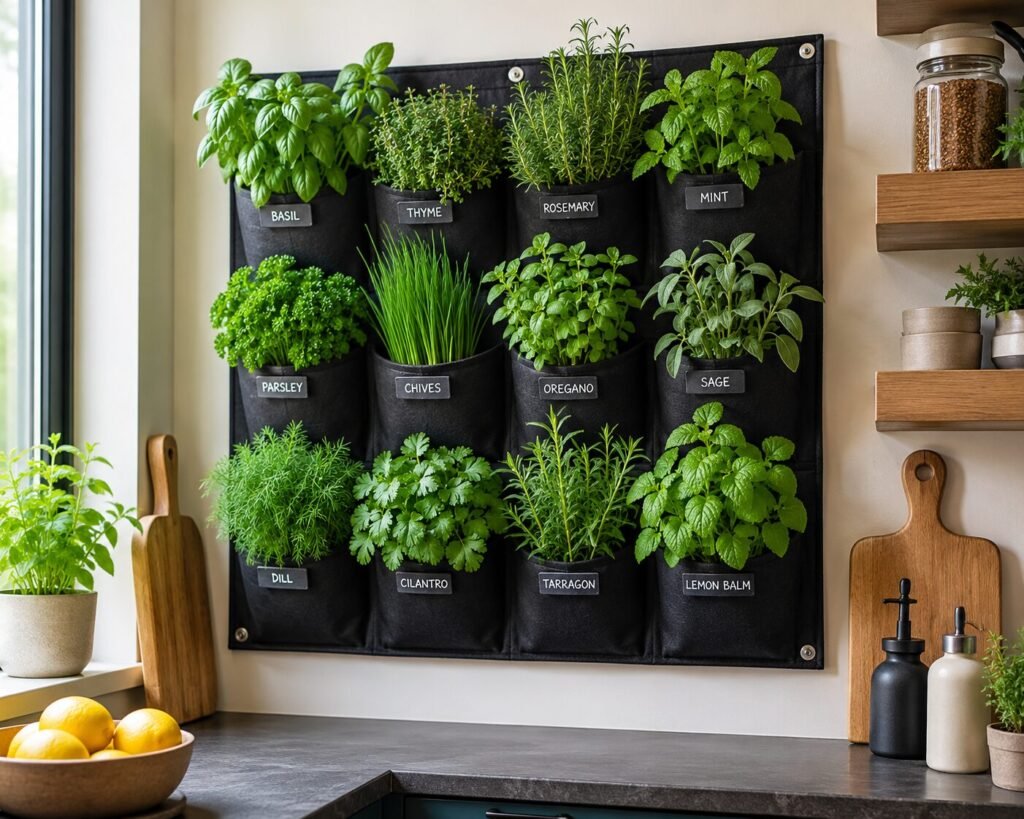
Fabric, felt, or plastic pockets attach to a wall-mounted backing, with each pocket holding one herb. This is the most popular style for kitchens because it takes up almost no depth.
Best for: Small kitchens with an open wall near a light source.
2. Tiered Shelf Stands
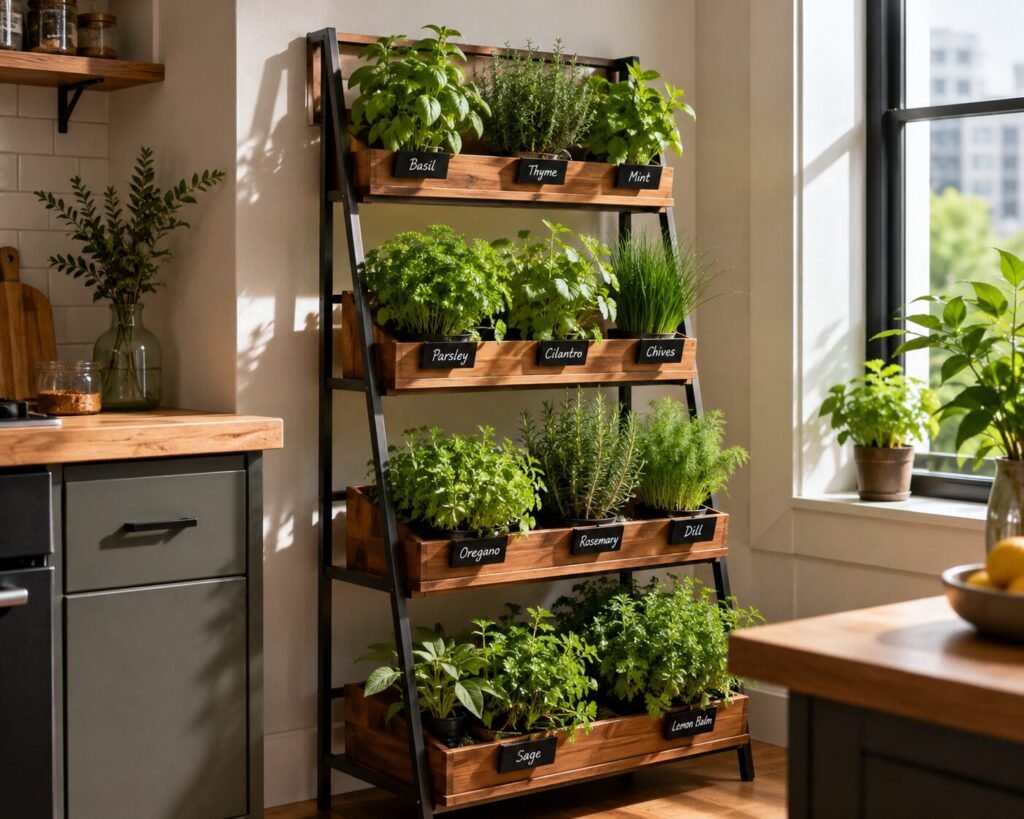
A freestanding shelf unit, often ladder-shaped, holds a row of pots on each level. This style requires floor space but no wall mounting or drilling, which makes it ideal for renters.
Best for: Renters, or anyone who wants to move the garden between rooms or seasons.
3. Hanging Systems
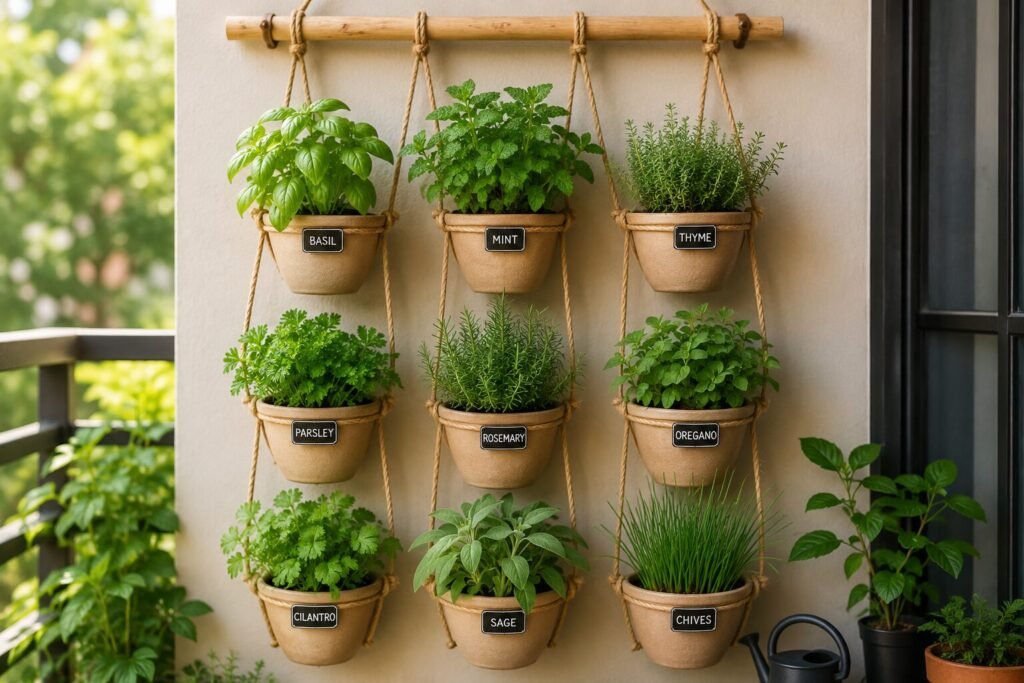
Individual pots or jars hang from a rod, rail, or macrame hangers, often over a sink, window, or kitchen island. Mason jars secured with pipe clamps are a particularly popular DIY take on this style.
Best for: Compact spaces with a sunny window but no open wall.
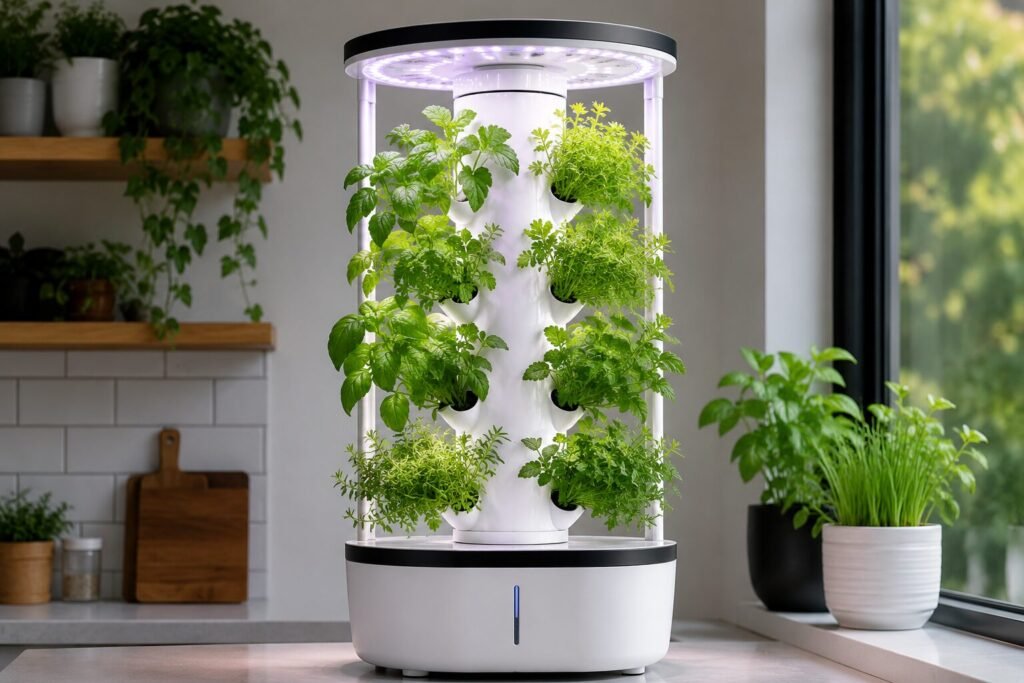
4. Hydroponic Vertical Towers
Self-contained systems, such as the Click & Grow Wall Farm or similar tower-style hydroponic units, combine multiple growing pods with a built-in water reservoir, pump, and often an LED grow light, all stacked vertically.
Best for: People who want the space efficiency of a vertical design without manual soil watering, and who don’t mind a higher upfront cost.
Read more: Indoor Hydroponic Herb Garden: How it Works and How to Start
Comparing the Four Types
| Type | Approx. Cost | Maintenance | Renter-Friendly | Light Source |
| Wall-mounted pockets | $20–$60 | Moderate (manual watering) | Depends on mounting method | Natural or added grow light |
| Tiered shelf stand | $30–$100 | Low to moderate | Yes | Natural or added grow light |
| Hanging jars/pots | $15–$50 | Moderate | Yes, with tension rods | Natural light, near a window |
| Hydroponic tower | $150–$400+ | Low (automated) | Yes, fully freestanding | Built-in LED grow light |
DIY Vertical Herb Garden: Step-by-Step
Building your own vertical herb garden indoors is straightforward with basic materials, and it’s one of the most affordable ways to grow several herbs in a small space.
Materials You’ll Need
- A backing structure: a hanging shoe organizer, a wooden ladder shelf, a pallet-style crate, or a simple board with hooks
- Individual planters: mason jars, small terra cotta pots, or fabric pockets, depending on your chosen backing
- Fast-draining potting mix
- Herb seedlings or seeds
- A watering can with a narrow spout for controlled watering
- Wall anchors or hooks, if wall-mounting
Step-by-Step Instructions
- Choose your backing structure. A canvas shoe organizer with multiple pockets is one of the fastest, cheapest indoor options, since each pocket already functions as a planting pocket.
- Add drainage. Cut or poke small drainage holes at the bottom of each pocket or container, and place a small saucer or tray underneath to catch runoff, protecting your wall or floor.
- Mount or position your structure near your best indoor light source, ideally a south-facing window, or plan to add a small clip-on grow light if natural light is limited.
- Fill each pocket or pot with potting mix, leaving about half an inch of space below the rim to prevent overflow when watering.
- Plant one herb type per pocket. Mixing herbs with very different water needs in the same pocket usually causes one of them to struggle.
- Water from the top down, and water slowly. Gravity pulls moisture downward through a vertical system, so top rows dry out fastest and need more frequent attention, while lower rows retain more moisture.
- Rotate or adjust plant placement if you notice some pockets are shadier than others; herbs that need more light can be moved toward the brightest section.
A Note on Pallets Indoors
Wooden shipping pallets are a popular material for outdoor vertical herb gardens, but they’re a poor choice indoors. Many pallets are treated with chemicals during shipping to prevent pest infestation, and that residue isn’t something you want leaching near edible plants in an enclosed space with limited airflow. If you like the rustic pallet look, use new, untreated cedar or pine boards built to the same design instead.
Best Herbs for a Vertical Garden, by Position
Not every herb belongs in the same spot on a vertical system. Matching each plant to the right tier makes a real difference in how well it performs.
| Position | Light/Moisture Conditions | Best Herbs |
| Top row | Brightest light, driest, first to lose moisture | Rosemary, thyme, oregano, sage |
| Middle rows | Moderate light and moisture | Basil, chives, cilantro |
| Bottom row | Shadiest, retains the most residual moisture | Mint, parsley, lemon balm |
Mediterranean herbs like thyme, oregano, and rosemary evolved in dry, rocky, sun-baked conditions, which makes the driest, brightest top row their natural fit. Moisture-loving herbs like mint and parsley do better where residual water collects.
Light Requirements for Indoor Vertical Herb Gardens
Most culinary herbs need at least 6 hours of bright light daily to grow well. A single south-facing window can provide this for a small vertical garden, but taller systems often struggle because upper rows shade the rows below.
Ways to solve uneven lighting in a vertical system:
- Position the entire structure perpendicular to the window rather than flat against a wall, so light reaches more rows at an angle.
- Add a slim clip-on or strip LED grow light angled toward the lower rows.
- Choose a hydroponic tower with a built-in light source if natural light in your space is limited or inconsistent.
- Rotate the entire structure occasionally if it isn’t wall-mounted, so all sides get even light exposure over time.
Pros and Cons of Indoor Vertical Herb Gardens
| Pros | Cons |
| Saves significant counter and floor space | Upper and lower tiers need different watering attention |
| Can hold many more herb varieties than flat pots | Lower rows often get less light unless positioned carefully |
| Doubles as a decorative kitchen feature | DIY versions require some setup time and basic tools |
| DIY versions are inexpensive to build | Wall-mounted versions may not be renter-friendly without careful anchor choices |
| Hydroponic towers automate watering and lighting | Hydroponic tower systems cost significantly more upfront |
Common Misconceptions About Vertical Herb Gardens
- “Any wall-mounted planter will work the same for every herb.” Water and light distribution changes significantly by tier, so plant placement matters as much as the structure itself.
- “Vertical gardens don’t need drainage.” Every pocket or pot still needs a way for excess water to escape, or roots can rot, especially in enclosed indoor pockets with limited airflow.
- “Pallet wood is always safe to reuse for growing food.” Many pallets are chemically treated, which makes them a poor and potentially unsafe choice for indoor edible gardens.
- “A vertical garden needs less light than a flat one.” The light requirement per plant doesn’t change; a vertical layout just requires more planning to make sure every row actually receives it.
- “Hydroponic towers are only for advanced growers.” Most modern hydroponic tower systems are designed for beginners, with automated lighting and nutrient delivery built in.
Frequently Asked Questions
What is the best type of vertical herb garden for a small apartment?
Wall-mounted pocket planters or a compact hydroponic tower are usually the best fit for apartments, since both take up minimal floor space and don’t require permanent wall modifications if you use removable hooks or a freestanding stand.
How do I make a DIY vertical herb garden cheaply?
A hanging canvas shoe organizer is one of the most affordable options. Add drainage holes to each pocket, fill with potting mix, plant one herb per pocket, and hang it near a bright window.
Do all the herbs in a vertical garden need the same amount of water?
No. Upper rows dry out faster due to gravity and typically stronger light exposure, while lower rows retain more moisture. Matching drought-tolerant herbs like rosemary and thyme to upper rows, and moisture-loving herbs like mint to lower rows, produces better results.
Can I use an old wooden pallet for an indoor vertical herb garden?
It’s not recommended. Many pallets are treated with chemicals for pest control during international shipping, and that residue can pose a risk near edible plants in an indoor space. Use new, untreated wood instead if you like the pallet aesthetic.
How much light does an indoor vertical herb garden need?
Most culinary herbs need at least 6 hours of bright light daily. In a vertical layout, lower rows often receive less light due to shading from upper rows, so positioning near a strong light source or adding a supplemental grow light is usually necessary for consistent growth across all tiers.