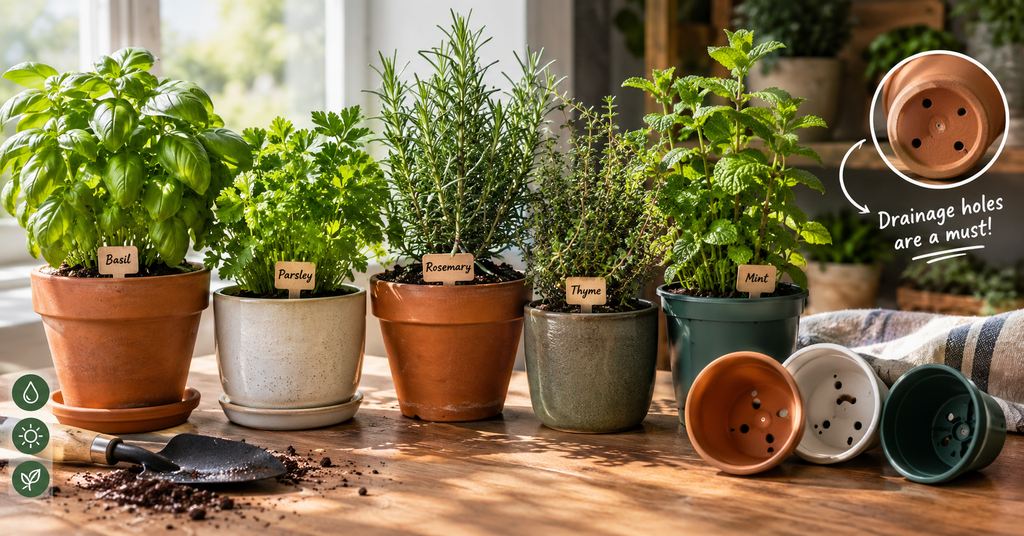
The best pots for indoor herbs are 6–10 inches wide with real drainage holes, sized and matched to each herb’s root type and watering needs.
Quick Answer: What Pots Are Best for Indoor Herbs?
Most indoor herbs thrive in 6–10-inch pots with at least 1–3 drainage holes. The ideal pot balances three things: enough root volume to buffer moisture for 48+ hours, proper drainage to prevent root rot, and a material (terracotta, plastic, or glazed ceramic) that matches your herb’s water needs and your home’s light/heat conditions.
For help choosing herbs that match your available space, light, and experience, you can also use the site’s Indoor Herb Finder.
Why Pot Choice Matters More Than You Think
Indoor herbs live in a confined world where the container controls nearly everything: how fast soil dries, how much oxygen roots receive, and how stable the plant stays as it grows. Unlike outdoor gardens where roots can spread and rain flushes the soil, potted herbs depend entirely on the small volume of media you provide.
Common symptoms your pot is the problem:
- Wilting by mid-afternoon every day → pot is too small
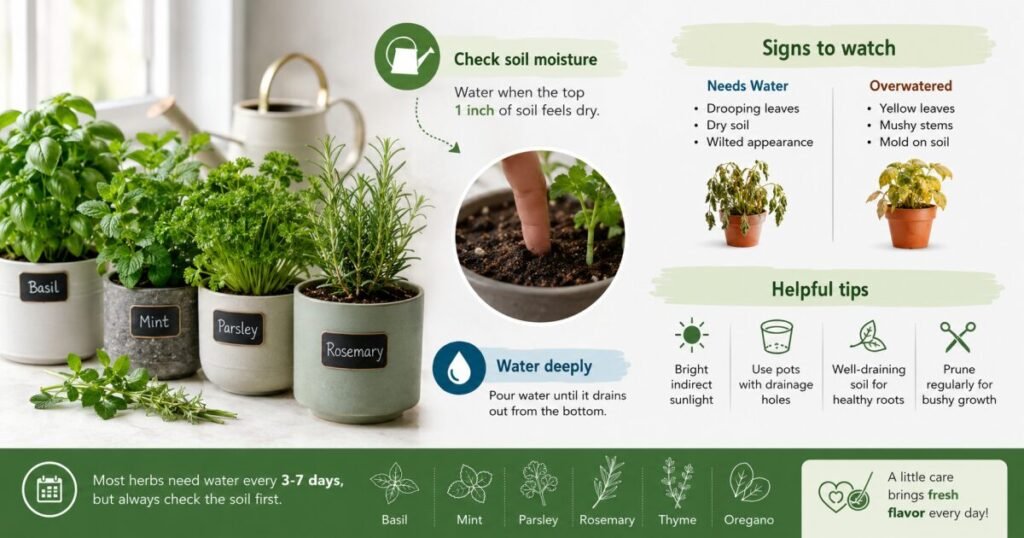
- Yellowing leaves with wet soil and foul smell → lacks drainage
- White crust on terracotta exterior → normal salt buildup, but means faster watering needed
The Non-Negotiable: Drainage Holes
Do indoor herb pots need drainage holes? Yes, absolutely. Without drainage holes, water pools at the bottom, roots lose access to oxygen, and root rot develops within days.
The site’s indoor herb gardening FAQs also recommend drainage holes for indoor herbs and explain why containers without proper drainage increase the risk of soggy soil and root problems.
Drainage hole requirements by pot size:
- Small pots (6 inches or smaller): at least 1 drainage hole
- Medium pots (>6 inches): 2–3 holes at ¼-inch diameter
- Large pots (>15 inches): 3–4 holes at ¼-inch diameter
Always use a saucer to catch runoff, but empty it within 30 minutes so the pot never sits in standing water.
Pot Size Guide: What Size Pots for Indoor Herbs?
Most herbs do best in containers large enough to buffer drying for at least 48 hours. Standard 6–10 inch pots work well for individual herbs, with specific recommendations varying by root type.
Herb-by-Herb Pot Size Recommendations
| Herb | Root Type | Minimum Pot Depth | Pot Diameter | Best Material |
| Parsley | Taproot | 12 inches | 8–10 inches | Plastic or glazed ceramic |
| Cilantro | Taproot | 10–12 inches | 6–8 inches | Plastic |
| Basil | Fibrous | 8–10 inches | 8–10 inches | Plastic |
| Mint | Rhizome spread | 8–10 inches | 8–10 inches (own pot only) | Plastic |
| Rosemary | Lateral roots | 10 inches | 8–10 inches | Terracotta |
| Thyme | Shallow | 6–8 inches | 6–8 inches | Terracotta |
| Oregano | Shallow | 6–8 inches | 6–8 inches | Terracotta |
| Sage | Shallow | 6–8 inches | 6–8 inches | Terracotta |
| Chives | Fibrous | 6–8 inches | 6–8 inches | Plastic or terracotta |
Key sizing rules:
- Avoid pots smaller than 6 inches; they dry out too fast and stress roots
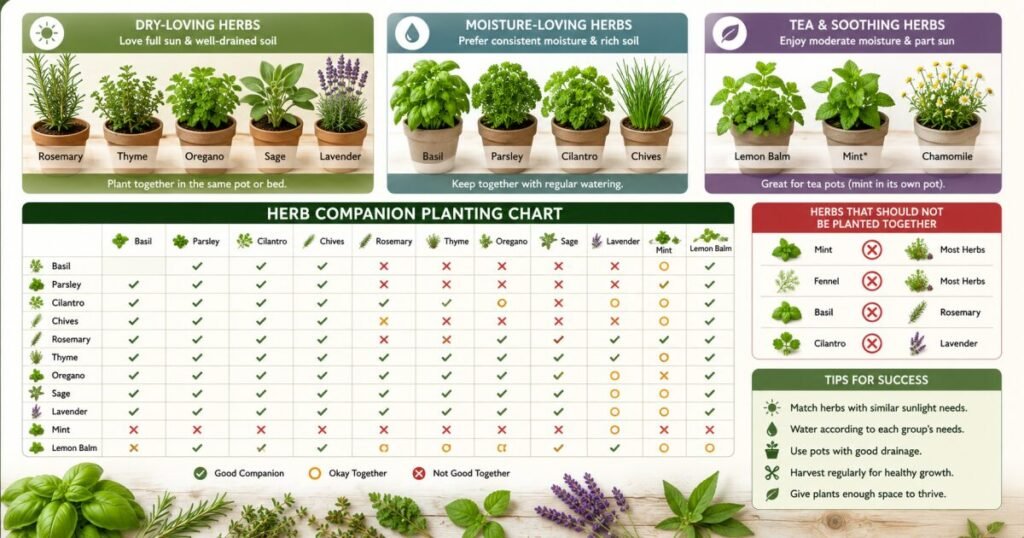
- One herb per pot is simplest; shared planters only work when herbs have identical water needs
- Mint must always have its own pot; it spreads aggressively through rhizomes and will crowd out companions
For more detailed container advice on one of the most popular indoor herbs, see the site’s complete guide to growing basil.
Terracotta vs Plastic Pots for Indoor Herbs
The material debate isn’t about which is “better” it’s about matching the pot to your herb’s natural preferences and your watering habits.
Terracotta (Unglazed Clay) Pots
How they work: Porous walls let moisture and air pass through, creating evaporative cooling and faster drying.
Best for: Mediterranean herbs that prefer drier conditions: rosemary, thyme, oregano, sage, and lavender.
Advantages:
- Breathable walls make overwatering harder
- Creates dry, airy conditions drought-tolerant herbs crave
- Classic aesthetic that looks great on windowsills
- Evaporative cooling protects roots from heat
Trade-offs:
- Soil dries 30–40% faster than plastic under identical conditions
- Requires more frequent watering, especially in hot/windy spaces
- Heavy and fragile
- White mineral crust (efflorescence) builds up on exterior over time
Plastic Pots
How they work: Completely impermeable walls mean water only escapes through drainage holes and surface evaporation, retaining moisture 2–3 times longer than terracotta.
Best for: Moisture-loving, fast-growing herbs: basil, mint, parsley, cilantro, and chives.
Advantages:
- Retains moisture longer between waterings
- Lightweight and easy to move
- Affordable and widely available in every size
- Forgiving for beginners or forgetful waterers
Trade-offs:
- Less airflow reaches roots
- Can overheat soil in direct sun, especially dark plastic
- Poor designs may look less attractive
- Overwatering risk if drainage is inadequate
Glazed Ceramic Pots
Glazed ceramic splits the difference: moderate moisture retention with decorative appeal. The glaze reduces side-wall evaporation compared to unglazed terracotta, but drainage holes remain essential.
Best for: Foliage plants and design-focused setups; works for moisture-loving herbs if drainage is adequate.
Quick Decision Guide
Choose terracotta when:
- Growing Mediterranean herbs (rosemary, thyme, oregano, sage)
- You tend to overwater or have a cool, damp indoor space
- You want evaporative cooling in sunny, hot windows
Choose plastic when:
- Growing thirsty herbs (basil, mint, parsley, cilantro)
- You forget to water or travel frequently
- You need lightweight pots for shelves or hanging setups
- Your space is warm and dry
If you’re growing mint specifically, the site’s complete guide to growing mint indoors covers pot selection, moisture, light, and indoor growing conditions in more detail.
Self-Watering Pots: Good for Indoor Herbs?
Can self-watering pots work for herbs? Yes, they can work well for moisture-loving herbs like basil, mint, and parsley, especially for beginners or busy people.
How they work: A reservoir at the bottom wicks water upward through the soil, maintaining consistent moisture without daily watering.
Best Herbs for Self-Watering Pots
- ✅ Basil
- ✅ Mint
- ✅ Parsley
- ✅ Cilantro
Herbs to Avoid in Self-Watering Pots
- ❌ Rosemary
- ❌ Thyme
- ❌ Oregano
- ❌ Sage
Mediterranean herbs need a pronounced dry interval between waterings, which self-watering systems don’t provide.
Top Self-Watering Pot Picks for Herbs (2026)
| Product | Best For | Price Range | Key Features |
| VIVOSUN 6-inch Self-Watering Pots (3-pack) | Best overall value | Under $25 | Water level window, overflow drainage, standard soil compatible |
| Lechuza Classico LS 21 | Best premium | $55–130 | Float indicator, 3–4 week reservoir, decade-long durability |
| Aquaphoric Herb Garden Planter | Best for kitchen windowsills | Mid-range | Clean design, practical herb-specific setup |
Important notes:
- Self-watering pots still need an airy, well-draining potting mix
- Monitor soil moisture closely at first—reservoirs can stay wet too long in low light
- Not all self-watering pots have traditional drainage holes; they’re designed as closed systems with overflow protection
Best Potting Soil for Indoor Herbs
The key: A light, well-draining organic potting mix with pH 6.0–7.0, plus drainage-boosting ingredients like perlite or coco coir.
What Makes Soil Right for Indoor Herbs?
Indoor herbs need a mix that balances moisture retention with fast drainage. Garden soil compacts in containers, trapping water and starving roots of air. The ideal indoor mix:
- Feels light and fluffy when squeezed, crumbling after a brief hold
- Drains within minutes, not hours
- Contains 25–33% perlite for drainage and 20–35% coir or peat for moisture retention
- Has pH between 6.0–7.0 for most herbs (Mediterranean herbs prefer 7.0–8.0)
For a broader look at growing herbs in containers and choosing the right setup, browse the site’s Growing Herbs section.
DIY Potting Mix Recipe for Indoor Herbs
Standard mix (works for most herbs):
- 2 parts all-purpose potting soil
- 1 part perlite
- 1 part compost or earthworm castings
For Mediterranean herbs (rosemary, thyme, oregano, sage):
- 1 part cactus/succulent mix
- 1 part regular potting soil
- Extra perlite or coarse sand for drainage
Top Potting Soil Brands for Indoor Herbs (2026)
| Product | Type | Best For | Key Features |
| Black Gold All-Purpose Potting Mix | All-purpose | Best overall | Nutrient-rich, slow-release fertilizer, moderate water retention and drainage |
| Miracle-Gro Indoor Potting Mix | Indoor-specific | Best for indoor containers | Omits bark/compost to reduce gnats, feeds for 6 months |
| Black Gold Natural & Organic Potting Soil | Organic | Best organic option | OMRI-certified, includes earthworm castings and perlite |
| FoxFarm Ocean Forest Potting Soil Mix | Premium organic | Best for serious growers | pH-adjusted 6.3–6.8, nutrient-rich with fish/crab meal |
| Miracle-Gro Organic Indoor Potting Mix | Organic indoor | Best budget organic | Contains coconut coir for drainage and airflow |
Soil Mistakes to Avoid
- ❌ Using garden soil – compacts like concrete, blocks drainage, introduces pests
- ❌ “Moisture control” potting mixes – designed to hold water, not drain it; works against containers
- ❌ Adding rocks to the bottom for drainage – myth that actually raises the water table closer to roots, causing rot
- ❌ Reusing old potting soil – can harbor pathogens, pest eggs, and depleted nutrients
One Herb Per Pot vs. Shared Planters
One herb per pot is the simplest and most reliable default. It creates clearer feedback—if basil wilts, you know the basil pot needs attention.
Shared planters work when:
- Herbs have identical moisture preferences (e.g., rosemary + thyme, or basil + parsley)
- The planter is wide enough to avoid instant root crowding
- You understand how fast that specific planter dries out
Never mix:
- Drought-loving and moisture-loving herbs (rosemary + basil = disaster)
- Mint with anything else; it will take over
If you’re planning to grow cilantro in a container, the site’s complete cilantro growing guide specifically covers deep containers, drainage, soil, and indoor growing.
Best Indoor Herb Garden Kits (2026)
If you want an all-in-one solution, smart indoor herb gardens combine pots, lights, and sometimes self-watering systems.
Top Picks
| Product | Best For | Price | Key Features |
| AeroGarden Bounty (9-pod) | Best smart garden overall | $200–280 | 9 pods, 50W LED, strong for productive herb growing |
| Click & Grow Smart Garden 9 | Best aesthetic design | $200–260 | 9 plants, minimalist look, subscription-friendly pods |
| iDOO 12-Pod Hydroponics System | Best value | $80–150 | 12 pods, 22W LED, proven reliability |
| URUQ 8-Pod | Best budget | Under $100 | Compact, good for tight spaces |
AeroGarden vs Click & Grow:
- AeroGarden wins on plant size, root development, and ecosystem maturity
- Click & Grow wins on ease of use, design aesthetics, and wider pod variety (50+ options)
- AeroGarden requires periodic liquid nutrient addition; Click & Grow pods include nutrients
Are herb garden kits worth it? For heavy daily cooking and larger harvests, yes—especially AeroGarden or iDOO systems. For casual cooks in small spaces, Click & Grow’s simplicity and aesthetics may be preferable.
Another option: the site’s monthly herb guide can help you plan which herbs to grow throughout the year.
Common Potting Mistakes to Avoid
- ❌ Using pots without drainage holes – guaranteed to cause root rot
- ❌ Choosing decorative pots that are too small – 3-inch tin pails are for transport, not growing
- ❌ Overcrowding herbs in one container – creates nutrient competition and uneven growth
- ❌ Letting pots sit in water-filled saucers – empty saucers within 30 minutes
- ❌ Mixing herbs with different moisture needs – somebody will always suffer
- ❌ Trying to fix container problems with more watering – often the pot itself is the issue
Frequently Asked questions
What pots are best for indoor herbs?
Pots with real drainage holes, 6–10 inches wide, sized to match each herb’s root type. Plastic works best for moisture-loving herbs (basil, mint), while terracotta suits drought-tolerant Mediterranean herbs (rosemary, thyme).
What kind of pots are best for growing herbs?
The best pots balance root volume, drainage, and material. Avoid tiny decorative pots and containers without holes. Match terracotta to dry-loving herbs and plastic to thirsty ones.
Do herbs like deep or shallow pots?
It depends on the herb. Taproot herbs (parsley, cilantro) need deep pots (10–12 inches). Fibrous-rooted herbs (basil, mint) prefer 8–10 inches. Shallow-rooted herbs (thyme, oregano) can manage in 6–8 inches.
What size pots for indoor herbs?
Most indoor herbs grow best in 6–10 inch diameter pots. Small herbs (chives, thyme) can use 6–8 inches; medium herbs (basil, mint) need 8–10 inches; taproot herbs (parsley) require 10–12 inches depth.
What is the best kit for growing herbs indoors?
The AeroGarden Bounty is a popular smart indoor herb garden for productive growing. For ease and aesthetics, Click & Grow Smart Garden 9 is another option. Budget-conscious growers can consider the iDOO 12-Pod system.
Can I grow multiple herbs in one pot?
Yes, but only if they share similar water and root depth requirements. Never mix drought-loving and moisture-loving herbs, and always give mint its own dedicated pot.
Are self-watering pots good for herbs?
They work well for thirsty herbs like basil, mint, and parsley, but not for Mediterranean herbs that need dry intervals. Monitor soil moisture closely, especially in low light.
Do I need special potting soil for herbs?
No herb-specific soil is required, but use a light, well-draining potting mix (not garden soil) with pH 6.0–7.0 and added perlite for drainage.