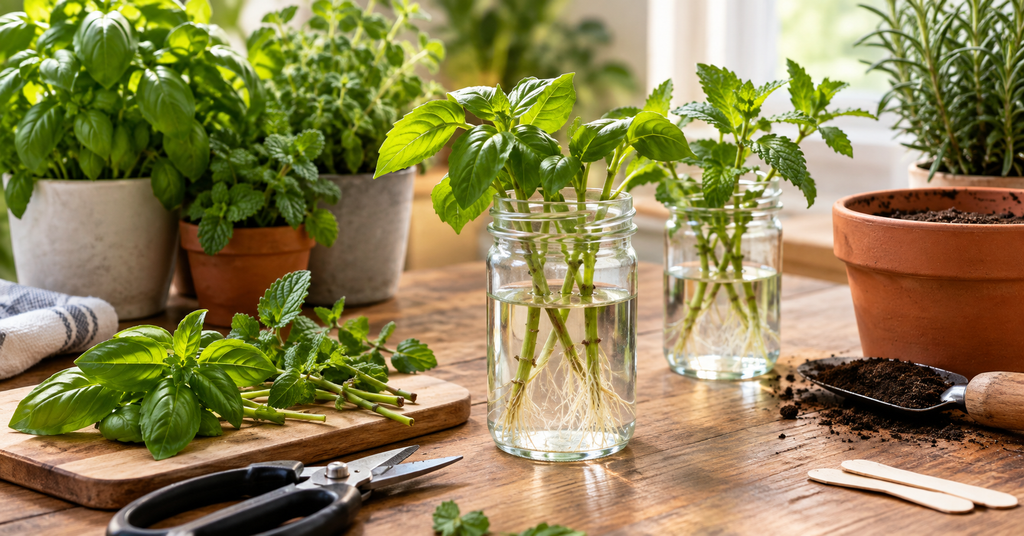
Growing herbs from cuttings is one of the easiest ways to make new plants from herbs you already have. Take a healthy 4–6 inch stem, remove the lower leaves, and root it in water or moist potting mix. Soft-stemmed herbs such as basil, mint, oregano, and lemon balm often root quickly, while woody herbs such as rosemary, thyme, lavender, and sage usually need more patience.
This method can also work with fresh supermarket herbs, provided the stems are healthy and have not been treated in a way that prevents rooting.
- What Does Growing Herbs From Cuttings Mean?
- Which Herbs Grow Well From Cuttings?
- How to Grow Herbs From Cuttings in Water
- How to Plant Rooted Cuttings
- How to Grow Herbs From Cuttings in Soil
- Water or Soil: Which Is Better?
- Can You Grow Herbs From Supermarket Cuttings?
- When Is the Best Time to Take Cuttings?
- How to Grow Herbs From Seeds
- How Long Do Herb Cuttings Take to Root?
- Common Problems and Solutions
- Frequently Asked Questions
- Final Tips for Success
What Does Growing Herbs From Cuttings Mean?
Propagation from cuttings means growing a new plant from part of an existing plant. For most culinary herbs, you use a stem cutting with at least one leaf node the point where leaves grow from the stem.
Unlike growing herbs from seeds, cuttings produce a genetic copy of the parent plant. This is useful when you want more of a particular basil, mint, rosemary, or oregano plant with the same flavor and growth habit.
Cuttings can be rooted in:
- Water.
- Potting mix.
- A very free-draining medium such as sand mixed with potting soil.
For beginners, water propagation is usually the easiest place to start because you can see the roots developing.
Which Herbs Grow Well From Cuttings?
The best herbs for cuttings are healthy plants with flexible, non-flowering stems. Soft-stemmed herbs generally root faster in water, while woody herbs often perform better in soil or a gritty propagation mix. If you’re deciding which plants to start with, this list of culinary herbs you can easily grow indoors is a good place to browse first.
| Herb | Best cutting type | Recommended method | Typical difficulty |
| Basil | Soft green stem | Water or soil | Easy |
| Mint | Soft stem or runner | Water, soil, or division | Very easy |
| Lemon balm | Soft stem | Water or soil | Easy |
| Oregano | Soft or semi-woody stem | Water or soil | Easy |
| Rosemary | Young semi-woody stem | Soil or gritty mix | Moderate |
| Thyme | Softwood cutting | Soil or gritty mix | Moderate |
| Sage | Young softwood or heel cutting | Soil | Moderate |
| Lavender | Semi-ripe cutting | Soil or gritty mix | Moderate |
| Marjoram | Soft or semi-woody stem | Water or soil | Easy |
| Tarragon | Young stem or division | Soil | Moderate |
Annual herbs such as cilantro, dill, and chervil are usually more dependable when grown from seed. Parsley can sometimes root from cuttings, but growing it from fresh seed is generally the simpler option.
Annual herbs such as basil, coriander, dill, and parsley are typically recommended for sowing from seed, while herbs such as rosemary, sage, thyme, oregano, and mint can be propagated using cuttings or division.
What You Need
You do not need specialist equipment. Gather:
- A healthy herb plant or fresh herb stems.
- Clean, sharp scissors or pruning shears.
- A clean glass or jar.
- Room-temperature water.
- A small pot with drainage holes.
- Well-draining potting mix.
- A pencil, chopstick, or dibber.
- Plant labels, if you are growing several varieties.
Clean tools are important because dirty blades can transfer bacteria or disease to the cutting. Wash the blades and wipe them with rubbing alcohol before making your cuts. If you don’t already have a setup for your rooted cuttings, this guide to choosing an indoor herb grower can help you pick containers that suit your space.
How to Grow Herbs From Cuttings in Water
Water propagation works especially well for basil, mint, oregano, lemon balm, and other soft-stemmed herbs.
1. Choose a healthy stem
Select a fresh, green stem without pests, disease, yellow leaves, or flowers. New growth is usually more successful than old, hard, brown wood.
Choose a stem that is about 4–6 inches long and has several healthy leaves near the tip. If possible, take cuttings in the morning, when the plant is less likely to be wilted.
2. Cut just below a leaf node
Use clean scissors to make a cut just below a leaf node. The node is the small joint where leaves emerge from the stem.
Taking several cuttings at once improves your chances of success, especially when you are propagating a herb for the first time.
3. Remove the lower leaves
Strip the leaves from the lower half or lower two-thirds of the stem. Leave several leaves at the top.
Do not allow leaves to sit underwater. Submerged leaves often become slimy, moldy, or rotten.
If the cutting has flowers or flower buds, remove them. This encourages the plant to direct more energy toward root development instead of flowering.
4. Place the stem in water
Put the cutting in a clean glass or jar filled with water. The bare portion of the stem should be submerged, but the leaves should remain above the water.
A narrow container can help hold the stem upright. If the cuttings are crowded, use a larger container so air can circulate the leaves.
5. Provide bright, indirect light
Place the jar somewhere warm with bright, indirect light. A bright windowsill can work, but strong direct sun may heat the water and stress the cutting. Rooting several cuttings in water is also a simple, low-cost way to get a feel for an indoor hydroponic herb garden before investing in a full system.
Avoid very cold windows, hot radiators, and areas exposed to drafts.
6. Refresh the water regularly
Change the water every few days, or sooner if it becomes cloudy or develops an unpleasant smell. Keep the water level high enough to cover the bare nodes.
Remove any yellowing leaves or cuttings that become soft and brown. One unhealthy cutting can encourage decay in the rest of the jar.
7. Wait for roots to develop
Many soft-stemmed herbs begin producing roots within one to three weeks. Woody herbs may take longer or may root less reliably in water.
Wait until the cutting has several healthy roots before transplanting it. Roots around 1–2 inches long are usually easier to handle than tiny root nubs.
How to Plant Rooted Cuttings
When the roots are established, move the cutting into a small pot with drainage holes.
- Fill the pot with moist, well-draining potting mix.
- Make a hole in the center with a pencil or chopstick.
- Lower the roots into the hole without forcing or bending them.
- Firm the mix gently around the stem.
- Water thoroughly and allow excess water to drain.
- Keep the plant in bright, indirect light for several days.
- Gradually introduce stronger light as the plant begins producing new growth.
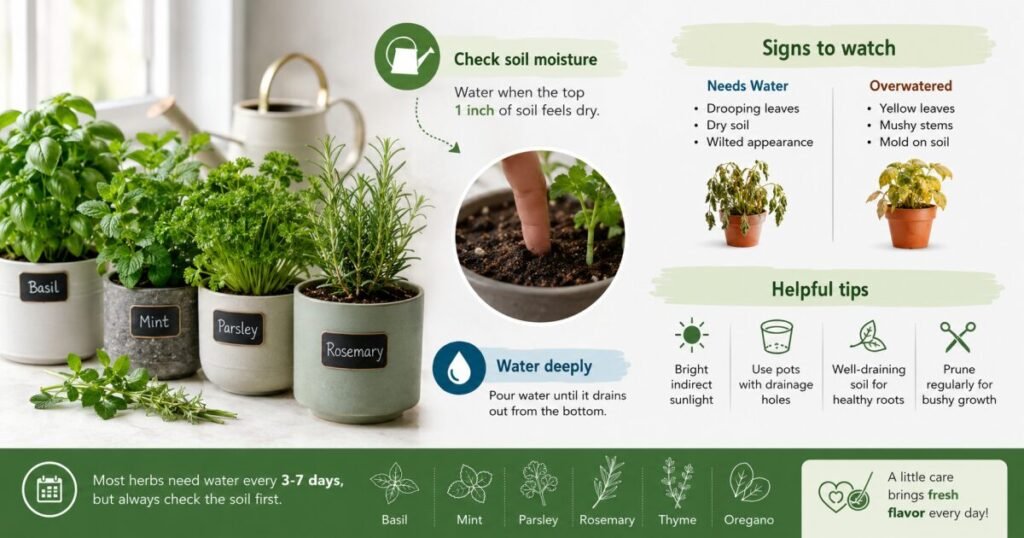
Water-rooted cuttings can wilt briefly after being moved into soil. This happens because roots formed in water need time to adapt to a solid growing medium. Keep the soil lightly moist, but do not leave the pot sitting in water. If you’re unsure how often to check on a newly potted cutting, see how often you should water indoor herb plants.
It’s generally recommended to wait until a cutting has several healthy roots before potting it up, then keep the young plant in filtered light while it adjusts to soil.
How to Grow Herbs From Cuttings in Soil
Rooting directly in soil is often a better choice for rosemary, thyme, lavender, and other woody herbs. The developing roots do not need to transition from water to soil later. Once potted, these woody herbs also do well in a vertical herb garden wall, especially in a small kitchen.
Step-by-step method
- Fill a small pot with a free-draining mix.
- Moisten the mix before planting.
- Take a 4–6 inch cutting from young, healthy growth.
- Remove the leaves from the lower half of the stem.
- Make a hole in the mix so the stem will not scrape against the soil.
- Insert the cutting up to the lowest remaining leaves.
- Firm the mix around the stem.
- Place the pot in bright, indirect light.
- Keep the mix moist but not waterlogged.
- Wait several weeks before checking for roots.
You can gently tug the cutting after a few weeks. Resistance usually indicates that roots have formed, although this method is not perfectly reliable. New leaf growth is another positive sign.
For woody cuttings, a mixture containing potting soil and coarse sand can improve drainage. A small clear cover or loose plastic bag can help maintain humidity, but provide ventilation to reduce the risk of rot and fungal disease.
Water or Soil: Which Is Better?
Neither method is best for every herb. Choose the method based on the type of stem and how much monitoring you want to do.
| Feature | Water propagation | Soil propagation |
| Ease for beginners | Very easy | Easy |
| Main advantage | Roots are visible | Roots adapt directly to soil |
| Best for | Basil, mint, lemon balm, oregano | Rosemary, thyme, lavender, sage |
| Main risk | Rot, algae, transplant shock | Overwatering or drying out |
| Root visibility | Excellent | None until the plant is disturbed |
| Typical timing | About 1–3 weeks for easy herbs | Often several weeks, sometimes longer |
For a first attempt with basil or mint, water is a practical choice. For rosemary or lavender, plant the cutting directly into a gritty, well-draining medium. Not sure which herbs suit your space? Our indoor herb finder can help you narrow it down.
Can You Grow Herbs From Supermarket Cuttings?
Yes, supermarket herbs can sometimes be rooted from cuttings. Basil, mint, oregano, and rosemary are among the better candidates.
For the best chance of success:
- Choose stems that are fresh, green, and firm.
- Avoid stems that are slimy, dried out, or badly bruised.
- Cut a fresh section from the bottom of each stem.
- Remove leaves from the portion that will sit in water or soil.
- Use several stems rather than relying on one.
- Root them as soon as possible after purchase.
Supermarket herbs may have been kept cold, tightly packed, or stored for too long. That can reduce their ability to root, so results are less predictable than with a healthy garden plant.
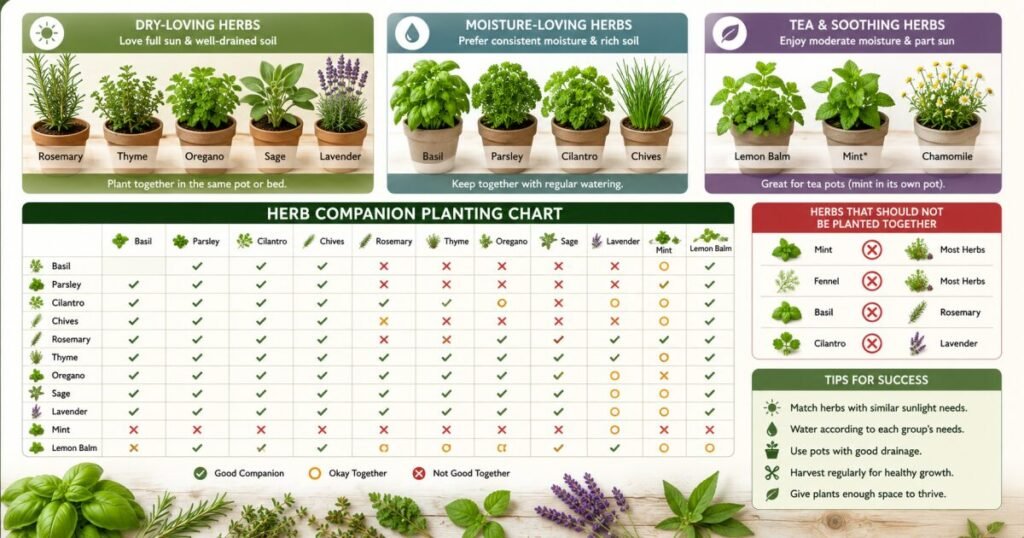
Do not use a supermarket cutting if it shows mold, rot, or signs of disease. A healthy parent plant is the safest source of propagation material. Once you have several rooted herbs on hand, it’s worth checking what herbs can be planted together before grouping them in the same pot.
When Is the Best Time to Take Cuttings?
The best timing depends on the herb and the type of cutting.
For many herbs, late spring through summer provides warm conditions and active growth. Take cuttings from soft, flexible new growth before the stem becomes heavily woody.
For rosemary, lavender, sage, and thyme, semi-ripe cuttings can work well later in the growing season. These stems are beginning to harden at the base while the tips remain relatively soft.
Late spring or summer is generally suitable timing for several herb cuttings, including rosemary, sage, oregano, mint, and thyme, although the exact timing varies by plant.
Avoid taking large numbers of cuttings from a stressed, flowering, pest-damaged, or diseased plant. For a month-by-month breakdown of what to do with your herbs, check our monthly herb guide.
How to Grow Herbs From Seeds
Cuttings are not the right method for every herb. Cilantro, dill, chervil, and parsley are commonly grown from seed, and seeds are also useful when you want many plants or new varieties.
How to grow herbs from seeds indoors
To grow herbs from seeds indoors:
- Fill a clean seed tray or small pot with a fine-textured seed-starting mix.
- Moisten the mix before sowing.
- Sow the seeds at the depth listed on the seed packet.
- Cover the container with a clear lid or loose plastic cover if extra humidity is needed.
- Place it in a warm, bright location.
- Keep the mix evenly moist, not saturated.
- Remove the cover once seedlings emerge.
- Thin crowded seedlings so they receive enough light and air.
- Harden plants gradually before moving them outdoors.
A sunny windowsill can work for some herbs, but weak winter light often produces thin, stretched seedlings. If seedlings become tall and pale, move them closer to a strong light source.
How to grow herbs from seeds in pots
Growing herbs from seeds in pots is useful when you have limited outdoor space.
- Use a pot with drainage holes.
- Choose a container large enough for the mature herb.
- Use fresh, well-draining potting mix.
- Avoid sowing too many seeds in one small pot.
- Label each pot with the herb and sowing date.
- Water gently so seeds are not washed away.
- Thin or transplant seedlings once they develop several true leaves.
Perennial herbs can remain in containers for years if they receive suitable light and are repotted when root-bound. Fast-growing annual herbs may be easier to sow in succession every few weeks rather than planting one large batch.
How Long Do Herb Cuttings Take to Root?
Easy soft-stemmed herbs may begin rooting in one to three weeks. Soil-rooted and woody cuttings commonly take several weeks, and some may take longer in cool or low-light conditions.
The timing depends on:
- Herb species.
- Stem age.
- Temperature.
- Light levels.
- Humidity.
- Moisture and drainage.
- Health of the parent plant.
Do not discard a cutting simply because roots have not appeared after a few days. A firm, green cutting that has not wilted may still be developing roots below the surface.
Common Problems and Solutions
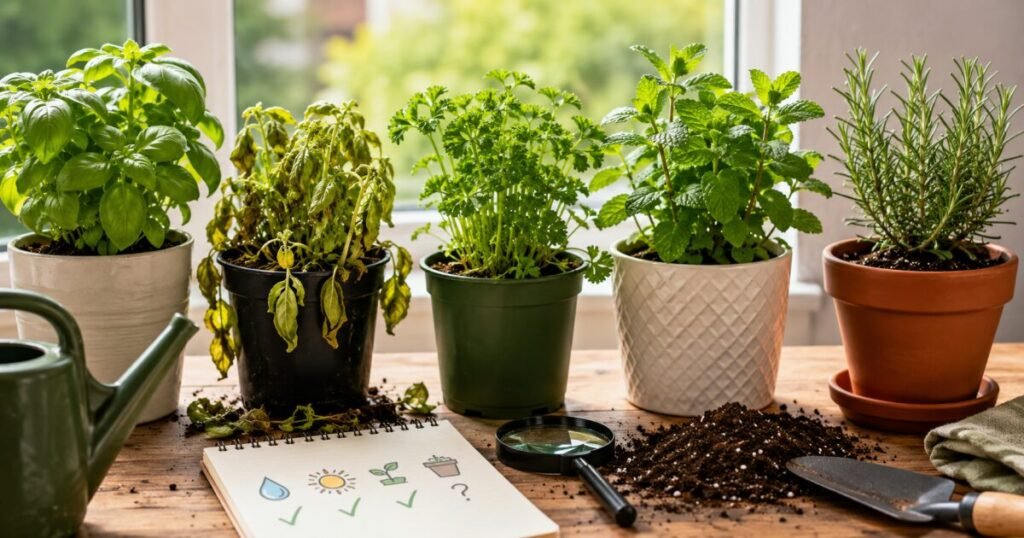
If issues keep coming up beyond the cutting stage, our guide on why indoor herbs keep dying covers the most common causes.
The cutting turns brown or mushy:
This usually indicates rot. Remove the damaged cutting, replace the water, and check that no leaves are submerged. In soil, reduce watering and improve drainage.
The leaves wilt:
The cutting may have lost water faster than it can replace it. Move it away from direct sun, increase humidity slightly, and take future cuttings during the cooler part of the day.
No roots appear:
The stem may be too old, flowering, diseased, or unsuitable for water propagation. Try a younger cutting, take several at once, or switch from water to a free-draining soil mix.
The water becomes cloudy:
Cloudy water can result from bacteria, plant debris, or decaying tissue. Wash the container, rinse the stem, remove damaged leaves, and refill it with fresh water.
The cutting grows leaves, but no roots:
New leaves do not always mean the root system is ready. Keep monitoring the base of the stem and avoid transplanting until the roots are strong enough to handle the move.
The transplanted cutting collapses:
Water roots may struggle to function immediately in soil. Keep the plant out of harsh sun, maintain steady moisture, and give it time to adapt.
Frequently Asked Questions
Which herbs can you grow from cuttings?
The easiest herbs to grow from cuttings include basil, mint, oregano, lemon balm, rosemary, thyme, sage, lavender, and marjoram. Soft-stemmed herbs often root readily in water, while woody herbs may perform better when planted directly into a well-draining medium.
Can you grow herbs from supermarket cuttings?
Yes. Fresh basil, mint, oregano, and rosemary stems can sometimes produce roots. Select firm, healthy stems, make a fresh cut, remove the lower leaves, and start the cuttings quickly. Supermarket stems are less reliable than cuttings taken from a healthy living plant.
Will herbs regrow after cutting?
Many herbs will regrow after cutting if you leave enough healthy growth on the parent plant. Cut above a leaf node and avoid removing more than the plant can support at one time. Basil, mint, oregano, rosemary, thyme, and sage can all produce new growth after careful trimming.
Is it better to root cuttings in soil or water?
Water is usually easier for beginners and works well for soft-stemmed herbs because you can see the roots. Soil is often better for woody herbs because the roots form in their final growing medium. Choose water for basil or mint, and consider soil for rosemary, thyme, lavender, or sage.
Do herb cuttings need rooting hormone?
Most easy-to-root herbs do not require rooting hormone. It may be useful for some woody cuttings, but clean tools, healthy stems, suitable moisture, and good light are usually more important.
Can you keep herbs growing in water?
Some herbs can continue growing in water for a while, especially basil and mint. However, plants usually grow more vigorously when eventually moved into a suitable potting mix that provides physical support and a broader supply of nutrients.
How many cuttings should I take?
Take three to five cuttings when possible. Not every cutting will root, and several healthy plants can later be separated or planted into individual pots.
Final Tips for Success
- Start with healthy, non-flowering stems.
- Use clean, sharp tools.
- Cut just below a leaf node.
- Keep leaves above the water or soil.
- Provide bright, indirect light.
- Keep the rooting medium moist but never waterlogged.
- Take several cuttings at once.
- Wait for a strong root system before transplanting.
- Acclimate water-rooted plants gradually to soil.
- Harvest lightly until the new plant is well established.
Growing herbs from cuttings is faster than starting many herbs from seed and lets you reproduce plants you already know grow well. Begin with basil or mint in a glass of water, then try rosemary, thyme, or lavender directly in a well-draining potting mix.