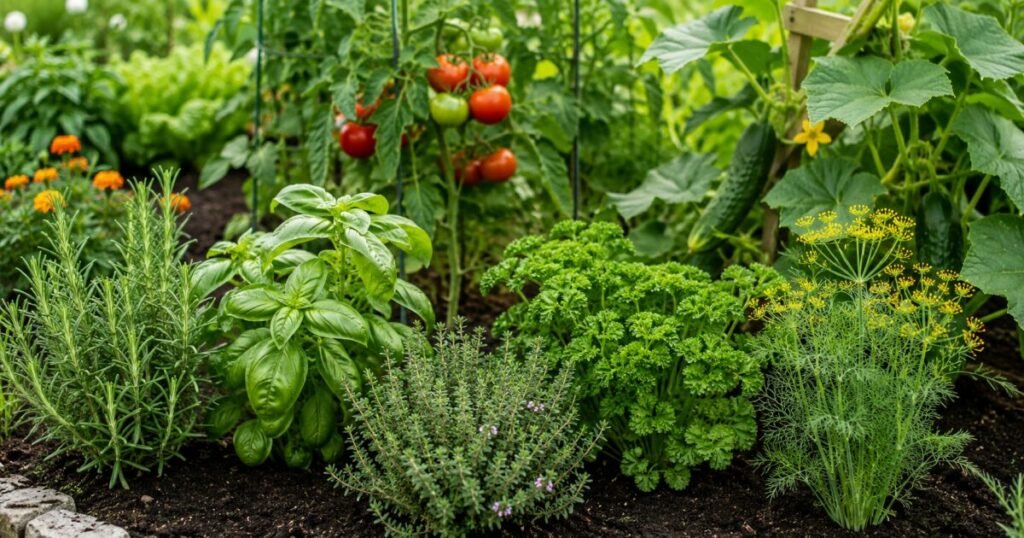
The best companion herbs for your vegetable garden are basil, dill, chives, oregano, thyme, and borage. These herbs help repel common garden pests, attract beneficial pollinators and predatory insects, improve biodiversity, and can even enhance the growth and flavor of nearby vegetables. Choosing the right companion herbs creates a healthier, more productive vegetable garden naturall
Growing vegetables is rewarding, but keeping plants healthy and productive can sometimes be challenging. Fortunately, nature provides a simple solution: companion planting. By strategically placing herbs alongside vegetables, gardeners can attract beneficial insects, repel pests, improve pollination, and even enhance crop growth.
The best companion herbs do more than add flavor to your kitchen; they become valuable allies in the garden. Whether you’re growing tomatoes, cucumbers, peas, strawberries, or eggplants, the right herb companions can help create a thriving ecosystem.
In this guide, you’ll discover the top 6 companion herbs for your vegetable garden, how they benefit different crops, and the best ways to use them for a healthier, more productive harvest.
What Are Companion Herbs?
Companion herbs are herbs planted near vegetables, fruits, or flowers to provide natural benefits. These benefits may include:
- Repelling harmful insects
- Attracting pollinators
- Encouraging beneficial predators
- Improving soil health
- Maximizing garden space
- Enhancing vegetable flavor and growth
Unlike chemical pest controls, companion planting works naturally and supports biodiversity throughout the garden.
Why Use Companion Herbs in a Vegetable Garden?
Adding herbs to your vegetable beds offers several advantages:
Natural Pest Control
Many herbs release aromatic oils that confuse or repel pests such as aphids, cabbage worms, whiteflies, and tomato hornworms.
Attracting Pollinators
Flowering herbs draw bees, butterflies, and other pollinators that increase vegetable yields.
Supporting Beneficial Insects
Ladybugs, lacewings, hoverflies, and parasitic wasps help control destructive pests naturally.
Saving Garden Space
Many herbs fit easily between vegetables, making them ideal for raised beds, containers, and small gardens.
Improving Garden Biodiversity
A diverse garden is generally healthier, more resilient, and less vulnerable to pest outbreaks.
Top 6 Companion Herbs for Your Vegetable Garden
1. Basil: The Ultimate Companion Herb
Basil is often considered the king of companion herbs because of its versatility and pest-repelling properties.
Basil Companion Herbs
Basil grows well alongside:
- Parsley
- Oregano
- Chives
- Marigolds
Avoid planting basil near rue, which may inhibit growth.
Best Vegetables for Basil
- Tomatoes
- Peppers
- Eggplants
- Lettuce
Basil is a companion herb for Tomatoes
When gardeners search for companion herbs for tomatoes, basil is usually the first recommendation.
Benefits include:
- Repels mosquitoes and flies
- May help deter tomato hornworms
- Attracts pollinators
- Maximizes garden space
Plant basil 10–12 inches away from tomato plants to allow proper airflow.
2. Dill A Pollinator Magnet
Dill is one of the most valuable herbs for attracting beneficial insects.
Dill Companion Herbs
Dill pairs well with:
- Basil
- Chives
- Parsley
Avoid planting mature dill too close to carrots, as both belong to the same family.
Dill is the best companion herb for Cucumbers.
Among the best companion herbs for cucumbers, dill stands out because it attracts pollinators and predatory insects.
Benefits include:
- Encourages bee activity
- Attracts hoverflies
- Helps control aphids
- Improves pollination
Dill is also Eggplant Companion Herbs
Dill is also among the top eggplant companion herbs because it attracts insects that prey on flea beetles and aphids.
3. Rosemary – A Natural Pest Repellent
Rosemary is both a culinary favorite and a powerful garden protector.
Rosemary Companion Herbs
Rosemary grows successfully with:
- Sage
- Thyme
- Oregano
- Lavender
These Mediterranean herbs share similar growing requirements.
Vegetables That Benefit from Rosemary
- Cabbage
- Beans
- Carrots
- Peppers
Rosemary’s strong scent may help deter:
- Cabbage moths
- Bean beetles
- Carrot flies
Because rosemary is drought-tolerant, avoid pairing it with moisture-loving herbs.
4. Thyme: The Low-Growing Garden Defender
Thyme is a compact herb that works exceptionally well around vegetable beds.
Thyme Companion Herbs
Good companions for thyme include:
- Rosemary
- Sage
- Oregano
- Lavender
Since these herbs prefer well-drained soil, they thrive together.
Companion Herbs for Strawberries
When searching for companion herbs for strawberries, thyme is an excellent choice.
Benefits include:
- Attracts pollinators
- Serves as a living mulch
- Suppresses weeds
- Helps create beneficial insect habitat
Thyme’s low growth habit makes it ideal around strawberry plants without competing heavily for sunlight.
5. Parsley: The Beneficial Insect Attractor
Parsley is often overlooked as a companion plant, but it offers impressive benefits.
Parsley Companion Herbs
Parsley grows well alongside:
- Basil
- Chives
- Oregano
- Dill
Parsley is the best companion herb for Peas
Among the best companion herbs for peas, parsley is frequently recommended.
Benefits include:
- Attracts hoverflies
- Supports beneficial wasps
- Enhances garden biodiversity
- Helps reduce aphid populations
Allow some parsley plants to flower to maximize beneficial insect activity.
Other Vegetables That Benefit
- Asparagus
- Tomatoes
- Peppers
- Carrots
6. Oregano: The Living Ground Cover
Oregano may not receive as much attention as basil or rosemary, but it’s one of the hardest-working herbs in a vegetable garden.
Why Oregano Works So Well
Benefits include:
- Attracts pollinators
- Suppresses weeds
- Conserves soil moisture
- Provides habitat for beneficial insects
Best Vegetable Companions
- Tomatoes
- Peppers
- Eggplants
- Cucumbers
Oregano’s spreading growth habit helps cover bare soil and reduce weed pressure.
Companion Herb Chart for Common Vegetables
| Vegetable | Best Companion Herb |
| Tomatoes | Basil |
| Cucumbers | Dill |
| Strawberries | Thyme |
| Peas | Parsley |
| Eggplants | Dill |
| Peppers | Basil |
| Cabbage | Rosemary |
| Carrots | Rosemary |
| Lettuce | Basil |
| Beans | Rosemary |
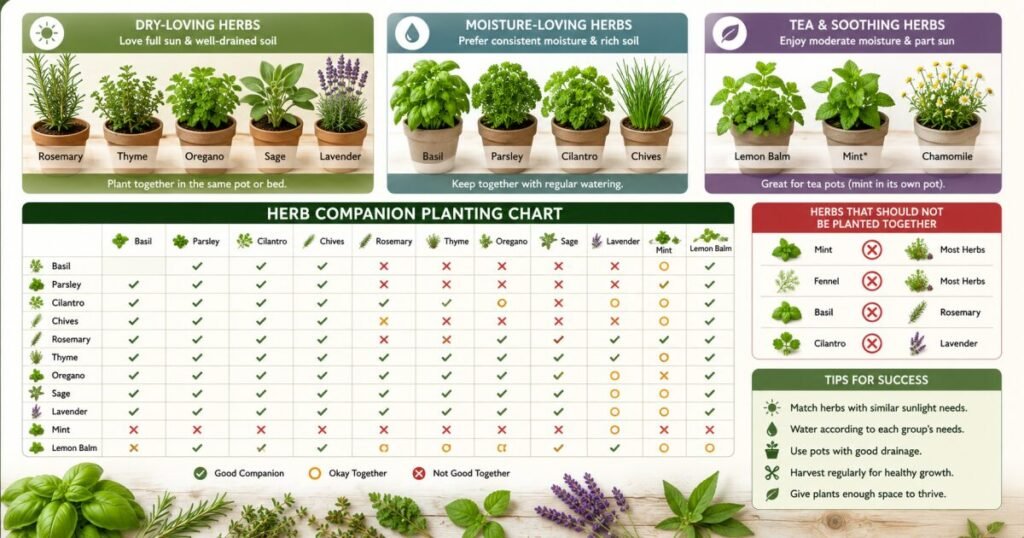
Herbs That Should Not Be Planted Together
Mint
Mint spreads aggressively and can quickly overtake nearby plants.
Fennel
Fennel is known to inhibit the growth of many vegetables and herbs.
Rue
Rue may interfere with basil growth and should generally be planted separately.
Moisture-Loving vs. Drought-Tolerant Herbs
Avoid mixing herbs with drastically different watering needs. For example:
- Rosemary prefers dry soil.
- Basil prefers consistently moist soil.
Grouping herbs by similar requirements often produces better results.
Tips for Successful Herb Companion Planting
Start Small
Experiment with a few herb-vegetable combinations before redesigning an entire garden.
Allow Proper Spacing
Crowded plants can reduce airflow and increase disease risk.
Encourage Herb Flowers
Many beneficial insects are attracted to herb blossoms.
Mix Different Herb Types
Combining several herbs creates a stronger defense against pests.
Observe and Adjust
Every garden is unique. Monitor plant performance and adjust companion pairings over time.
Frequently Asked Questions
What are the best companion herbs for tomatoes?
Basil is widely considered the best companion herb for tomatoes because it attracts pollinators and may help deter common pests.
What companion herbs for cucumbers work best?
Dill is one of the best companion herbs for cucumbers because it attracts pollinators and beneficial insects.
Which companion herbs for strawberries should I choose?
Thyme is an excellent option for strawberries due to its low-growing habit and ability to attract pollinators.
What are the best companion herbs for peas?
Parsley works well with peas by attracting beneficial insects that help manage aphid populations.
Can rosemary and basil be planted together?
They can grow together, but they have different watering needs. In small gardens, separate containers often work best.
What herbs should not be planted near vegetables?
Fennel and aggressive spreaders like mint can create problems for many vegetables and are usually best grown separately.
Final Thoughts
The right companion herbs can transform an ordinary vegetable garden into a healthier, more productive growing space. Basil, dill, rosemary, thyme, parsley, and oregano each offer unique benefits, from pest control and pollinator attraction to weed suppression and biodiversity support.
Whether you’re looking for companion herbs for tomatoes, companion herbs for cucumbers, companion herbs for peas, companion herbs for strawberries, or effective pairings involving rosemary companion herbs, basil companion herbs, dill companion herbs, parsley companion herbs, and thyme companion herbs, these six herbs provide an excellent foundation for successful companion planting.
By incorporating these herbs strategically throughout your garden, you’ll create a thriving ecosystem that supports healthier plants and larger harvests naturally.