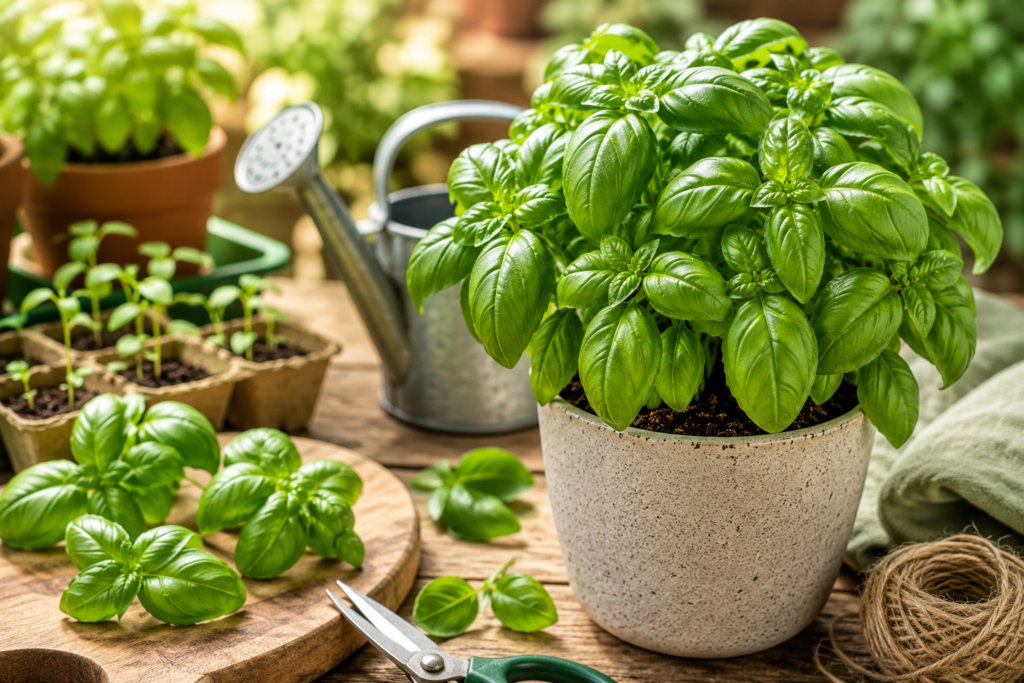
Basil is one of the easiest herbs to grow at home, whether you have a sunny garden, a patio container, or a small indoor windowsill. If you know how to grow basil correctly, you can keep harvesting fresh leaves throughout the warm growing season—and with the right care, an indoor plant can continue producing for much longer.
The basics are simple: give basil plenty of light, warm temperatures, well-draining soil, consistent moisture, and regular pruning. Basil grows particularly well in containers, making it an excellent choice for beginners and indoor herb gardens.
You can grow basil from seed, start with a nursery plant, or propagate a healthy plant from cuttings. In this guide, you’ll learn how to grow basil indoors and outdoors, how to grow basil from seed, how to keep plants bushy and productive, and how to harvest, dry, store, and freeze your extra leaves.
Quick Answer: How to Grow Basil
For healthy basil:
- Give it 6–8 hours of bright light each day.
- Use well-draining, fertile soil.
- Keep the soil consistently moist but not waterlogged.
- Plant outdoors only after the danger of frost has passed.
- Choose a pot with drainage holes.
- Start harvesting once the plant is established and has several sets of true leaves.
- Pinch or cut stems just above a pair of leaves to encourage branching.
- Remove flower buds if your priority is continued leaf production.
- Harvest regularly rather than waiting until the plant becomes large and woody.
Basil is a warm-season herb, so temperature and light are usually more important than complicated fertilizer routines.
What Basil Needs to Grow Well
Before planting, understand the four things basil needs most: light, warmth, water, and drainage.
| Growing requirement | What basil prefers |
| Light | About 6–8 hours of bright light |
| Temperature | Warm conditions; protect from cold |
| Soil | Fertile, well-draining soil |
| Water | Consistent moisture without waterlogging |
| Container | Drainage holes are essential |
| Feeding | Light, balanced feeding when needed |
| Harvesting | Frequent pruning encourages branching |
Basil (Ocimum basilicum) is a member of the mint family and is generally grown as a warm-season annual. It grows quickly under favorable conditions, but cold temperatures can severely slow or damage the plant.
The University of Minnesota Extension recommends at least six to eight hours of bright light per day and notes that basil performs best in well-drained soil.
How to Grow Basil From Seed
Growing basil from seed is inexpensive and gives you access to many different varieties.
You can sow seeds indoors for an early start or directly outdoors once the weather is reliably warm.
Step 1: Choose good-quality seeds
Choose a basil variety that matches how you plan to use it.
Sweet or Genovese basil is a good choice for pesto and everyday cooking. Other varieties include Thai basil, lemon basil, cinnamon basil, purple basil, and compact varieties that work particularly well in containers.
If you’re growing indoors, compact varieties can be especially convenient because they take up less space.
Step 2: Use a fine, well-draining growing medium
Fill a seed tray or small pot with a quality seed-starting mix.
Avoid using heavy garden soil for tiny seedlings because it can compact around the roots and hold too much moisture.
Step 3: Sow the seeds shallowly
Basil seeds don’t need to be buried deeply.
Place them on the surface or cover them with only a very thin layer of growing medium. Keep the medium evenly moist.
The Royal Horticultural Society recommends sowing basil indoors in warm conditions and notes that seeds germinate well at around 20°C (68°F).
Step 4: Give them warmth and light
Place the seed tray somewhere warm and bright.
A sunny windowsill can work, although a grow light may provide more consistent results indoors, particularly when natural daylight is weak.
Keep the growing medium moist but avoid keeping it saturated.
Step 5: Thin the seedlings
Once the seedlings develop several true leaves, give them more room.
Crowded seedlings compete for light and airflow and are more likely to become weak and stretched.
How to Grow Basil From Seed Indoors
If your goal is a year-round supply, how to grow basil from seed indoors is one of the most useful techniques to learn.
Start seeds in small pots or seed trays and place them in your brightest available location.
For indoor basil:
- Use a container with drainage holes.
- Fill it with a lightweight, well-draining potting mix.
- Sow seeds shallowly.
- Keep the soil evenly moist.
- Provide strong light for roughly 6–8 hours or supplement with a grow light.
- Thin crowded seedlings.
- Move healthy plants into larger containers as they grow.
- Begin pruning once the plants are established.
The RHS recommends starting basil indoors for earlier and more reliable germination and moving seedlings into individual pots once they have several leaves.
A common indoor basil mistake
Not enough light.
A basil plant can survive near a window while still growing poorly. If the stems become long and thin and the plant leans strongly toward the window, it probably needs more light.
How Long Does Basil Take to Grow?
Under warm, favorable conditions, basil seeds can germinate in roughly 5–14 days, depending on temperature, variety, moisture, and growing conditions. University extension guidance reports germination within about 5–7 days under suitable conditions, while Utah State University gives approximately 10–14 days.
You can generally begin harvesting once the plant is established and has several sets of true leaves. For a healthy plant grown from seed, this often means several weeks rather than several days.
Your actual timeline will depend on:
- Temperature
- Light intensity
- Variety
- Pot size
- Watering
- Soil quality
- Whether you started from seed or a transplant
Don’t worry if your basil isn’t ready on an exact schedule. Healthy growth matters more than the calendar.
How to Grow Basil in a Pot
Basil is particularly well suited to container growing.
In fact, pots can make basil easier to manage because you can move the plant to a warmer or sunnier location when necessary.
When learning how to grow basil in a pot, focus on three things:
1. Choose a container with drainage
The pot must have drainage holes.
Basil dislikes constantly wet roots, and poor drainage can contribute to root problems.
2. Don’t overcrowd the container
One or a few plants in an appropriately sized container will generally perform better than packing too many plants into a small pot.
The RHS recommends a container at least 20 cm (about 8 inches) wide and deep for basil.
3. Watch the moisture
Containers dry out faster than garden beds, especially in hot weather.
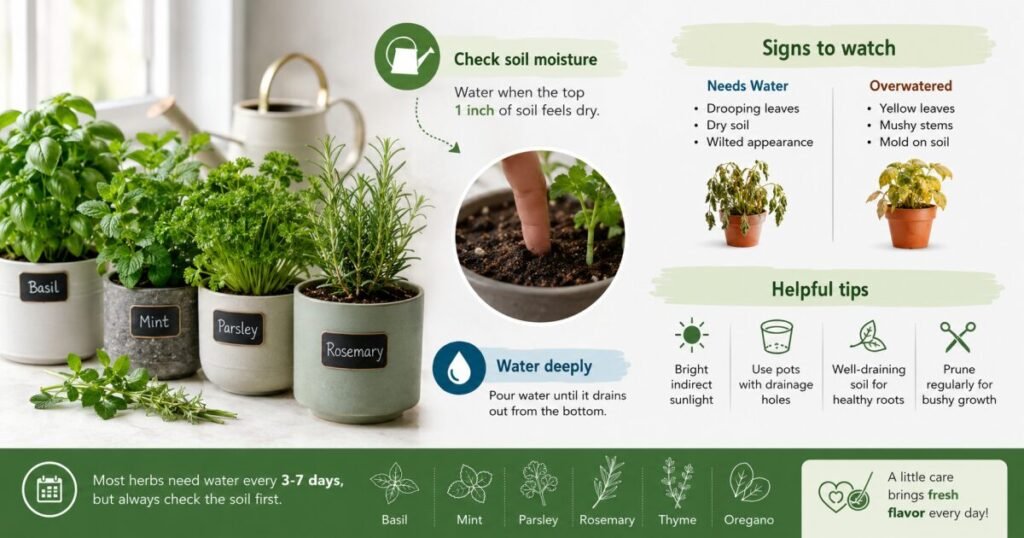
Check the soil regularly rather than watering according to a rigid schedule.
Water when the upper portion of the growing medium begins to dry, then allow excess water to drain freely.
How to Grow Basil Outdoors
Basil grows vigorously outdoors when temperatures are warm.
If you’re learning how to grow basil outdoors, wait until cold weather has passed before planting.
Choose a sunny location
Basil performs best in full sun.
A location receiving approximately 6–8 hours of bright light is a good target. Full sun can also help produce stronger flavor and aromatic oils.
Prepare the soil
Choose fertile soil that drains well.
If your garden soil is heavy or stays wet after watering, improve drainage before planting.
Space plants appropriately
Give basil enough room for air to move around the foliage.
Crowded plants can have more difficulty drying after watering and may have greater disease pressure.
Water consistently
Don’t let basil repeatedly wilt from severe water stress.
At the same time, avoid keeping the soil constantly saturated.
The right balance is consistent moisture with good drainage.
Should You Grow Basil in a Pot or in the Ground?
Both methods can work.
Choose a pot if:
- You have limited garden space.
- You want basil on a balcony or patio.
- You want to move the plant indoors.
- Your garden soil drains poorly.
- You want better control over the growing medium.
Choose the ground if:
- You have a warm, sunny garden.
- Your soil drains well.
- You want several plants.
- Your climate provides a sufficiently long warm season.
For beginners, containers are often the easiest option because the plant’s location, soil, and drainage are easier to control.
The RHS also notes that basil generally does well in containers and that containers can be particularly useful in cooler locations.
How to Keep Basil Bushy and Productive
This is one of the most important basil-growing tricks.
Don’t just pick individual leaves from the bottom of the plant.
Instead, harvest the growing tips.
When a basil stem has several sets of leaves, cut the stem just above a pair of leaves or a leaf node.
New shoots can develop from that point, giving you a bushier plant.
Regular pruning also gives you a continuous supply of fresh basil.
The University of Minnesota Extension recommends cutting whole stems just above a pair of leaves because new growth develops at the cut point.
Should You Remove Basil Flowers?
If your priority is maximum leaf production, remove developing flower stems regularly.
As basil begins flowering, its growth pattern changes and the plant eventually puts more energy into reproduction. Flowering can also affect the flavor and quality of the leaves.
However, you don’t have to remove every flower forever.
Basil flowers can provide nectar for pollinators, so if you have several plants, you can allow one to flower while keeping the others pruned for leaves.
The RHS specifically recommends removing flower stems to maintain leaf quality, while also noting that basil flowers can provide food for bees and other pollinators.
How to Grow Basil From Cuttings
If you already have a healthy basil plant, you don’t necessarily need to buy another one.
You can propagate basil from softwood cuttings.
Here’s how:
- Cut a healthy, non-flowering shoot below a leaf node.
- Remove the lower leaves.
- Leave a few leaves at the top.
- Place the cutting in a clean glass or jar of water.
- Keep it somewhere warm and bright but avoid harsh direct sunlight while it develops roots.
- Change the water when needed.
- Once the roots are well developed, transplant the cutting into potting mix.
The RHS notes that basil cuttings root readily in water and can be transplanted into compost after roots develop.
This is one of the fastest ways to create new basil plants from an existing one.
Common Basil Growing Problems
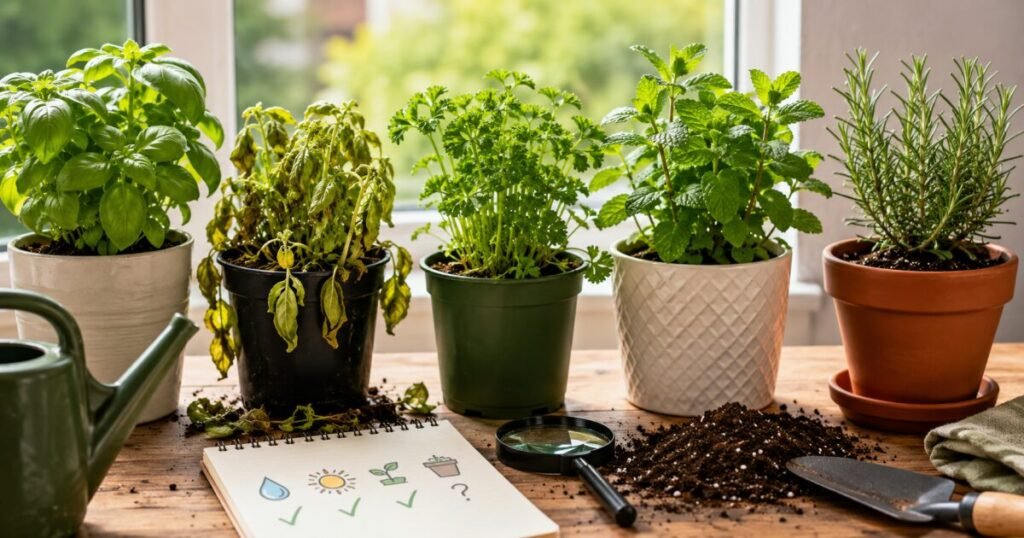
Even though basil is relatively easy to grow, a few problems appear repeatedly.
Yellow basil leaves
Yellow leaves can have several causes, including:
- Overwatering
- Poor drainage
- Insufficient light
- Nutrient problems
- Root stress
- Natural aging of older leaves
Don’t automatically add fertilizer when you see yellow leaves. Check the plant’s light, watering, and root conditions first.
Basil wilting
If basil wilts, check the soil.
Dry soil can cause temporary wilting, particularly in containers during hot weather.
But wilting in consistently wet soil can indicate a root problem.
Basil becoming tall and thin
This is often a light problem.
Move the plant to a brighter location or provide supplemental lighting indoors.
Basil flowering too early
Heat, stress, crowding, and the plant’s natural life cycle can all contribute to flowering.
Regular harvesting helps maintain a productive shape.
Holes in basil leaves
Inspect the plant carefully for insects or other pests.
Don’t assume every damaged leaf means you need a pesticide. Identify the problem first and use the least disruptive appropriate control.
How to Harvest Basil
Knowing how to harvest basil correctly can make the difference between a small plant and a bushy, productive one.
You can harvest individual leaves when needed, but for ongoing production, harvesting the stem tips is usually better.
The simple method
- Find a healthy stem with several sets of leaves.
- Cut just above a pair of leaves.
- Leave enough foliage on the plant for continued growth.
- Repeat on different stems.
- Harvest regularly rather than removing most of the plant at once.
If you’re harvesting a large quantity for pesto or preservation, you can take more substantial portions.
The University of Minnesota Extension says basil leaves can be harvested throughout the growing season and recommends taking shoot tips to encourage bushy growth.
When is the best time to harvest basil?
For routine harvesting, pick when the leaves look healthy and before extensive flowering.
For herbs intended for drying, harvesting after the morning dew has evaporated can help reduce surface moisture. University of Minnesota Extension notes that mid-morning, after dew has dried and before the day’s heat, is a useful harvesting time for many herbs.
How to Store Fresh Basil
Fresh basil can be surprisingly sensitive to refrigeration.
If you have more basil than you can use immediately, one simple method is to trim the stems and place them in a jar or glass of water.
Keep the basil away from direct sunlight.
For short-term storage, you can loosely cover the basil to help retain moisture.
Utah State University Extension recommends storing fresh basil with the stems in water away from direct sunlight and describes a covered-water method for keeping it for approximately 7–10 days.
Avoid crushing the leaves
Bruised basil loses quality quickly.
Handle the leaves gently and wash them only when needed.
If you wash basil before storage, dry it thoroughly first.
How to Dry Basil
If you have a large harvest, learning how to dry basil gives you a convenient way to preserve it.
Air-drying basil
- Harvest healthy stems.
- Remove damaged leaves.
- Tie small bunches loosely.
- Hang them in a dry, well-ventilated place.
- Keep them out of direct sunlight.
- Wait until the leaves are completely dry and crisp.
- Remove the leaves from the stems.
- Store them in an airtight container.
Don’t seal basil in a container while it still contains moisture.
That can lead to mold and spoilage.
University extension guidance recommends drying basil in a warm, dry, well-ventilated area and storing thoroughly dried leaves in an airtight container away from heat and light.
Another guide for Drying Herbs: How to Dry Herbs at Home Without Losing Flavor (Best Methods for Every Herb Type)
How to Store Basil After Drying
Once your basil is completely dry:
- Keep it in an airtight container.
- Store it away from direct light.
- Keep it somewhere cool and dry.
- Label the container with the herb and date.
- Avoid opening the container unnecessarily.
Keeping dried basil whole until you’re ready to use it can help preserve its aroma.
If you notice moisture inside the container, don’t ignore it. Remove the basil and dry it again before storing.
How to Freeze Basil
Freezing is another excellent option, especially if you want basil to retain more of the character of fresh leaves.
One simple method is to:
- Wash the leaves if necessary.
- Dry them thoroughly.
- Place whole leaves in a freezer-safe container or bag.
- Remove as much excess air as practical.
- Freeze in small portions.
You can also chop basil and freeze it in ice cube trays with a small amount of water or oil.
Frozen basil is particularly useful for:
- Pesto
- Pasta sauces
- Soups
- Stews
- Tomato dishes
Keep in mind that frozen basil can become soft after thawing. It is usually better for cooked dishes than fresh garnishes.
University of Minnesota Extension recommends freezing basil for better flavor retention than air-drying and describes whole leaves, ice cubes, oil-based portions, and frozen pesto as options.
You will also love reading this: How to Freeze Fresh Herbs Without Losing Flavor (Best Methods by Herb Type)
Is Basil a Perennial?
Common sweet basil is usually grown as an annual, particularly in climates where temperatures drop below its preferred range.
However, basil is technically a tender plant that can continue growing for more than one season when protected from cold and given suitable conditions.
In a warm, frost-free environment, basil may continue growing much longer. Indoors, you can sometimes extend its life by providing warmth and strong light.
But eventually, basil will age, flower, produce seed, and decline.
The University of Minnesota Extension describes basil as a tender annual and notes that even plants brought indoors eventually flower and die.
So for most home gardeners, the practical answer is:
Treat basil as an annual, but you can extend its productive life indoors.
You might love reading this: What Herbs Are Perennials? The Complete List of Perennial Herbs, Shade-Loving Varieties, Growing Zones, and Care Guide
Can Dogs Eat Basil?
Yes. The ASPCA lists basil (Ocimum basilicum) as non-toxic to dogs.
That doesn’t mean you should deliberately feed your dog large amounts of basil. Dogs can experience digestive upset from eating plant material, even when the plant itself is classified as non-toxic.
A small amount of plain basil is generally not considered toxic to dogs, but avoid giving pets basil treated with pesticides, fertilizers, essential oils, or other substances that may be harmful.
If your dog eats a large amount of any plant or develops symptoms after eating it, contact your veterinarian.
Is Basil Safe for Cats?
Yes. The ASPCA also lists basil as non-toxic to cats.
As with dogs, non-toxic does not mean cats should consume large quantities.
Cats can experience stomach upset from eating plant material, and the safety of a specific basil plant can also depend on what has been applied to it.
Keep concentrated basil essential oils and other highly concentrated plant products away from pets.
For a normal basil plant grown without harmful chemicals, occasional nibbling is not considered toxic according to the ASPCA’s plant database.
Can You Grow Supermarket Basil?
Yes, but there’s an important distinction.
A supermarket basil plant may contain many individual seedlings crowded together in one pot. You can sometimes divide them carefully and transplant them into separate containers.
Another option is to take healthy stems and propagate them from cuttings.
However, don’t assume every supermarket basil plant will thrive outdoors immediately. If it was grown in protected indoor conditions, gradually acclimate it before exposing it to strong outdoor conditions.
The RHS specifically advises keeping supermarket-bought basil plants indoors in containers because of risks associated with outdoor growing conditions.
10 Tips for Growing More Basil
If you want a simple checklist, remember these ten rules:
- Give basil plenty of light.
- Keep it warm.
- Use well-draining soil.
- Choose pots with drainage holes.
- Don’t let the plant repeatedly dry out completely.
- Don’t keep the roots constantly waterlogged.
- Harvest the growing tips regularly.
- Remove flower stems if you want more leaves.
- Propagate healthy plants from cuttings.
- Preserve excess basil by drying or freezing it.
The goal isn’t to make basil complicated. It’s to create conditions where the plant can keep producing new leafy growth.
Basil Growing Timeline
Here’s a simple way to visualize the process:
| Stage | Approximate timing |
| Seeds planted | Day 0 |
| Germination | About 5–14 days |
| Seedling development | Following several weeks |
| Transplanting | Once seedlings are established |
| Regular harvesting | Once the plant has sufficient leafy growth |
| Flowering | Usually later in the growing cycle, depending on conditions |
| Drying harvest | Whenever you have surplus mature foliage |
| Cuttings | Can root within a few weeks under good conditions |
Don’t treat these dates as guarantees. Temperature, light, variety, and growing conditions can change the timeline considerably.
Final Thoughts
Learning how to grow basil doesn’t require a large garden or advanced gardening skills. A sunny windowsill, balcony, patio, or small garden bed can be enough to produce a useful harvest.
For beginners, start with one or two plants and concentrate on the basics: strong light, warm temperatures, well-draining soil, consistent moisture, and regular harvesting.
If you want the fastest start, buy a healthy plant. If you want more variety and a lower-cost growing routine, learn how to grow basil from seed. And if you already have a healthy plant, cuttings give you an easy way to create more.
Once your basil starts producing more than you can eat fresh, don’t let the extra harvest go to waste. Learn how to dry basil, store fresh basil properly, or freeze the leaves for later use.
With a little regular pruning, one healthy basil plant can provide fresh leaves for much of the growing season.
FAQs About Growing Basil
What is the trick to growing basil?
The biggest keys are warmth, strong light, consistent moisture, good drainage, and regular harvesting. Basil grows best when it isn’t allowed to become severely stressed by cold, drought, or waterlogged soil. Regularly cutting the growing tips also encourages a bushier plant.
How long does basil take to grow?
Basil seeds can germinate in roughly 5–14 days under suitable conditions. You can begin harvesting once the plant is established and has enough leafy growth, often several weeks after germination. Temperature, light, variety, and growing conditions all affect the exact timing.
Does basil grow better in pots or in the ground?
Basil can grow well in both. Pots are particularly useful for beginners, balconies, patios, and indoor growing because you can control the soil and move the plant when temperatures change. In the ground, basil can produce excellent growth when planted in warm, sunny, well-drained soil.
Does basil come back every year?
Usually, no. Common basil is generally grown as a tender annual. In warm, frost-free conditions it can continue growing longer, and you can sometimes extend its life indoors with sufficient warmth and light.
Can dogs and cats eat basil?
Basil is listed by the ASPCA as non-toxic to both dogs and cats. However, eating large quantities of plant material can still cause digestive upset, and basil treated with potentially harmful chemicals should not be given to pets.