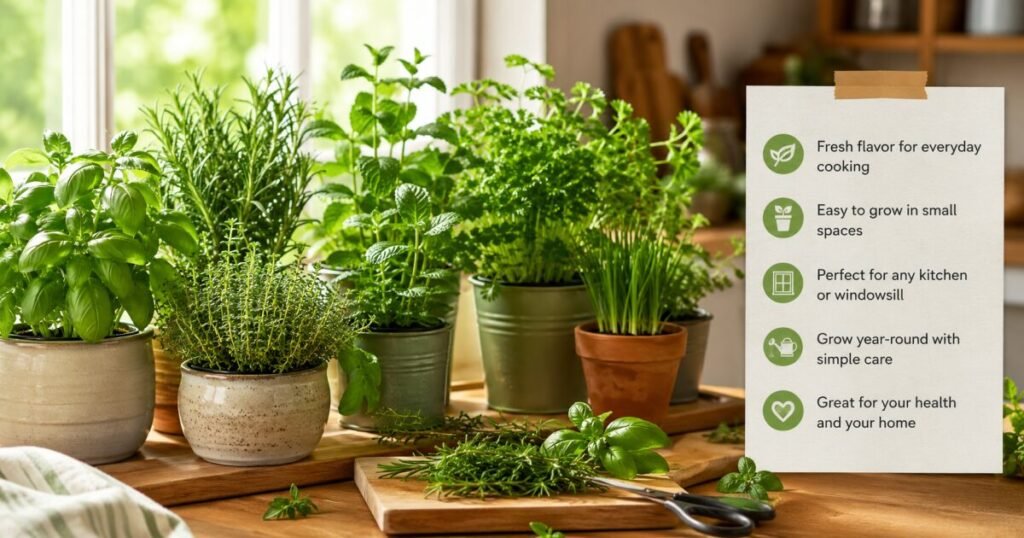
Can you grow mint indoors? Absolutely. Mint is one of the easiest herbs to grow inside, making it an excellent choice for a kitchen windowsill, apartment, balcony, or small indoor herb garden. It grows quickly, tolerates some shade better than many culinary herbs, and can provide fresh leaves for cooking and mint tea throughout much of the year.
The secret to successfully growing mint indoors isn’t complicated. Give it bright light, consistently moist but well-drained soil, a suitable pot, and regular harvesting. Mint is a vigorous perennial, so an indoor plant can continue producing new growth for a long time when its basic needs are met.
In this guide, you’ll learn how to grow mint indoors, whether mint can grow in low light, how much sun and water it needs, how to grow mint in a pot, how long it takes to grow, and how to harvest it without weakening the plant. We’ll also cover mint tea, including how to make it and what it is traditionally used for.
Quick Answer: How to Grow Mint Indoors
To grow healthy mint indoors:
- Place it near a bright window with several hours of good light.
- Use a pot with drainage holes.
- Choose rich, moisture-retentive but well-draining potting mix.
- Keep the soil evenly moist, but never constantly soggy.
- Give the plant enough space for its roots to spread.
- Harvest the growing tips regularly to encourage bushier growth.
- Rotate the pot occasionally so the plant grows evenly.
- Repot or divide mint when it becomes crowded or root-bound.
- Keep indoor mint away from very cold drafts and extreme heat.
- Use fresh leaves for cooking or mint tea, or dry or freeze excess leaves.
The most common indoor mint mistake is treating it like a drought-tolerant herb. Mint prefers more consistent moisture than herbs such as rosemary or thyme.
Can You Grow Mint Indoors?
Yes, you can grow mint indoors, and it is one of the better herbs for beginners.
Mint naturally grows as a perennial and can tolerate both full sun and partial shade. The Royal Horticultural Society describes mint as extremely easy to grow and notes that it can be grown in containers and brought indoors for continued harvesting.
Growing mint indoors also solves one of the biggest problems with growing it outdoors: mint spreads aggressively.
Mint produces underground stems called rhizomes, which allow the plant to spread. That’s why gardeners are often advised to grow mint in containers rather than allowing it to spread freely through a garden bed.
An indoor pot gives you much better control.
Indoor mint is especially useful if you:
- Live in an apartment
- Don’t have a garden
- Want fresh mint for tea
- Cook with mint regularly
- Want herbs available year-round
- Have limited outdoor growing space
- Want to prevent mint from taking over your garden
How to Grow Mint Indoors Step by Step
Growing mint indoors can be broken down into six basic steps.
1. Choose a healthy mint plant
Starting with an established plant is usually easier than growing mint from seed.
Look for a plant with:
- Bright green leaves
- Plenty of new growth
- No obvious pests
- No black or mushy stems
- Healthy-looking roots
- No strong signs of disease
Spearmint and peppermint are two of the most familiar types, but there are many other varieties, including chocolate, apple, lime, Moroccan, and pineapple mint.
For tea, Moroccan mint and spearmint are particularly useful choices.
2. Choose the right pot
Mint needs room to develop a healthy root system, but you don’t need an enormous container.
Choose a pot that:
- Has drainage holes
- Is wide enough for the plant to spread
- Is deep enough for the roots
- Has a stable base so the plant doesn’t tip over
A container is preferable to growing mint directly in an indoor planter without drainage.
3. Use the right potting mix
Mint likes fertile, moisture-retentive soil, but the roots should not sit in stagnant water.
A good-quality indoor potting mix is usually sufficient.
If your potting mix holds too much water, improve drainage with an appropriate drainage material or choose a better-draining mix.
The RHS recommends fertile, moisture-retentive growing conditions for mint while emphasizing that container-grown herbs should not remain waterlogged.
4. Place it somewhere bright
This is where many indoor growers go wrong.
Mint can tolerate some shade, but bright light produces stronger, healthier growth.
Place the pot close to a bright window where it receives several hours of good natural light.
5. Water when needed
Don’t water mint simply because it’s “herb watering day.”
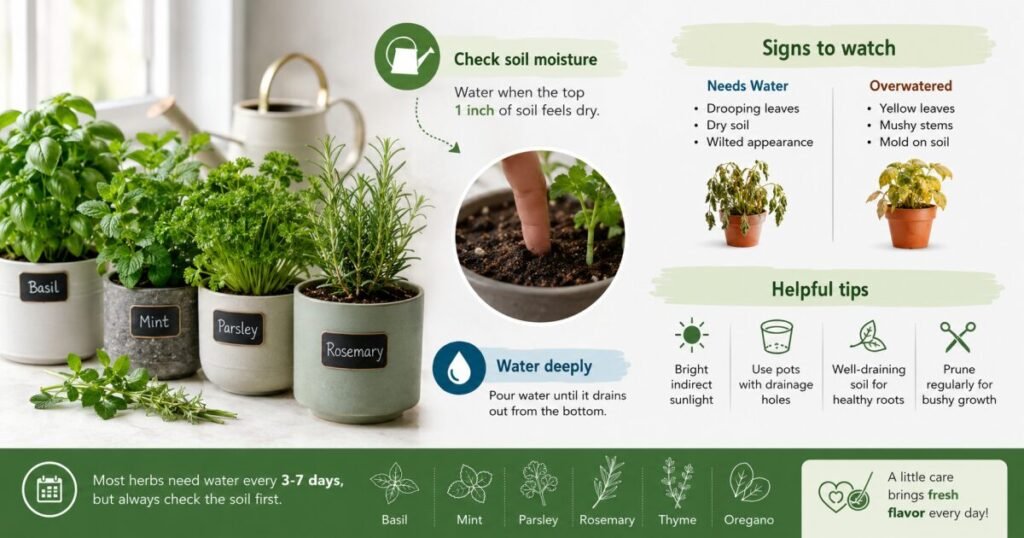
Check the soil first.
If the upper layer is beginning to dry, water thoroughly until some water drains from the bottom of the pot.
Then empty excess water from the saucer.
6. Harvest regularly
Once the plant is established, don’t be afraid to harvest it.
Regularly cutting the growing tips encourages the plant to branch and stay compact. The RHS specifically recommends harvesting mint’s young shoot tips regularly to keep plants bushy and productive.
How Much Sun Does Mint Need?
Mint is flexible compared with many herbs. It can grow in full sun or partial shade, but indoors, the quality and intensity of light matter.
A bright windowsill is usually a good starting point.
For indoor mint, aim for:
Several hours of bright light each day.
A sunny south-, southeast-, or southwest-facing window can work well depending on your location and the season.
However, very intense afternoon sun through hot glass can sometimes cause stress, especially if the pot becomes excessively hot.
Signs your mint needs more light
Watch for:
- Long gaps between leaves
- Thin, weak stems
- Strong leaning toward the window
- Small leaves
- Slow growth
- Pale or less vibrant foliage
If your mint is becoming tall and floppy rather than compact and leafy, light is one of the first things to check.
If your home has limited natural light, a grow light can help.
A simple indoor setup might place the mint under a suitable LED grow light for part of the day, particularly during darker seasons.
Don’t place the light so close that the leaves become overheated.
Natural light vs. grow light
| Situation | Best approach |
| Bright sunny window | Natural light may be enough |
| Bright indirect light | Monitor growth closely |
| Dark room | Add a grow light |
| Winter with short days | Supplemental light may help |
| Long, leggy growth | Increase light |
The goal isn’t simply to keep mint alive. It’s to provide enough light for dense, useful growth.
How Much Water Does Mint Need?
Mint likes moisture.
If you’re wondering how much water mint needs, the better answer is not a fixed number of cups per week. Water requirements change according to:
- Pot size
- Temperature
- Light
- Humidity
- Plant size
- Potting mix
- Season
Instead, check the soil.
A good indoor watering routine
- Feel the surface of the soil.
- If it has begun to dry, check slightly deeper.
- Water thoroughly when the plant needs it.
- Allow excess water to drain.
- Empty standing water from the saucer.
Mint prefers evenly moist soil, but constantly saturated soil can cause root problems.
The RHS specifically recommends keeping container-grown mint moist and checking pots regularly because containers dry out faster, especially in warm weather.
Does Mint Need a Lot of Water?
Compared with drought-tolerant Mediterranean herbs, yes, mint generally needs more consistent moisture.
But “mint needs lots of water” does not mean “keep the pot soaking wet.”
That’s an important distinction.
Underwatering can cause:
- Wilting
- Dry or crispy leaf edges
- Slow growth
- Drooping stems
- Smaller leaves
Overwatering can cause:
- Persistently wet soil
- Yellowing leaves
- Root problems
- Weak or collapsing growth
- Unpleasant soil odor
The ideal condition is:
Moist + well-drained = healthy mint.
How to Grow Mint in a Pot
Growing mint in a pot is actually one of the best ways to control it.
Mint spreads through underground rhizomes, so a container prevents those spreading roots from taking over other parts of your growing space.
Choose a pot with drainage holes
This is non-negotiable.
A decorative container without drainage can collect water around the roots.
If you love a decorative pot, use a nursery pot with drainage holes inside it and remove excess water from the outer container.
Don’t overcrowd the pot
One healthy mint plant can produce a surprising amount of growth.
If several plants become tightly packed together, they may compete for space, water, and nutrients.
Repot when necessary
Mint is vigorous and can eventually become crowded in its container.
The RHS recommends dividing and repotting established mint periodically as it becomes congested.
If you notice roots circling heavily around the inside of the pot or the plant drying out unusually quickly, it may be time to repot or divide it.
How Long Does Mint Take to Grow?
Mint can establish relatively quickly, especially when started from an established plant or cutting.
If grown from seed, germination can take around two weeks under suitable conditions, according to the RHS.
However, there is an important difference between:
“The seed germinated.”
and
“I have enough mint to harvest.”
After germination, the plant still needs time to develop roots, stems, and enough foliage to support harvesting.
Typical progression
| Stage | Approximate timing |
| Seeds planted | Day 0 |
| Germination | Around 2 weeks under suitable conditions |
| Seedling development | Following weeks |
| Established plant | Several more weeks |
| Regular harvesting | Once sufficient leafy growth develops |
An established plant or cutting can give you usable mint much sooner than starting from seed.
Can You Grow Mint From Cuttings?
Yes—and it’s one of the easiest ways to create more mint.
Mint stems root readily in water, making propagation especially beginner-friendly. The RHS confirms that mint cuttings can be rooted in a jar of water before being potted up.
How to grow mint from a cutting
- Cut a healthy stem several inches long.
- Remove the lower leaves.
- Leave several leaves near the top.
- Place the stem in clean water.
- Put it somewhere bright but not extremely hot.
- Change the water as needed.
- Wait for roots to develop.
- Transfer the rooted cutting into potting mix.
This is also a useful way to rescue mint from a grocery-store bunch if the stems are fresh and capable of rooting.
How to Keep Mint Bushy
If your mint is getting tall and sparse, don’t simply let it continue growing upward.
Cut it back.
Take the growing tip just above a pair of leaves.
This encourages new side shoots to develop.
The more you harvest appropriately, the more opportunities the plant has to produce fresh branching growth.
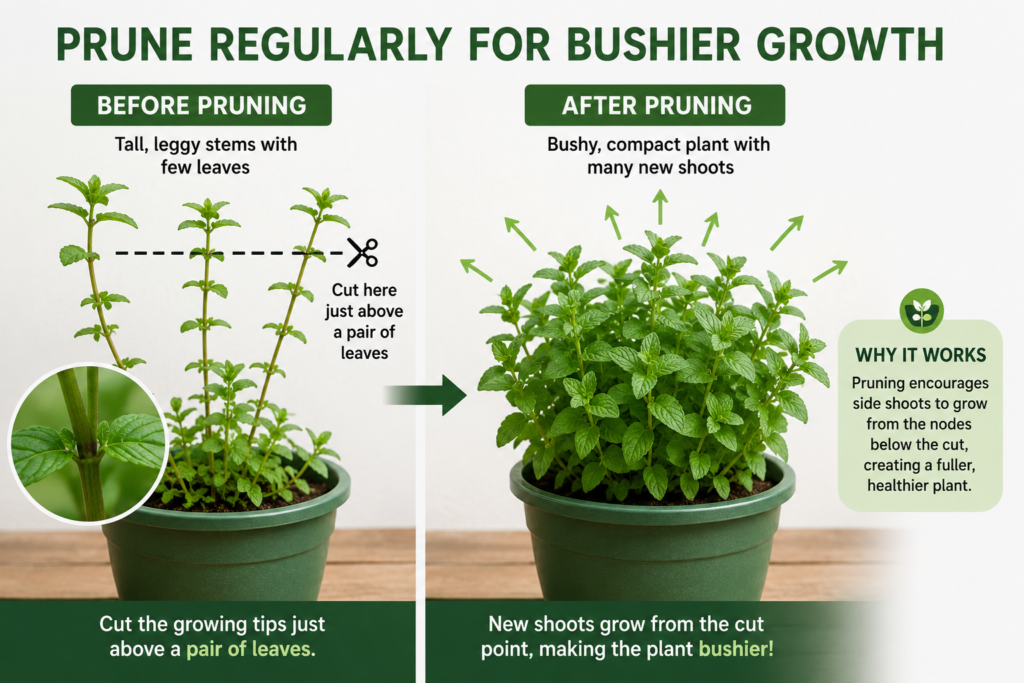
In practical terms, regular harvesting is one of the best ways to keep indoor mint compact and productive.
How to Harvest Mint Without Killing the Plant
Mint is forgiving, but you shouldn’t remove almost all of its leaves at once.
For regular harvesting:
- Select healthy growing tips.
- Cut above a pair of leaves.
- Leave plenty of foliage behind.
- Harvest several stems rather than stripping one stem completely.
- Continue harvesting as new growth develops.
The RHS recommends picking young, soft shoot tips for strong flavor and says regular harvesting helps keep mint compact and productive.
When should you harvest mint?
You can harvest whenever the plant has enough healthy growth to spare.
For the best flavor, young leaves and shoot tips are particularly useful.
If you’re growing mint specifically for tea, harvest a generous amount of healthy leaves shortly before brewing.
What to Do When Mint Flowers
Mint can produce small flowers, usually later in the growing season.
You have two choices.
Want maximum leafy growth?
Cut flowering stems back.
Want flowers for pollinators?
Allow some stems to flower.
Mint flowers can provide food for pollinating insects, so you don’t necessarily have to remove every flower.
For an indoor plant grown primarily for culinary use, however, regular trimming keeps the plant more compact.
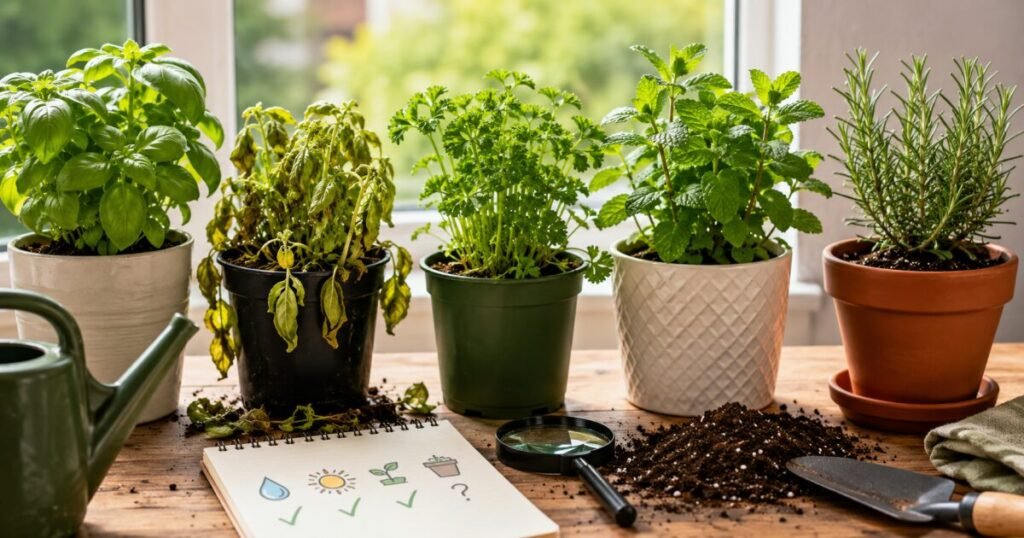
Common Indoor Mint Problems
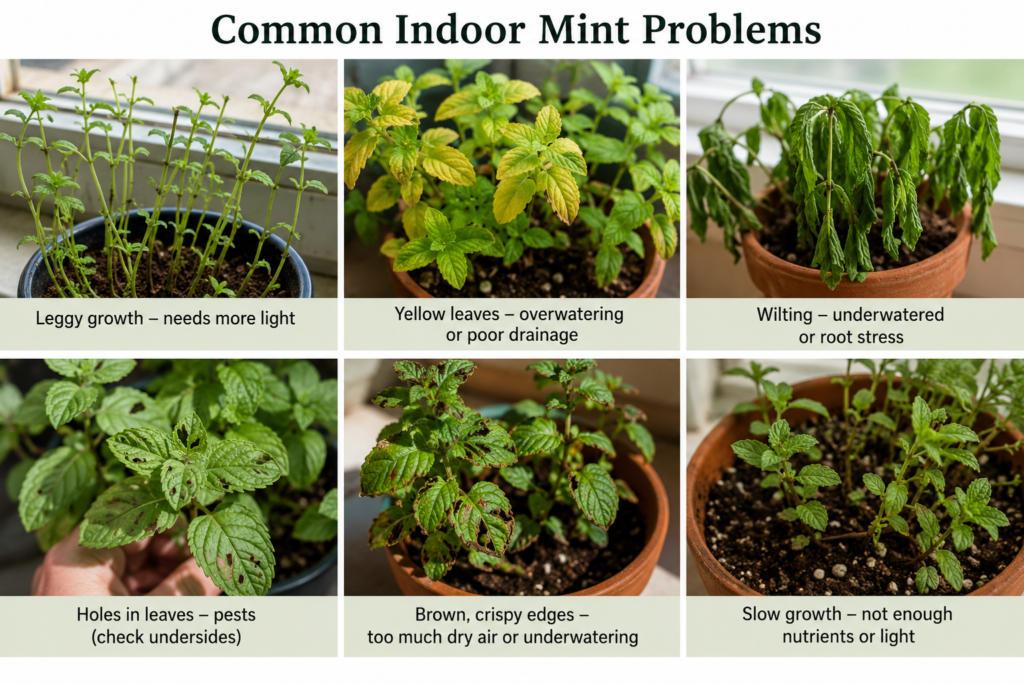
Mint is getting leggy
Likely cause: insufficient light.
Move the plant closer to a brighter window or add supplemental lighting.
Mint leaves are turning yellow
Possible causes include:
- Overwatering
- Poor drainage
- Root stress
- Insufficient light
- Natural aging of older leaves
Check the soil before automatically adding fertilizer.
Mint is wilting
Check whether the soil is dry.
If the soil is very wet but the plant is still wilting, the problem may be related to root health rather than lack of water.
Mint leaves are dry and crispy
The plant may be underwatered, exposed to excessive heat, or receiving intense dry airflow.
Check moisture and move it away from hot vents or unusually harsh conditions.
Mint has tiny insects
Inspect the undersides of leaves and growing tips.
Common indoor pests can include aphids and other sap-feeding insects.
Identify the pest before choosing a treatment.
Mint has a bad smell from the soil
A sour or unpleasant smell combined with constantly wet soil can indicate poor drainage or root problems.
Can You Grow Mint From Supermarket Mint?
Sometimes, yes.
If you purchase fresh mint with healthy stems, you can try rooting some of the stems in water.
However, success isn’t guaranteed because cut herbs may have been harvested at different stages and may not always root well.
If the stems are fresh and still capable of rooting, place them in clean water with the lower leaves removed.
Once roots develop, transplant them into a pot.
For the most reliable long-term indoor plant, starting with a healthy nursery plant or established cutting is usually easier.
Is Mint a Perennial?
Yes.
Mint is a herbaceous perennial, meaning it can live for multiple years under suitable conditions. The RHS describes mint as a perennial that can die back during winter and regrow.
This is one reason mint is such a useful herb for home growers.
Unlike annual herbs that need to be replanted every year, an established mint plant can continue producing new growth season after season.
Indoors, you can potentially maintain it through winter by providing suitable light, warmth, and moisture.
Mint Tea
Fresh mint leaves make a simple, naturally caffeine-free herbal infusion.
It’s worth clarifying the terminology: mint tea isn’t technically tea made from the tea plant (Camellia sinensis). Herbal infusions are made from other plants rather than true tea leaves.
Mint has traditionally been used in beverages and is commonly enjoyed after meals.
The RHS specifically notes that mint sprigs can be used to make a refreshing tea and that mint is used in a wide range of culinary applications.
What is mint tea good for?
People commonly drink mint tea for:
- A refreshing caffeine-free beverage
- A soothing warm drink after meals
- Its cooling mint flavor
- A relaxing evening beverage
- Enjoying fresh herbs from the garden
However, don’t confuse traditional use with proven medical treatment. If you’re drinking mint tea for a specific health condition or symptom, especially regularly or in concentrated amounts, it’s worth discussing it with a healthcare professional.
How to Make Mint Tea
One of the easiest rewards of growing mint indoors is that you can go directly from plant → cup.
Fresh mint tea
You’ll need:
- A small handful of fresh mint leaves
- 1–2 cups of hot water
- Honey or lemon, optional
Method
- Rinse the mint leaves gently.
- Place them in a mug or teapot.
- Pour hot water over the leaves.
- Let them steep for approximately 5–10 minutes.
- Strain if desired.
- Add lemon or honey if you like.
You can adjust the amount of mint depending on how strong you want the flavor.
For stronger mint tea
Gently bruise or crush some of the leaves before adding hot water. This releases more of the plant’s aromatic compounds and creates a stronger mint flavor.
Fresh Mint vs. Dried Mint for Tea
Both work, but they produce slightly different results.
| Fresh mint | Dried mint | |
| Flavor | Bright and fresh | More concentrated/herbal |
| Preparation | Use immediately | Easy to store |
| Storage | Short-lived | Much longer |
| Best use | Fresh tea | Tea anytime |
| Source | Indoor plant | Preserved harvest |
If your indoor mint is producing more leaves than you can use, drying or freezing the excess can prevent waste.
The RHS notes that mint can be frozen or dried, with freezing generally preserving its flavor better.
10 Simple Rules for Growing Mint Indoors
If you don’t want to remember everything in this guide, remember these ten rules:
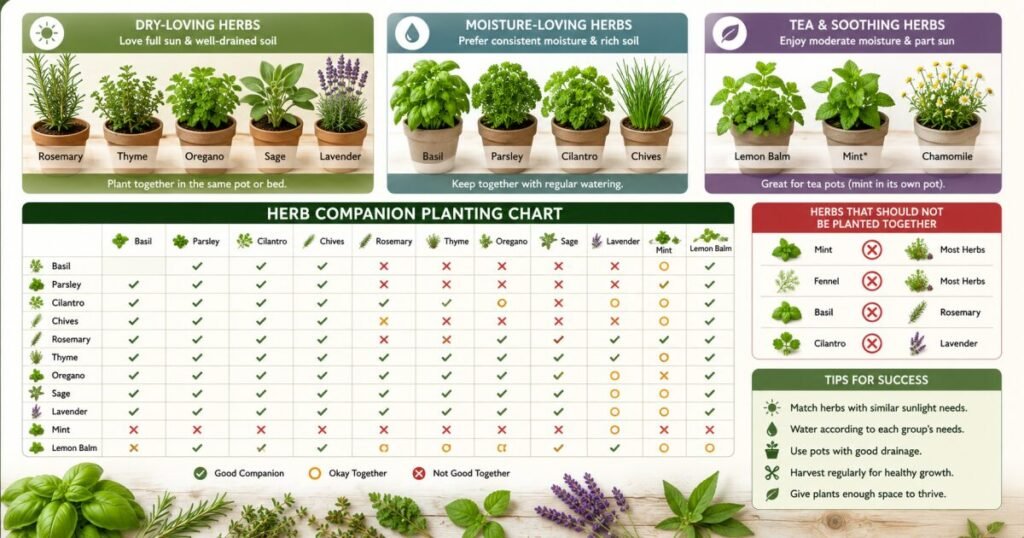
- Grow mint in its own pot.
- Use a container with drainage holes.
- Give it plenty of bright light.
- Keep the soil consistently moist.
- Don’t leave the roots sitting in water.
- Harvest the growing tips regularly.
- Trim leggy growth back.
- Repot or divide crowded plants.
- Protect mint from extreme temperatures.
- Use your harvest for cooking, drinks, drying, or freezing.
Indoor Mint Growing Schedule
Once established, mint doesn’t need complicated care.
| Task | How often |
| Check soil moisture | Every few days |
| Rotate pot | Occasionally |
| Inspect leaves for pests | Weekly |
| Harvest | Whenever enough new growth develops |
| Trim leggy growth | As needed |
| Remove damaged leaves | As needed |
| Repot/divide | When crowded or root-bound |
Your plant may need more frequent attention during hot, bright periods and less during cooler, darker periods.
Don’t follow the calendar blindly. Follow the plant.
Final Thoughts
If you’ve been wondering how to grow mint indoors, the good news is that you don’t need an elaborate indoor garden.
A healthy mint plant, a suitable pot, quality potting mix, bright light, and consistent watering are enough to get started.
Mint is particularly forgiving, but there is one thing to remember: it likes moisture and it grows aggressively. Keep it in its own container, don’t allow the soil to stay waterlogged, and harvest the growing tips regularly.
Once established, your mint can provide fresh leaves for salads, sauces, drinks, desserts, and a simple cup of mint tea.
And if you end up with more mint than you can use, that’s a good problem to have. Root cuttings to make new plants, dry the leaves, or freeze them for later.
FAQs
Will mint grow well indoors?
Yes. Mint is one of the easier culinary herbs to grow indoors. Give it bright light, consistently moist but well-drained soil, and a suitable container. Regular harvesting also helps keep indoor plants compact and productive.
How much sunlight does mint need indoors?
Mint can tolerate partial shade, but it grows best with plenty of bright light. A bright windowsill is a good starting point. If the plant becomes tall, weak, or strongly leans toward the window, it may need more light or supplemental grow lighting.
Does mint need a lot of water?
Mint prefers consistently moist soil, particularly when grown in containers, but it should not sit in water. Check the soil regularly and water thoroughly when it begins to dry.
How long does mint take to grow?
Mint grown from seed can germinate in approximately two weeks under suitable conditions, but it takes longer for seedlings to develop enough foliage for substantial harvesting. Established plants and cuttings can provide usable growth much sooner.
What is mint tea good for?
Mint tea is a refreshing caffeine-free herbal infusion traditionally enjoyed as a beverage and after meals. Fresh mint can be steeped in hot water for a simple homemade drink. The RHS specifically recommends mint leaves for making refreshing tea.