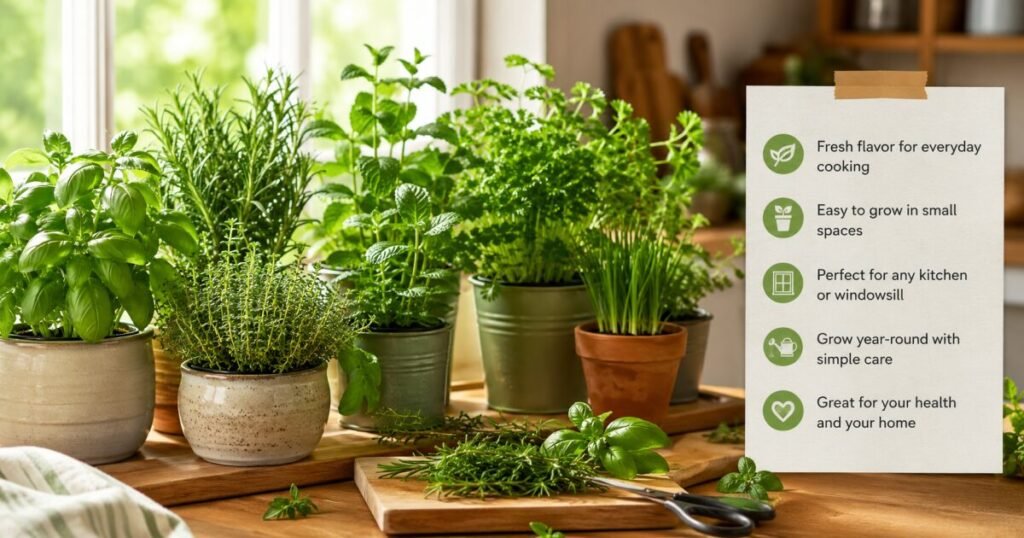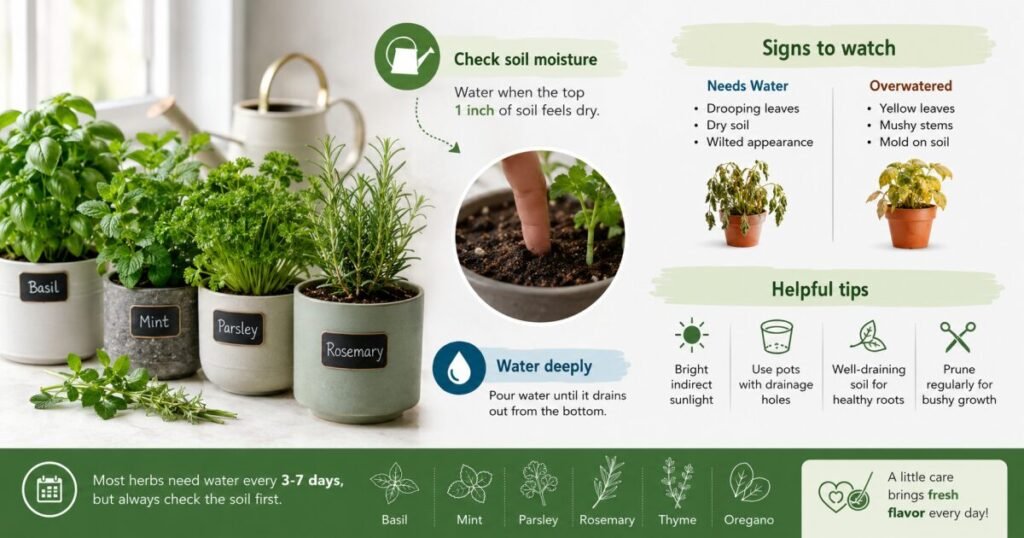
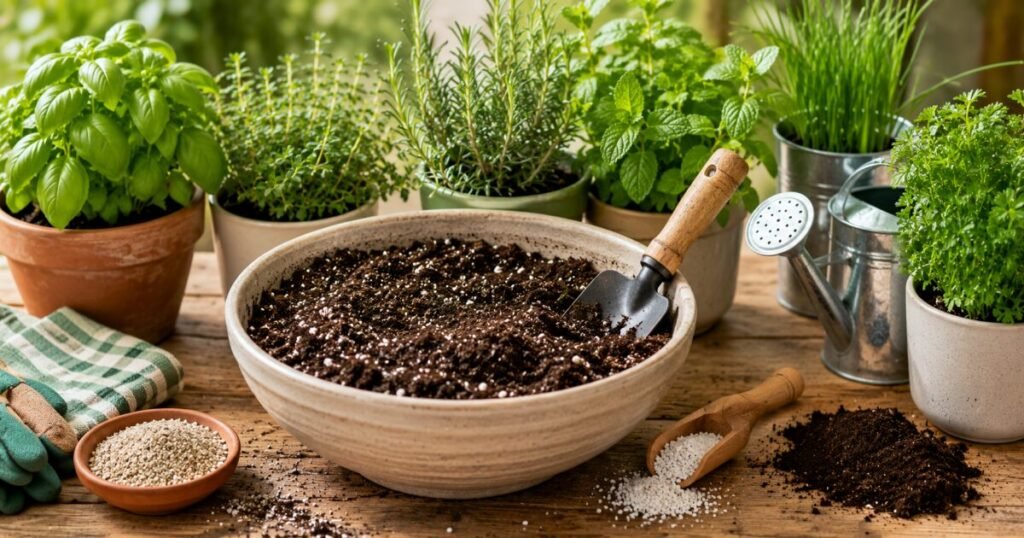
The best soil for herbs is a lightweight, fast-draining potting soil for herbs made with peat moss or coconut coir, perlite, and compost. Whether you’re growing herbs indoors or looking for the best soil for herbs in pots, the mix should hold enough moisture for healthy roots while allowing excess water to drain quickly. Most herbs grow best in soil with a pH between 6.0 and 7.0.
Most herbs that die in containers aren’t victims of bad luck; they’re planted in the wrong soil for herbs. Choosing the best potting soil for herbs makes a huge difference because herbs need excellent drainage and plenty of air around their roots. This guide breaks down exactly what herb soil needs to do, how to choose a bag at the store, how to mix your own for a fraction of the cost, and why indoor and outdoor herb soil aren’t quite the same thing.
What Kind of Soil for Herbs Is Best?
If you’re wondering what kind of soil for herbs works best, the answer is simple: herbs prefer light, airy, well-draining soil rather than dense garden soil. Most herbs thrive in a quality potting soil for herbs containing peat moss or coconut coir, perlite, and compost. This combination provides moisture without keeping roots soggy.
Is Potting Mix the Same as Potting Soil?
No, and this mislabeling causes more herb problems than almost any other single mistake. “Potting soil” often contains real soil or compost-heavy blends that compact over time in a container. “Potting mix” is a soilless blend typically peat moss or coir, perlite, and vermiculite engineered specifically for containers, where drainage and aeration matter more than they do in the ground.
In practice, many bags labeled “potting soil” on store shelves are actually formulated as soilless mixes, so the label alone isn’t reliable check the ingredient list on the bag. If it lists actual soil, loam, or dirt as a primary ingredient, it’s too heavy for a container herb. If it lists peat/coir, perlite, and vermiculite, it will perform like a potting mix regardless of what the front label calls it.
Simple rule: for any herb in a pot, indoors or on a patio, use a soilless potting mix, not garden soil or a “topsoil” or “garden soil” bag, even if it’s labeled “premium.”
What Makes the Best Soil for Herbs?
Herb soil has to do three jobs at once, and most generic mixes only do one or two well:
- Drain fast. Herb roots rot quickly in standing water; this is the single most common cause of container herb death.
- Hold some moisture. Fully dried-out soil starves roots between waterings, especially indoors where pots dry faster than garden beds.
- Stay loose and aerated. Compacted soil blocks oxygen from reaching roots, stunting growth even when watering is otherwise correct.
Herbs are also lighter feeders than vegetables. Soil that’s too nutrient-rich promotes fast, leafy growth at the expense of the essential oils that give herbs their flavor and scent. This is why “more fertile” isn’t automatically “better” for herb soil specifically.
Herb Soil pH and Nutrient Needs by Herb
Most guides give one blanket pH range for “herbs.” In practice, needs vary enough to matter if you’re troubleshooting a struggling plant.
| Herb | Ideal pH | Feeding Needs | Drainage Preference |
| Basil | 6.0–7.0 | Light to moderate | Moist, well-drained |
| Rosemary | 6.0–7.5 | Very light | Fast-draining, dry between waterings |
| Thyme | 6.0–8.0 | Very light | Fast-draining, tolerates dry soil |
| Sage | 6.0–7.0 | Light | Fast-draining |
| Mint | 6.0–7.5 | Moderate | Consistently moist |
| Parsley | 6.0–7.0 | Moderate | Moist, well-drained |
| Cilantro | 6.2–6.8 | Light | Moist, well-drained |
| Oregano | 6.0–8.0 | Very light | Fast-draining |
| Chives | 6.0–7.0 | Moderate | Moist, well-drained |
| Dill | 5.5–6.5 | Light | Moist, well-drained |
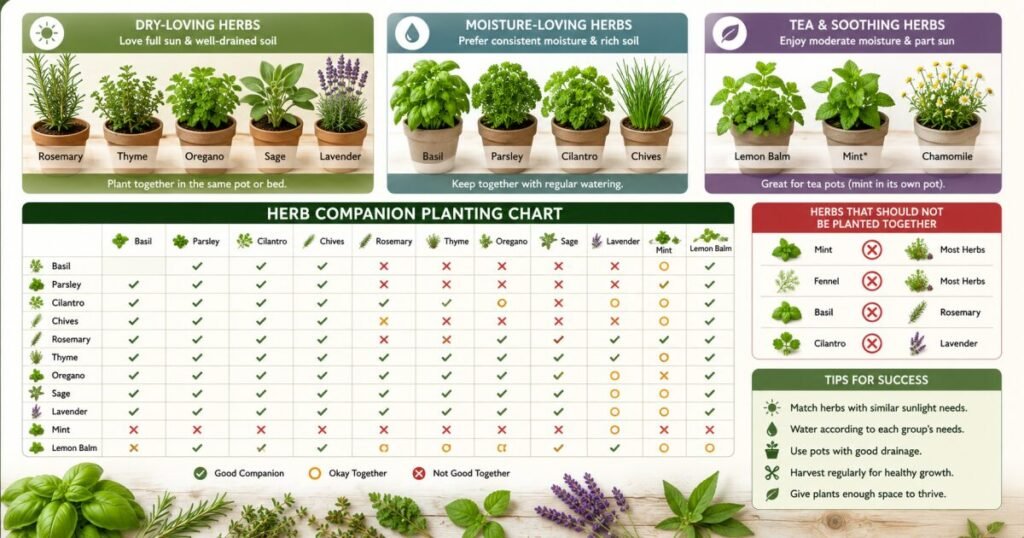
Practical takeaway: if you’re growing a mixed planter, group herbs from the same drainage-preference column together rather than averaging across the whole table; mismatched groupings are a common reason one plant in a shared pot thrives while its neighbor rots.
Best Soil for Herbs Indoors vs. Outdoors
The best soil for herbs indoors is slightly different from outdoor mixes because indoor containers dry more slowly and are more likely to develop fungus gnats. Indoor herbs benefit from lighter, sterile potting mixes with excellent drainage.
| Factor | Indoor Herb Soil | Outdoor Herb Soil |
| Drying speed | Slower: less airflow, less heat | Faster sun and wind pull moisture out quickly |
| Sterility | Matters more pests like fungus gnats breed in damp, un-sterilized soil indoors | Less critical natural predators and airflow limit pest buildup |
| Weight | Lighter mix preferred easier to move, less mess on windowsills | Weight is less of a concern |
| Nutrient replenishment | Slower natural replenishment more reliant on added fertilizer over time | Some nutrient cycling from environment, rain, and organic matter |
| Moisture retention | Slightly higher retention ingredient ratio often helpful (e.g., more coir) | Slightly higher drainage ratio often helpful (e.g., more perlite) |
Why sterility matters more indoors: unsterilized compost or garden-adjacent soil can carry fungus gnat larvae or mold spores that thrive in the still, humid air of an indoor pot. Outdoors, wind and temperature swings naturally suppress this in a way a windowsill can't replicate.
How to Make the Best Potting Soil for Herbs (DIY Recipe)
You don’t need to buy specialty bagged mixes to get correct herb soil; a simple DIY blend costs less per batch and gives you full control over drainage and nutrients. This DIY recipe works equally well as the best potting soil for herbs in containers, raised planters, and indoor pots.
General-purpose herb soil mix (outdoor or larger containers):
- 2 parts peat moss or coconut coir (moisture retention, structure)
- 1 part perlite (drainage and aeration)
- 1 part compost (nutrients, microbial life)
Indoor herb soil mix (lighter, better sterility):
- 2 parts sterilized compost or coco coir
- 1 part perlite
- 1 part vermiculite (moisture retention without excess weight)
- A small handful of worm castings per gallon of mix (slow-release nutrients)
To sterilize your own compost for indoor use: spread it on a baking sheet and heat at 180°F (82°C) for 30 minutes. This kills most weed seeds, pests, and pathogens without destroying the organic matter's benefit.
Mixing steps:
- Combine dry ingredients in a large tub or wheelbarrow.
- Moisten lightly with water until the mix holds together when squeezed but doesn’t drip.
- Let it sit for 24 hours before potting to let moisture distribute evenly.
- Fill containers, leaving about 1 inch of headspace below the rim for watering.
Best Organic Soil for Herbs in Pots
If you prefer growing organically, the best organic soil for herbs in pots contains compost, coconut coir, worm castings, and perlite without synthetic fertilizers. Organic potting mixes encourage healthy microbial activity while providing gentle nutrients that herbs can use over time.
Store-Bought Herb Soil
A plain all-purpose potting soil for herbs works well if you improve drainage by mixing in extra perlite. You don’t necessarily need a bag labeled “best soil for herbs” because many standard potting mixes perform just as well after a few simple amendments.
If you’d rather buy a bag than mix your own, read the ingredient panel, not the marketing copy on the front.
| Look For | Avoid |
| Peat moss or coir, perlite, vermiculite listed as primary ingredients | “Garden soil,” “topsoil,” or “compost” listed as the primary ingredient |
| Labeled for container gardening or potting | Moisture-retaining gel crystals these overhydrate herb roots |
| Light, crumbly texture when you squeeze a handful | Dense, heavy texture that stays compacted when squeezed |
| Neutral to slightly acidic pH stated on the bag | No pH information at all (harder to troubleshoot later) |
| Little to no added synthetic fertilizer, or a light slow-release only | Heavily fertilized “bloom booster” mixes meant for flowering plants |
A plain all-purpose potting mix works fine for most herbs if you amend it with extra perlite (about 1 part perlite to 4 parts mix) to improve drainage; you don’t need a mix marketed specifically as “herb soil” to get good results.
Signs Your Herb Soil Is Wrong
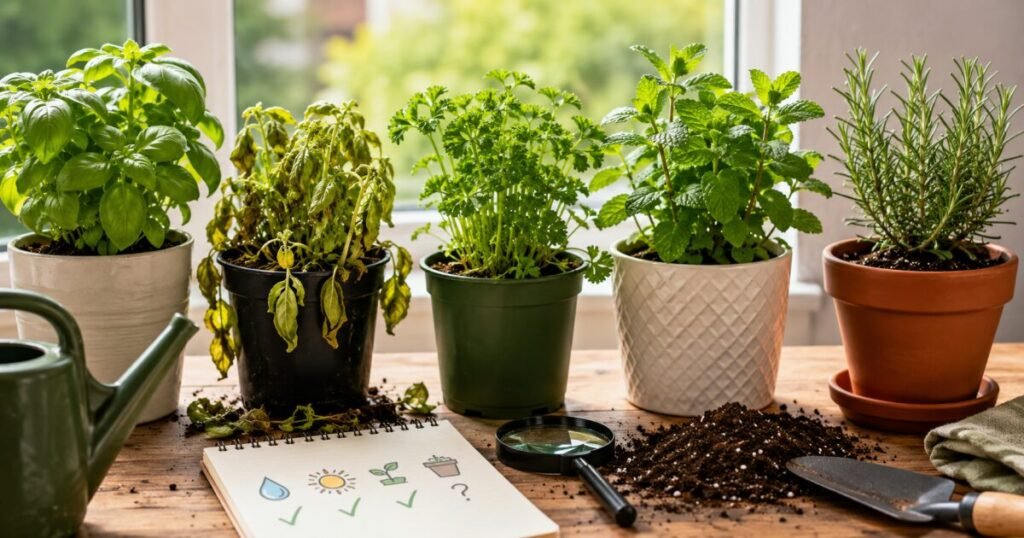
Most soil problems show up as symptoms that get misread as watering or light issues. Use this as a quick diagnostic:
Yellowing leaves + consistently damp soil → drainage is too poor; soil is staying wet too long.
Crispy, wilting leaves despite regular watering → soil is draining too fast or has become hydrophobic (common with dried-out peat that repels water).
White, crusty buildup on the soil surface → mineral salt buildup from over-fertilizing or hard tap water; flush the pot with plain water monthly.
Fungus gnats hovering around the pot → soil is staying too wet at the surface, usually indoors; let the top inch dry out between waterings.
Stunted growth with pale green (not yellow) leaves → soil may be too compacted or nutrient-depleted; consider repotting with fresh mix.
Leggy growth with few flowers or aroma → soil is too nutrient-rich; ease off fertilizer.
Fertilizing Herb Soil
Herbs are light feeders, and over-fertilizing is more common and more damaging than under-fertilizing. Too much nitrogen pushes fast leafy growth at the cost of the essential oils responsible for flavor and scent.
- Use a diluted, balanced liquid fertilizer (or fish emulsion) every 4–6 weeks during active growth.
- Skip fertilizing dormant or slow-growing herbs in winter.
- If soil already includes compost or worm castings, you can often skip additional fertilizer for the first 2–3 months.
Pros and Cons: DIY Herb Soil Mix vs. Store-Bought
DIY Mix
- Pros: Full control over drainage and nutrients, cheaper per batch for larger gardens, customizable per herb
- Cons: Requires sourcing multiple ingredients, more time upfront, batch-to-batch variation if not measured carefully
Store-Bought Mix
- Pros: Consistent quality, no mixing required, widely available
- Cons: Higher cost per volume, less customizable, quality varies by brand; always check the ingredient panel
Key Takeaways
- Potting mix and potting soil aren’t reliably the same thing; check the ingredient list, not the label name, before using a bag on herbs.
- Herb soil needs to drain fast, hold moderate moisture, and stay loose; garden soil fails all three in a container.
- Indoor herb soil benefits from sterilized ingredients and a lighter mix; outdoor soil can lean more toward drainage.
- A basic DIY mix (peat/coir + perlite + compost) costs less than most bagged specialty blends and performs just as well.
- Most herb soil problems show up as symptoms yellowing, crusting, gnats, legginess that map directly back to drainage or fertilizer issues.
FAQs
Is potting mix the same as potting soil?
Not reliably “potting soil” sometimes contains real soil or heavy compost that compacts in containers, while “potting mix” is a soilless blend built for drainage and aeration. Always check the ingredient list rather than trusting the label name alone.
Can I use garden soil instead of potting soil for herbs?
No garden soil compacts in containers, drains poorly, and can introduce pests or weed seeds; use a potting mix instead, even for outdoor container herbs.
What is the best soil mix for indoor herbs specifically?
A lighter blend of sterilized compost or coir, perlite, and vermiculite works best indoors, since it stays loose, resists pests like fungus gnats, and doesn’t compact under the lower airflow of an indoor environment.
Do herbs need special fertilizer in their soil?
No, herbs are light feeders, and over-fertilizing reduces the essential oil concentration responsible for flavor and scent; a diluted, balanced fertilizer every 4–6 weeks during active growth is usually enough.
Why does my herb soil dry out so fast indoors?
Small containers, warm indoor air, and heating systems in winter all pull moisture out of soil faster than outdoor conditions; adding slightly more coir or vermiculite to the mix, or watering more frequently in small pots, usually solves it.
Choosing the best soil for herbs is one of the easiest ways to grow healthier, more flavorful plants. Whether you buy a quality potting soil for herbs, make your own DIY mix, or choose an organic blend, prioritize fast drainage, moderate moisture retention, and plenty of airflow around the roots. With the right soil for herbs, most culinary herbs will thrive both indoors and outdoors.