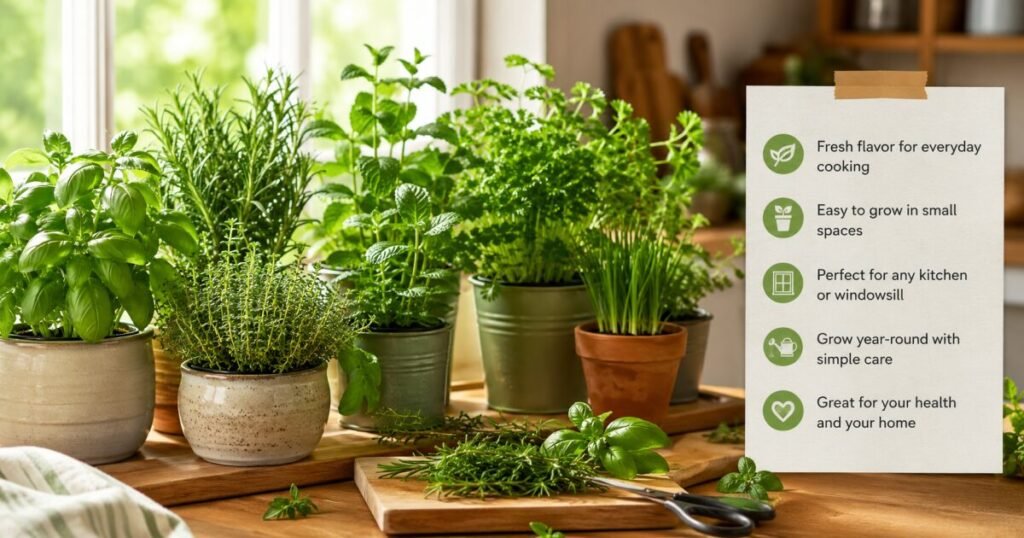
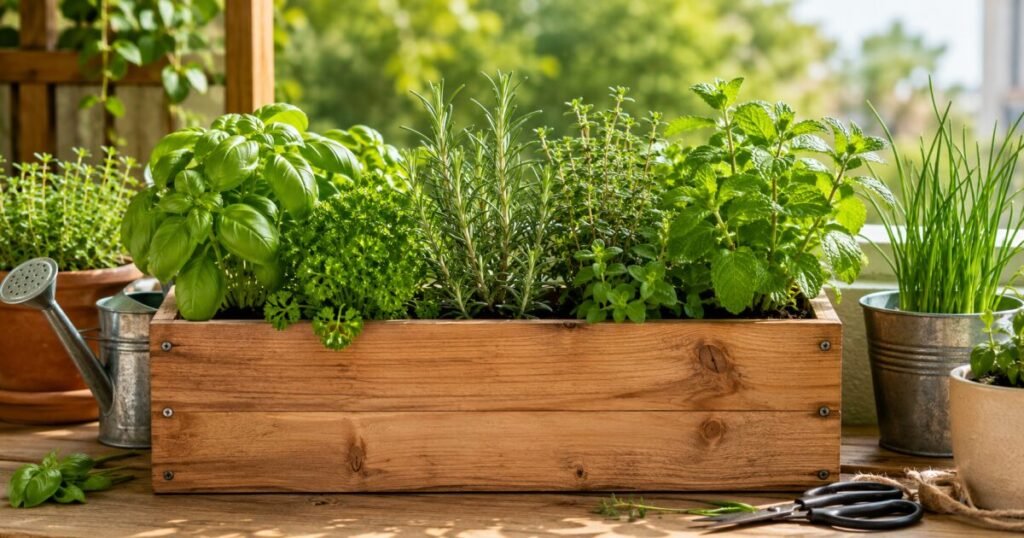
A herb planter is any container a box, pot, rail planter, or raised bed built or bought specifically to grow culinary herbs in a defined space with good drainage and enough depth for root growth. The best herb planters are at least 6–12 inches deep, have drainage holes, and hold 1–3 gallons of potting mix per plant, whether you keep them on a windowsill, patio, or balcony.
If you’ve ever bought a $6 bunch of basil at the grocery store and used two sprigs before the rest turned to slime in your crisper drawer, a herb planter solves that problem for the cost of one grocery run. This guide covers everything the top gardening sites and product pages leave out: how to size a planter correctly for each herb, how to build one yourself from scratch, how indoor and outdoor setups differ, and which mistakes quietly kill more herb gardens than pests ever do.
What Is a Herb Planter, Exactly?
A herb planter is a container freestanding, wall-mounted, elevated, or built into a raised bed designed to hold enough soil volume and drainage capacity for herbs to establish root systems and be harvested repeatedly (a “cut-and-come-again” cycle) rather than pulled up once like an annual vegetable.
The category includes:
1. Single pots:
One herb per container, most flexible for mixed light and water needs
2. Planter boxes:
Rectangular containers holding 3–8 herbs together
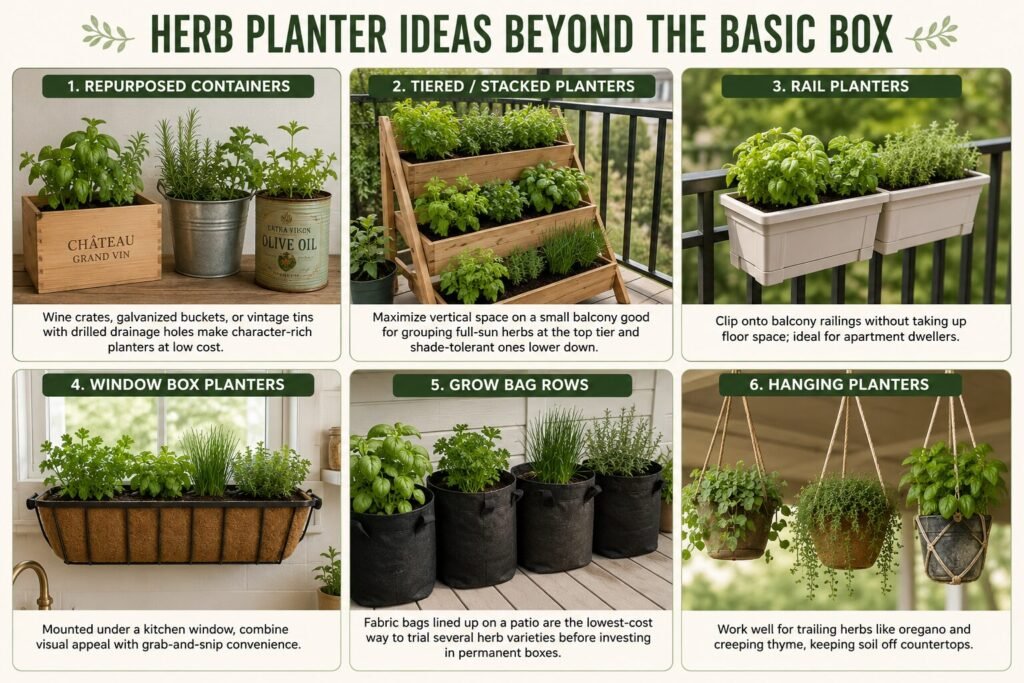
3. Rail or balcony planters:
narrow, hang or clip onto railings
4. Elevated/raised planter boxes:
Waist-height boxes on legs, easier on the back
5. Self-watering planters:
Built-in water reservoir with a wicking system
6. Vertical or tiered planters:
Stacked pockets or shelves for small footprints
7. Windowsill or countertop planters:
Compact indoor containers, often under 8 inches deep
Why Grow Herbs in a Dedicated Planter?
Cost
A $3–5 seed packet or $4 starter plant replaces $5–7 grocery-store clamshells that go bad in days.
Flavor and freshness
Herbs lose aromatic oils fast after cutting; a live plant on your counter beats anything pre-cut.
Space efficiency
Most culinary herbs don’t need garden beds a planter 12 inches deep supports even deep-rooted rosemary.
Portability
You can chase sunlight, move plants indoors before frost, or relocate for renovations.
Control
You choose the soil, drainage, and whether it’s treated with anything at all.
Planter Material Comparison
Material affects watering frequency, weight, cost, and lifespan more than most guides admit. Here’s how the common options actually compare:
| Material | Drainage/Moisture Retention | Weight | Typical Lifespan | Cost | Best For |
| Terracotta/clay | Porous dries fast, forgiving of overwatering | Heavy | 5–10+ years (cracks in hard freezes) | Low–Medium | Mediterranean herbs (rosemary, thyme, sage) |
| Untreated wood (cedar) | Good drainage, moderate retention | Medium | 5–8 years untreated | Medium | DIY boxes, natural look, outdoor use |
| Plastic/resin | Retains moisture longer | Light | 5–15 years | Low | Beginners, indoor use, moisture-loving herbs |
| Glazed ceramic | Retains moisture, low por//osity | Heavy | 10+ years | Medium–High | Indoor statement pots, humidity-loving herbs |
| Metal (galvanized) | Drains well but heats up fast in sun | Medium | 10+ years | Medium–High | Outdoor raised planters, modern aesthetic |
| Self-watering (plastic w/ reservoir) | Consistent moisture via wicking | Medium | 5–10 years | Medium–High | Busy schedules, drought-prone herbs like basil |
| Fabric grow bags | Excellent drainage and aeration | Very light | 2–4 years | Low | Renters, temporary setups, root health |
Quick rule: if you tend to forget to water, choose plastic, glazed ceramic, or self-watering. If you tend to overwater, terracotta or fabric bags forgive you by drying out faster.
How Deep Does a Herb Planter Need to Be?
Depth requirements vary more than most buying guides suggest, because herb root systems aren’t uniform. Shallow-rooted herbs waste soil (and money) in an oversized box; deep-rooted herbs get root-bound and stunted in a shallow one.
| Herb | Minimum Depth | Minimum Diameter/Spacing | Root Type |
| Basil | 8–10 in | 10–12 in | Moderate, spreading |
| Rosemary | 12–14 in | 12–16 in | Deep, woody |
| Thyme | 6–8 in | 6–8 in | Shallow, spreading |
| Sage | 10–12 in | 12–14 in | Moderate, woody |
| Mint | 8–10 in (separate pot) | 10–12 in | Aggressive, spreading rhizomes |
| Chives | 6–8 in | 6–8 in | Shallow, clumping |
| Parsley | 8–10 in | 8–10 in | Taproot needs depth |
| Cilantro | 8–10 in | 6–8 in | Taproot, fast-bolting |
| Oregano | 8–10 in | 10–12 in | Shallow, spreading |
| Dill | 10–12 in | 8–10 in | Taproot, tall growth |
If you’re planting a mixed box, group herbs with similar depth and water needs rather than sizing for the average; a common mistake that stunts either the shallow- or deep-rooted plant.
How to Build an Herb Garden Planter (DIY Step-by-Step)
You don’t need carpentry experience to build a solid cedar herb planter box. This is the version competing guides skip entirely.
Materials (for a 24″ x 12″ x 10″ box):
- Cedar or untreated pine boards: two 24″ x 10″, two 12″ x 10″, one 24″ x 12″ (base)
- Wood screws (deck screws, 2″)
- Landscape fabric or weed barrier cloth
- Drill with drill bit set
- Wood glue (exterior-rated, optional)
- Sandpaper (120 grit)
- Optional: exterior wood sealant (avoid on the interior if growing edibles)
Steps:
- Cut your boards to size if you didn’t buy pre-cut lumber two long sides, two short sides, one base panel.
- Assemble the frame first. Screw the short side panels to the ends of the long side panels to form a rectangle, pre-drilling pilot holes to prevent splitting.
- Attach the base. Set the frame on top of the base panel and screw down through the sides into the base every 4–6 inches.
- Drill drainage holes. Space 6–8 holes (½ inch diameter) evenly across the base this is the single most skipped step in DIY builds and the top cause of root rot.
- Sand rough edges, especially anywhere hands or harvesting will make contact.
- Line the interior base with landscape fabric, stapled or tucked in place, to slow soil loss through the drainage holes without blocking water flow.
- Seal the exterior only (never the interior, since sealants can leach into soil edible plants will grow in) if the box will live outdoors year-round.
- Elevate the box slightly on furniture risers or bricks so water drains freely instead of pooling underneath.
- Fill with potting mix, not garden soil garden soil compacts in containers and drains poorly.
- Plant, water thoroughly, and let it drain fully before placing in its final spot.
Time investment: roughly 1–2 hours for a first build, less with pre-cut lumber.
Indoor Herb Planter vs. Outdoor Herb Planter
Indoor and outdoor setups aren’t the same project with a different location the constraints are genuinely different.
| Factor | Indoor Herb Planter | Outdoor Herb Planter |
| Light | Usually insufficient without a grow light; south-facing windows give 4–6 hrs, most herbs want 6+ | Full sun readily available |
| Drainage | Needs a saucer or tray spills matter indoors | Can drain freely onto soil, patio, or gravel |
| Airflow | Lower increases fungal/mildew risk | Higher naturally reduces disease pressure |
| Pests | Fewer outdoor pests, but fungus gnats and aphids from bought plants | Wider pest exposure (aphids, slugs, rabbits) |
| Humidity | Often too low (heated homes in winter) | Usually adequate, weather-dependent |
| Growth rate | Slower without supplemental light | Faster with full sun |
| Best herbs | Chives, parsley, mint, thyme (tolerate lower light) | Basil, rosemary, dill (want full sun and heat) |
The single biggest indoor herb planter mistake:
placing the planter on a windowsill and assuming that’s “full sun.” Most homes only get true full sun (6+ hours direct) on south-facing sills in the growing season; everywhere else, a basic LED grow light (10–16 hours/day) makes a measurable difference within two weeks.
Choosing the Right Herbs for Your Planter
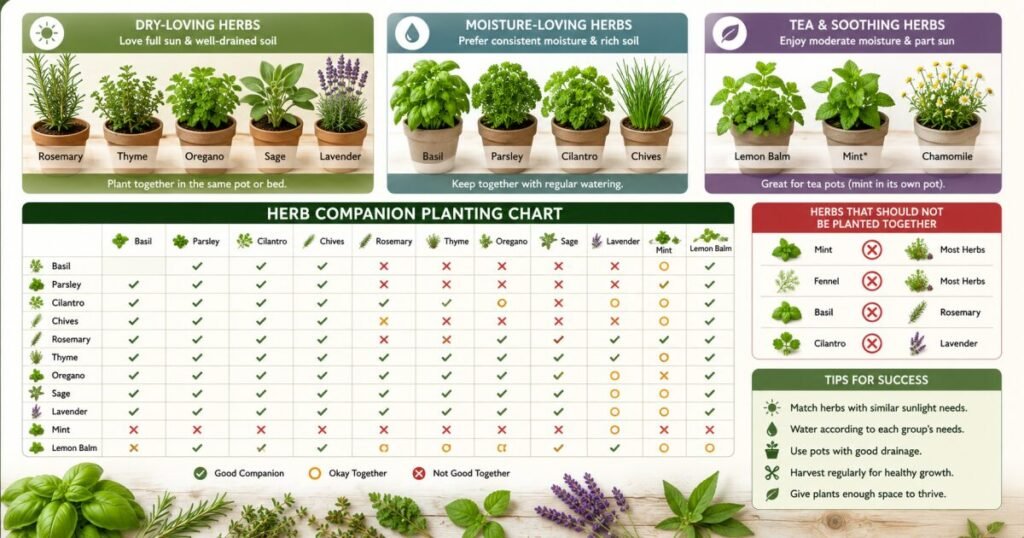
Full-sun / drought-tolerant plant group (plant together): rosemary, thyme, sage, oregano all want soil to dry out between waterings and resent soggy roots.
Moisture-loving group (plant together): basil, parsley, chives, cilantro want more consistent moisture and tolerate partial shade better.
Grow alone (never combine): mint. Its rhizomes spread aggressively underground and will choke out neighboring herbs within a season; this applies in containers just as much as garden beds.
Soil, Drainage, and Watering
- Use potting mix, not garden soil. Garden soil compacts in a container, drains poorly, and often carries pests or weed seed.
- Target pH 6.0–7.0 for most culinary herbs; a $10 soil pH meter is worth owning if you’re growing more than one or two plants.
- Drainage holes are non-negotiable. A planter without them will develop root rot regardless of how careful you are with watering.
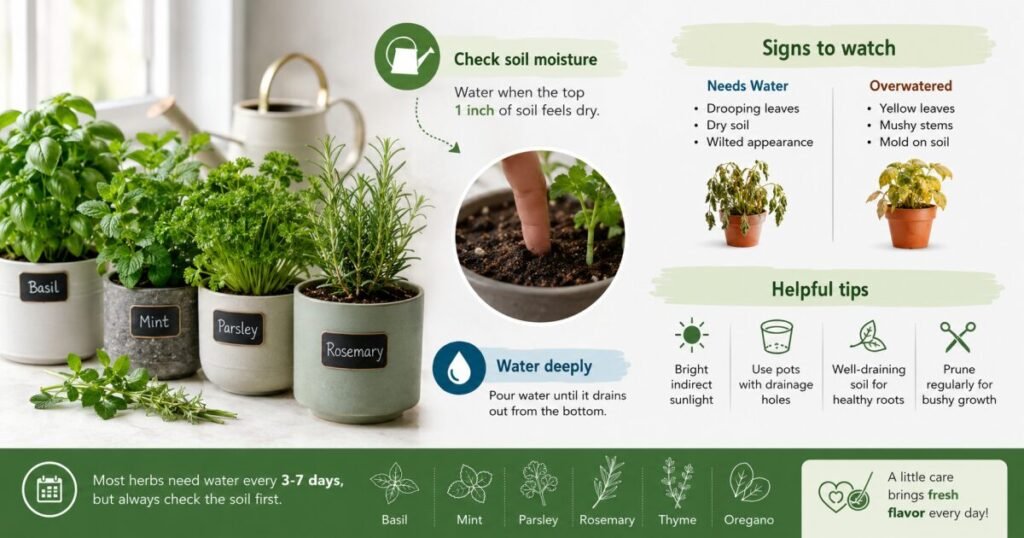
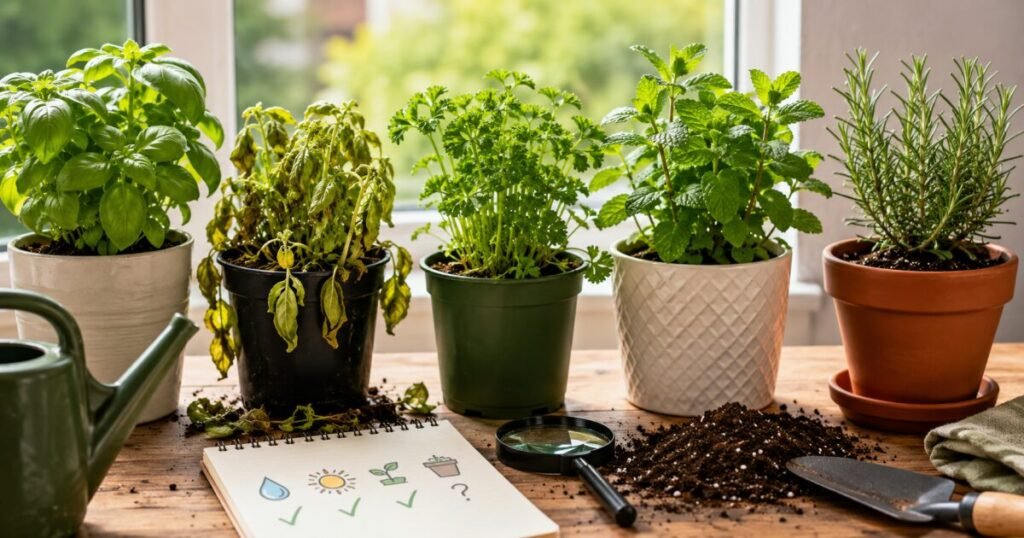
- Water when the top inch of soil is dry, not on a fixed schedule; this single habit change prevents more herb deaths than any other factor.
- Self-watering planters reduce the guesswork for moisture-loving herbs like basil and parsley but can overhydrate drought-tolerant herbs like rosemary if you’re not careful about reservoir refill frequency.
Read more: How Often to Water Herbs? Indoor, Outdoor, and Potted Herb Watering Guide
Pros and Cons of Growing Herbs in Planters
Pros:
- Lower cost than repeated grocery purchases
- Full control over soil quality and chemical use
- Portable for light, weather, or renovations
- Works in apartments, balconies, and small yards alike
- Easier pest management than open garden beds
Cons:
- Requires more frequent watering than in-ground planting
- Limited root space can stunt long-term perennial herbs like rosemary
- Indoor setups often need supplemental grow lights
- Wood planters need occasional maintenance (sealing, replacement)
- Mixed planters require matching water/light needs or one herb suffers
Common Misconceptions About Herb Planters
“Any pot works for herbs.”
Without drainage holes and adequate depth, most pots set herbs up to fail regardless of soil quality.
“Mint plays well with other herbs in a shared planter.”
Its spreading rhizomes will dominate a shared container within one growing season.
“Indoor herbs don’t need much light.”
Most culinary herbs still want 6+ hours of bright light; low-light tolerance is relative, not absolute.
“Bigger is always better.”
Oversized planters for shallow-rooted herbs like thyme hold excess moisture around roots and increase rot risk.
“Herb planters need fertilizer as often as vegetables.”
Most culinary herbs actually produce better flavor with lean soil; over-fertilizing pushes leafy growth at the expense of aromatic oil concentration.
Key Takeaways
- A herb planter needs drainage holes, 6–14 inches of depth depending on the herb, and potting mix, not garden soil.
- Group herbs by shared water needs (drought-tolerant vs. moisture-loving); never plant mint with anything else.
- Indoor planters usually need supplemental grow light a windowsill alone rarely provides true full sun.
- A basic DIY cedar planter box takes about 1–2 hours to build and costs less than most pre-made options.
- Material choice (terracotta, plastic, self-watering, etc.) should match your watering habits, not just your design preference.
FAQs
How deep should a herb planter be?
Most culinary herbs need at least 6–8 inches of depth; deep-rooted herbs like rosemary and dill need 12–14 inches for healthy root development.
Can I grow herbs indoors without a grow light?
Yes, but only in a south-facing window with 4–6+ hours of direct sun, and typically for lower-light herbs like mint, chives, and parsley; basil and rosemary usually struggle without supplemental light in most homes.
What is the best material for an outdoor herb planter?
Cedar and terracotta are the most popular because they drain well and hold up outdoors, though galvanized metal and glazed ceramic are durable alternatives if weight and heat retention are managed.
Do herb planters need drainage holes?
Yes, without them, water pools at the roots and causes root rot within weeks, even with careful watering habits.
Can I plant multiple herbs in one planter box?
Yes, as long as you group herbs with similar sun and water needs (for example, rosemary, thyme, and sage together) and keep spreading herbs like mint in a separate container.