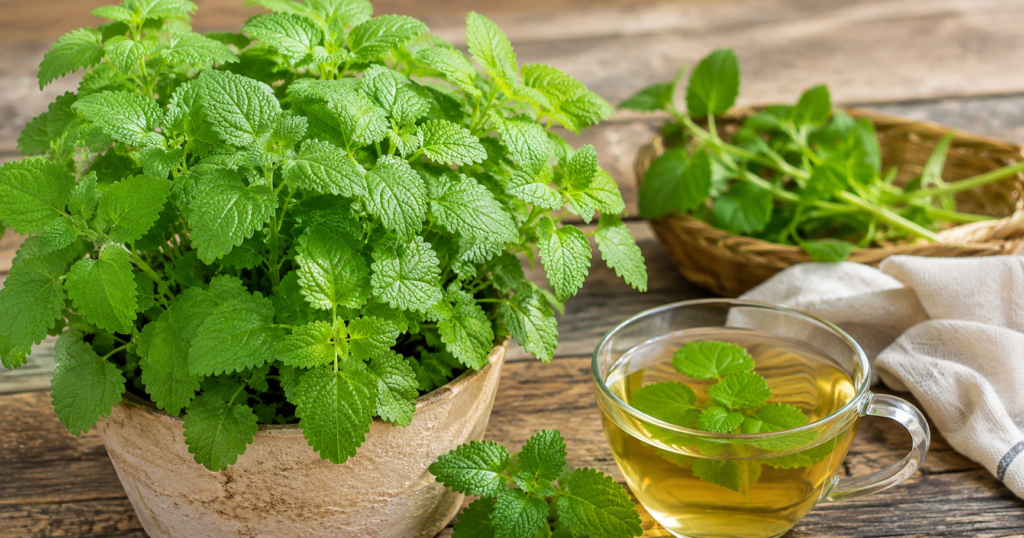
Lemon balm (Melissa officinalis) is a fragrant perennial herb with soft green, lemon-scented leaves. It belongs to the mint family and is one of the easiest herbs to grow at home. You can use the leaves fresh in drinks, salads, desserts, sauces, and herbal infusions such as lemon balm tea.
Beyond the kitchen, lemon balm has a long history of traditional use for relaxation and digestive comfort, and it has also been studied for sleep, anxiety, and other health-related uses. However, promising traditional use is not the same as strong clinical evidence, so it’s worth separating what the plant is commonly used for from what research actually supports.
If you’re growing an indoor herb garden, lemon balm is especially useful because you can harvest the leaves repeatedly throughout the growing season and use them fresh or preserve them for later.
In this guide, you’ll learn what lemon balm is used for, how to grow it indoors, when and how to harvest lemon balm, what to do with the leaves, how to make lemon balm tea, whether lemon balm is a perennial, and what the research says about lemon balm for sleep.
Quick Answer: What Is Lemon Balm?
Lemon balm is a perennial herb known for its fresh lemon fragrance and flavor. Its botanical name is Melissa officinalis, and it belongs to the mint family, Lamiaceae.
It grows as a leafy, bushy plant and can reach roughly 3 feet (90 cm) under favorable conditions. It produces small pale flowers that are rich in nectar and attractive to bees.
The leaves are the part most commonly used.
You can:
- Add fresh leaves to drinks
- Make lemon balm tea
- Use the leaves in salads
- Add them to desserts
- Flavor fruit dishes
- Use them with chicken or fish
- Dry the leaves for later
- Freeze leaves for longer storage
- Grow it indoors in a container
One important characteristic to remember is that lemon balm is vigorous. Like mint, it can spread and self-seed, so growing it in a container is often the easiest way to keep it under control.
What does Lemon Balm Plant Looks Like?
The lemon balm plant is easy to recognize once you know what to look for.
It has:
- Soft green, textured leaves
- Scalloped or toothed leaf edges
- Square-ish stems characteristic of the mint family
- A strong lemon scent when the leaves are crushed
- Small white to pale flowers during summer
The leaves are usually the reason people grow it.
If you rub one gently between your fingers, you’ll notice the citrus-like aroma almost immediately.
The plant can become quite bushy when harvested regularly. Left alone, established plants can become large clumps, which is one reason occasional cutting back is useful.
Is Lemon Balm a Perennial?
Yes. Lemon balm is a herbaceous perennial.
That means a healthy plant can live for multiple years rather than needing to be replanted every season. The above-ground growth may die back during winter in colder climates and return when conditions become favorable again.
This makes lemon balm particularly valuable for a home herb garden.
You can establish one plant and continue harvesting from it season after season.
But there’s a catch
Lemon balm is vigorous.
It can:
- Spread into surrounding areas
- Form large clumps
- Self-seed after flowering
If you don’t want it spreading through the garden, grow it in a container or remove the flower heads before they set seed. The RHS specifically recommends container growing when you want to limit its spread.
How to Grow Lemon Balm Indoors
Lemon balm is a good candidate for an indoor herb garden because it isn’t particularly difficult to grow.
Give it:
- Bright light
- A container with drainage
- Fertile, well-drained potting mix
- Consistent moisture
- Regular harvesting
A sunny windowsill can work well, although the plant may need supplemental lighting if your home doesn’t receive enough natural light.
Choose the right container
Because lemon balm can become vigorous, give it a container with enough room for the roots to develop.
Most importantly, choose a pot with drainage holes.
A container that holds excess water can create root problems.
Light
Lemon balm grows well in full sun or partial shade.
Indoors, place it near a bright window.
If the plant becomes:
- Tall and floppy
- Sparse
- Pale
- Strongly tilted toward the window
it may not be receiving enough light.
Water
Keep the potting mix reasonably moist, but allow excess water to drain.
Container-grown lemon balm may need more frequent watering than plants growing outdoors in the ground, particularly during warm weather.
Don’t keep the roots permanently saturated.
Do you want to read more details about pots, light and watering plants?
Read our following article: How to Grow Mint Indoors: Complete Guide for Pots, Light & Watering
What Is Lemon Balm Used For?
So, what is lemon balm used for?
There are two different answers: culinary use and traditional herbal use.
Culinary uses
Lemon balm’s fresh lemon flavor makes it useful in:
- Herbal tea
- Lemonade
- Fruit salads
- Desserts
- Sauces
- Salads
- Chicken dishes
- Fish dishes
- Cold drinks
- Cocktails and mocktails
The RHS recommends the young leaves for both savory and sweet dishes and for making a refreshing tea.
Read more about Culinary Herbs: 25 Culinary Herbs You Can Easily Grow Indoors
Traditional herbal uses
Lemon balm has traditionally been used as a calming herb and for digestive comfort.
It has also been studied for possible effects involving:
- Stress
- Anxiety
- Sleep
- Mood
- Digestive symptoms
But this is where it’s important to avoid overpromising.
Research into herbal supplements can vary considerably in quality, preparation, dosage, and study size. Evidence for complementary approaches is often limited or inconsistent, and supplements can interact with medications.
So lemon balm can be an interesting herb to grow and use, but it shouldn’t be presented as a proven treatment for a medical condition.
What to Do With Lemon Balm
If you grow lemon balm for the first time, you’ll probably discover that it produces more leaves than you expected.
That’s not a problem.
Here are some of the best things to do with lemon balm:
1. Make lemon balm tea
Fresh leaves make an easy caffeine-free herbal infusion.
2. Add it to cold drinks
Bruise a few leaves and add them to:
- Lemon water
- Iced tea
- Sparkling water
- Homemade lemonade
3. Add it to fruit
Lemon balm pairs especially well with berries, peaches, melons, and other fresh fruit.
4. Use it in desserts
Chopped leaves can add a subtle citrus note to:
- Sorbet
- Fruit desserts
- Cakes
- Cookies
- Puddings
5. Add fresh leaves to salads
Use young leaves sparingly for a fresh lemony flavor.
6. Use it with savory food
Lemon balm can complement chicken, fish, vegetables, and light sauces.
7. Dry it for winter
If your plant produces a large harvest, drying gives you a supply for herbal infusions later.
8. Freeze it
Freezing is another option when you want to preserve more of the fresh character.
How to Harvest Lemon Balm
One of the best things about growing lemon balm is that you can harvest it repeatedly.
The easiest approach is to cut the young shoot tips rather than removing individual leaves one at a time.
The RHS recommends harvesting the young shoot tips for the best flavor and scent.
How to harvest lemon balm
- Choose healthy stems with plenty of fresh growth.
- Use clean scissors or pruning shears.
- Cut several inches of the upper growth.
- Leave enough foliage on the plant for continued growth.
- Use the leaves immediately or prepare them for drying.
Regular harvesting encourages fresh growth and can help prevent the plant from becoming overly tall or untidy.
When to Harvest Lemon Balm
When to harvest lemon balm depends partly on how you plan to use it.
For the strongest fresh aroma, harvest the young leaves and shoot tips before the plant becomes heavily flowered.
You can harvest lemon balm regularly during its active growing season. The RHS notes that harvesting can continue through spring and summer because the plant regrows quickly.
For fresh use
Harvest whenever you need a small amount.
For drying
Harvest a larger amount when the plant is producing abundant healthy foliage.
For the best flavor
Young leaves and shoot tips are generally preferable.
After flowering
A hard cutback can encourage another flush of fresh leaves. Wisconsin Horticulture recommends cutting lemon balm back after flowering to produce fresh growth.
The Best Time of Day to Harvest Lemon Balm
For home harvesting, choose a dry period after any morning dew has evaporated.
Avoid harvesting wet foliage if you’re planning to dry it.
Wet leaves take longer to dry and can increase the risk of spoilage during storage.
For the freshest flavor, use your harvested leaves soon after cutting.
How to Use Lemon Balm?
There are two broad ways to use lemon balm:
Fresh or preserved.
Fresh lemon balm is excellent when you want its bright lemon aroma.
Try it in:
- Tea
- Lemonade
- Salads
- Fruit dishes
- Desserts
- Sauces
Preserved lemon balm is more convenient when the growing season ends.
You can:
- Dry it
- Freeze it
- Store dried leaves in an airtight container
One thing to know about dried lemon balm: the flavor is usually milder than fresh leaves. Wisconsin Horticulture notes that dried leaves lose some of their aroma.
That’s why many gardeners prefer to use fresh leaves whenever they’re available.
Lemon Balm Tea
Lemon balm tea is one of the simplest ways to use a homegrown plant.
You don’t need a complicated recipe.
Fresh lemon balm leaves + hot water = a simple herbal infusion.
The RHS specifically recommends lemon balm leaves for making refreshing tea.
And because lemon balm isn’t Camellia sinensis, the resulting drink is an herbal infusion rather than traditional tea.
How to Make Lemon Balm Tea
Here’s a simple lemon balm tea recipe using fresh leaves.
Ingredients
- A small handful of fresh lemon balm leaves
- 1–2 cups hot water
- Lemon, optional
- Honey, optional
Method
- Rinse the leaves gently.
- Place them in a mug or teapot.
- Lightly bruise the leaves between your fingers to release their aroma.
- Pour hot water over them.
- Cover and steep for about 5–10 minutes.
- Strain the leaves.
- Add lemon or honey if desired.
Fresh vs. dried lemon balm
You can make the tea with either fresh or dried leaves.
Fresh leaves generally give you a brighter, more pronounced lemon aroma.
Dried leaves are convenient in winter, although some fragrance is lost during drying.
Benefits of Lemon Balm
Lemon balm has been used traditionally for centuries, particularly as a calming herb and for digestive comfort. Modern research has investigated lemon balm for several potential benefits, including relaxation, anxiety, mood, and sleep. However, the strength of the evidence varies, and results from concentrated extracts or supplements shouldn’t automatically be applied to a cup of homemade lemon balm tea.
Lemon Balm Tea for Sleep
Lemon balm for sleep is an interesting area of research, but the evidence should be described carefully.
Lemon balm has traditionally been used for relaxation, and researchers have investigated whether it may influence sleep and anxiety-related symptoms.
However, evidence for herbal approaches to sleep is not strong enough to treat lemon balm as a proven insomnia treatment. NCCIH notes that evidence for many complementary approaches to sleep disorders remains inconsistent or too limited to draw firm conclusions.
So if you enjoy lemon balm tea before bed, it can be part of a relaxing evening routine, but it shouldn’t replace evidence-based treatment for persistent insomnia.
If sleep problems continue for weeks or significantly affect daytime functioning, it’s better to address the underlying issue with a healthcare professional.
You might love to read this: Best Herbs for Sleep: What Research Actually Supports
Can Lemon Balm Help With Anxiety?
Lemon balm is often marketed as a calming herb, and small studies have explored its potential effects on anxiety and mood.
But there isn’t enough evidence to make strong claims that lemon balm treats anxiety disorders.
The preparation also matters. A cup of homemade tea is not equivalent to a standardized extract used in a clinical study.
That’s an important distinction whenever you see claims online about herbal supplements.
Other Traditional Uses of Lemon Balm
Lemon balm has traditionally been used for more than relaxation. Its leaves have been used in herbal preparations for digestive discomfort, occasional nervousness, and general well-being.
It is also a versatile culinary herb. Fresh leaves can be added to fruit dishes, salads, desserts, sauces, cold drinks, and herbal infusions.
Important: “Natural” does not automatically mean risk-free. If you take medications, are pregnant or breastfeeding, or plan to use concentrated lemon balm supplements regularly, talk with a healthcare professional first.
How to Dry Lemon Balm
Drying is one of the easiest ways to preserve a large harvest.
Method
- Harvest healthy stems.
- Remove damaged or discolored leaves.
- Avoid washing unless necessary; if you do wash them, allow them to dry thoroughly.
- Spread the stems or leaves in a single layer on a clean drying screen.
- Place them somewhere dark, dry, and well ventilated.
- Allow them to dry completely.
- Remove the leaves from the stems.
- Store the dried leaves in an airtight container.
Wisconsin Horticulture recommends drying lemon balm on screens in a dark, airy room and storing the dried leaves in closed containers.
How do you know it’s dry enough?
The leaves should feel dry and crumble easily rather than remaining soft or flexible.
Don’t seal partially dried leaves in a jar.
Residual moisture can lead to mold.
How to Store Lemon Balm
The best storage method depends on how quickly you plan to use the herb.
Fresh lemon balm
For short-term storage, gently wrap the leaves in a slightly damp paper towel and place them in a breathable container or bag in the refrigerator.
Avoid crushing the leaves unnecessarily.
Dried lemon balm
Store completely dried leaves in:
- An airtight glass jar
- A cool cupboard
- A dark location
- A dry environment
Keep the container away from direct sunlight and heat.
Frozen lemon balm
You can also freeze fresh leaves.
One practical method is to place chopped leaves into ice cube trays, cover them with water, and freeze.
The cubes can then be added to cold drinks or dishes.
Lemon Balm Recipe: Simple Lemon Balm & Lemon Drink
If you have more fresh leaves than you can use for tea, try this simple drink.
Ingredients
- Fresh lemon balm leaves
- Cold water
- Lemon slices
- Ice
- Honey, optional
Method
- Gently bruise a handful of lemon balm leaves.
- Add them to a jug.
- Add sliced lemon.
- Fill with cold water.
- Refrigerate for several hours.
- Add ice before serving.
- Sweeten lightly if desired.
This isn’t a medicinal preparation; it’s simply an easy way to enjoy the herb you’ve grown.
Why Lemon Balm Is Excellent for an Indoor Herb Garden
Lemon balm has several qualities that make it particularly useful for home growers.
It’s perennial
You don’t necessarily need to start over every year.
It’s productive
Regular cutting encourages fresh growth.
It’s versatile
One plant can provide ingredients for drinks, food, tea, and dried herbs.
It’s fragrant
The lemon scent makes it enjoyable to handle.
Pollinators love it
When grown outdoors, its flowers are rich in nectar and attractive to bees.
It’s forgiving
Lemon balm is generally considered easy to grow and has relatively few serious pest and disease problems.
One Important Warning: Lemon Balm Can Spread
There’s one characteristic you shouldn’t ignore.
Lemon balm can become vigorous.
It can form large clumps and readily self-seed if flowers are allowed to develop and produce seed.
If you have limited space, growing it in a pot is often the simplest solution.
If you’re growing it outdoors and don’t want seedlings appearing everywhere, cut the plant back after flowering before seeds mature.
This is one reason lemon balm works so well in a controlled indoor herb garden.
Lemon Balm Growing & Harvesting Cheat Sheet
| Task | What to do |
| Location | Bright light; full sun to partial shade |
| Container | Use a pot with drainage |
| Soil | Fertile and well-drained |
| Water | Keep soil reasonably moist |
| Harvest | Cut young shoot tips regularly |
| Best flavor | Use young fresh leaves |
| After flowering | Cut back to encourage fresh growth |
| Drying | Dark, dry, well-ventilated location |
| Storage | Airtight container away from light |
| Lifespan | Perennial |
| Main concern | Can spread and self-seed |
Growing requirements are based on guidance from RHS and University of Wisconsin Horticulture.
Key Takeaways
- Lemon balm (Melissa officinalis) is a lemon-scented perennial herb in the mint family.
- It grows well in full sun or partial shade and can be grown successfully in containers.
- Its fresh leaves can be used in drinks, desserts, salads, savory dishes, and lemon balm tea.
- Regular harvesting encourages fresh, leafy growth.
- The best time to harvest is generally during active growth, focusing on young shoot tips.
- Lemon balm can be dried or frozen when you have more fresh leaves than you can use.
- Lemon balm for sleep is a promising but not firmly established area of research; don’t treat tea or supplements as a proven insomnia treatment.
- Because lemon balm is vigorous and can self-seed, containers are useful when you want to keep it contained.
FAQs
What is lemon balm used for?
Lemon balm is commonly used as a culinary herb and for making herbal tea. Fresh leaves can flavor salads, fruit, desserts, sauces, and drinks. It has also been traditionally used for relaxation and digestive comfort, while research has explored its potential effects on anxiety and sleep.
Is lemon balm a perennial?
Yes. Lemon balm is a herbaceous perennial that can live for several years. It may die back during winter in colder climates and return in spring.
How do you harvest lemon balm?
Cut the young shoot tips with clean scissors or shears, leaving plenty of healthy foliage behind. Regular harvesting encourages new growth. For a larger harvest, several inches of the upper plant can be cut at once.
What is lemon balm tea good for?
Lemon balm tea is a refreshing herbal infusion traditionally associated with relaxation and digestive comfort. Lemon balm has also been studied for sleep and anxiety, but the evidence isn’t strong enough to consider it a proven treatment for either condition.
How do you make lemon balm tea?
Rinse a small handful of fresh lemon balm leaves, gently bruise them, and steep them in hot water for about 5–10 minutes. Strain the leaves and add lemon or honey if desired.