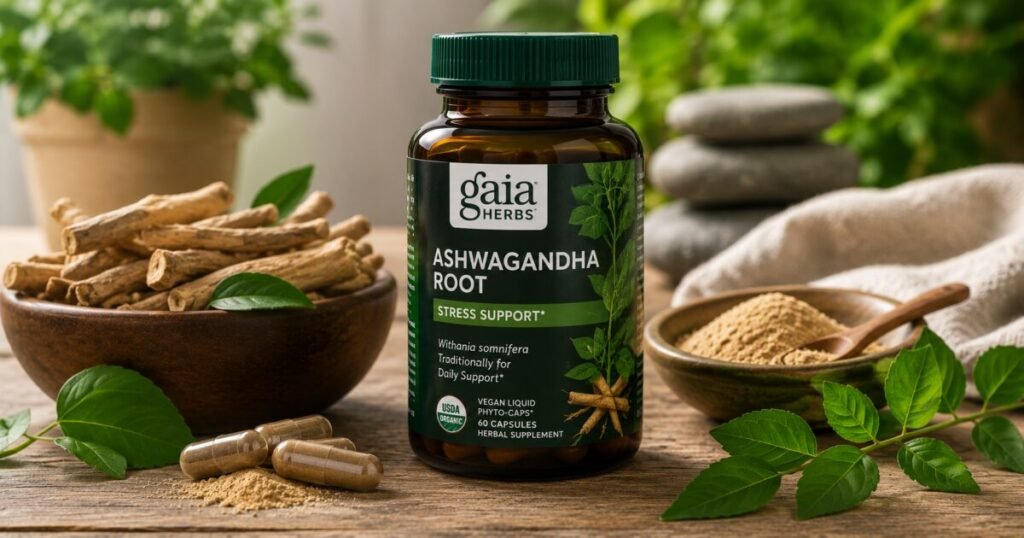
Gaia Herbs Ashwagandha Root is a vegan capsule supplement made from organic ashwagandha root and root extract, sourced from India and manufactured at Gaia’s North Carolina facility. It’s formulated to support the body’s stress response and is taken as one capsule twice daily. It holds a 4.9-star average across 249 verified reviews, with most users reporting calmer stress levels and better sleep within a few weeks.
That’s the short answer. Here’s what’s actually in the bottle, how it compares to Gaia’s gummies, and what the reviews don’t tell you upfront.
What Is Gaia Herbs Ashwagandha Root?
Definition: Ashwagandha (Withania somnifera) is a shrub used in Ayurvedic medicine for over 2,000 years, valued for its ability to help the body adapt to physical and mental stress. Gaia Herbs Ashwagandha Root is a single-herb capsule supplement made with organic ashwagandha root and a concentrated root extract standardized to withanolides, the plant’s active compounds.
Gaia grows and tests much of its herb supply on a Regenerative Organic Certified farm in Brevard, North Carolina. However, the ashwagandha itself is sourced from India through a supplier that funds local clean-water and education projects (source). Each batch is tested on-site for microbes and heavy metals before bottling.
You might want to know: Is Gaia Herbs a Good Brand? Safety, Testing, Ownership, and Quality Review (2026)
Key Ingredients and How It’s Made
The capsule blend combines organic ashwagandha root with a root extract in a vegan hypromellose capsule, plus vegetable glycerin and water. There are no fillers, binders, artificial colors, or common allergens (corn, dairy, gluten, soy, tree nuts).
Extracts matter because they concentrate withanolides into a smaller dose than raw root powder, which typically requires 3–6 grams a day to match extract potency a difficult amount to get consistently from a bitter-tasting powder alone.
Suggested Dosage and How to Take It
The label directs adults to take one capsule twice daily, with benefits building over several weeks of consistent use rather than overnight. This aligns with the clinical research base: most studies on ashwagandha use 250–600 mg of standardized extract per day, often split into two doses.
Practical tips:
- Take one dose with breakfast for daytime stress support.
- Take the second dose in the evening if sleep support is the priority.
- Take with food to reduce mild stomach upset in sensitive users.
- Give it 4–8 weeks before judging effectiveness adaptogens work cumulatively, not instantly.
Gaia Herbs Ashwagandha Root Reviews: What Customers Actually Say
Across 249 reviews, 93% are 4- or 5-star, and 97% of reviewers say they’d recommend the product. Recurring themes in the feedback include improved sleep quality, a steadier mood under stress, and satisfaction with the clean ingredient list. The small share of critical reviews (about 4 stars and below) mostly cite a strong earthy smell, a higher price than powdered alternatives, and slower-than-expected results consistent with adaptogens generally needing weeks, not days, to show effects.
Pros and Cons
| Pros | Cons |
| Organic, single-herb formula with no fillers | Noticeable earthy smell and taste for some users |
| Purity-tested for heavy metals and microbes | Higher cost per serving than root powder |
| Vegan, gluten-free, allergen-free capsule | Effects build gradually, not immediately |
| Strong track record (4.9/5 across 249 reviews) | Not suitable during pregnancy or breastfeeding |
Capsules vs. Gummies: Which Gaia Herbs Ashwagandha Fits You?
Gaia Herbs also sells Ashwagandha Gummies, and the two products serve different needs.
| Feature | Ashwagandha Root (Capsules) | Ashwagandha Gummies |
| Format | Vegan liquid phyto-capsule | Chewable, apple-cinnamon flavor |
| Serving | 1 capsule, twice daily | 3 gummies, once daily |
| Strength per serving | Extract standardized to withanolides | Equivalent to about 6g dry ashwagandha root |
| Added sugar | None | ~4g per serving (fruit-based sweeteners) |
| Best for | Those who don’t mind capsules and want split dosing | Those who dislike swallowing capsules or the taste of ashwagandha |
If you’re sensitive to added sugar or prefer twice-daily dosing for steadier support, the capsules are the better fit. If capsule fatigue or taste is the barrier to consistency, the gummies solve that at the cost of a once-daily dose and a small amount of sugar.
Who Should Avoid It
Ashwagandha isn’t right for everyone. Gaia Herbs’ own labeling advises against use during pregnancy or breastfeeding. Anyone with a thyroid condition, autoimmune disease, or who takes sedatives, thyroid medication, or immunosuppressants should talk to a healthcare provider first, since ashwagandha can interact with these. As with any supplement, individual results vary, and it isn’t a substitute for medical treatment of anxiety or sleep disorders.
Key Takeaways
- Gaia Herbs Ashwagandha Root is a purity-tested, single-herb capsule with a 4.9/5 rating across 249 reviews.
- Standard dosage is one capsule twice daily; expect gradual results over several weeks.
- The gummies trade capsule inconvenience for once-daily dosing and a small amount of added sugar.
- Not recommended during pregnancy or breastfeeding, and worth a doctor’s input if you’re on thyroid or sedative medication.
FAQs
Is Gaia Herbs Ashwagandha Root good for anxiety?
It’s marketed for general stress support rather than as an anxiety treatment. Many reviewers report feeling calmer, but it isn’t FDA-evaluated to diagnose or treat any condition, and it shouldn’t replace professional mental health care.
How long does it take to work?
Most users report noticeable changes after 4–8 weeks of consistent daily use, matching the “benefits build over time” guidance on the label.
What’s the difference between Gaia’s Ashwagandha Root and their PRO 700 formula?
The PRO line is sold through healthcare practitioners and uses a higher per-capsule dose; the standard Ashwagandha Root is the consumer version sold direct-to-consumer and through retailers like Amazon and Walmart.
Can I take Gaia Herbs Ashwagandha Root every day long-term?
The label supports daily use, but long-term safety data beyond several months is limited industry-wide. Periodic breaks and a conversation with your doctor are reasonable, especially if you’re on other medications.
Why does it smell strong?
Ashwagandha root naturally has an earthy, slightly bitter smell it’s a sign of an unprocessed, whole-root extract rather than a quality issue.
This article is for informational purposes only and is not medical advice. Consult a healthcare provider before starting any new supplement.