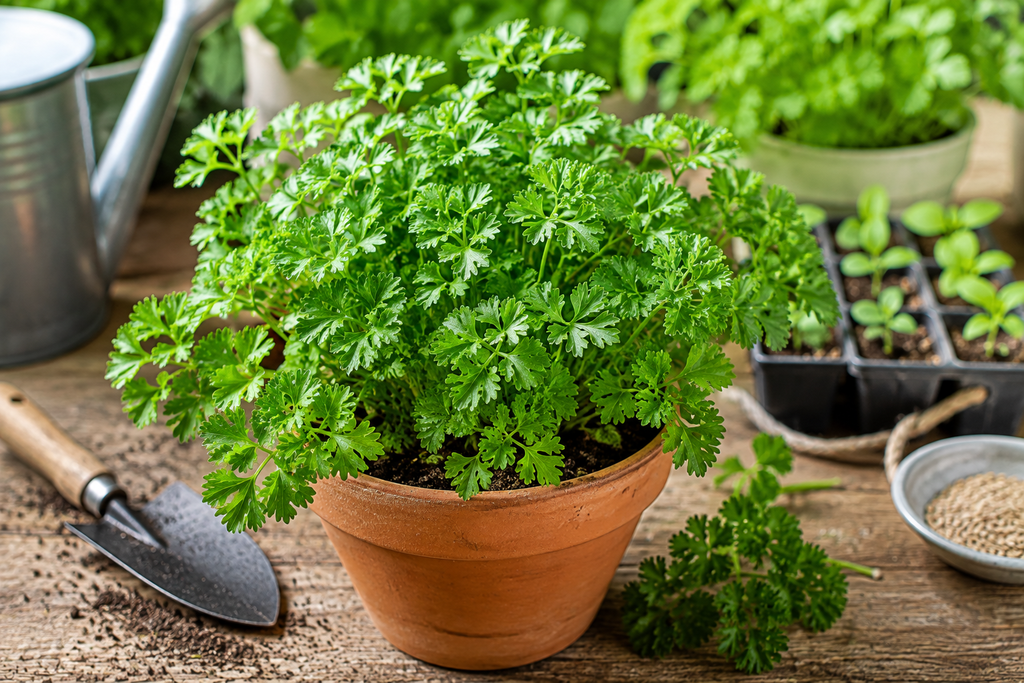
Parsley is one of the easiest kitchen herbs to keep harvesting once it gets established, but growing it from seed requires a little patience. The seeds can take several weeks to germinate, while the plants prefer consistently moist, well-drained soil and plenty of light.
The good news is that you can grow parsley indoors or outdoors, in a garden bed or container, and harvest fresh leaves repeatedly throughout the growing season.
This guide covers how to grow parsley from seed, how to grow parsley indoors, how to grow parsley in a pot, when to plant it, how long it takes to grow, and whether you can propagate it from cuttings or water.
Quick answer: The easiest way to grow parsley is from fresh seed. Sow the seeds about ¼–½ inch deep in moist, well-drained soil, keep them consistently moist while they germinate, and give established plants about 6–8 hours of light daily. Parsley is slow to germinate—often taking 2–5 weeks—but once established, you can harvest outer stems regularly for continued growth.
Parsley at a Glance
| Growing requirement | What parsley prefers |
| Botanical name | Petroselinum crispum |
| Plant type | Biennial |
| Light | About 6–8 hours of direct light; partial shade is tolerated |
| Soil | Fertile, well-drained, moisture-retentive |
| Ideal soil pH | About 6.0–7.0 |
| Water | Consistently moist soil without waterlogging |
| Best growing method | Direct sowing from seed |
| Germination | Usually about 2–5 weeks |
| Container | At least 10 inches wide and deep |
| Harvest | Pick outer stems near the base |
| Best varieties for cooking | Flat-leaf/Italian parsley |
| Best for decorative use | Curly parsley |
What Is Parsley?
Parsley is a leafy herb in the carrot family, Apiaceae. The two types most commonly grown at home are curly parsley and flat-leaf, or Italian, parsley.
Curly parsley forms shorter, dense plants with tightly curled leaves and a relatively mild flavor. Flat-leaf parsley tends to grow taller and has broader leaves with a stronger flavor, making it particularly useful for cooking.
Parsley is technically a biennial, meaning it normally grows leaves during its first year and flowers and produces seeds during its second. Gardeners often grow it as an annual because the quality of the leaves declines once the plant begins flowering.
How to Grow Parsley From Seed
If you’re wondering how to grow parsley, starting with seed is usually your best option. Parsley develops a taproot and doesn’t particularly enjoy unnecessary root disturbance, so direct sowing is often simpler than repeatedly transplanting young seedlings.
The one thing you need to understand before planting is that parsley is slow to germinate.
Don’t assume your seeds have failed just because nothing appears after a week.
1. Choose Fresh Parsley Seeds
Fresh seed generally gives you a better chance of successful germination. Parsley seeds can lose viability over time, and germination is naturally slower than with many other herbs.
You can soak the seeds in warm water for up to 24 hours before planting. This isn’t essential, but it can help soften the seed coat and may encourage faster germination.
2. Prepare the Soil
Parsley prefers soil that is:
- Rich in organic matter
- Well drained
- Moisture-retentive
- Loose enough for roots to develop
A soil pH around 6.0–7.0 is suitable for parsley.
For containers, use a good-quality potting mix rather than heavy garden soil. The goal is to retain enough moisture for parsley without leaving the roots sitting in saturated soil.
3. Sow the Seeds
Make a shallow furrow and sow the seeds roughly ¼–½ inch deep, depending on the growing conditions and guidance on your seed packet.
Cover them lightly with soil and water gently.
The important part is to keep the soil consistently moist while you’re waiting for germination. Letting the seedbed dry out repeatedly can make an already slow process even more frustrating.
4. Be Patient
Parsley can take around 2–5 weeks to germinate, with seed freshness and growing conditions affecting the timing.
Once seedlings appear, thin them if necessary so the plants have enough room to develop.
A useful trick is to mark where you’ve planted the parsley seeds. Because the seedlings take so long to emerge, it’s easy to forget exactly where the row is and accidentally disturb it.
How to Grow Parsley Indoors
Yes, you can grow parsley indoors, and it’s one of the more practical herbs for a sunny kitchen windowsill.
University of Minnesota Extension specifically lists parsley as an easy herb to grow indoors when it has a bright location and a container with drainage holes.
Choose the Right Location
Place your parsley where it receives plenty of bright light.
Ideally, give it around 6–8 hours of direct light per day. Parsley can tolerate some shade, but indoor plants may become thin or leggy when light levels are too low.
A sunny south-facing window can work well in many homes. If natural light is inadequate, a grow light can help maintain stronger growth.
Can I Grow Parsley Indoors in Winter?
Yes. Parsley can continue growing indoors through winter if you provide enough light, warmth, water and nutrients.
One practical approach is to move a container-grown parsley plant indoors before harsh winter conditions arrive. RHS notes that potted parsley can be moved indoors for continued harvesting when sufficient light and warmth are available.
Starting new parsley indoors is another option. You can sow seeds several weeks before your outdoor growing season begins and later transplant the seedlings carefully.
Indoor Parsley Setup
For a simple indoor parsley garden, you need:
- A container with drainage holes
- Quality potting mix
- Fresh parsley seeds or a young plant
- A bright window or grow light
- A saucer or tray to catch excess water
Don’t place the pot inside a decorative container where excess water has nowhere to escape. Parsley likes moisture, but its roots still need oxygen.
How to Grow Parsley in a Pot
Parsley grows very well in containers, making it a good choice if you have a balcony, patio, windowsill or small garden.
Choose a pot that is at least 10 inches wide and deep. A deeper container is useful because parsley develops a substantial root system. RHS recommends a container at least 25 cm (about 10 inches) wide and deep.
Step-by-Step
1. Fill the pot with quality potting mix.
Choose a mix that drains well while still holding some moisture.
2. Sow the seeds.
Scatter them thinly and cover lightly with approximately ½ inch of growing medium.
3. Water gently.
Avoid washing the seeds away.
4. Keep the mix moist.
This is particularly important during germination.
5. Give the plant plenty of light.
A sunny location works well.
6. Thin crowded seedlings.
Allow enough room for individual plants to develop.
Container-grown parsley may need more frequent watering than plants growing in the ground because pots can dry out faster, particularly in hot weather.
How Much Sun Does Parsley Need?
Parsley generally grows best with about 6–8 hours of direct light each day, although it can tolerate partial shade.
If you’re growing parsley indoors, insufficient light is one of the most common reasons plants become tall, thin and weak.
If your plant is:
- Stretching toward the window
- Producing thin stems
- Developing smaller leaves
- Growing noticeably slower than expected
consider moving it closer to a brighter window or adding a grow light.
You might love reading: 11 Best Herbs That Grow in Low Light Apartments (Beginner Friendly Guide)
How Much Water Does Parsley Need?
Parsley likes evenly moist soil, but it does not want to sit in constantly waterlogged conditions.
For outdoor plants, deep watering about once a week may be adequate under normal conditions, but hot or dry weather can increase the need for water. Container plants should be checked more frequently because their soil can dry out faster.
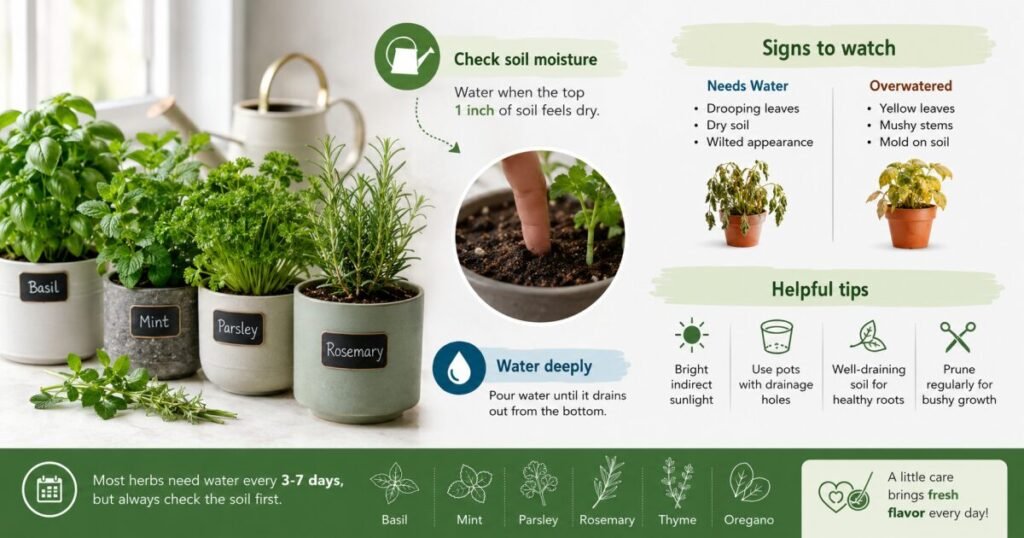
A simple test is to touch the surface of the potting mix. If the top layer feels dry and the soil below is also beginning to dry, it’s time to water.
Water thoroughly until some water drains from the bottom, then empty excess water from the saucer.
Watering Guide for more Herbs: How Often Should You Water Indoor Herb Plants?
When to Grow Parsley
The best time to grow parsley depends on your climate and whether you’re growing it indoors or outdoors.
For outdoor growing, parsley is generally a cool-season-friendly herb and can be sown around the beginning of the growing season. In many climates, seeds can be started a few weeks before the last spring frost, because parsley tolerates cool conditions.
For indoor growing, you have considerably more flexibility.
You can start parsley indoors during winter as long as you can provide adequate light and suitable growing conditions.
A Simple Seasonal Approach
Early season: Start seeds indoors or sow outdoors when conditions are suitable.
Spring: Establish young plants and begin regular growth.
Summer: Keep plants watered and harvest regularly, especially during hot weather.
Fall: Continue harvesting while growth remains strong.
Winter: Move container plants indoors where appropriate, or protect outdoor plants depending on your climate.
Always use your local frost dates and climate rather than following a single calendar date.
How Long Does It Take to Grow Parsley?
If you’re asking how long does it take to grow parsley, the answer depends on whether you’re counting germination or the first usable harvest.
Parsley seeds commonly take 2–5 weeks to germinate, so the first part of the process can feel surprisingly slow.
After germination, the plants need additional time to develop enough foliage for harvesting.
A reasonable expectation is:
Seed → 2–5 weeks → germination → several more weeks of growth → first light harvest
Don’t judge parsley by the speed of basil or other fast-growing herbs. Parsley is naturally slower to get started.
Can You Grow Parsley From Cuttings?
This is one of those gardening questions where the internet can give you an overly simple answer.
Parsley is normally grown from seed, and seed is the method I recommend.
Parsley develops a taproot, and reputable growing guides focus on seed propagation rather than stem cuttings. RHS specifically recommends sowing parsley from seed and notes that direct sowing avoids root disturbance.
You may see tutorials claiming that parsley stems can produce roots in water. While cut stems may sometimes produce roots under favorable conditions, this isn’t as reliable a way to establish a productive parsley plant as starting with seed.
So if your goal is a healthy parsley plant that you can harvest repeatedly:
Choose fresh seeds rather than relying on cuttings.
Can You Grow Parsley in Water?
You can place parsley stems in water and sometimes see roots develop, but growing parsley long-term in plain water isn’t the same as growing it hydroponically.
A glass of water can keep a cutting hydrated temporarily, but a plant growing indefinitely needs access to nutrients as well as water, oxygen and light.
If you want to experiment with water propagation, treat it as a small kitchen-garden experiment rather than the easiest method for growing a productive parsley crop.
For reliable results, soil or a properly managed hydroponic system is the better choice.
How to Harvest Parsley
Once your plant has developed enough mature stems, you can begin harvesting.
The best method is surprisingly simple:
Cut the outer stems first.
Use clean scissors or garden snips to cut individual stems close to the base of the plant.
Don’t simply remove the tops of the leaves while leaving long bare stalks behind. Cutting the entire outer stem encourages the plant to produce new growth from the center.
RHS similarly recommends taking a few leafy stems from the outside of the plant and cutting them near the base.
Harvesting rule to remember:
Outer stems first, inner growth last.
That way, the plant can continue producing fresh leaves.
Regular harvesting can actually help keep the plant productive during its growing season.
Can Parsley Grow Back After Cutting?
Yes. Parsley can continue producing new leaves after harvesting as long as you cut individual outer stems properly and leave the central growing points intact.
Instead of cutting the entire plant down, harvest a few mature outer stems at a time.
However, parsley isn’t an endlessly regenerating perennial. It’s a biennial, and eventually the plant will enter its flowering and seed-producing stage. At that point, leaf production and quality decline.
Common Parsley Growing Problems
Even though parsley is relatively easy to grow, a few problems are common.
Slow Germination
This is probably the biggest issue for beginners.
Parsley simply takes longer to germinate than many herbs. Give the seeds time, keep them moist and avoid repeatedly disturbing the soil.
Leggy Indoor Growth
Usually a sign of insufficient light.
Move the plant closer to a bright window or supplement natural light with a grow light.
Yellow Leaves
Older lower leaves may naturally yellow, but widespread yellowing can indicate problems with watering, drainage, nutrition or environmental stress.
Check the soil before automatically adding fertilizer.
Wilting
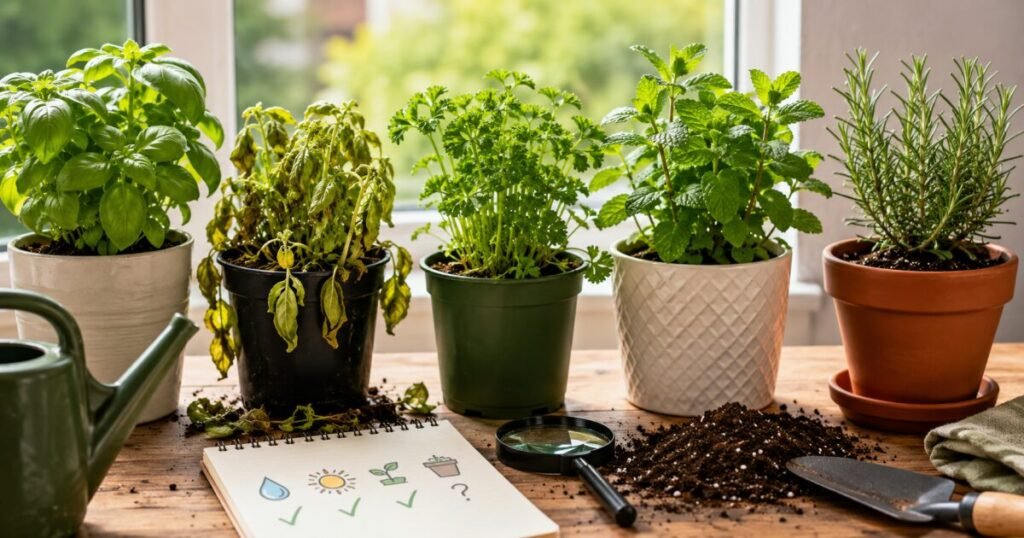
Wilting can occur when the soil becomes too dry, particularly in containers. But overwatering and poor drainage can also damage roots and create similar symptoms.
Check the moisture level before watering again.
Pests
Parsley can be affected by pests including aphids, slugs and snails. Because parsley belongs to the same plant family as carrots and celery, it can also encounter some of the pests and diseases associated with those crops.
Growing parsley in containers can make some pests, particularly slugs and snails, easier to manage.
How to Keep Parsley Growing Productively
For a steady supply of fresh leaves:
- Give it plenty of light.
- Keep the soil evenly moist.
- Use a pot with good drainage.
- Harvest outer stems rather than stripping the entire plant.
- Avoid letting container soil dry completely.
- Remove yellowing leaves.
- Feed container plants lightly when needed during active growth.
- Sow new plants periodically if you want a continuous supply.
Succession sowing—starting small batches of parsley at intervals—is particularly useful if you want fresh young plants coming along while older plants become less productive.
How to Store Fresh Parsley
Fresh parsley generally has better flavor and quality than dried parsley, so use it fresh whenever possible.
For short-term storage, one simple approach is to keep the stems in water in the refrigerator, similar to a small bouquet.
For longer storage, you have two practical options:
Freeze Parsley
Chop the leaves and freeze them in small portions. One convenient method is to put chopped parsley into an ice-cube tray, add water and freeze. The cubes can then be added directly to soups, sauces and other dishes.
Do you want to learn how to freeze other herbs → Learn here
Dry Parsley
Hang small bunches in a warm, dark, well-ventilated location until completely dry. Once dry, crumble the leaves and store them in an airtight container away from heat and bright light.
Keep in mind that dried parsley won’t taste exactly like fresh parsley. Drying is convenient for long-term storage, but fresh leaves generally offer better flavor.
Learn how to dry other herbs → Learn here
The Easiest Way to Grow Parsley at Home
If you don’t want to overthink it, follow this simple formula:
Fresh seed → moist soil → patience → bright light → regular harvesting.
The biggest mistake beginners make is expecting parsley seeds to emerge as quickly as basil or cilantro.
Give the seeds several weeks, keep the soil from drying out, and don’t disturb them unnecessarily. Once the plants establish themselves, parsley becomes much easier to manage.
For indoor gardeners, a 10-inch or larger pot, quality potting mix, bright window and consistent watering are enough to get started.
Frequently Asked Questions
Can you grow parsley indoors?
Yes. Parsley grows well indoors when given a bright location, adequate moisture and a container with drainage holes. If natural light is limited, a grow light can help prevent weak, leggy growth.
Can I grow parsley indoors in winter?
Yes. You can grow parsley indoors during winter as long as the plant receives enough light and isn’t kept in overly dry or poorly drained soil. Moving a container indoors can extend the harvest season considerably.
How long does parsley take to grow?
Parsley seeds usually take about 2–5 weeks to germinate, after which the plant needs additional time to develop enough foliage for harvesting. The exact time to harvest varies with variety, temperature, light and growing conditions.
Can you grow parsley from cuttings?
Parsley is best grown from seed. Although you may find methods for rooting parsley stems in water, stem cuttings are not the most dependable way to establish a productive plant. Direct sowing is the simpler and more reliable approach for home gardeners.
Can you grow parsley in water?
A parsley stem may produce roots when placed in water, but growing a productive plant long-term in plain water is different from growing parsley hydroponically. For most home gardeners, growing parsley in soil from seed is easier and more reliable.
Final Takeaway
Learning how to grow parsley is mostly about patience rather than complicated gardening techniques. Start with fresh seeds, give them fertile and well-drained soil, keep the growing medium consistently moist, and provide plenty of light.
If you’re short on garden space, grow parsley in a pot indoors. If you have a garden, direct-sow it where you want it to grow and harvest the outer stems regularly.
And remember the most important parsley-growing tip: don’t give up on the seeds too early. Two to five weeks of waiting for germination can feel excessive, but slow emergence is normal for parsley. Once established, the plant can reward you with repeated harvests of fresh leaves throughout its growing season.