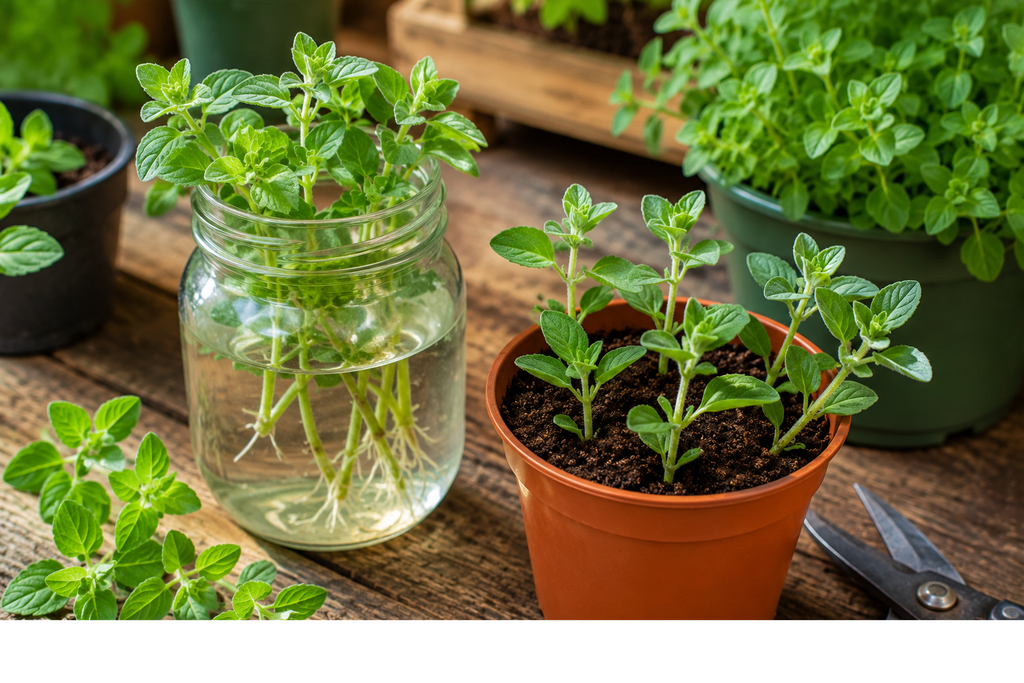
If you’ve got an oregano plant with a flavor you love, growing it from cuttings is the surest way to get more of exactly that plant — not a slightly different version from a seed packet.
Quick answer: Snip a 3–5 inch, non-flowering stem just below a leaf node, strip the leaves from the bottom half, and root it in either water or moist, well-draining soil. Keep it warm and in bright, indirect light. Roots typically form in 2–3 weeks, at which point the cutting is ready to pot up on its own.
Here’s the full method, including both rooting options, so you can pick whichever fits your setup.
Why Grow Oregano from Cuttings Instead of Seed?
Oregano grown from a cutting is a genetic clone of the parent plant — it will have the exact same flavor, growth habit, and cold tolerance. Seed-grown oregano, by contrast, is a gamble: widely popular varieties don’t grow “true” from seed, meaning the resulting plant can taste milder, different, or purely decorative with little culinary flavor at all.
If you already have a plant you like — your own, a neighbor’s, or one from a friend’s garden — cuttings are the reliable way to reproduce it exactly, and they establish into usable plants far faster than starting from seed.
What You’ll Need
- A healthy, established oregano plant that isn’t currently flowering
- Sharp, clean scissors or pruning shears
- A glass of water, or a small pot with well-draining potting mix
- Rooting hormone (optional — oregano roots well without it, but it can speed things up)
- A warm spot with bright, indirect light
How to Grow Oregano from Cuttings
Step 1: Take the Right Cutting
- Choose a healthy, vigorous stem that isn’t flowering — flowering stems put their energy into seed production rather than root growth.
- Cut a stem 3 to 5 inches long, using a diagonal cut positioned just below a leaf node (the point where leaves emerge, and where new roots will form).
- Take the cutting in the morning if possible, when the plant is best hydrated.
Step 2: Prepare the Cutting
- Strip the leaves from the bottom half to two-thirds of the stem, leaving just 2–3 leaves at the top. Buried or submerged leaves will simply rot, so removing them isn’t optional.
- If using rooting hormone, dip the freshly cut end into powder or liquid hormone now. This step is optional — oregano is one of the easier herbs to root without it — but it can shorten rooting time.
Step 3: Root the Cutting — Water Method
Rooting in water lets you see progress easily, which makes it a good choice for beginners.
- Place the cutting in a glass of room-temperature water, making sure no leaves are submerged.
- Set the glass somewhere with bright, indirect light — direct sun can overheat the water and stress the cutting.
- Change the water every 2–3 days, or as soon as it looks cloudy, to prevent bacterial growth.
- Watch for small white roots to appear along the submerged section of the stem, usually within 2–3 weeks.
- Once roots reach about 1–2 inches long, the cutting is ready to move into soil.
Step 3 (Alternative): Root the Cutting — Soil Method
Soil-rooted cuttings often transplant with less shock later, since the roots are already adapted to growing in a solid medium.
- Fill a small pot with a well-draining mix — a standard potting soil blended with perlite or sand works well.
- Moisten the soil thoroughly before planting.
- Make a small hole with a pencil or your finger, insert the cutting, and firm the soil gently around the stem.
- Place the pot somewhere warm with bright, indirect light.
- Keep the soil consistently moist but never soggy — check daily, since small pots dry out quickly.
- After about 2–3 weeks, gently tug the stem; slight resistance means roots have formed. New top growth is another reliable sign.
Water vs. Soil: Which Method Is Better?
| Water method | Soil method | |
| Ease of monitoring | Easy — roots are visible | Harder — must check by gentle tugging |
| Transplant shock | Slightly higher when moved to soil | Lower, since roots adapt to soil from day one |
| Maintenance | Change water every few days | Keep soil evenly moist |
| Best for | Beginners, windowsill setups | Gardeners planning to leave cuttings in place long-term |
Both methods work reliably for oregano — pick whichever fits how closely you want to monitor the process.
Step 4: Transplant and Establish
Once your cutting has roots 1–2 inches long (water method) or shows resistance when tugged (soil method):
- Move it into a slightly larger pot — a 3 to 4-inch container is plenty to start.
- Use fresh, well-draining potting mix.
- Water thoroughly after transplanting, then let the top of the soil dry slightly between waterings.
- If the cutting was rooted indoors and you plan to move it outside, harden it off first — gradually expose it to outdoor conditions over about a week so it doesn’t wilt from the sudden change in light and airflow.
Read more: How to Grow Oregano (Indoors, in Pots, and From Seed)
Caring for New Oregano Cuttings
Light:
Bright, indirect light while rooting; once established, oregano wants full sun (6+ hours a day) to develop its best flavor.
Water:
Keep soil lightly moist while roots are forming, then ease off — established oregano is drought-tolerant and prefers to dry out slightly between waterings.
Temperature:
Room temperature or warmer is ideal for rooting; oregano roots slowly in cold conditions.
Timing:
Spring through early summer gives the best success rate, since stems are softer and more pliable and the plant has a full growing season ahead to establish.
Troubleshooting Common Problems
Cutting turns black or mushy at the base:
Usually rot from waterlogged soil or leaves left touching water. Trim above the damaged section and try again with less moisture.
No roots after 4+ weeks:
Check that the cutting isn’t sitting in direct, hot sun, and that you change the water regularly if using the water method. Try a fresh cutting with a clean diagonal cut just below a node.
Leaves wilting quickly:
Normal in the first day or two as the cutting adjusts. Persistent wilting usually means too much direct light or too little humidity around the leaves.
FAQs
How long does it take for oregano cuttings to root?
Most oregano cuttings develop visible roots within 2–3 weeks, whether rooted in water or soil. Cold conditions or low light can slow this down.
Can oregano cuttings root in just water?
Yes. Oregano roots easily in a glass of water, as long as you change the water every few days and don’t submerge any leaves. Once roots reach 1–2 inches, transplant into soil.
Do oregano cuttings need rooting hormone?
No — oregano roots well without it. Rooting hormone is optional and mainly speeds up the process, not for making rooting possible in the first place.
Why is my oregano cutting not rooting?
The most common causes are taking a cutting from a flowering stem, leaving leaves submerged in water, or keeping the cutting somewhere too cold or too shaded. Fresh, non-flowering cuttings kept warm and bright root most reliably.