Sage is one of those herbs that rewards you for years with almost no effort. Plant it once in the right spot, and a single shrub will keep you in fresh leaves for Thanksgiving stuffing, a pan of brown butter sauce, or a cup of tea, season after season.
Quick answer: Grow sage in full sun and well-drained soil with a pH of 6.5–7.0. Space plants 18–24 inches apart, water deeply but infrequently once established, and prune back the woody stems each spring. Sage is a perennial in USDA zones 5–8, reaching 12–30 inches tall, and it grows just as well in a pot or indoors on a bright windowsill as it does in the ground.
Here’s everything you need to know to grow sage successfully, no matter your method or space.
- Sage at a Glance
- How to Grow Sage from Seed
- How to Grow Sage from Cuttings
- How to Grow Sage in a Pot
- Can You Grow Sage Indoors?
- Does Sage Come Back Every Year?
- Should Sage Be Grown in Pots or in the Ground?
- How to Harvest Sage
- Can You Eat Sage Straight Off the Plant?
- Common Sage Growing Problems
- Is Sage Easy to Grow?
- FAQs
Sage at a Glance
| Details | |
| Botanical name | Salvia officinalis |
| Plant type | Perennial (woody sub-shrub) |
| Native range | Mediterranean, Southern Europe |
| Sun | Full sun (6+ hours) |
| Soil | Well-drained, pH 6.5–7.0 |
| Spacing | 18–24 inches apart |
| Mature height | 12–30 inches |
| Hardiness | USDA zones 5–8 (annual further south) |
| Container size | At least 12 inches deep and wide |
| Days to harvest | ~75 days from seed; usable within weeks from cuttings |
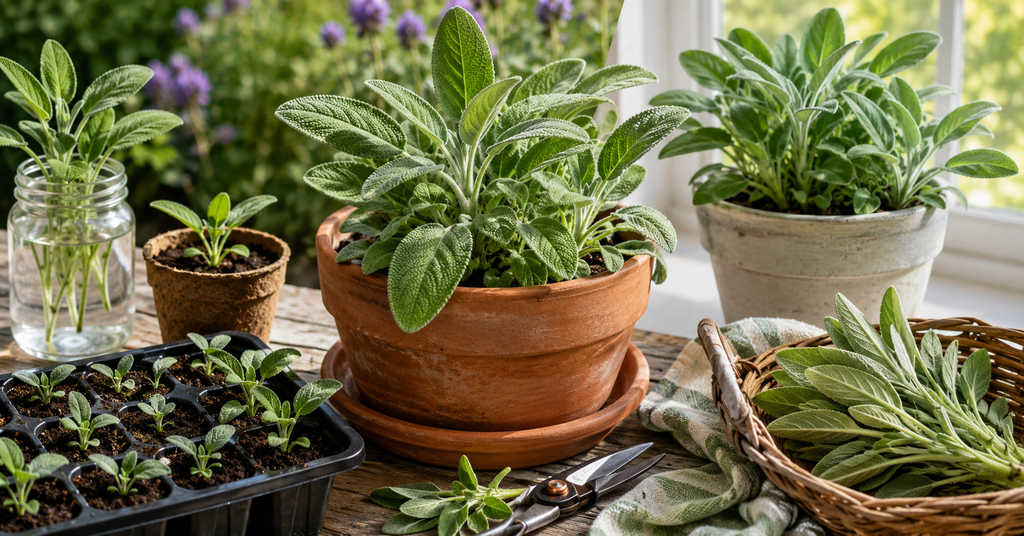
Where Does Sage Grow?
Sage is native to the rocky, dry hillsides of the Mediterranean and Southern Europe, which explains almost everything about growing it successfully: it wants sun, heat, and soil that drains fast rather than staying damp. In the garden, sage thrives as a hardy perennial in USDA zones 5 through 8. In hotter, more humid zones (9 and south), the combination of heat and moisture tends to shorten its lifespan, so it’s often grown as an annual or replaced every year or two in those climates.
How to Grow Sage from Seed
Growing sage from seed is the slowest method, but it’s the cheapest way to start several plants at once.
- Start 6–8 weeks indoors before your last frost, or direct-sow outdoors up to 2 weeks before that date once soil has begun to warm.
- Sow seeds shallowly about ¼ inch deep in a seed-starting mix, since sage seed needs some light to germinate well.
- Keep soil consistently moist and warm (ideally 60–70°F). Germination is slow, typically taking 2–3 weeks.
- Thin seedlings once they have a few true leaves, and transplant outdoors after hardening off, spacing plants 18–24 inches apart.
- Be patient in year one. Seed-grown sage plants are usually small in their first season; harvest lightly and let the plant establish before cutting heavily.
Because germination and early growth are slow, most gardeners, including large commercial growers, actually start sage from a small nursery plant or a cutting rather than seed.
For another herb that can be started from seed, see our How to Grow Cilantro guide.
How to Grow Sage from Cuttings
Propagating sage from cuttings is faster than seed and produces a plant genetically identical to the parent, useful if you already love the flavor of a specific plant.
- In late spring or early summer, snip a 4-inch, non-flowering stem from a healthy sage plant.
- Strip the leaves from the bottom half of the cutting.
- Dip the cut end in rooting hormone (optional, but speeds things up).
- Insert the cutting into a small pot of moist, well-draining potting mix or a half-sand, half-compost blend.
- Keep the soil lightly moist and place the pot somewhere bright but out of direct, scorching sun.
- Roots typically form within 3–4 weeks. Once you feel resistance when you gently tug the cutting, it’s rooted and ready to pot up or plant out.
If you enjoy propagating herbs from cuttings, compare sage with How to Grow Thyme.
How to Grow Sage in a Pot
Sage is an excellent container plant in fact, many gardeners find it performs even better in a pot than in the ground, because containers naturally provide the sharp drainage sage craves.
- Pot size: Choose a container at least 12 inches wide and deep. A clay or terracotta pot is ideal, since its porous walls let excess moisture evaporate.
- Soil: Use a well-draining potting mix; if it feels heavy, work in some perlite or coarse sand.
- Drainage: Make sure the pot has drainage holes — sage’s biggest enemy is soggy roots, not cold.
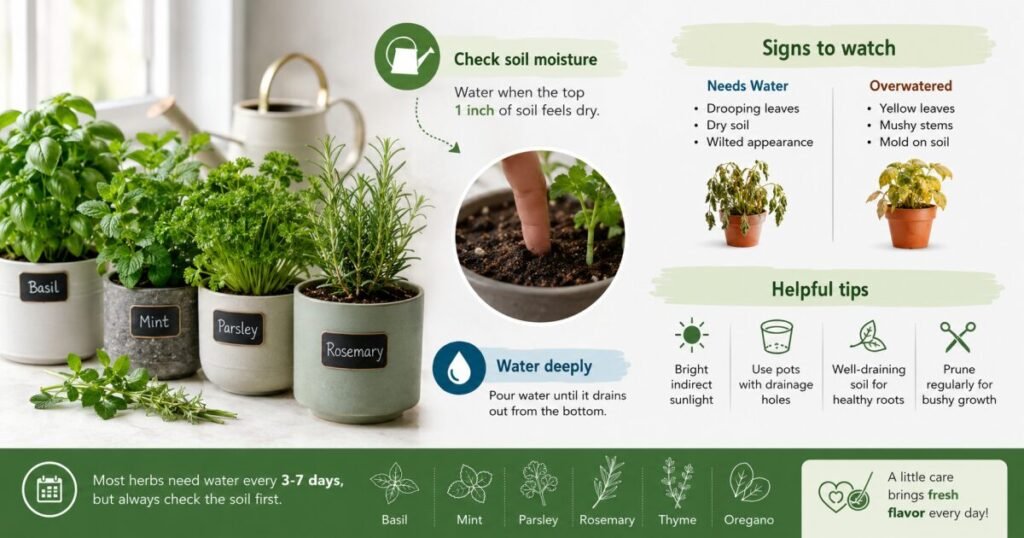
- Watering: Let the top inch or two of soil dry out between watering. Container-grown sage is far more likely to suffer from overwatering than underwatering.
- Feeding: A light monthly feed of water-soluble fertilizer during the growing season is plenty; sage doesn’t need heavy feeding.
For another easy indoor herb, see our complete guide on How to Grow Basil.
Can You Grow Sage Indoors?
Yes — sage grows well indoors year-round, provided it gets enough light and isn’t overwatered.
- Light: Place your pot in the brightest window you have, ideally south-facing, for at least 6 hours of light a day. If natural light is limited, a small grow light makes a real difference — sage grown in low light tends to get leggy and pale.
- Container: Use a pot at least 12 inches deep with good drainage, since indoor sage is even more prone to root rot than outdoor plants if water pools at the base.
- Watering: Water only when the top inch of soil is dry. Indoor sage needs far less water than most people expect.
- Airflow: Sage is prone to powdery mildew in still, humid air, so a spot with some air circulation — near a fan or a cracked window — helps keep foliage healthy.
An indoor sage plant is one of the easiest herbs to keep alive through winter, since it tolerates the drier air of a heated home better than most moisture-loving herbs like basil or mint.
If you are building an indoor herb collection, How to Grow Mint Indoors is another useful guide.
Planting and Soil Requirements
Whichever propagation method you use, sage performs best under the same core conditions:
- Sunlight: Full sun produces the most compact growth and the most concentrated flavor. Partial shade is tolerated but leads to leggier, less aromatic plants.
- Soil pH: Aim for 6.5–7.0, slightly acidic to neutral.
- Drainage: This is non-negotiable — sage’s roots rot quickly in wet, heavy soil. If you have clay soil, work in sand and organic matter, or grow sage in a raised bed or container instead.
- Spacing: 18–24 inches between plants gives the shrub-like growth habit room to fill out without crowding.
- Watering: Water regularly while young plants establish, then cut back significantly. Established sage is genuinely drought-tolerant and prefers to dry out between watering.
How Tall Does Sage Grow?
Common garden sage typically reaches 12 to 30 inches tall, with a similar or greater spread, since it grows as a low, rounded, woody-based shrub rather than upright like rosemary.
Height varies by variety, and growing conditions plants in full sun with regular light pruning tend to stay more compact and bushy, while unpruned or shaded plants can get taller and leggier.
Flower spikes, which appear in late spring, can add several more inches of height above the foliage.
Does Sage Come Back Every Year?
Yes, in the right climate.
For a compact herb that also performs well in containers, see How to Grow Chives.
Sage is a true perennial in USDA zones 5–8, meaning an established plant will die back or slow down in winter and reliably regrow each spring. In hotter, more humid zones (9 and south), sage struggles with the combination of heat and moisture and is more often grown as an annual, needing to be replanted yearly. Even in ideal conditions, sage plants tend to get woody and less productive after 3–5 years, at which point most gardeners take cuttings from the old plant and start a fresh one, rather than trying to rejuvenate an aging shrub.
Should Sage Be Grown in Pots or in the Ground?
Both work well the right choice depends on your climate and space, not on which method grows “better” sage.
| Grow in the ground | Grow in a pot | |
| Best for | Zones 5–8 with well-drained garden soil | Any climate, patios, small spaces, indoor growing |
| Drainage control | Depends on native soil | Full control over soil mix |
| Winter protection | Relies on hardiness zone | Can be moved indoors or sheltered |
| Root space | Unrestricted, larger mature plant | Limited, may need repotting every 2–3 years |
| Watering needs | Lower once established | Slightly higher; dries out faster |
If your garden soil is heavy clay or you live somewhere with humid summers, a pot often produces a healthier plant simply because you can control drainage. If you have loose, sandy, or well-drained soil in a zone 5–8 climate, planting directly in the ground gives roots more room to spread and generally produces a larger, longer-lived shrub.
You can also compare sage with How to Grow Parsley for another container-friendly herb.
How to Harvest Sage
- Wait until the plant is well established before harvesting heavily—go light in the first year.
- Pinch individual leaves, or snip whole sprigs with scissors.
- After the first year, harvest as needed, but always leave enough foliage for the plant to keep photosynthesizing and recovering.
- Stop major harvesting about 2 months before your first fall frost, giving the plant time to harden off new growth before winter.
- Prune back the oldest, woodiest stems each spring to encourage fresh growth and keep the plant productive.
Can You Eat Sage Straight Off the Plant?
Yes.
Fresh sage leaves are edible raw, straight from the plant — though the flavor is strong, slightly peppery, and a little bitter compared to cooked sage, so most people use just a leaf or two chopped into a dish rather than eating it on its own.
Sage is more commonly used cooked (fried in butter, added to stuffing, or infused into sauces), which mellows its intensity, but nibbling a fresh leaf to check flavor or freshness is completely safe.
For more herb-growing ideas and related guides, browse our A–Z of Herbs.
Common Sage Growing Problems
- Powdery mildew: Sage’s most common issue, especially in humid weather. Improve air circulation by thinning stems, avoid overhead watering, and consider mulching with gravel rather than organic mulch to keep the base of the plant dry.
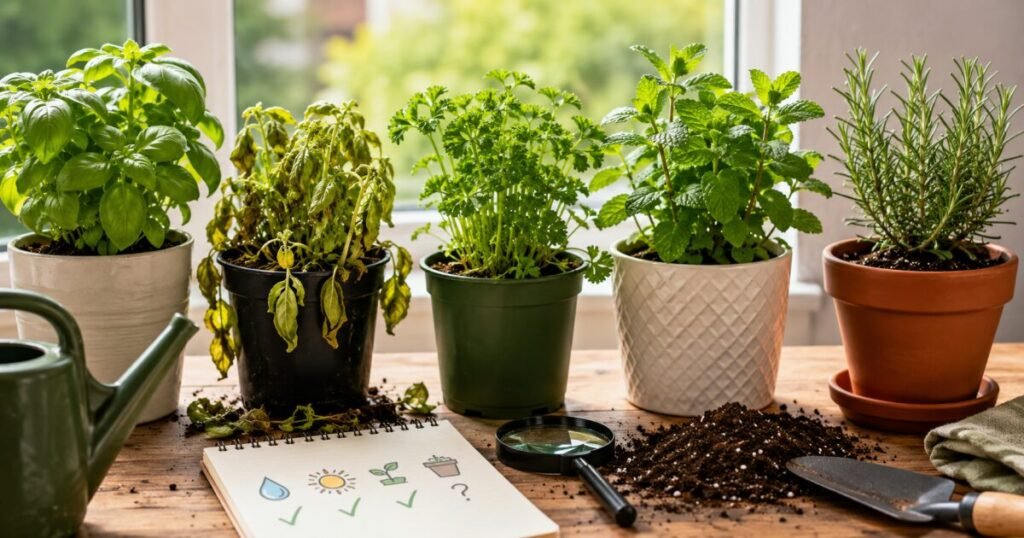
- Root rot: Almost always caused by poor drainage or overwatering. If leaves yellow and the base feels mushy, check that your pot or soil is draining properly.
- Legginess: Usually a sign of insufficient light. Move containers to a sunnier spot, or increase grow light hours indoors.
Is Sage Easy to Grow?
Yes, sage is widely considered one of the easier culinary herbs for beginners. It tolerates poor soil, needs minimal feeding, is naturally drought-tolerant once established, and comes back reliably for years in the right climate. Its main requirement isn’t attention so much as restraint: the most common way people struggle with sage is overwatering it, not underwatering it.
FAQs
For seasonal herb-growing ideas, see the Monthly Herb Guide.
Should sage be grown in pots or in the ground?
Either works well. Pots give you more control over drainage and are ideal for humid climates or indoor growing, while in-ground planting suits zones 5–8 with well-drained soil and gives roots more room to establish a larger, longer-lived plant.
Are sage plants easy to grow?
Yes. Sage tolerates poor soil, needs little watering once established, and is naturally resistant to most pests—making it one of the lower-maintenance herbs for a beginner garden or windowsill.
Does sage come back every year?
In USDA zones 5–8, sage is a true perennial and returns each spring for several years. In hotter, more humid zones, it’s usually grown as an annual since it doesn’t tolerate the combination of heat and moisture as well.
Can you eat sage straight off the plant?
Yes, fresh sage leaves are safe to eat raw. The flavor is strong and slightly bitter compared to cooked sage, so it’s typically used in small amounts, but there’s no need to cook it before tasting or using a leaf.