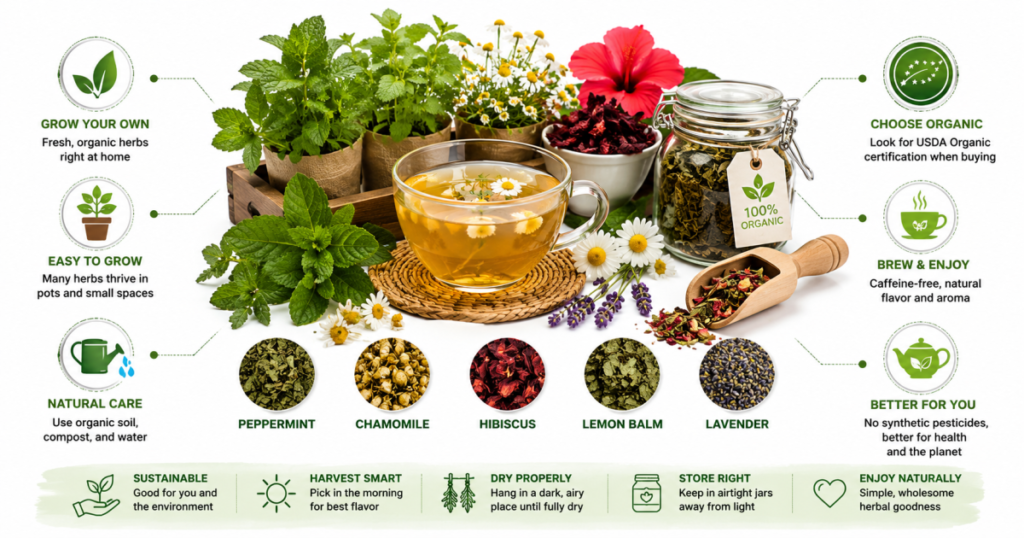
If you’re looking for herbs for tea, some of the best choices are mint, lemon balm, chamomile, tulsi, lavender, and lemongrass. Many are easy to grow indoors, and you can use the fresh or dried leaves and flowers to make simple herbal infusions. Buying organic herbs can also be a convenient option when a plant is difficult to grow in your climate or you want a wider variety.
Growing your own tea herbs gives you control over how the plants are grown, harvested, dried, and stored. For herbs you use frequently, a small indoor herb garden can provide a steady supply with very little space.
But not every herb is equally easy to grow, and “organic” does not automatically mean an herb is more effective or appropriate for everyone. Here’s how to choose the best herbs for tea, whether to grow or buy them, and how to dry them properly at home.
Best Herbs for Tea
The best herb for tea depends on the flavor you enjoy, how easy the plant is to grow, and whether you want a simple everyday beverage or a more specialized herbal infusion.
| Herb | Flavor | Difficulty to Grow | Part Used for Tea | Good for Beginners? |
| Peppermint | Cool, refreshing, minty | Very easy | Leaves | Yes |
| Lemon balm | Mild, citrusy, slightly sweet | Very easy | Leaves | Yes |
| Chamomile | Floral, mild, apple-like | Easy | Flowers | Yes |
| Tulsi (holy basil) | Herbal, peppery, slightly sweet | Easy-moderate | Leaves | Yes |
| Lavender | Floral, aromatic | Easy-moderate | Flowers | Yes |
| Lemongrass | Bright, citrusy | Moderate | Leaves and stalks | Yes |
| Anise hyssop | Sweet, minty, licorice-like | Easy | Leaves and flowers | Yes |
| Rosemary | Strong, pine-like, savory | Moderate | Leaves | With experience |
1. Peppermint
Peppermint is one of the easiest herbs to grow at home for tea. Its leaves produce a strong, cooling flavor and can be used fresh or dried.
It grows particularly well in containers, although it can spread aggressively if planted directly in a garden. Keeping peppermint in its own pot makes it easier to control.
For an indoor herb garden, place it somewhere with plenty of bright light and keep the soil lightly moist without leaving the roots waterlogged.
2. Lemon Balm
Lemon balm is another excellent choice if you want to grow herbs specifically for tea. Its leaves have a mild lemon-like aroma and work well alone or in blends.
It is also relatively easy to grow in containers and can tolerate some conditions that are less than ideal for more demanding herbs.
Harvest young leaves regularly to encourage new growth.
3. Chamomile
Chamomile is best known for its small daisy-like flowers, which are the part commonly used to make tea.
Unlike mint and lemon balm, chamomile isn’t primarily grown for its leaves. Harvest the flowers when they are fully open and dry them carefully before storage.
If you have enough light indoors, chamomile can be a rewarding addition to a small tea herb garden.
4. Tulsi
Tulsi, also called holy basil, is widely used in traditional herbal preparations and makes a flavorful tea with an aromatic, slightly spicy taste.
Tulsi needs warmth, light, and regular harvesting to stay productive. It can be grown indoors in a sunny location or under a suitable grow light.
If you’re building an indoor tea garden, tulsi is worth considering alongside more familiar herbs such as mint and lemon balm.
5. Lavender
Lavender flowers can be used to make fragrant herbal infusions or combined with other herbs.
Because lavender has a strong flavor, you generally don’t need as much as you would with mint or lemon balm. It also prefers well-draining soil and plenty of light, so avoid keeping its roots constantly wet.
6. Lemongrass
Lemongrass provides a bright citrus flavor and works especially well in blends.
It needs warmth and plenty of light, so it can be more challenging indoors than mint or lemon balm. If you live somewhere with cooler winters, growing it in a container lets you move it indoors when needed.
What Are the Best Herbs for Tea to Grow Indoors?
If your main goal is to grow tea ingredients at home, start with herbs that are productive, forgiving, and useful in several different blends.
The easiest choices are:
- Peppermint
- Lemon balm
- Chamomile
- Tulsi
- Lavender
For a small indoor herb garden, I’d start with mint and lemon balm. They’re useful in many blends, relatively easy to grow, and don’t require complicated harvesting techniques.
Once you’re comfortable growing them, add chamomile or tulsi.
This approach is better than filling your entire growing space with herbs you may only use occasionally.
Fresh vs. Dried Herbs for Tea
You can use many herbs fresh or dried, but the flavor and preparation differ.
Fresh herbs
Fresh leaves are convenient when you’re growing the plant yourself. Simply harvest what you need, rinse them when appropriate, and use them soon after harvesting.
Fresh herbs generally have a lighter, greener flavor.
Dried herbs
Dried herbs for tea are more convenient for long-term storage. Removing moisture lets properly dried herbs be stored much longer than fresh leaves.
Dried herbs also take up less space, making them useful when your plants produce more than you can immediately drink.
For best quality, dry herbs completely before storing them.
How to Dry Herbs for Tea
Learning how to dry herbs for tea is one of the most useful skills for an indoor herb gardener. You don’t need expensive equipment for many leafy herbs.
1. Harvest at the right time
Harvest healthy leaves or flowers when the plant is dry. For many herbs, harvesting after morning dew has evaporated is practical.
Avoid harvesting plants that are wet from rain or watering.
2. Remove damaged material
Discard leaves or flowers that are diseased, damaged, or visibly contaminated.
Use clean plant material for drying.
3. Air-dry small quantities
For herbs such as mint, lemon balm, and some other leafy plants, spread the material in a single layer or make small, loose bundles.
The drying area should be:
- Dry
- Well ventilated
- Away from direct sunlight
- Clean
- Protected from excessive humidity
4. Check that the herbs are completely dry
This step is extremely important.
Leaves should feel dry and crumble easily rather than remaining soft or flexible.
If herbs still contain significant moisture, storing them can encourage mold.
5. Store them properly
Place completely dried herbs in an airtight container and store them somewhere cool and dark.
Label the container with:
- Herb name
- Harvest date
- Drying date, if useful
Keeping herbs whole rather than crushing them until needed can help preserve their aroma.
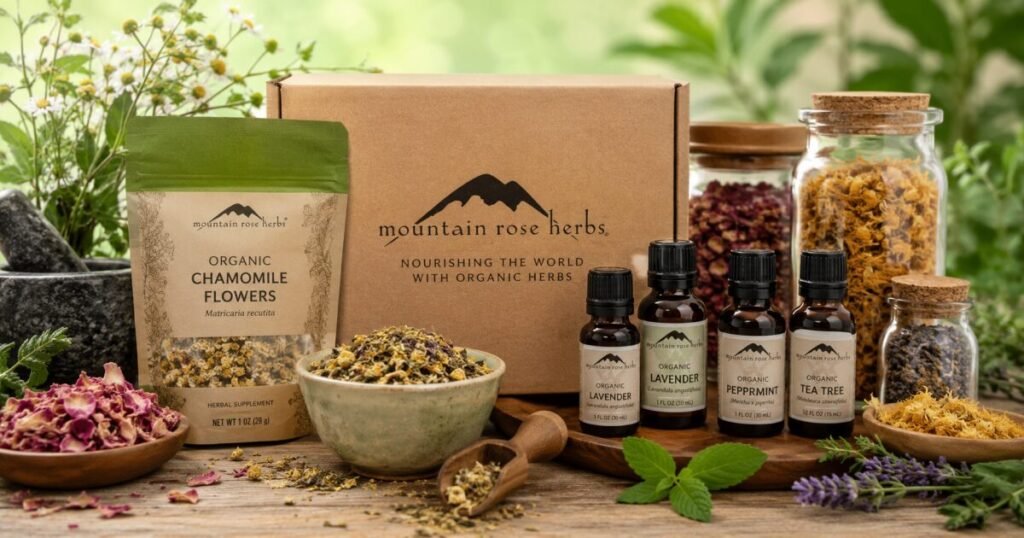
Where to Buy Herbs for Tea
Growing your own isn’t always practical.
You may want an herb that doesn’t grow well in your climate, need a larger quantity than your garden produces, or simply want something ready to brew.
When deciding where to buy herbs for tea, look for suppliers that clearly identify:
- The botanical or common name of the herb
- The ingredients
- Whether the product is organic certified
- Country or region of origin when provided
- Batch or lot information where available
- Packaging and storage information
- Whether the product contains additives or flavorings
For herbs you plan to drink regularly, buying from a reputable supplier is more important than simply choosing the cheapest product.
Bulk Herbs for Tea: Are They Worth Buying?
Bulk herbs for tea can make sense if you drink herbal infusions regularly.
Buying larger quantities may reduce packaging and the cost per ounce, but only if you can use the herbs before they lose quality.
Bulk buying is particularly useful for herbs that:
- You drink frequently
- Store well when properly dried
- Are difficult to grow
- Aren’t available fresh locally
- You use in multiple blends
For occasional tea drinkers, smaller quantities may be more practical.
Growing vs. Buying Bulk Herbs
| Factor | Grow Your Own | Buy in Bulk |
| Initial cost | Soil, pots, seeds/plants | No growing setup |
| Long-term cost | Can be economical for frequently used herbs | Convenient but ongoing cost |
| Freshness | Harvest when needed | Depends on storage and supplier |
| Variety | Limited by your growing conditions | Very wide |
| Space | Requires growing space | Requires only storage |
| Work | Watering, harvesting, drying | Little preparation |
| Best for | Mint, lemon balm, chamomile, tulsi | Hard-to-grow or specialty herbs |
For most indoor gardeners, the best approach is a combination of both: grow the herbs you use often and buy dried herbs that aren’t practical to grow.
Organic Herbs for Tea: What Does “Organic” Really Mean?
If you’re specifically looking for organic tea, check what the organic label actually represents rather than assuming every product described as “natural” is certified organic.
Certified organic production follows specific agricultural standards. In the United States, for example, certified organic crop production restricts synthetic pesticides and fertilizers and prohibits genetic engineering, while allowing certain approved substances under organic standards.
Homegrown herbs are not automatically certified organic simply because you don’t use synthetic pesticides.
If you’re growing herbs for yourself and avoid synthetic pesticides and fertilizers, you control your growing practices, but that is different from having formal organic certification.
That distinction is important when comparing homegrown herbs with commercially certified organic products.
Organic Herbs and Spices for Tea: What’s the Difference?
The words herbs and spices are sometimes used interchangeably in tea recipes, but botanically they can refer to different plant parts.
Herbs commonly come from leafy or flowering parts of plants, such as:
- Mint leaves
- Lemon balm leaves
- Chamomile flowers
- Tulsi leaves
Spices often come from other plant parts, including:
- Cinnamon bark
- Ginger rhizome
- Cardamom seeds
- Fennel seeds
A tea blend can contain both.
For example, a homemade infusion might combine mint leaves with ginger root or cinnamon. The different ingredients may require different preparation and drying methods, so it’s useful to know what part of each plant you’re working with.
You might love reading this: Herbs vs Spices: What’s the Real Difference?
Can You Mix Herbs Together for Tea?
Yes, you can mix many culinary and tea herbs together to create your own blends.
Some simple combinations include:
Mint + lemon balm
A bright, refreshing combination that’s easy to grow indoors.
Chamomile + lemon balm
A mild floral and citrus combination.
Mint + lavender
A stronger aromatic blend. Use lavender sparingly because its flavor can quickly dominate.
Tulsi + lemon balm
A flavorful combination for people who enjoy more pronounced herbal notes.
Start with small amounts when creating a new blend. Strong herbs can easily overpower milder ones.
Also remember that not every medicinal herb is appropriate to combine casually. If you’re using herbs specifically for a health condition or taking medications, check with a qualified healthcare professional before creating concentrated herbal blends.
Herbs for Tea With Anti-Inflammatory Properties
Some herbs commonly used in tea are being studied for compounds with anti-inflammatory or antioxidant activity. Examples include ginger, turmeric, chamomile, and other botanicals.
However, laboratory or preliminary research does not automatically mean that drinking an herbal tea will treat inflammation or a medical condition.
If you’re searching for anti-inflammatory herbs for tea, think of these beverages as part of your diet rather than a replacement for medical treatment.
For everyday use, choose herbs primarily based on flavor, growing conditions, and how you intend to use them.
Are Herbal Teas Always Caffeine-Free?
Most traditional herbal infusions are naturally caffeine-free because they don’t contain leaves from the Camellia sinensis tea plant.
However, “herbal tea” does not automatically guarantee that a product contains zero caffeine.
Some plant-based beverages, such as yerba mate and guayusa, naturally contain caffeine.
If avoiding caffeine is important to you, check the ingredient list rather than relying only on the word “herbal.”
Common Mistakes When Making Tea From Homegrown Herbs
Using herbs that aren’t fully dry
Moisture can create storage problems, including mold.
Storing herbs in sunlight
Light and heat can gradually reduce quality.
Crushing everything immediately
Keeping dried herbs whole until you’re ready to use them can help preserve their aroma.
Growing too many varieties
It’s tempting to grow every interesting tea herb you find. Start with a few herbs you actually enjoy drinking.
Assuming every herb is safe because it’s natural
Natural does not automatically mean safe for everyone. Some herbs can interact with medicines or may not be appropriate during pregnancy or for certain health conditions.
How to Build a Simple Indoor Tea Herb Garden
You don’t need a large garden to grow herbs for tea.
A beginner setup could include:
Pot 1: Peppermint
Pot 2: Lemon balm
Pot 3: Chamomile
Pot 4: Tulsi
Give each plant the light, container size, soil, watering, and airflow it needs.
As you become more comfortable, add lavender, lemongrass, thyme, or other herbs that match your taste.
The advantage of growing your own is that you can harvest a small amount whenever you want rather than buying an entire package of dried herbs.
Key Takeaways
- Mint, lemon balm, chamomile, tulsi, and lavender are some of the best herbs for tea and can be grown at home.
- Mint and lemon balm are particularly good starting points for an indoor tea herb garden.
- Dried herbs for tea are convenient for long-term storage, but they must be thoroughly dried before being stored.
- Bulk herbs for tea can be economical when you drink a particular herb regularly, while smaller quantities make more sense for occasional use.
- When deciding where to buy herbs for tea, look for clear labeling, reputable sourcing, and organic certification if that is important to you.
- You can mix compatible herbs such as mint and lemon balm to create your own tea blends.
- Organic certification describes production standards; simply growing herbs at home without synthetic pesticides does not make them formally certified organic.
- Herbal tea can be part of a healthy routine, but medicinal herbs should not automatically be treated as substitutes for medical care.
FAQs
What are the best herbs for tea?
Some of the best herbs for tea include peppermint, lemon balm, chamomile, tulsi, lavender, and lemongrass. For beginners, peppermint and lemon balm are especially easy to grow indoors and can be harvested repeatedly.
How do you dry herbs for tea?
Harvest clean, healthy herbs when they are dry, then air-dry them in a clean, dry, well-ventilated place away from direct sunlight. The leaves or flowers should be completely dry and crumble easily before you store them in an airtight container.
Can you mix herbs together for tea?
Yes. Mint and lemon balm, chamomile and lemon balm, and tulsi and lemon balm are examples of combinations you can try. Start with small amounts because strong herbs such as lavender can easily overpower a blend.
Where can you buy herbs for tea?
You can buy dried herbs for tea from reputable herbal suppliers, specialty tea companies, health-food stores, and other retailers that provide clear ingredient and sourcing information. If you want certified organic herbs, look for an appropriate organic certification rather than relying only on terms such as “natural” or “chemical-free.”
Are herbal teas caffeine-free?
Most herbal infusions are naturally caffeine-free, but not all plant-based beverages are. Yerba mate and guayusa, for example, naturally contain caffeine. Check the ingredient list if you need to avoid caffeine.