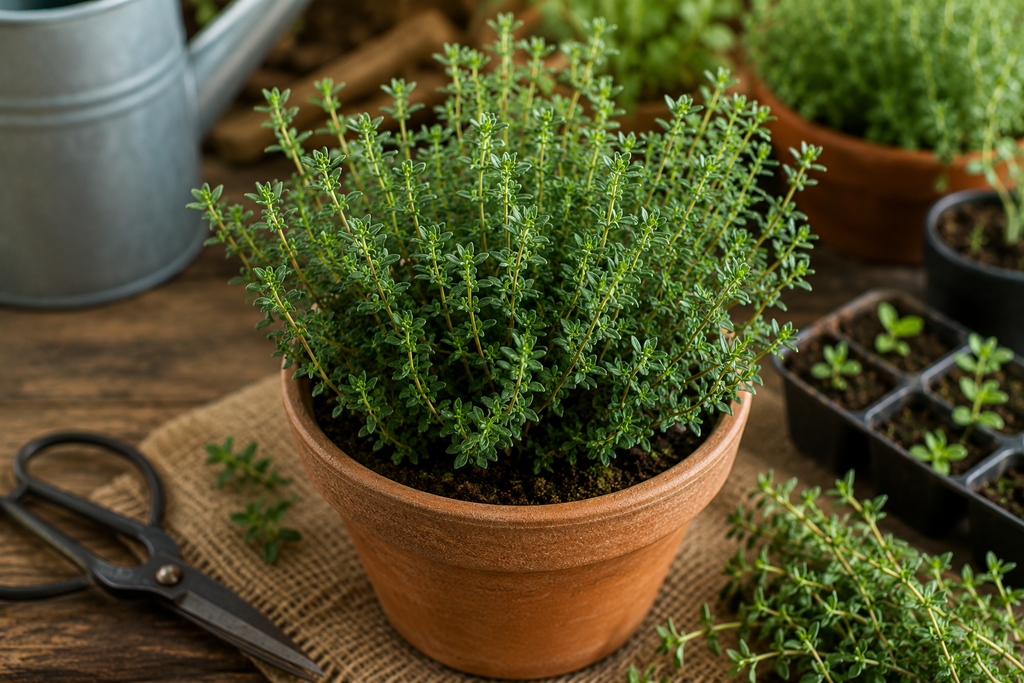
Quick Answer: To grow thyme, plant it in well-draining soil in a spot that gets at least 6 hours of direct sun, water only when the top inch of soil feels dry, and avoid overwatering, since thyme is a drought-tolerant Mediterranean herb. You can start thyme from seed, from stem cuttings (in soil or water), or from a nursery plant, and it grows equally well in garden beds, containers, or indoors on a sunny windowsill.
Thyme (Thymus vulgaris) is one of the easiest herbs to grow because it tolerates poor soil, occasional neglect, and a wide range of temperatures better than most kitchen herbs. This guide covers every method of propagation, indoor and container growing, ongoing care, harvesting, and how to use, store, and substitute fresh and dried thyme once you’ve grown it.
Quick Facts About Growing Thyme
| Factor | Ideal Condition |
| Sunlight | 6+ hours full sun (tolerates partial shade) |
| Soil | Sandy, well-draining, slightly alkaline (pH 6.0–8.0) |
| Watering | Low; let soil dry between waterings |
| Temperature | 60–75°F (15–24°C); hardy to USDA zones 5–9 |
| Propagation | Seed, stem cuttings, division, or nursery starts |
| Time to harvest | 60–90 days from seed; 3–4 weeks from cuttings |
| Common issues | Root rot from overwatering, powdery mildew, leggy growth |
Is Thyme Easy to Grow?
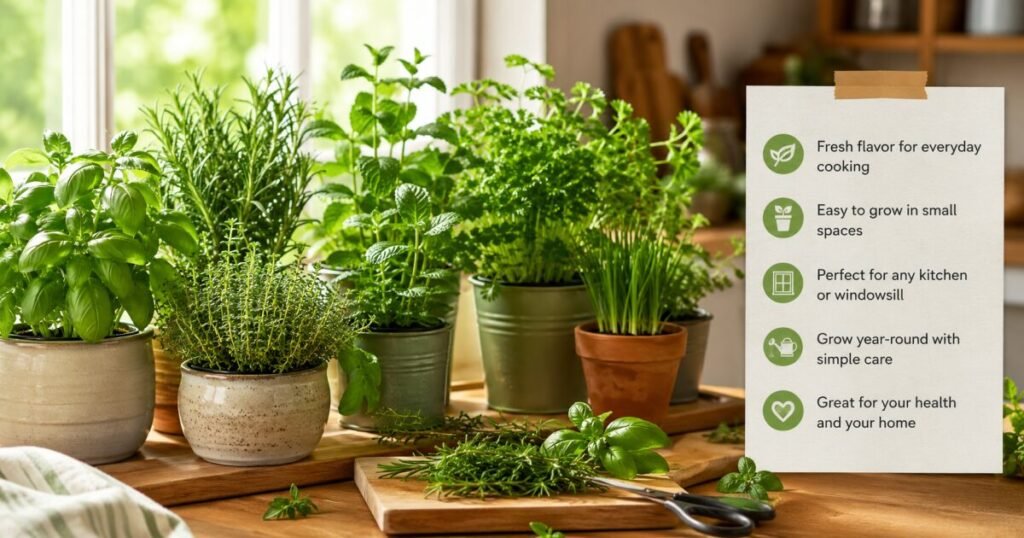
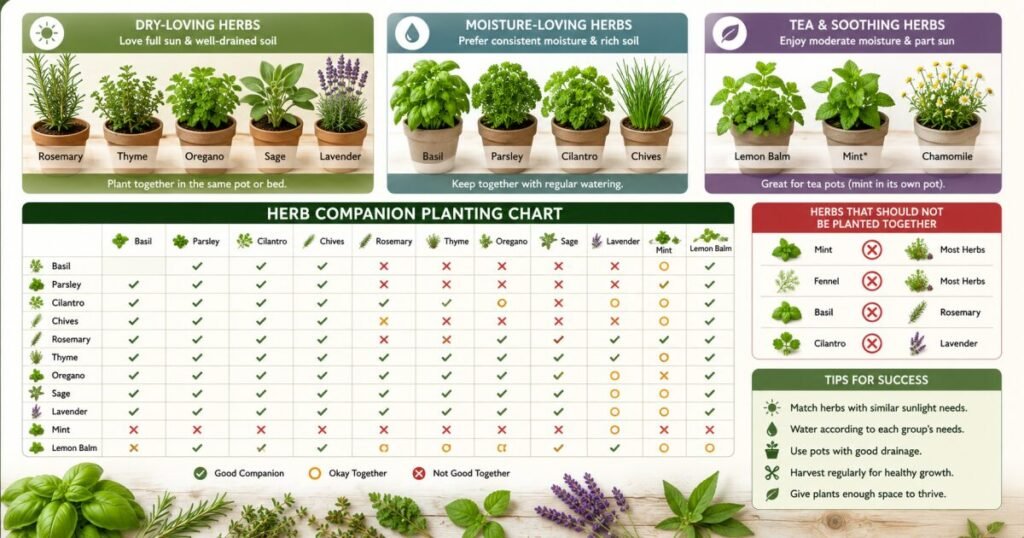
Yes. Thyme is a low-maintenance perennial herb native to the rocky, dry hillsides of the Mediterranean. That native habitat explains almost everything about its care: it wants sun, tolerates drought, and actually performs worse in rich, constantly moist soil than in lean, sandy soil. Unlike moisture-loving herbs such as Lemon Balm, thyme prefers drier growing conditions. The single most common mistake gardeners make is treating thyme like a vegetable that needs frequent watering and fertile soil. Thyme prefers the opposite.
Choosing How to Start Thyme: Seed, Cutting, or Nursery Plant
There are three practical ways to start thyme, and each has trade-offs.
- Nursery plant (transplant): Fastest way to get an established, harvestable plant. Best for beginners who want quick results.
- Stem cuttings: Free if you already have a thyme plant (yours or a friend’s), and produces a genetic clone of the parent plant, which matters because thyme grown from seed can vary in flavor and growth habit.
- Seed: Cheapest option if starting from scratch and useful if you want several plants, but slowest and least predictable, since thyme seeds are notoriously slow and uneven to germinate.
If you want thyme with a specific flavor profile (lemon thyme, English thyme, French thyme), cuttings or nursery starts are more reliable than seed, because named varieties don’t always grow true from seed.
How to Grow Thyme from Seed
Growing thyme from seed takes patience. Germination is slow and uneven, often taking 14–28 days, and seedlings grow slowly for the first several weeks. If you’re working with limited space, you can also explore Vertical Herb Garden Indoor setups to make the most of your growing area.
- Start indoors 6–8 weeks before your last frost date. Thyme seed benefits from a head start since outdoor soil temperatures in early spring are often too cool for reliable germination.
- Use a seed-starting mix, not garden soil. A sterile, light mix drains well and reduces the risk of damping-off, a fungal issue that kills seedlings at the soil line.
- Sow seeds shallowly. Press seeds lightly into the surface and cover with only a thin dusting of mix; thyme seeds need light to germinate, so burying them deeply prevents sprouting.
- Keep the soil surface consistently moist, not wet, using a spray bottle until germination occurs. Once seedlings appear, ease off watering frequency.
- Provide bright light immediately after sprouting. A sunny south-facing window or a grow light kept a few inches above the seedlings prevents the thin, weak stems that develop from low light.
- Thin seedlings once they have their first true leaves, leaving the strongest ones spaced about 2 inches apart.
- Harden off before transplanting outdoors. Gradually expose seedlings to outdoor conditions over 7–10 days before planting them in the garden or a permanent container, once nighttime temperatures are reliably above 50°F (10°C).
A realistic expectation: seed-started thyme usually isn’t ready for a real harvest until its second growing season, though light snipping is fine once plants are established and bushy.
How to Grow Thyme from Cuttings
Growing thyme from cuttings is faster and more reliable than seed, and it’s the method most experienced gardeners prefer for reproducing a specific plant.
- Select a healthy, non-flowering stem about 4–6 inches long from an actively growing plant in spring or early summer.
- Cut just below a leaf node using clean, sharp scissors or pruning snips.
- Strip the lower leaves, leaving only a few sets at the top of the cutting.
- Dip the cut end in rooting hormone (optional, but it speeds up root development).
- Insert the cutting into a small pot of moist, well-draining potting mix or a sand-perlite blend, burying the bottom third to half of the stem.
- Keep the soil lightly moist and place the pot in bright, indirect light; direct hot sun can stress an unrooted cutting.
- Check for roots after 2–3 weeks by gently tugging the stem; resistance means roots have formed.
- Transplant into a garden bed or larger container once roots are about an inch long.
How to Grow Thyme from Cuttings in Water
Rooting thyme cuttings in water is a popular alternative because it lets you watch root development, though it isn’t always as reliable as rooting directly in soil, since thyme’s woody stems can be slower to root in water and the roots that form there are more fragile.
- Take a 4–6 inch cutting the same way described above, from a non-flowering stem.
- Remove all lower leaves so no foliage sits below the waterline, since submerged leaves rot and foul the water.
- Place the cutting in a small glass or jar of room-temperature water.
- Set it in bright, indirect light, not direct sun, which encourages algae growth in the water.
- Change the water every 2–3 days to keep it fresh and oxygenated.
- Watch for roots in 2–4 weeks. They’ll be thin and white at first.
- Transplant to soil as soon as roots are visible, ideally when they reach about half an inch to an inch long. Waiting too long lets the plant become dependent on water roots, which struggle when suddenly switched to soil.
A practical note: because thyme is adapted to dry, well-draining conditions, water propagation works but tends to have a lower success rate than soil propagation. Many gardeners find rooting directly in a sandy potting mix produces sturdier plants.
How to Grow Thyme in a Pot
Thyme is an excellent container herb, partly because pots make it easier to control the fast-draining soil thyme needs.
- Choose a pot with drainage holes. This is non-negotiable for thyme; without drainage, water pools around the roots and causes rot.
- Use a well-draining potting mix, ideally one formulated for cacti or succulents, or a standard potting mix amended with perlite or coarse sand.
- Pick a pot at least 6–8 inches in diameter to start; thyme’s root system is shallow but appreciates room to spread horizontally.
- Place the pot where it gets 6+ hours of sun, such as a south-facing patio, balcony, or windowsill.
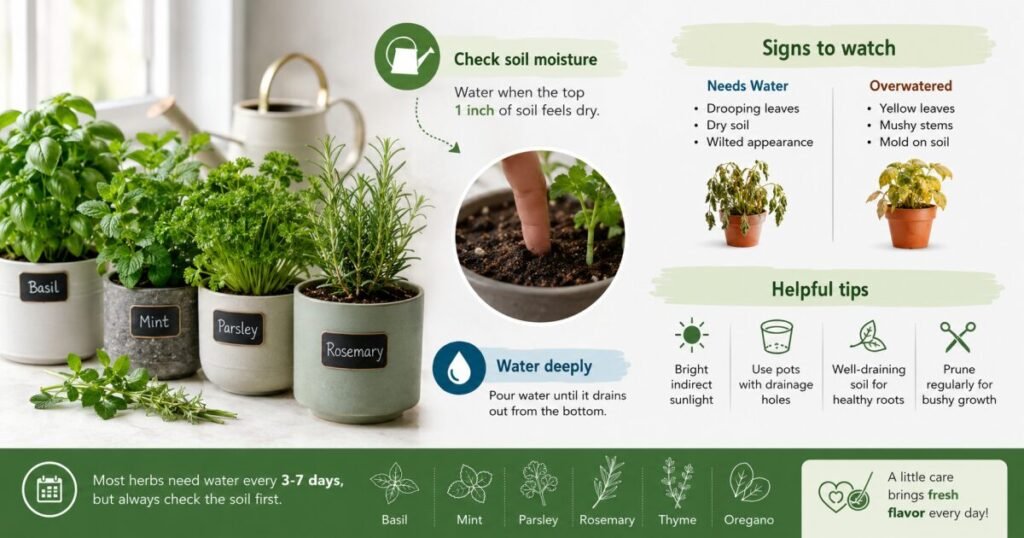
- Water only when the top inch of soil is dry, and always water at the base rather than overhead, to reduce the risk of fungal issues on the leaves.
- Repot every 2–3 years, or when you notice the plant has become root-bound or woody at the base, to refresh the soil and give the roots more room.
Growing thyme in pots is also a practical solution for gardeners in cold climates who want to bring plants indoors for winter, or for anyone with poor native soil, since a container lets you create ideal conditions regardless of what’s in the ground.
How to Grow Thyme Indoors
Thyme can be grown indoors year-round, but the biggest limiting factor is light, not temperature.
- Place it in the sunniest window available, ideally south-facing in the Northern Hemisphere, where it can receive at least 6 hours of direct light.
- Supplement with a grow light if natural light is limited, especially during winter months when day length shortens. Indoor thyme grown without enough light tends to become leggy, with long, sparse stems and pale leaves.
- Keep indoor temperatures between 60–75°F (15–24°C). Thyme tolerates typical home temperatures well and doesn’t need extra humidity; in fact, it prefers drier air, which makes it a good match for many indoor environments.
- Avoid overwatering, which is the most common cause of indoor thyme decline. Let the soil dry out between waterings, and make sure the pot has drainage.
- Improve air circulation with a small fan or by cracking a window periodically, since stagnant indoor air can encourage powdery mildew on thyme’s dense foliage.
- Rotate the pot every few days so the plant grows evenly instead of leaning toward the light source.
Indoor thyme rarely grows as vigorously as outdoor thyme because even a bright window provides less light than full outdoor sun, so expect slower growth and lighter harvests compared to a garden-grown plant.
Ongoing Thyme Plant Care
Once established, whether indoors, in a pot, or in the ground, thyme care follows the same core principles.
Watering
Water deeply but infrequently, allowing the soil to dry out between waterings. Established, in-ground thyme in temperate climates often needs no supplemental water beyond rainfall except during extended dry spells. Container thyme dries out faster and needs more frequent checking, especially in summer.
Soil and Fertilizing
Thyme actually performs best in lean, low-fertility soil. Heavy fertilizing produces soft, fast growth that is less flavorful and more prone to disease. A light application of balanced fertilizer once in spring is typically enough, if any is used at all.
Pruning
Regular light pruning, including harvesting for the kitchen, keeps thyme compact and encourages new growth. Trim plants back by about one-third in early spring before new growth starts, and avoid cutting into old, leafless woody stems, since thyme doesn’t reliably regrow from bare wood.
Overwintering
In garden beds within USDA zones 5–9, established thyme typically survives winter outdoors with minimal protection; a layer of mulch can help in colder parts of that range. In containers or colder zones, move pots indoors or into an unheated garage or greenhouse before the first hard frost.
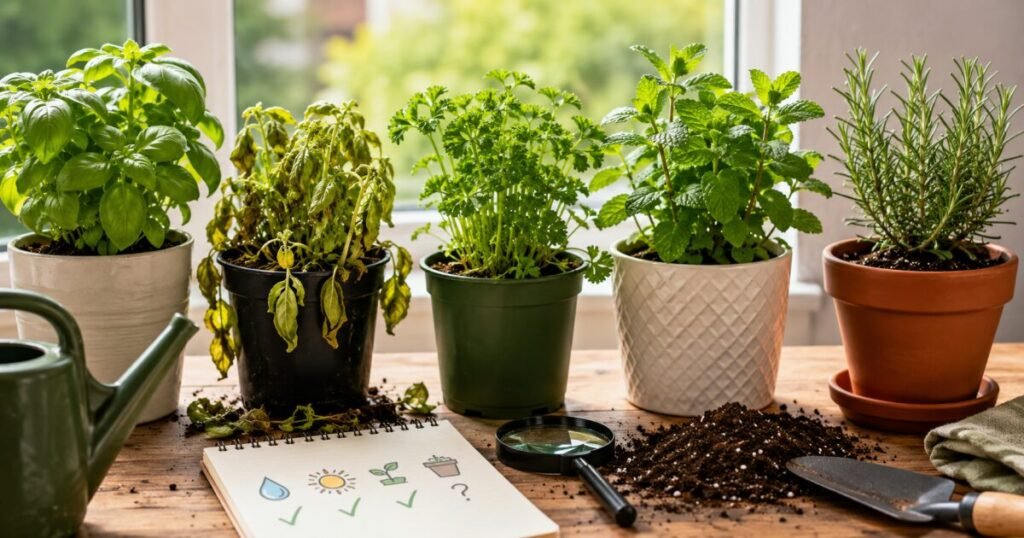
Common Problems
| Problem | Likely Cause | Fix |
| Yellowing leaves, mushy stems | Overwatering or poor drainage | Reduce watering; repot into well-draining mix |
| Leggy, sparse growth | Insufficient light | Move to a sunnier spot or add a grow light |
| White powdery coating on leaves | Powdery mildew from poor air circulation/humidity | Improve airflow, avoid overhead watering, space plants out |
| Woody, unproductive base | Natural aging or lack of pruning | Prune each spring lightly; replace plants every 3–4 years |
| Slow or no seed germination | Seeds buried too deep or soil too cold | Sow shallowly; keep soil at 65–70°F until sprouting |
Common Thyme Varieties Worth Knowing
Most guides on how to grow thyme focus only on common (English) thyme, but several varieties are widely available and behave slightly differently.
- Common/English thyme (Thymus vulgaris): The standard culinary thyme, with gray-green leaves and a classic earthy, slightly minty flavor. Most reliable for general cooking use.
- Lemon thyme (Thymus citriodorus): A hybrid with a distinct citrus aroma, useful in dishes where a brighter, lemony note works well, such as fish or roasted vegetables.
- Creeping thyme (Thymus serpyllum and related species): Grown more as a low, spreading ground cover or lawn alternative than a culinary herb; some varieties are edible but tend to have a milder flavor.
- French thyme: A narrow-leafed variety often considered slightly sweeter and less bitter than common thyme, favored in classic French cooking.
For a home kitchen garden, common or French thyme is typically the most versatile choice, while lemon thyme is worth adding as a second variety for its distinct flavor.
Companion Planting with Thyme
Thyme is commonly planted alongside vegetables because its strong scent is thought to help deter certain pests, and it doesn’t compete aggressively for nutrients given its low fertility needs. Popular companions include cabbage, tomatoes, eggplant, and roses. Avoid planting thyme directly next to plants with very different water needs, such as thirsty leafy greens, since consistently moist soil around those neighbors can lead to root rot in nearby thyme.
Harvesting Thyme
Begin light harvesting once a plant is established and at least 4–6 inches tall, generally 60–90 days after planting from seed or a few weeks after transplanting a rooted cutting. Snip stems in the morning after any dew has dried, when the essential oils responsible for flavor and aroma are most concentrated. Harvest no more than about a third of the plant at a time to keep it growing.
Fresh Thyme: How to Use and Store It
Fresh thyme refers to the harvested stems and leaves of the thyme plant before drying. It has a brighter, slightly more citrusy and less concentrated flavor than dried thyme.
How to Use Fresh Thyme
- Add whole sprigs to soups, stocks, and braises early in cooking, then remove the woody stems before serving, since they don’t soften during cooking.
- Strip leaves from the stem by running your fingers down the stem against the direction of growth, and use the leaves in marinades, roasted vegetables, or scrambled eggs.
- Use it in longer-cooking dishes where it has time to release its flavor, such as stews, roasted meats, and slow-cooked beans.
- Pair it with fattier foods like roasted chicken, potatoes, and butter-based sauces, since thyme’s flavor compounds are fat-soluble and bloom in those contexts.
- Add a few fresh sprigs near the end of cooking for a brighter, more aromatic finish, in addition to any added earlier for depth.
How to Store Fresh Thyme
Fresh thyme stores well for one to two weeks with the right method.
- Trim the stem ends slightly, like you would with cut flowers.
- Place stems upright in a small glass with about an inch of water, similar to a bouquet.
- Loosely cover the top with a produce bag or plastic wrap and refrigerate.
- Change the water every few days.
Alternatively, wrap fresh thyme loosely in a slightly damp paper towel, place it in a partially sealed produce bag, and refrigerate in the crisper drawer. For longer storage, fresh thyme also freezes well: freeze whole sprigs in a freezer bag, or freeze stripped leaves in ice cube trays with a bit of olive oil or water.
Dried Thyme: What It Is and How It’s Made
Dried thyme is fresh thyme with most of its moisture removed, either through air-drying, dehydrating, or commercial processing. Removing the water concentrates the plant’s essential oils, which is why dried thyme tastes noticeably stronger, spoonful for spoonful, than fresh thyme.
Dried thyme leaves are typically sold with the small, whole leaves largely intact, having been stripped from the stem and dried, giving them a slightly coarser texture than ground thyme.
Ground Thyme vs. Dried Thyme
These terms are sometimes used interchangeably, but they describe two different forms of the same dried herb.
| Form | Texture | Best Use |
| Dried thyme leaves | Whole or lightly crushed small leaves | Dishes with longer cook times where leaves can rehydrate and soften, like soups and stews |
| Ground thyme | Finely powdered | Dry rubs, spice blends, and dishes where a smooth texture matters, since whole leaves would be noticeable |
Ground thyme also tends to release its flavor faster and can taste slightly more intense per equal volume than whole dried leaves, simply because grinding exposes more surface area. If a recipe specifies “dried thyme” without further detail, it almost always means the whole-leaf form.
Dried Thyme Substitutes
If you’re out of dried thyme, several options work reasonably well depending on the dish:
- Fresh thyme (see conversion below) is the closest substitute in flavor.
- Herbes de Provence, which typically includes thyme along with other Mediterranean herbs, works in similar savory dishes, though it will shift the overall flavor slightly.
- Dried oregano or marjoram can stand in for thyme in a pinch, especially in Mediterranean-style dishes, though the flavor profile isn’t identical, since oregano is more pungent and marjoram is sweeter and milder.
- Italian seasoning blends that include thyme as one ingredient can work in a general sense, though they dilute the specific thyme flavor with other herbs.
How Much Dried Thyme Equals Fresh (Fresh-to-Dried Conversion)
Because drying concentrates flavor, dried herbs are used in smaller quantities than fresh. The standard culinary conversion is:
1 tablespoon fresh thyme = 1 teaspoon dried thyme
This 3:1 ratio is a widely used general guideline, though personal taste and the specific recipe may call for adjustment, since dried herb potency can vary somewhat by age and brand.
Fresh Thyme vs. Dried Thyme: Which Should You Use?
| Factor | Fresh Thyme | Dried Thyme |
| Flavor | Brighter, more subtle, slightly citrusy | Stronger, more concentrated, earthier |
| Best for | Finishing dishes, garnishes, shorter cooking times | Long-simmered dishes, marinades, spice rubs |
| Shelf life | 1–2 weeks refrigerated | 1–3 years in a sealed container |
| Quantity needed | More (3x the dried amount) | Less |
| Texture | Soft leaves, woody stems to remove | Dry, crumbly leaves or fine powder |
Neither form is objectively better; the right choice depends on the dish, the cooking time, and what you have on hand. Recipes that simmer for a long time, like stews, generally suit dried thyme well because there’s time for the dried leaves to rehydrate and release flavor. Quick-cooking or raw applications, like a vinaigrette or a garnish, generally benefit from fresh thyme’s brighter flavor and pleasant texture.
A Note on “Fresh Thyme” the Grocery Store
If you’ve searched for “fresh thyme hours,” you may be looking for Fresh Thyme Market, a Midwestern U.S. grocery store chain, rather than the herb itself. Store hours vary by location and can change on holidays, so the most reliable way to confirm hours for a specific store is to check that location’s page directly on the Fresh Thyme Market website or call the store. This guide focuses on growing and using the herb thyme, not the grocery chain. If you’re also interested in growing other herbs at home, you can learn how to Grow Basil.
Pros and Cons of Growing Thyme
| Pros | Cons |
| Very drought-tolerant once established | Slow to grow from seed |
| Thrives in poor soil, little fertilizer needed | Can become woody and less productive after a few years |
| Perennial in many climates; low replanting effort | Sensitive to overwatering and poor drainage |
| Attracts pollinators when flowering | Needs consistent sun; struggles in deep shade |
| Suitable for containers, indoor growing, and small spaces | Different varieties can vary in cold-hardiness |
Key Takeaways
- Thyme needs full sun, well-draining soil, and infrequent watering; overwatering is the most common cause of failure.
- Nursery starts grow fastest, cuttings are a reliable free option, and seed is the slowest method.
- Thyme grows well in garden beds, containers, and indoors, as long as light and drainage needs are met.
- Fresh thyme is milder and used generously; dried thyme is stronger and used sparingly, at roughly a 3:1 fresh-to-dried ratio.
- Ground thyme is a finer, more concentrated form of dried thyme, best suited to rubs and blends rather than long-simmered dishes.
Frequently Asked Questions
Can you grow thyme from cuttings?
Yes. Thyme roots readily from 4–6 inch stem cuttings taken from a non-flowering stem, whether placed directly in moist, well-draining soil or rooted first in water. Cuttings typically develop roots within 2–4 weeks and grow into full plants faster than seed-started thyme.
Can you grow thyme indoors?
Yes, thyme grows well indoors as long as it gets at least 6 hours of bright light daily, ideally from a south-facing window or a supplemental grow light, along with well-draining soil and infrequent watering. Indoor thyme generally grows slower than outdoor thyme because indoor light is usually weaker than full sun.
How much dried thyme equals fresh?
The standard conversion is 1 teaspoon of dried thyme for every 1 tablespoon of fresh thyme, a 3:1 ratio, since drying concentrates the herb’s flavor. This is a general guideline, and it’s reasonable to adjust slightly to taste.
Can I use dried thyme instead of fresh?
Yes, in most cooked dishes, using the 3:1 conversion (dried is stronger, so use less). Dried thyme works especially well in soups, stews, and dishes with longer cook times, since it has time to rehydrate. For garnishes or dishes where thyme is added raw or at the very end, fresh thyme is generally the better choice for flavor and texture.
Is dried thyme the same as ground thyme?
Not exactly. Dried thyme leaves are dried but left whole or lightly crushed, while ground thyme is finely powdered. Both come from the same dried herb, but ground thyme has a smoother texture and can taste slightly more concentrated, making it more common in spice rubs and blends, while dried leaf thyme is more common in soups and stews.