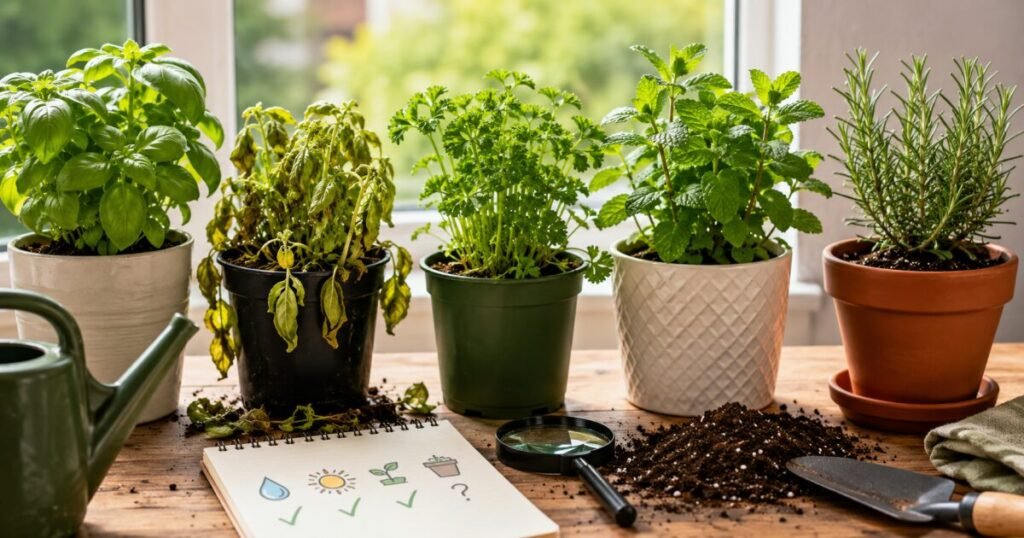
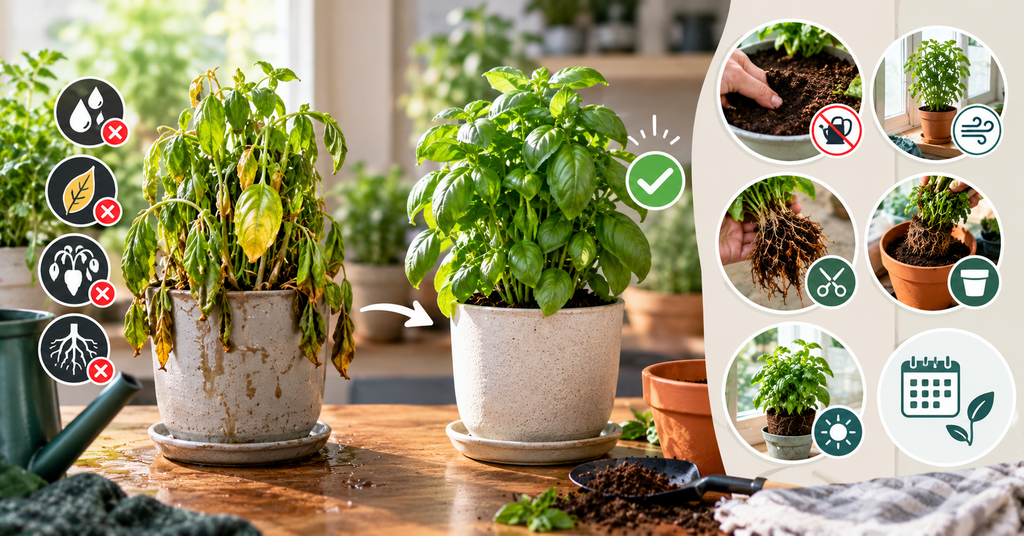
Your indoor herbs are wilting, turning yellow, dropping leaves, or looking unhealthy even though you’ve been watering them regularly. Surprisingly, these can all be signs of overwatering rather than underwatering.
When herb soil stays wet for too long, the roots can become deprived of oxygen and eventually develop root rot. The plant may then wilt even though the soil is soaked.
The good news is that many overwatered indoor herbs can recover if you catch the problem early. This guide explains how to identify overwatering, rescue damaged herbs, deal with root rot, and prevent the problem from happening again.
Quick Answer: How to Fix Overwatered Indoor Herbs
If your indoor herb is overwatered, follow these basic steps:
- Stop watering immediately. Wait until the top 2 inches of soil are completely dry.
- Improve drainage and airflow. Empty standing water from saucers and move the plant somewhere with better air circulation.
- Check the roots. Healthy roots should be firm and white or tan. Brown, black, mushy, or smelly roots may indicate root rot.
- Remove damaged roots and leaves. Use clean scissors to cut away rotten roots and severely damaged foliage.
- Repot if necessary. Use fresh, well-draining potting soil and a container with drainage holes.
- Allow the plant to recover. Avoid immediately returning to a regular watering schedule.
Mildly overwatered herbs may recover within one or two weeks. Plants with significant root damage can take several weeks to produce healthy new growth.
Why Overwatering Is So Harmful to Indoor Herbs
Indoor herbs are particularly vulnerable to excessive moisture because their growing conditions are very different from those outdoors.
Shallow Root Systems
Many culinary herbs have relatively fine and shallow root systems. When the soil remains saturated, oxygen around the roots decreases quickly.
Healthy roots need both water and oxygen. When all the air spaces in the soil become filled with water, the roots can no longer function properly.
Limited Indoor Light
Herbs generally need plenty of light to grow actively. Indoor plants often receive much less light than plants growing outdoors.
When light levels are low, plants use water more slowly. As a result, soil can remain wet for much longer than expected.
If you’re growing herbs in a darker room, choosing suitable plants can make indoor care easier. The best herbs for low-light apartments can help you choose varieties that are more tolerant of lower-light conditions.
Poor Drainage
A container without drainage holes can trap water around the roots. Decorative pots can create the same problem when water collects at the bottom.
Constantly wet soil creates conditions that encourage root problems and fungal diseases.
Why Overwatered Herbs Wilt
One of the most confusing symptoms is wilting.
You might assume a wilted plant needs more water, but an overwatered plant can also wilt because damaged roots cannot absorb water and nutrients effectively.
This creates the classic situation where the plant looks thirsty while the soil is still wet.
Signs Your Indoor Herbs Are Overwatered
The earlier you identify overwatering, the better the chances of recovery.
Look at both the plant and the soil rather than relying on one symptom alone.
Early Warning Signs
These symptoms can indicate that your herb is beginning to suffer from excess moisture:
- Soil remains wet for many days after watering.
- Leaves become soft or limp even though the soil is moist.
- New growth looks pale or weak.
- The soil develops a sour or musty smell.
- Algae or white growth appears on the soil surface.
- Growth becomes unusually slow.
At this stage, the roots may still be healthy enough for the plant to recover without major intervention.
Moderate to Severe Symptoms
More serious symptoms include:
- Yellowing leaves on both old and new growth.
- Green leaves dropping from the plant.
- Soft or dark stems near the soil line.
- Fungus gnats appearing around constantly wet soil.
- Brown, black, mushy, or foul-smelling roots.
- The entire plant beginning to collapse.
When several of these symptoms appear together, inspect the roots and consider repotting.
Overwatering vs. Underwatering: Quick Comparison
| Symptom | Overwatered Herbs | Underwatered Herbs |
| Soil feel | Wet or soggy | Dry and pulling away from pot edges |
| Leaf texture | Soft, limp, or mushy | Crispy, dry, or papery |
| Yellow leaves | Soft yellowing | Dry yellow or brown leaves |
| Leaf drop | Green leaves may fall | Yellow or brown leaves may fall |
| Soil smell | Sour or musty | Usually no unusual smell |
| Recovery after watering | Usually does not improve | Often improves within hours |
| Stem base | May become soft and dark | Usually firm but may look shriveled |
| Roots | Brown, mushy, or smelly | White but dry and brittle |
Step-by-Step: How to Fix Overwatered Indoor Herbs
The best treatment depends on how severe the overwatering is.
A plant with wet soil but healthy roots needs a different approach from a plant suffering from extensive root rot.
Stage 1: Mild Overwatering
If the soil is very wet but the roots are still white or tan and firm, you may be able to correct the problem without repotting.
1. Stop Watering
Do not add more water while the soil is still wet.
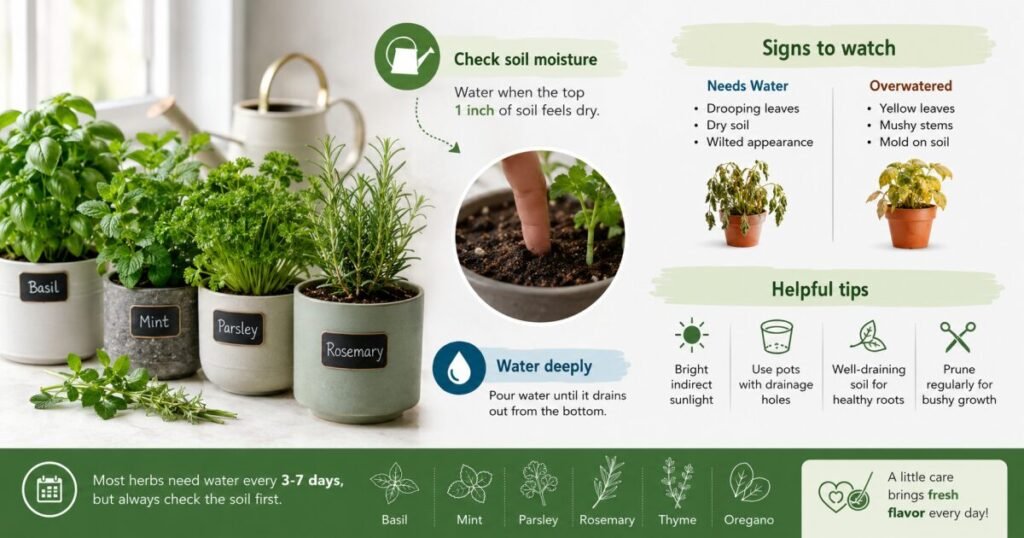
Check the top 2 inches of soil before watering again. If it still feels moist, wait longer.
Avoid following a fixed watering schedule. Your herb’s watering needs can change depending on light, temperature, pot size, soil, and season.
2. Remove Standing Water
Check the saucer beneath the pot and empty any collected water.
If the container is sitting inside a decorative pot, remove it and make sure excess water can drain freely.
For more detailed guidance, see Do Indoor Herbs Need Drainage Holes?, especially if your herbs are growing in decorative containers.
3. Improve Light and Airflow
Move the herb to a brighter location with good air circulation.
Better airflow can help excess moisture evaporate and reduce the conditions that encourage fungal problems.
Avoid placing a severely stressed plant immediately next to a heater or in extreme direct heat.
4. Gently Aerate the Soil
If the soil is compacted, gently make a few small holes in the upper layer using a clean skewer or chopstick.
Do this carefully so you don’t damage the roots.
The goal is to improve air movement through the soil, not to aggressively disturb the root system.
5. Allow the Soil to Dry
Let the soil dry gradually.
Do not try to force the plant to dry extremely quickly by exposing it to intense heat. A stable environment with adequate light and airflow is safer.
6. Resume Watering Carefully
Once the appropriate depth of soil has dried, water thoroughly but allow excess water to drain completely.
Do not return to frequent watering simply because the plant begins to look slightly better.
Stage 2: Moderate Overwatering and Root Damage
If you notice yellow leaves, soft stems, a musty smell, or obvious root damage, inspect the root system.
1. Remove the Herb From Its Pot
Gently slide the plant out of the container.
Avoid pulling aggressively on the stems because damaged plants can break easily.
Remove as much wet soil from around the roots as you can without unnecessarily tearing healthy roots.
2. Inspect the Roots
Healthy roots are generally:
- Firm
- White, cream, or tan
- Not slimy
- Free from a strong rotten smell
Damaged roots may be:
- Brown or black
- Soft or mushy
- Slimy
- Foul-smelling
- Easily detached from the plant
The more healthy roots remain, the better the plant’s chances of recovery.
3. Remove Rotten Roots
Use clean, sharp scissors to remove clearly rotten roots.
Cut back to firm, healthy tissue.
Avoid removing healthy roots unnecessarily because the remaining root system is important for recovery.
4. Remove Severely Damaged Leaves
Trim leaves that are completely yellow, mushy, dead, or severely damaged.
Removing badly damaged tissue reduces the plant’s workload while it recovers.
Do not remove every leaf simply because some leaves are slightly yellow. The plant still needs healthy foliage to produce energy.
5. Repot in Fresh Soil
Use fresh, well-draining potting soil.
A suitable mix should allow water to move through easily rather than staying saturated for long periods.
For more detailed guidance on choosing a suitable mix, see Best Soil for Herbs.
Adding materials such as perlite can improve drainage in many indoor herb mixes.
Never place a damaged herb back into heavily saturated old soil.
6. Choose a Container With Drainage Holes
Drainage holes are essential for indoor herbs.
If you prefer a decorative container without holes, use it as a cover around a separate nursery pot that has drainage holes.
After watering, allow the nursery pot to drain completely before returning it to the decorative container.
7. Give the Plant Time to Recover
After major root pruning and repotting, avoid immediately giving the plant excessive water.
Allow the root system time to adjust to its new environment.
Place the herb in a stable location with appropriate light and airflow.
8. Avoid Fertilizing Immediately
Do not rush to fertilize a plant with damaged roots.
A recovering root system may not be able to use fertilizer efficiently, and unnecessary fertilizer can add additional stress.
Wait until the plant begins producing healthy new growth before returning to normal fertilization.
Stage 3: Severe Overwatering and Extensive Root Rot
Severe overwatering is more difficult to reverse.
If the stem base is black and mushy, most roots have rotted, or the plant has collapsed, the original root system may not be able to recover.
However, you may still be able to save the plant through healthy stem cuttings.
1. Look for Healthy Growth
Inspect the plant carefully.
Look for:
- Firm green stems
- Healthy leaves
- New growth
- Sections above the damaged area that remain healthy
If the entire plant has become soft, black, and rotten, recovery may not be possible.
2. Take Healthy Stem Cuttings
Cut healthy sections above the damaged area.
Choose stems that are firm and free from visible rot.
Remove unhealthy portions before attempting propagation.
3. Root the Cuttings
Depending on the herb, cuttings can be rooted in:
- Fresh potting mix
- Water
- Perlite
- A coarse, well-draining propagation medium
For a more detailed propagation method, see How to Grow Herbs From Cuttings.
The best method varies by herb.
Basil, mint, and parsley commonly root relatively easily, while woody Mediterranean herbs generally prefer a well-draining medium.
4. Provide Stable Propagation Conditions
Place cuttings in bright, indirect light.
Maintain a stable temperature and avoid keeping the propagation medium constantly saturated.
Once roots develop and the cutting begins producing healthy new growth, it can gradually be moved into its permanent growing container.
Herb-Specific Overwatering Tolerance
Not all herbs respond to excess moisture in the same way.
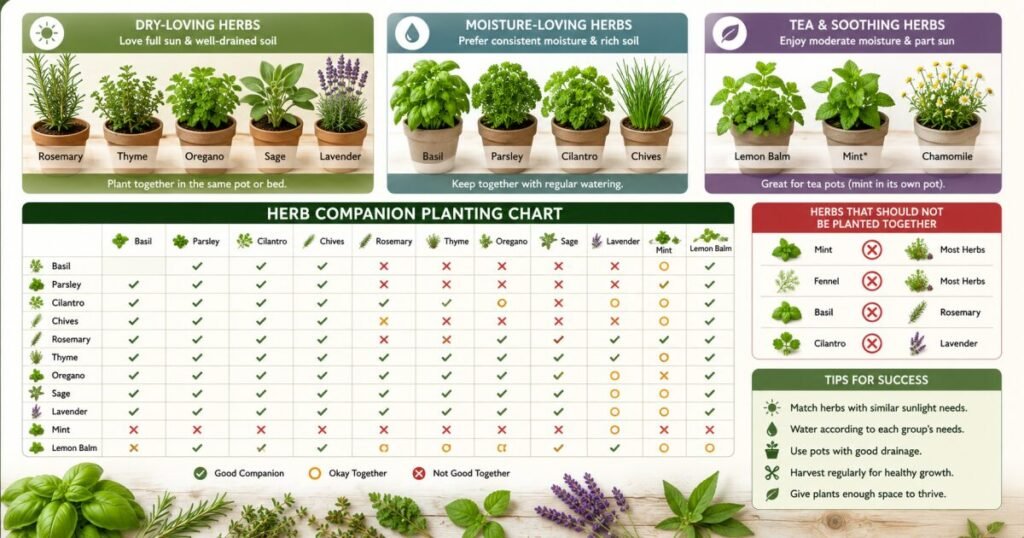
Mediterranean herbs generally prefer drier conditions, while some tender herbs tolerate slightly more moisture.
| Herb | Overwatering Tolerance | Preferred Soil Dryness Before Watering |
| Rosemary | Very low | Soil should dry substantially |
| Thyme | Very low | Soil should dry substantially |
| Sage | Low | Soil should dry substantially |
| Oregano | Low | Soil should dry substantially |
| Basil | Moderate | Top layer should dry |
| Parsley | Moderate | Top layer should dry |
| Mint | Moderate to high | Top layer should dry |
| Chives | Moderate | Top layer should dry |
| Cilantro | Low | Top layer should dry |
The key difference is that rosemary, thyme, sage, and oregano generally prefer faster-draining soil and longer periods between watering.
Basil, parsley, and mint can tolerate somewhat more moisture, but they still need good drainage.
For an overview of different herbs and their growing characteristics, you can browse the A–Z of Herbs.
How Long Does It Take for Overwatered Herbs to Recover?
Recovery time depends on how much damage has occurred.
Mild Overwatering
A plant with healthy roots may begin recovering within 1–2 weeks after watering is corrected.
Moderate Root Damage
A plant that has been repotted and had damaged roots removed may need 3–6 weeks before strong new growth becomes noticeable.
Severe Root Rot
If you have to propagate new plants from healthy cuttings, establishing a new plant may take 4–8 weeks or longer, depending on the herb and growing conditions.
If there is no improvement after several weeks, consider other possible problems such as insufficient light, pests, disease, temperature stress, or nutrient issues.
How to Prevent Overwatered Indoor Herbs
Prevention is much easier than rescuing a severely damaged plant.
1. Water Based on Soil Moisture
One of the biggest mistakes is watering according to a fixed calendar.
Instead, check the soil before every watering.
Use your finger to check moisture below the surface. You can also learn to judge moisture by lifting the pot because wet soil makes containers noticeably heavier.
A moisture meter can also help when growing herbs in larger containers.
2. Use Well-Draining Potting Mix
Indoor herbs generally perform better in a loose, well-draining growing medium.
For many herbs, you can improve drainage by combining quality potting soil with perlite or another suitable drainage material.
Mediterranean herbs such as rosemary and thyme usually benefit from especially fast drainage.
Avoid using heavy garden soil in containers because it can become compacted and restrict drainage.
3. Always Use Pots With Drainage Holes
A container should have a way for excess water to escape.
If you use decorative pots without drainage, place the herb inside a separate container with drainage holes.
After watering, allow the inner container to drain completely.
For guidance on container size and drainage, see Best Pots for Indoor Herbs.
4. Match Watering to the Herb
Different herbs have different moisture requirements.
Mediterranean Herbs
Rosemary, thyme, sage, and oregano generally prefer soil to dry significantly between waterings.
Tender Herbs
Basil, parsley, and mint generally need more consistent moisture but should never remain in waterlogged soil.
Winter Growing
Many indoor herbs grow more slowly during periods of lower light and cooler temperatures.
As growth slows, their water requirements can decrease.
5. Provide Enough Light
Light plays an important role in watering.
A plant receiving insufficient light may use water more slowly, causing its soil to remain wet.
Most culinary herbs prefer several hours of bright light each day. If natural light is insufficient, a suitable grow light can help.
6. Maintain Good Air Circulation
Stagnant air can contribute to fungal problems and slow evaporation from the growing environment.
Provide reasonable air movement around your indoor herbs without exposing them to damaging drafts or extreme temperatures.
7. Consider Using a Watering Calculator
If you’re growing several herbs, it can be difficult to remember the ideal watering conditions for every plant.
A watering calculator can help estimate watering needs based on factors such as:
- Herb type
- Pot size
- Container material
- Light exposure
- Temperature
- Humidity
- Season
The goal is not to follow a rigid schedule but to make watering decisions based on the plant’s actual growing conditions.
Common Mistakes That Cause Overwatered Herbs
Avoid these common watering mistakes:
- Watering on a fixed schedule regardless of soil moisture.
- Using containers without drainage holes.
- Leaving pots sitting in standing water.
- Using heavy soil that drains poorly.
- Ignoring seasonal changes.
- Giving newly repotted plants too much water.
- Fertilizing a severely stressed plant too soon.
- Reusing heavily contaminated soil after severe root rot.
- Assuming every wilted herb needs more water.
- Keeping herbs in low light while watering frequently.
If you’re unsure which herbs are most suitable for your growing conditions, the Indoor Herb Finder can help you compare herbs based on factors such as light, space, and growing preferences.
FAQ: Overwatered Indoor Herbs
Can Overwatered Herbs Recover?
Yes. Many overwatered herbs can recover if the problem is identified early.
Mild overwatering may resolve within one or two weeks after correcting the watering routine. Plants with root rot can take several weeks to recover after pruning and repotting.
Severe root damage may require propagation from healthy cuttings.
How Do I Know if My Herb Has Root Rot or Just Needs Water?
Check the soil first.
If the soil is wet but the plant is wilting, overwatering or root damage may be responsible.
If you inspect the roots, healthy roots should generally feel firm, while rotted roots may be dark, mushy, slimy, and unpleasant-smelling.
Should I Repot an Overwatered Herb?
Repotting is usually appropriate when the plant has signs of significant root damage, such as persistent yellowing, soft stems, a foul-smelling growing medium, or visibly rotten roots.
A mildly overwatered plant with healthy roots may recover without repotting.
How Often Should I Water Indoor Herbs?
There is no single watering schedule that works for every indoor herb.
Watering frequency depends on:
Herb type
Pot size
Soil composition
Light exposure
Temperature;
Humidity
Season
Mediterranean herbs such as rosemary, thyme, and sage generally need the soil to dry more thoroughly between watering.
Tender herbs such as basil, parsley, and mint generally prefer somewhat more consistent moisture.
Always check the soil rather than watering simply because a certain number of days has passed.
For a herb-by-herb reference, How to Grow Oregano is a useful example of how watering needs can differ between herbs.
Why Are My Indoor Herbs Wilting Even After I Just Watered Them?
This is one of the most common signs of overwatering.
When soil becomes saturated, oxygen around the roots decreases. Damaged roots may then struggle to absorb water properly.
The result is a plant that appears thirsty even though the soil is wet.
Check the roots if the problem continues and look for signs of root rot.
Is It Better to Underwater or Overwater Herbs?
Slight underwatering is generally easier for many herbs to recover from than severe overwatering.
Mild drought stress can often be corrected with appropriate watering, while advanced root rot can permanently damage the plant.
When you’re unsure whether the soil is dry enough, checking the moisture level is better than automatically adding more water.
Key Takeaways
- Overwatered indoor herbs can wilt even when their soil is wet.
- Yellow leaves, soft stems, musty soil, fungus gnats, and mushy roots can indicate excessive moisture.
- Stop watering while the soil remains wet.
- Make sure containers have proper drainage.
- Mild cases may recover without repotting.
- Plants with root rot may need root pruning and fresh soil.
- Severe cases may be saved by taking healthy stem cuttings.
- Mediterranean herbs such as rosemary, thyme, sage, and oregano generally prefer drier conditions.
- Tender herbs such as basil, parsley, and mint tolerate somewhat more moisture but still require good drainage.
- Avoid rigid watering schedules and check the soil before watering.
- Adequate light and airflow are important for healthy indoor herb growth.