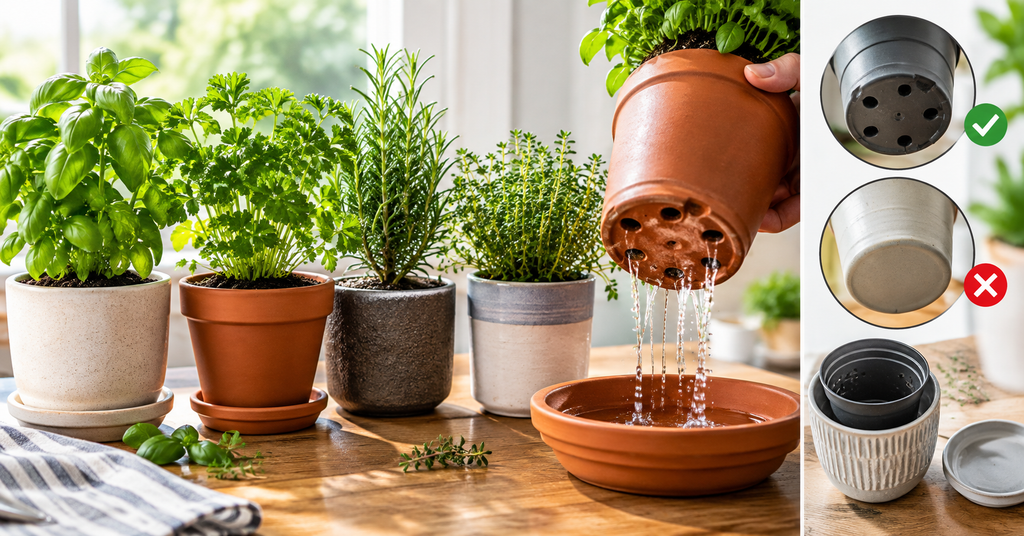
Yes, most indoor herbs should be grown in a pot with drainage holes. Drainage holes let excess water escape, reducing the risk of waterlogged soil, root rot, fungal problems, and weak growth.
You can grow herbs in a decorative container without holes, but the safest method is to place the herb in a draining nursery pot and use the decorative container as a cover pot. This gives you the appearance you want without forcing the roots to sit in standing water.
Table of Contents
Why Drainage Holes Matter for Indoor Herbs
Herb roots need both moisture and air. When soil stays saturated, water fills the spaces that normally hold oxygen. Roots can then become stressed, stop functioning properly, and eventually rot.
Drainage holes help by allowing you to:
- Water the entire root ball thoroughly.
- Flush excess water and accumulated fertilizer salts from the soil.
- Prevent water from collecting around the roots.
- Check whether the soil is draining properly.
- Reduce the chance of overwatering.
The important point is that overwatering is not only about how much water you use. It is also about how long the soil stays wet. A draining pot makes moisture management much easier, especially for beginners.
For more guidance on choosing a well-draining growing medium, see our guide to best soil for indoor herbs.
Basil, parsley, cilantro, mint, thyme, oregano, rosemary, and lavender generally perform better when excess water can drain away. Herbs vary in their moisture preferences, but few indoor culinary herbs benefit from permanently waterlogged soil.
For basil-specific container and drainage guidance, see How to Grow Basil.
Can Herbs Grow Without Drainage Holes?
They can, but it is less forgiving. A container without drainage holes gives excess water nowhere to go, so the margin for error is small.
Some plants survive in non-draining containers when the grower carefully controls watering, uses an airy potting mix, and checks moisture frequently. However, this approach is riskier for herbs because:
- The bottom of the container may remain wet while the surface looks dry.
- You cannot easily flush excess fertilizer salts from the soil.
- Water accumulation is difficult to see in opaque pots.
- A single heavy watering may leave the roots submerged.
- Root damage can begin before the plant shows obvious symptoms.
The safest choice is still a pot with drainage holes. If your decorative pot has no hole, use a separate inner pot that does.
The Best Setup: Inner Pot and Saucer
A practical indoor herb arrangement is:
- Plant the herb in a nursery pot with drainage holes.
- Place that pot inside a slightly larger decorative container.
- Water the herb at a sink or over a tray.
- Allow excess water to drain completely.
- Empty any water collected in the outer container.
- Return the inner pot to the decorative pot.
This is often called double potting or using a cover pot. It works particularly well for indoor kitchens, windowsills, and countertops because the outer pot protects surfaces while the inner pot provides proper drainage.
If you are growing oregano indoors, its care guide also explains why a well-draining container matters: How to Grow Oregano.
A pot with drainage holes and a saucer is another excellent option. Choose a detachable saucer rather than one permanently attached to the pot, because it is easier to empty after watering. Never let the inner pot sit in a saucer full of water for long periods.
Do You Need a Saucer?
A saucer is not a replacement for drainage holes. It simply catches water that leaves the pot.
Use a saucer when:
- The herb sits on a wooden shelf, windowsill, or countertop.
- You water the plant in place.
- The container has one or more holes in its base.
- You want to protect indoor surfaces from water stains.
After watering, wait until the flow slows, then empty the saucer. A permanently wet saucer can keep the lower portion of the soil saturated.
For small herbs, a shallow saucer is usually enough. Make sure the pot is not sitting in a deep pool of water.
How Big Should Drainage Holes Be in Planters?
For small indoor herb pots, drainage holes should be large enough to let water escape freely without washing out the potting mix.
As a practical guide:
| Pot size: Suitable drainage setup | |
| 10–15 cm wide | One hole around 6 mm, or several smaller holes |
| 15–20 cm wide | One or more holes totaling roughly 1–2 cm of open drainage |
| Larger containers | Several evenly spaced holes near the base |
The exact size is less important than having enough open drainage area. Several small holes can work better than one very large hole because they distribute drainage across the bottom.
The holes should not be blocked by a compacted layer of soil. If the pot has only one tiny hole, water may drain slowly, especially when the potting mix is dense.
Thyme is another herb that benefits from fast-draining soil and careful watering; see How to Grow Thyme.
Avoid making large holes in thin plastic pots unless necessary, because the base may crack or lose structural strength.
Most Asked Questions about Drainage Holes
Will Soil Fall Out of Drainage Holes?
A small amount of potting mix may initially fall through, but this is easy to prevent.
Good options include:
- A piece of plastic mesh.
- Fine screen material.
- A coffee filter.
- A small piece of porous landscape fabric.
- A broken piece of clean terracotta placed loosely over the hole.
The covering should allow water to pass through. Do not seal the hole with tape, glue, or a solid piece of plastic.
Do not pack the bottom of the container tightly with rocks. A loose mesh is usually enough to keep the potting mix in place while preserving drainage.
Should You Cover Drainage Holes?
You may cover drainage holes lightly with mesh or another porous material, but you do not need to block them.
The purpose of a cover is only to reduce soil loss. It should not create a plug. If water cannot leave quickly, the covering defeats the purpose of the hole.
Before planting, check the hole by pouring a small amount of water into the empty container. Water should begin flowing out without pooling for a long time.
Do Rocks Improve Drainage?
No. Adding a layer of gravel or rocks inside the bottom of an individual pot does not reliably improve drainage.
Water does not automatically move from soil into the rock layer simply because the rocks are more open. Instead, moisture can collect in the soil above the gravel, leaving the root zone wetter than expected. Illinois Extension specifically advises against using gravel inside individual pots as a drainage solution.
If you want to use a decorative container without holes, place a draining inner pot inside it. This is more dependable than creating a gravel reservoir beneath the soil.
A gravel layer placed in a saucer may help increase local humidity, but that is different from improving drainage inside the planting container.
What If Your Herb Pot Has No Hole?
You have three practical choices.
Use a nursery pot inside it
This is the safest and easiest solution. Keep the herb in a plastic or terracotta pot with drainage holes, then place it inside the decorative container.
Remove the inner pot before watering, or check afterward that no water remains in the outer pot.
Drill a drainage hole
Plastic, resin, terracotta, and ceramic containers can often be modified, but the correct tool depends on the material.
- Plastic and resin usually need a suitable drill bit and steady pressure.
- Terracotta can often be drilled carefully with a masonry or tile bit.
- Ceramic requires extra caution because it may crack.
- Wear safety glasses and work slowly.
- Keep the container supported on a stable, padded surface.
Guides on drilling planters recommend using the appropriate bit for the material, securing the planter, and taking care with heat and cracking when drilling ceramic.
If you are not comfortable drilling an expensive or sentimental pot, use an inner pot instead.
If you prefer starting herbs from cuttings, this guide also recommends a small pot with drainage holes and a well-draining mix: How to Grow Herbs From Cuttings.
Water very carefully
This is the least reliable option. If you keep an herb directly in a container without drainage holes:
- Use a loose, well-draining potting mix.
- Water only when the plant and soil actually need it.
- Add a small amount at a time rather than following a fixed schedule.
- Never leave visible water pooled at the bottom.
- Monitor the plant closely for declining health.
Even careful watering cannot remove excess water once it accumulates below the root ball.
How to Water Herbs in Pots With Drainage Holes
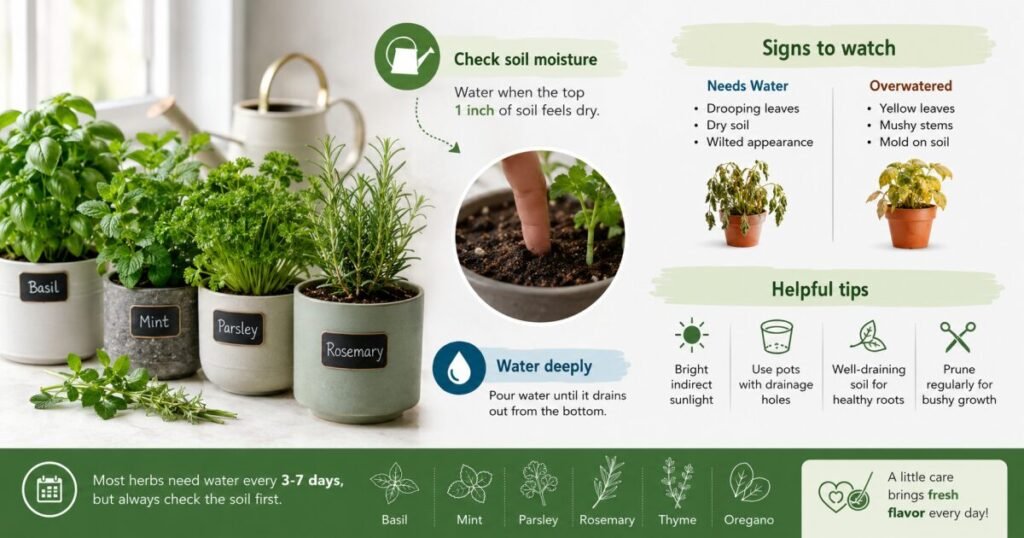
For most indoor herbs, water thoroughly rather than giving frequent small sips.
- Check the soil first with your finger or a moisture meter.
- Water slowly across the soil surface.
- Stop when a little water drains from the bottom.
- Let the pot drain fully.
- Empty the saucer or outer container.
- Wait until the upper portion of the soil has dried appropriately before watering again.
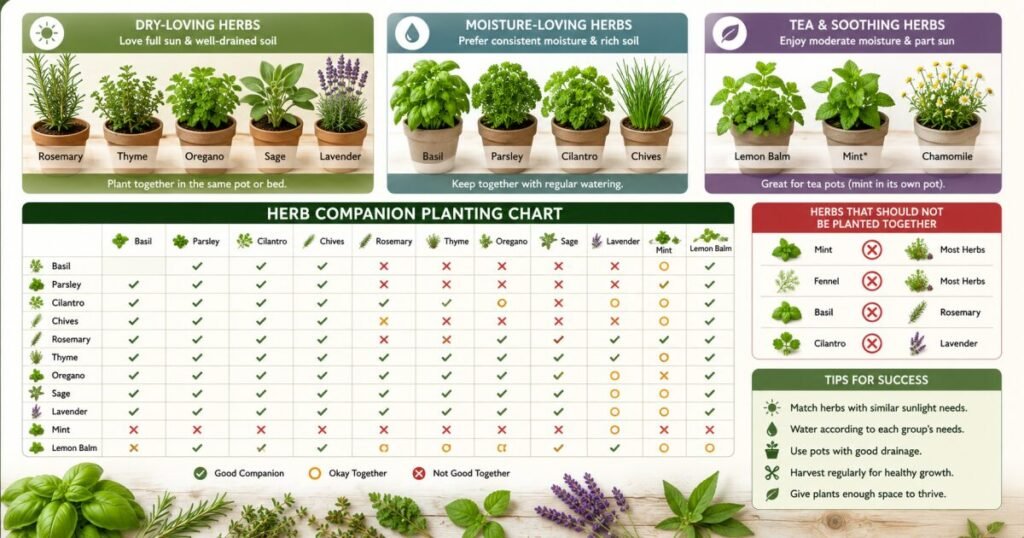
The drying point depends on the herb. Rosemary, thyme, oregano, and lavender generally prefer more drying between waterings. Basil, parsley, cilantro, and mint usually prefer more consistent moisture, but they still should not sit in standing water.
Light, temperature, humidity, pot size, soil type, and plant size all affect how quickly a container dries. A calendar-based watering schedule is less reliable than checking the soil.
For another example of container drainage and watering needs, see How to Grow Cilantro.
Signs of Poor Drainage
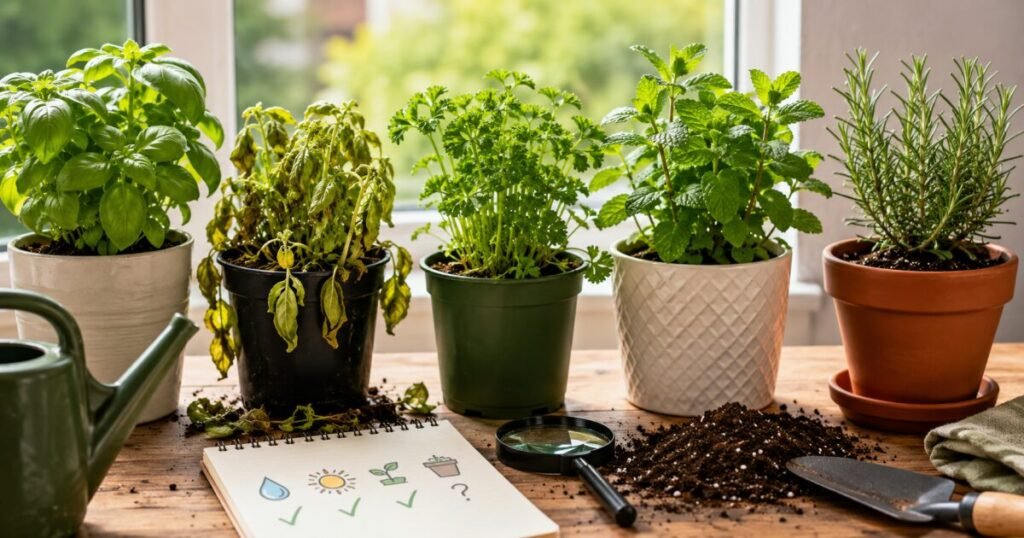
Watch for these warning signs:
- Yellowing leaves despite moist soil.
- Black or soft stems near the soil line.
- A sour or swampy smell from the pot.
- Fungus gnats around persistently wet soil.
- Wilting even though the soil is damp.
- Slow growth or sudden leaf drop.
- Roots that are brown, soft, or unpleasant-smelling.
Wilting does not always mean a plant needs water. Roots damaged by excess moisture may be unable to absorb water, causing a plant in wet soil to look thirsty.
If your growing space also has limited natural light, see 11 Best Herbs That Grow in Low Light Apartments for additional indoor-growing options.
If the problem is caught early, move the herb into a draining container with fresh, suitable potting mix. Remove visibly damaged roots with clean scissors and correct the watering routine.
Do Succulents Need Drainage Holes?
Yes. Succulents generally benefit even more from drainage holes because their roots are adapted to periods of drying rather than constantly wet soil.
A succulent can sometimes survive in a container without a hole when the mix is extremely mineral and the grower waters very carefully. However, a draining pot remains the safer option.
For more ideas on herbs suited to indoor container growing, see 25 Culinary Herbs You Can Easily Grow Indoors.
Use:
- A pot with drainage holes.
- A gritty, fast-draining succulent mix.
- A container only slightly larger than the root ball.
- Thorough watering followed by a drying period.
Self-watering containers are usually not appropriate for succulents because they maintain a more consistent moisture supply than these plants typically need.
Frequently Asked Questions
What are drainage holes?
Drainage holes are openings in the bottom or lower sides of a plant container. They allow excess water to leave the pot after watering or rainfall.
Are drainage holes necessary for indoor herbs?
They are strongly recommended for most indoor herbs. Drainage holes make it easier to water thoroughly while preventing excess moisture from remaining around the roots.
Can I use a plant pot without drainage holes?
Yes, but use it as a decorative cover pot around a smaller inner pot with drainage holes. Planting directly into a non-draining container is riskier.
Is one drainage hole enough?
If you are choosing an herb based on your available space, light, and growing conditions, the Indoor Herb Finder can help narrow down suitable herbs.
For a small herb pot, one adequately sized hole may be enough. Several smaller holes can provide more even drainage and reduce the chance of blockage.
Do I need to put rocks in the bottom?
No. Rocks do not reliably improve drainage inside a container and can cause water to collect above the rock layer.
How do I stop soil from falling out?
Place a small piece of porous mesh, screen, or coffee filter over the drainage hole. Keep it loose enough for water to pass through.
Can I drill drainage holes in a ceramic pot?
For more answers about indoor herb growing, including soil, pots, watering, and drainage, see our All About Herbs FAQs.
Often, yes, but ceramic can crack. Use the correct masonry or tile bit, wear eye protection, support the pot securely, and drill slowly. If the pot is valuable, use a nursery pot inside it instead.
Bottom Line: Indoor herbs usually do best in pots with drainage holes. The simplest setup is a nursery pot with holes placed inside a decorative cover pot, or a draining pot used with a detachable saucer.
Drainage holes do not prevent every watering mistake, but they give excess water a way out and make healthy watering much easier. For beginners and for herbs such as lavender, rosemary, thyme, and oregano, they are one of the most useful safeguards against root problems.