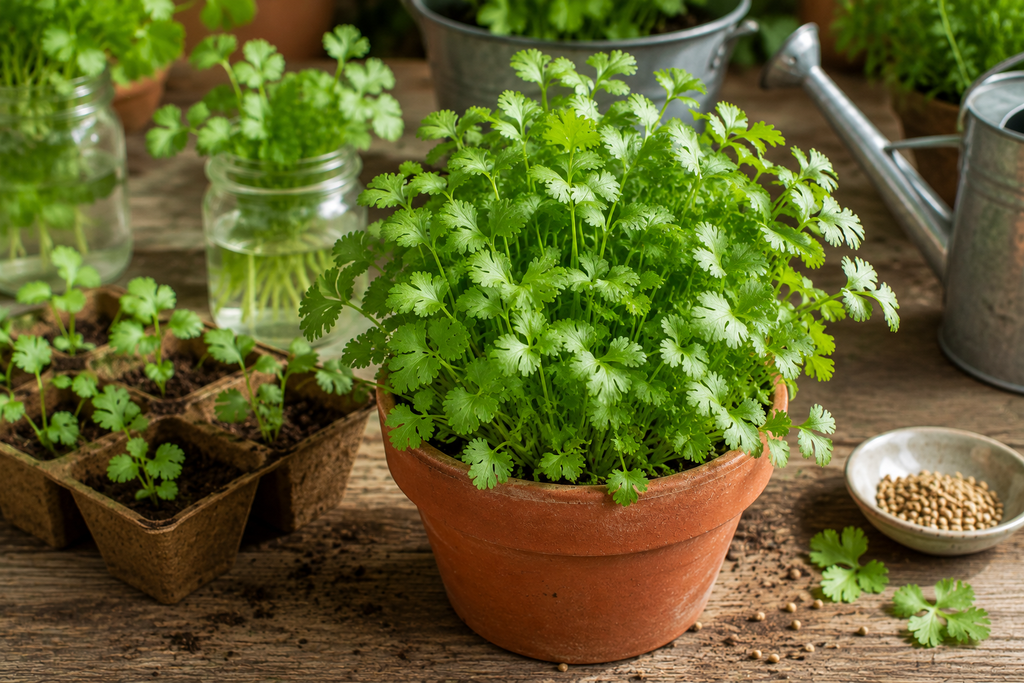
Cilantro (Coriandrum sativum) is one of the fastest, cheapest herbs you can grow and also one of the most misunderstood. Most people fail with it not because it’s hard, but because they treat it like basil: they start it indoors, transplant it, and let it sit in a warm kitchen window. Cilantro does none of its best work that way.
The short version: cilantro grows fastest from seed sown directly into its final pot or garden bed, in cool weather (60–75°F), with 6+ hours of light and consistently moist soil. It’s ready to harvest in 3–4 weeks and will “bolt” (flower and turn bitter) within a couple of months no matter what you do, so the real skill isn’t preventing that; it’s staggering plantings so you’re never without fresh leaves.
Below is everything you need from seed to pot to water to indoor grow lights plus the mistakes that trip up most first-time growers.
Is Cilantro Easy to Grow?
Yes, cilantro is one of the easiest herbs to start from seed. It germinates quickly, needs no special soil amendments, and tolerates neglect on watering better than most leafy greens.
What makes it feel hard is its short lifespan. Cilantro is a cool-season annual with a single taproot, and once temperatures climb or daylight hours lengthen, it “bolts,” shooting up a flower stalk and turning the leaves bitter. This is normal biology, not a mistake on your part. The trick isn’t stopping it; it’s succession planting a new batch every 2–3 weeks so something is always in the leafy stage.
Cilantro shares a lot of its cool-season logic with how to grow parsley indoors; both are taprooted, both dislike transplanting, and both do better slightly cooler than most people assume.
What Cilantro Needs to Thrive
| Factor | Ideal Range |
| Germination soil temp | 55–70°F (13–21°C) |
| Growing temperature | 50–75°F (10–24°C); bolts above ~75–80°F |
| Light | 6+ hours of sun outdoors; bright indirect light or 12–14 hrs under grow lights indoors |
| Soil | Loose, well-draining potting mix; slightly acidic to neutral pH (6.2–6.8) |
| Water | Consistently moist, never soggy — like a wrung-out sponge |
| Days to germinate | 7–14 days |
| Days to first harvest | 21–28 days |
| Days to bolting (full cycle) | 45–75 days, faster in heat |
The single biggest factor that determines success is temperature. Cilantro is genuinely a cool-weather plant closer to lettuce or spinach than to heat-loving herbs like basil.
How to Grow Cilantro From Seed (Step by Step)
Direct sowing is the method every serious grower and extension office recommends, and for one specific reason: cilantro develops a long taproot almost immediately after germination, and that taproot hates being disturbed. Transplanting it — even gently — often shocks the plant into bolting early.
- Skip the seed trays. Sow seeds directly into the pot, raised bed, or garden spot you want the plant to live in permanently.
- Crack the seed coat (optional but helpful). Cilantro seed is actually a dried fruit containing two seeds inside a papery husk. Gently press or rub the seeds between your palms to split the husk and speed up germination.
- Sow ¼–½ inch deep, spacing seeds about 1–2 inches apart. Cilantro likes to grow in a dense little patch, not spread thin like a solo plant.
- Keep soil evenly moist until germination — 7 to 14 days depending on temperature. Warmer soil sprouts faster but also shortens the plant’s usable life.
- Thin seedlings to about 4–6 inches apart once they have their first true (feathery) leaves, if you sowed thickly.
- Move to full or partial sun as soon as seedlings are up. Morning sun with afternoon shade is ideal in warm climates.
- Start harvesting once plants are 4–6 inches tall, usually 3–4 weeks after sowing.
Pro tip: sow a new patch of seeds every 2–3 weeks throughout the cool season. This “succession planting” is the actual answer to “how do I keep a steady supply of cilantro” — not any trick that stops bolting, because nothing fully does.
How to Grow Cilantro Indoors
Cilantro can be grown indoors year-round, but it’s genuinely more finicky inside than in a garden bed, mainly because homes run warmer than cilantro prefers and windowsill light is often too weak.
What indoor cilantro needs that outdoor cilantro doesn’t:
- A deep container. Cilantro’s taproot wants depth, not width. Use a pot at least 8–10 inches deep; shallow herb pots stunt it and trigger early bolting. See our guide to best pots for indoor herb gardens if you’re shopping for one.
- More light than you think. A bright windowsill is rarely enough on its own. A small LED grow light running 12–14 hours a day makes a noticeable difference in leaf production and slows premature flowering. Our best indoor herb grower guide covers systems with built-in grow lights if you’d rather not rig your own.
- A cooler spot in the house. Keep it away from heat sources, not directly above a radiator, not on a sun-baked south windowsill in summer, not near the oven. A cool kitchen counter or an unheated sunroom outperforms a warm living room.
- Drainage. Indoor pots without drainage holes are the #1 cause of root rot in potted herbs. Always use a pot with a drainage hole and a saucer.
- Direct sowing, not transplants. The same taproot rule applies: sow seeds indoors straight into the final pot rather than moving seedlings from a nursery tray.
Because indoor conditions are usually warmer and less bright than an outdoor cool season, expect indoor cilantro to bolt faster and need more frequent replanting — every 4–6 weeks is realistic for a continuous supply.
How to Grow Cilantro in a Pot
Container growing works well outdoors or indoors as long as you respect the taproot and drainage needs.
- Pot size: Minimum 8 inches deep and at least 8–10 inches wide. Wider pots let you succession-sow in the same container over time.
- Soil: A loose, well-draining potting mix — avoid dense garden soil in containers, which compacts and suffocates roots. Not sure which bag to buy? Our breakdown of best potting soil for indoor herbs compares the common options.
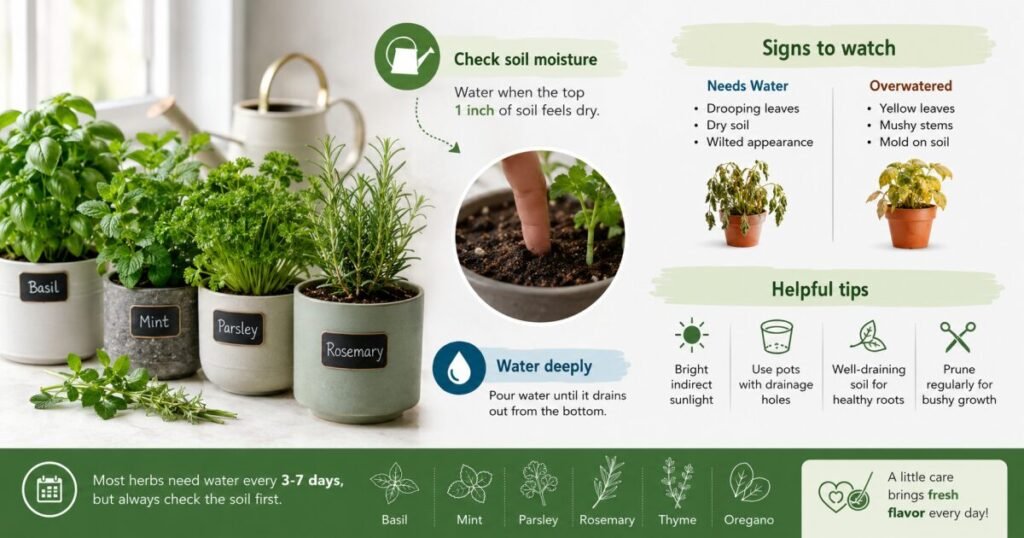
- Watering: Check soil moisture daily in warm weather; container soil dries faster than ground soil. Water when the top inch feels dry, and always water until it runs from the drainage holes. For a broader rule of thumb across your herb collection, see how often to water indoor herbs.
- Feeding: Cilantro isn’t a heavy feeder. A diluted balanced liquid fertilizer every 3–4 weeks is plenty; over-fertilizing pushes fast, weak growth that bolts sooner.
- Placement: Move the pot to follow milder morning sun in summer, full sun in cooler months.
How to Grow Cilantro in Water (From Cuttings)
Growing cilantro from a cutting, including a bunch bought at the grocery store, is a fun, fast experiment. Still, it’s worth setting expectations: cilantro doesn’t root from cuttings as reliably as basil or mint, because its energy is built around a single taproot rather than branching roots. If you want a houseplant herb that roots far more reliably in water, how to grow basil indoors is the better bet.
- Cut a healthy 4–6 inch stem just below a leaf node.
- Strip the leaves from the bottom 2 inches of the stem.
- Place the stem in a clear glass with 2–3 inches of water, keeping the leaves above the waterline.
- Set the glass in bright, indirect light, not direct sun, which can overheat the water.
- Change the water every 2 days to keep it oxygenated and prevent rot.
- Watch for small roots at the submerged nodes, usually within 1–3 weeks.
- Once roots reach about 1 inch long, transplant into a pot of moist, well-draining soil and handle the fragile new roots as little as possible.
If a cutting hasn’t rooted after 3 weeks, it’s not your fault; some stems simply won’t root. Starting several cuttings at once improves your odds.
How Long Does It Take to Grow Cilantro?
- Germination: 7–14 days
- First harvestable leaves: 3–4 weeks from sowing
- Peak leaf production: 4–6 weeks
- Bolting (flowering) begins: 6–10 weeks, sooner in heat or long daylight
- Coriander seed (if left to mature): roughly 90–105 days from sowing
So from seed to first harvest, budget about a month. From seed to a full, bushy plant ready for a big cut, closer to 5–6 weeks.
Harvesting Cilantro Without Killing the Plant
These same principles apply across your indoor herb garden; see how to harvest rosemary without killing the plant for the same rules applied to a woodier herb.
- Start harvesting once the plant is 4–6 inches tall.
- Cut the outer, older stems near the base rather than pinching individual leaves; this encourages the plant to keep producing from the center.
- Take no more than about a third of the plant at once, and always leave the central growing point intact.
- Harvest in the cool morning, when leaves hold the most moisture and flavor.
- Regular light harvesting every 7–10 days genuinely does slow bolting compared to leaving the plant untouched, because it keeps the plant in leaf-production mode longer.
Does Cilantro Grow Back After Cutting?
Yes, cilantro will regrow after a light harvest as long as you leave the central stem and growing tip intact; new leaves emerge from the base and side stems within a week or so. What it generally won’t do is bounce back the same way after it has already bolted. Once a plant sends up a flowering stalk, any regrowth tends to be sparse and noticeably more bitter, so most growers treat post-bolt regrowth as a bonus rather than a real harvest and start a fresh batch of seed instead.
Should I Let My Cilantro Flower?
It depends on what you’re growing it for. If you only want leaves, pinch off flower stalks as soon as you spot them to squeeze out a few more days of usable foliage, though the plant is already committed to bolting at that point.
If you’d rather have coriander (the seed), letting a plant flower is actually the goal. The white or pale pink flower umbels are also excellent for attracting pollinators and beneficial insects like hoverflies and parasitic wasps to a garden. A reasonable approach many growers use: harvest most of your cilantro plants for leaves, but deliberately let one or two go to flower and seed; you get coriander for cooking, seed to replant, and a pollinator boost, without sacrificing your whole leaf supply.
What’s the Trick to Growing Cilantro?
If there’s one real “trick,” it’s this: stop trying to keep a single plant alive for months and start treating cilantro like a crop you replant on a rotation.
- Sow a small patch every 2–3 weeks during the cool season (or year-round indoors under lights).
- Direct-sow every time; never transplant from a nursery tray.
- Keep it cooler and shadier than feels natural, especially once temperatures push past 75°F.
- Harvest lightly and often instead of waiting for one big cut.
Do those four things, and you’ll have a steady supply of cilantro, even though no individual plant lives very long.
Common Cilantro Growing Problems
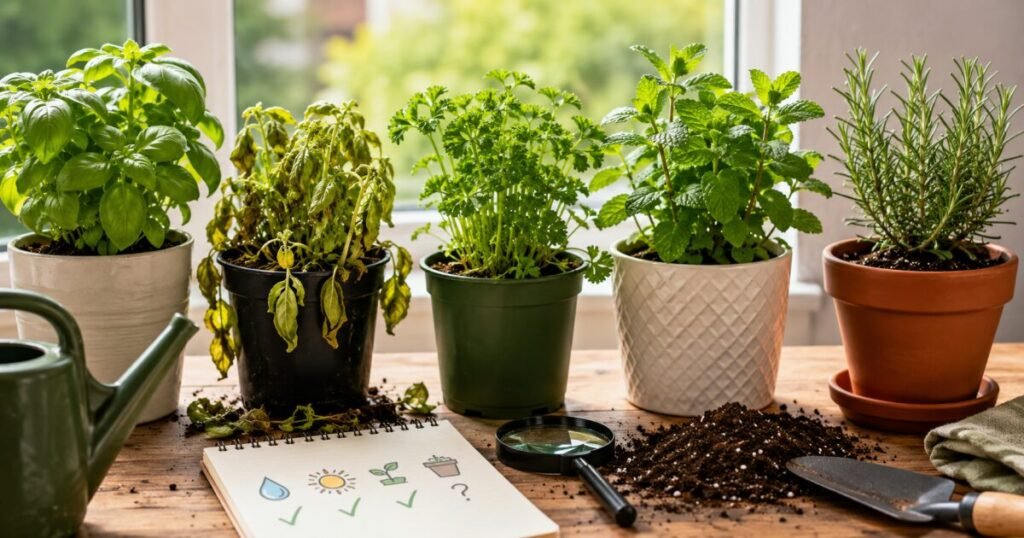
Most of these overlap with issues across other pots on your windowsill. See why do my indoor herbs keep dying for a wider troubleshooting reference.
| Problem | Likely Cause | Fix |
| Bolting within 2–3 weeks | Heat, long daylight, or a disturbed taproot | Grow in cooler season/spot; direct sow only; try a slow-bolt variety like ‘Calypso’ or ‘Santo’ |
| Leggy, pale seedlings | Not enough light | Move to a sunnier spot or add a grow light |
| Yellowing leaves | Overwatering / poor drainage | Let soil dry slightly between waterings; ensure pot has drainage holes |
| Slow or no germination | Soil too warm or too dry | Keep soil at 55–70°F and consistently moist, not soaked |
| Bitter-tasting leaves | Plant has bolted or is heat-stressed | Harvest before flowering; start a fresh batch |
Frequently Asked Questions
How often should I water cilantro?
Keep the soil consistently moist, watering whenever the top inch feels dry often every 1–2 days for containers in warm weather, less for garden beds.
Can I grow cilantro from store-bought coriander seed (whole spice)?
Yes, as long as it hasn’t been heat-treated or irradiated for cooking use, untreated whole coriander seed from the spice aisle will often germinate. However, seed sold specifically for planting is more reliable.
Does cilantro need full sun?
It prefers 6+ hours of light, but in hot climates it actually performs better with morning sun and afternoon shade, since intense heat speeds up bolting.
Is cilantro a perennial?
No, it’s an annual. It completes its lifecycle from seed to flower to seed in a matter of weeks to a few months and does not regrow year after year from the same root.
Final Thought
Cilantro isn’t a “grow once and forget it” herb, and treating it that way is where most people go wrong. Sow it directly, keep it cool, harvest lightly, and replant every couple of weeks — do that, and you’ll have fresh leaves in rotation basically year-round, even though no single plant sticks around for long. Once you’ve got the rhythm down, it’s one of the lowest-effort herbs on this whole site.