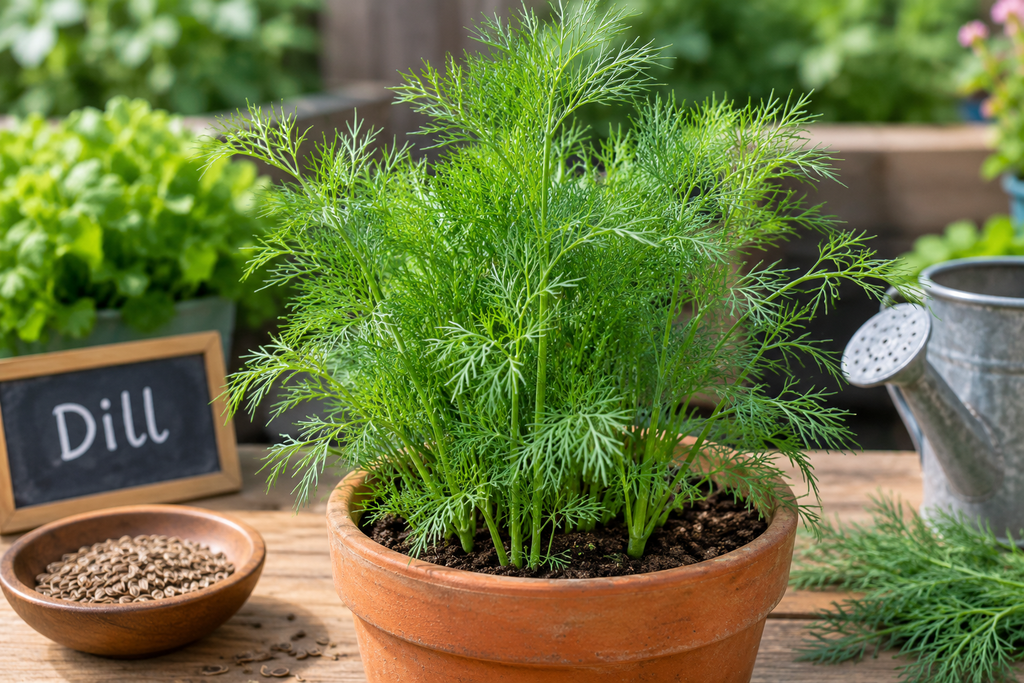
Dill is an easy, fast-growing herb that does best when you sow seeds directly in a sunny spot with loose, well-draining soil. Whether you grow dill in a garden bed, a deep pot, or indoors under strong light, the secret to a steady harvest is simple: plant small batches regularly, water consistently, and harvest sprigs before the plants begin flowering.
Dill (Anethum graveolens) is loved for its soft, feathery leaves, fragrant yellow flower heads, and flavorful seeds. Fresh dill is delicious in salads, eggs, fish dishes, yogurt sauces, soups, potatoes, and pickles. It is also a useful plant for gardeners because its flowers attract pollinators and beneficial insects.
If you are building a kitchen herb garden, dill is a great herb to grow alongside other favorites. Add your internal links here to your relevant guides:
Dill growing at a glance
| Growing factor | What dill needs |
| Botanical name | Anethum graveolens |
| Plant type | Tender annual herb |
| Best way to start | Direct sowing from seed |
| Sunlight | 6–8 hours of direct sun outdoors |
| Indoor lighting | Bright window plus a grow light if possible |
| Soil | Loose, fertile, well-draining soil |
| Germination time | Usually 7–14 days |
| First leaf harvest | About 6–8 weeks after sowing |
| Mature seed harvest | About 90 days after sowing |
| Container depth | At least 12 inches deep |
| Does dill return every year? | No, but it may self-seed |
Dill is typically grown as an annual. That means one plant completes its life cycle in a single growing season: it grows leaves, flowers, produces seeds, and then dies. It can appear to return next year if seeds fall onto the soil and germinate naturally.
How to grow dill from seed
The best and most reliable way to grow dill is from seed. Dill develops a taproot, and young plants do not always transplant well. Sowing seeds directly into the garden bed or final container allows the plant to establish without root disturbance.
When to plant dill
Plant dill outdoors after the risk of hard frost has passed and the soil begins to warm. In cooler climates, spring through early summer is the ideal planting period. In warm climates, dill often grows best during the cooler months of autumn, winter, or early spring.
Rather than sowing every seed at once, plant a small batch every two to three weeks. This is called succession sowing. It prevents you from ending up with a large amount of dill all at once, followed by no fresh leaves after the first plants begin flowering.
How to sow dill seeds
- Choose a sunny location with at least 6 hours of direct sunlight each day.
- Prepare loose, well-draining soil by removing weeds and breaking up large clumps.
- Sow dill seeds about ¼–½ inch deep.
- Cover the seeds lightly with soil.
- Water gently to keep the soil evenly moist.
- Keep the surface moist until seedlings emerge.
- Thin the young plants once they are a few inches tall, leaving about 8–12 inches between them.
Dill seedlings usually emerge within one to two weeks when temperatures are mild, and the soil stays consistently moist.
Why direct sowing works best
Dill has a long central root, commonly called a taproot. When this root is disturbed during transplanting, the plant can become stressed, stop growing temporarily, or fail to establish well.
That does not mean transplanted dill can never survive. However, direct sowing is easier and gives you a better chance of growing healthy, productive plants. University of Minnesota Extension specifically advises sowing dill where it will grow because it does not transplant easily.
Choose the best dill variety
Different dill varieties suit different spaces and goals. Some grow compactly and work well in containers, while others become tall and produce abundant flowers and seeds.
| Your goal | Best dill types to look for | Why they work |
| Growing in pots | Fernleaf, Tetra, Domino | Compact growth habit |
| Indoor growing | Fernleaf, Tetra | More manageable in limited space |
| Fresh dill leaves | Dukat, Tetra | Productive foliage and good flavor |
| Pickles and dill flowers | Bouquet, Mammoth | Larger flower heads |
| Saving dill seed | Mammoth, Bouquet | Tall plants with plenty of seed production |
| Pollinator-friendly planting | Mammoth, Bouquet | Large flowering umbels attract insects |
If you are growing dill in a small balcony garden, patio pot, or indoor planter, choose a compact variety. Tall varieties can grow quickly, lean toward the sun, and require a stake for support.
How to grow dill in pots
Dill grows well in pots if you give its roots enough depth. Avoid shallow herb planters, because dill needs room for its taproot to grow downward.
Choose a container at least 12 inches deep with drainage holes. A wider pot is even better if you want to grow several plants together.
Planting dill in containers
- Select a deep pot with drainage holes.
- Fill it with fresh, well-draining potting mix.
- Sow seeds directly into the container.
- Cover lightly and water carefully.
- Place the pot in full sun.
- Thin seedlings to prevent overcrowding.
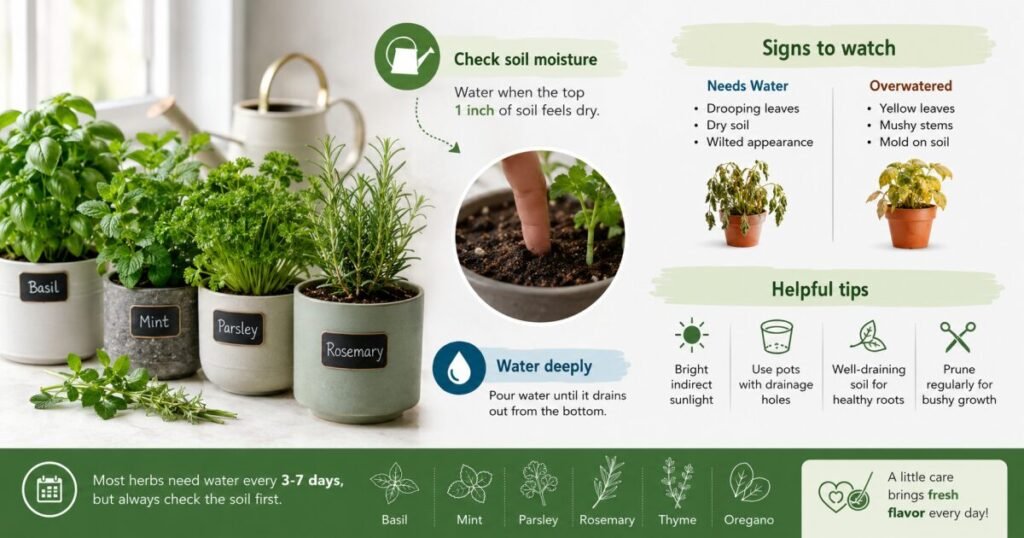
- Water when the top inch of soil feels dry.
Potted dill often needs watering more frequently than dill growing in the ground. Containers dry out quickly in warm, sunny, or windy weather. Check the soil regularly, especially during summer.
Do not let the pot sit in a saucer full of water for long periods. Dill needs moisture, but soggy roots can lead to weak growth and yellowing leaves.
Read more: How Often to Water Herbs? Indoor, Outdoor, and Potted Herb Watering Guide
How to Grow Dill Indoors
You can grow dill indoors, but it needs stronger light than many people realize. A dim kitchen counter or shaded window is not enough for healthy growth.
You might love reading this: 11 Best Herbs That Grow in Low Light Apartments (Beginner Friendly Guide)
For indoor dill, use a deep pot, fresh potting mix, and the brightest available window. A south-facing or west-facing window is often best in the Northern Hemisphere. If natural light is limited, use a grow light for about 12–14 hours a day.
University of Minnesota Extension recommends giving indoor dill at least five to six hours of direct sunlight daily or roughly 12 hours of artificial light.
Indoor dill growing setup
| Indoor growing needs | Best approach |
| Pot | At least 12 inches deep with drainage |
| Soil | Fresh, well-draining potting mix |
| Light | Bright direct window light or a grow light |
| Water | Water when the top inch of soil dries |
| Temperature | Moderate household temperatures |
| Fertilizer | Light feeding only, if needed |
| Harvesting | Snip young sprigs regularly |
Signs indoor dill needs more light
Your dill probably needs stronger light if you notice:
- Long, weak stems
- Plants leaning heavily toward the window
- Pale green or yellowing leaves
- Large gaps between sets of leaves
- Plants that fall over easily
- Slow or stunted growth
A grow light can make a significant difference, particularly during winter or in homes without a sunny window. Position the light close enough to be effective, but follow the manufacturer’s safety guidance to prevent leaf scorch.
How to grow dill from cuttings
Growing dill from cuttings is possible to experiment with, but it is not the most dependable way to produce healthy plants. Dill is naturally easier to grow from seed, and direct sowing usually creates a stronger plant with a better root system.
Many online propagation methods recommend placing dill stems in water. A cutting may sometimes develop roots, but it can struggle after transplanting because dill does not respond well to root disruption.
If you want to try growing dill from cuttings, use this method:
- Choose a healthy, non-flowering dill stem.
- Cut a 4–6 inch piece with clean scissors.
- Remove the leaves from the lower part of the stem.
- Place the lower stem in clean water.
- Keep leaves above the waterline.
- Put the cutting in bright, indirect light.
- Change the water every few days.
- Pot the cutting carefully only after roots appear.
For dependable results, however, plant dill seeds directly in soil. Direct sowing remains the recommended method because dill generally does not transplant easily.
Dill sunlight, soil, and watering needs
Dill grows best in full sun, meaning at least 6–8 hours of direct sunlight per day. More sun generally produces stronger growth and more flavorful foliage, although very intense heat can make the plant flower sooner.
Dill prefers soil that is:
- Loose and easy for roots to grow through
- Well-draining
- Moderately fertile
- Enriched with compost or organic matter
- Slightly acidic to neutral
Dill can survive in average soil, but it performs better with good drainage and some organic matter.
How often should you water dill?
Water dill whenever the top inch of soil feels dry. Young seedlings need more consistent moisture because they have shallow roots. Mature garden plants can tolerate brief dry periods, but prolonged dryness can make them bolt early.
A good rule is to water deeply rather than giving the plant tiny amounts of water every day. Deep watering encourages roots to grow downward, making the plant more resilient.
Should you fertilize dill?
Dill is not a heavy feeder. In a garden bed with compost-rich soil, it may not need extra fertilizer.
If you are growing dill in a pot and the plant looks pale or slow-growing, apply a diluted liquid fertilizer every four to six weeks. Avoid overfertilizing. Too much nitrogen can create overly soft, floppy growth and may reduce flavor.
How to stop dill from bolting too soon
Bolting happens when dill sends up a tall flowering stem. This is a natural stage of its life cycle, but hot weather, dry soil, root stress, and overcrowding can make it flower earlier than you want.
Once dill flowers, it puts more energy into seeds and less into leafy growth.
Ways to delay dill flowering
- Grow dill during cooler weather where possible
- Keep the soil evenly moist
- Harvest sprigs regularly
- Thin crowded seedlings
- Choose slower-bolting varieties
- Give plants a little afternoon shade in very hot climates
- Sow new seed every two to three weeks
You cannot prevent dill from flowering forever. The most reliable strategy is to succession sow, so you always have younger plants producing fresh leaves while older plants flower and produce seed. RHS notes that hot, dry conditions can encourage dill to flower prematurely.
How to harvest dill so it keeps growing
Harvest dill lightly and regularly to encourage continued leaf growth. Once plants reach about 6–8 inches tall, you can begin cutting small sprigs for cooking.
Use clean scissors or garden snips. Take outer stems first and leave the center of the plant intact.
The best way to cut dill
- Harvest in the morning after any dew has dried.
- Snip young outer stems instead of cutting the whole plant.
- Cut just above a leaf junction or side shoot.
- Leave the central growing point untouched.
- Do not remove more than one-third of the plant at one time.
- Use fresh dill soon after harvesting for the best flavor.
Dill can regrow after cutting when you harvest carefully. Regular, light harvesting encourages the plant to make more foliage. However, once it flowers heavily and starts producing seed, fresh leaf production will naturally slow down. RHS recommends leaving at least one-third of the plant when harvesting.
How to harvest dill flowers and seeds
If you want dill flowers for pickles, harvest the flower heads after the yellow flowers fade and the developing seeds are still green.
If you want mature dill seeds, leave flower heads on the plant until they turn brown and dry. Cut the seed heads, place them upside down in a paper bag, and allow them to dry fully. The seeds will fall into the bag as they dry.
Does dill regrow after cutting?
Yes, dill can regrow after cutting if you harvest only a small amount at a time. Snipping outer sprigs while leaving the central growing point intact allows the plant to continue producing new leaves.
Dill will struggle to recover if you cut away most of the foliage or remove its central growing tip. It will also slow down once it begins flowering and setting seed.
For the longest possible harvest, do not depend on one plant. Sow new dill seeds every few weeks so younger plants replace older ones as they flower.
Does dill grow back every year?
No, dill does not grow back every year from the same plant because it is an annual herb. It completes its life cycle in one season.
However, dill can self-seed. If you leave mature flower heads in the garden, seeds may drop into the soil and germinate the following season. This can make it seem as though dill has returned, but the new growth comes from new seeds.
If you want dill to self-seed, leave a few mature plants alone at the end of the season. If you prefer a neat garden, harvest seed heads before they open and scatter seeds.
Does dill do better in pots or in the ground?
Dill usually grows larger in the ground because it has more root space and the soil does not dry as quickly. A sunny garden bed is ideal for tall varieties, large harvests, pollinator planting, and seed production.
Dill also grows successfully in pots if the pot is deep enough. Containers are a great choice if you have a balcony, patio, small garden, or sunny windowsill.
| Growing location | Best for | Main consideration |
| Garden bed | Large plants, flowers, and seeds | Needs a sunny, sheltered space |
| Deep container | Patios, balconies, and small gardens | Needs regular watering |
| Indoor pot | Year-round growing attempts | Needs very strong light |
| Raised bed | Easy harvesting and drainage | Allow enough spacing for tall varieties |
The best choice depends on your space. If you have access to a sunny garden bed, grow dill in the ground. If not, a deep container can still produce a very useful harvest.
What should you not plant dill next to?
Avoid planting dill too close to tall plants that create heavy shade or aggressive plants that compete strongly for water and nutrients.
It is also sensible to give dill and carrots some separation. They belong to the same plant family, and closely related plants can sometimes share pests and diseases.
Be cautious with claims that dill is a guaranteed pest-control companion plant. Dill flowers can attract pollinators and beneficial insects, but companion planting does not guarantee that pests will disappear or that nearby crops will automatically grow better.
The most practical gardening priorities are:
- Give dill enough sunlight
- Avoid overcrowding
- Maintain airflow between plants
- Water consistently
- Keep tall plants from shading dill
- Let a few dill plants flower if you want to attract insects
Common dill growing problems
Dill seeds do not germinate
If dill seeds fail to emerge, the most common causes are dry soil, old seed, cold temperatures, or planting too deeply.
Keep the soil surface consistently moist while waiting for seedlings. Do not let newly sown seed dry out completely.
Dill seedlings are crowded
Crowded dill plants compete for light, water, and nutrients. They may grow tall and weak, with poor airflow around the stems.
Thin seedlings early so each plant has room to develop. For large varieties, allow around 8–12 inches between plants.
Dill is tall and falling over
Tall dill often flops because it needs more light, has grown too close to other plants, or is exposed to wind.
Move potted plants into stronger light, stake tall stems, and protect outdoor dill from strong gusts where possible.
Dill leaves are yellow
Yellow leaves may indicate overwatering, poor drainage, weak light, or nutrient depletion in an old container mix.
Check the soil first. If it feels constantly wet, let it dry slightly before watering again. Make sure the pot has drainage holes. If the plant is indoors, increase the light level.
Pests are eating dill
Aphids, slugs, and snails may feed on dill’s tender foliage. Check leaves and stems regularly.
For aphids, rinse the plant gently with water or remove heavily infested stems. For slugs and snails, hand-pick them in the evening, remove debris near the plant, and keep containers raised where practical. RHS identifies aphids, slugs, and snails as pests that can affect dill.
Frequently asked questions
How long does dill take to grow?
Dill seeds usually germinate in 7–14 days. Under good growing conditions, you can often begin harvesting small amounts of dill leaf about 6–8 weeks after sowing.
For mature flower heads and dill seed, allow about 90 days, although timing varies by variety, climate, and weather.
Can dill survive frost?
Dill can tolerate cool weather better than extreme heat, but it is generally treated as a tender annual. Young plants can be damaged by hard frosts, so sow outdoors after frost risk has passed in cold climates.
Can you grow dill and cilantro together?
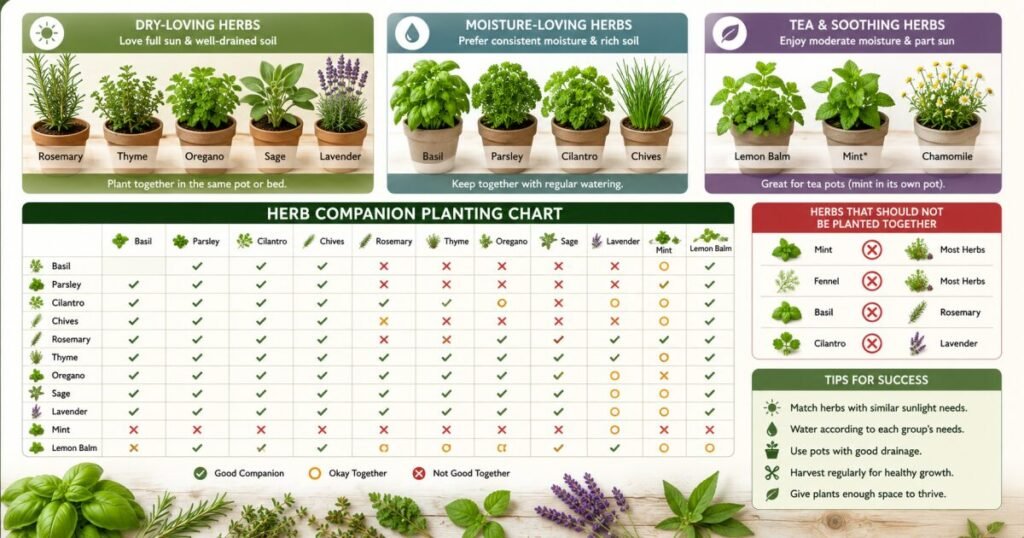
Yes. Dill and cilantro can grow together because both prefer direct sowing, full sun to partial sun, and well-draining soil. Both can also bolt in warm weather, so succession sowing helps maintain a regular supply.
Can dill grow in partial shade?
Dill can survive in partial shade, but it will usually grow best in full sun. Plants grown with too little light may become tall, weak, and less productive.
In very hot climates, a little afternoon shade can help reduce heat stress and delay early flowering.
Is dill easy to grow for beginners?
Yes. Dill is a beginner-friendly herb because it grows quickly from seed and does not need complicated care. The main things to remember are to direct sow it, give it sun, use deep containers if planting in pots, and plant new batches regularly.
Final thoughts
Dill is one of the most rewarding herbs to grow because it gives you several harvests from one simple plant: fresh leaves for cooking, flower heads for pickling, seeds for seasoning, and blooms that can bring more life to the garden.
The easiest path to success is to sow dill directly from seed, grow it in sun, keep the soil evenly moist, and harvest sprigs regularly. Do not expect one plant to provide leaves forever. Dill is an annual, and flowering is part of its natural cycle.
Instead, sow a small amount of dill every few weeks. You will have young plants for fresh leafy harvests, mature plants for flowers and seeds, and a much more reliable supply throughout the season.