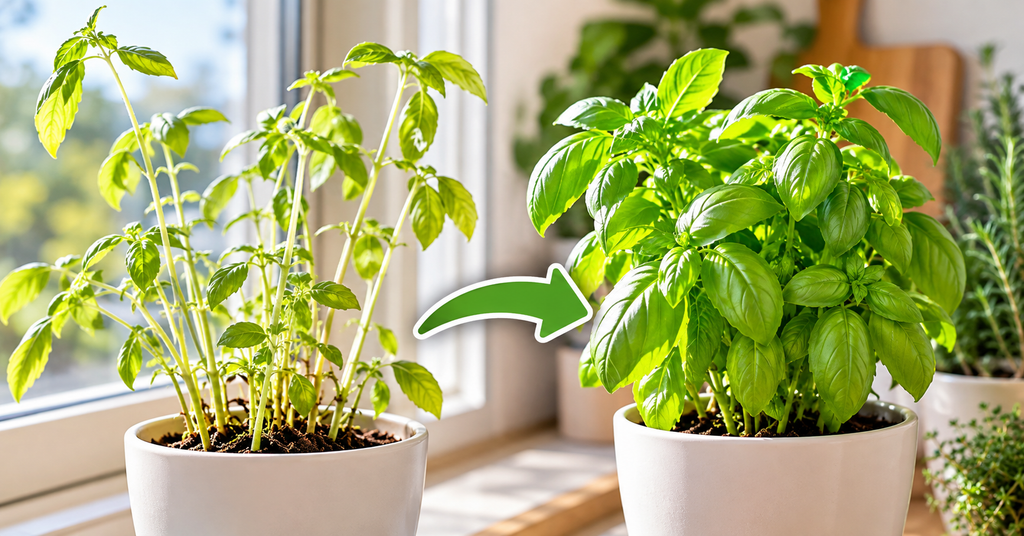
If your indoor herbs are getting leggy, the most likely cause is insufficient light. Long, thin stems, wide spaces between leaves, small foliage, and plants leaning toward a window are all signs that your herbs are stretching to find more light.
The good news is that leggy herbs can often recover. Move them closer to a bright window or grow light, prune them correctly, improve air circulation, and adjust watering and feeding habits.
The Indoor Herb Finder + Light Tool can help you identify a better location and lighting setup for the herbs you grow.
What Does “Leggy” Mean?
A leggy herb has weak, elongated stems and sparse leaves instead of compact, bushy growth. The plant may lean dramatically toward a window, with most of its leaves growing on one side.
Leggy growth is called etiolation. It happens when a plant does not receive enough light for the amount of growth it is trying to produce. The plant stretches toward the available light, but the new stems remain thin and weak.
Common signs include:
- Long spaces between leaves.
- Thin, floppy stems.
- Small or pale leaves.
- A plant leaning toward one direction.
- Leaves concentrated near the stem tips.
- Slow growth despite regular watering.
- Reduced aroma or flavor.
- Plants becoming more vulnerable to pests.
Most culinary herbs need about six hours of direct sunlight daily, although the exact requirement varies by herb and season. Herbs grown without enough light can become weak, sparse, and less flavorful.
Why Are My Indoor Herbs Getting Leggy?
1. They are not getting enough light
This is the most common cause of leggy indoor herbs.
A window may appear bright to you but still provide much less usable light than outdoor conditions. Light levels also change with the season, window direction, curtains, nearby buildings, and the distance between the plant and the glass.
South-facing windows generally provide the strongest indoor light, while west-facing windows are often the next best option. East-facing windows may work well for herbs that prefer gentler morning sun. North-facing windows are usually more challenging for sun-loving herbs unless you add a grow light.
If your plant is leaning toward the window, stretching between leaves, or producing pale new growth, treat light as the first thing to check. For more ideas, see our guide to herbs that grow in low light apartments.
2. The grow light is too far away
A grow light can help, but only if it is close enough and runs for an appropriate amount of time. A weak light positioned high above the plant may not provide enough intensity, causing the herb to stretch just as it would near a dim window.
Keep the light close enough to illuminate the foliage without overheating or bleaching it. Adjustable lights are especially useful because the correct distance changes as the herbs grow. Indoor garden testing has also shown that adjustable light height helps prevent tall plants from growing too far away from the light source.
If your herbs are under a fixed light, fast-growing plants may eventually reach the light while slower-growing herbs remain shaded.
3. Taller herbs are shading smaller herbs
A crowded windowsill can create its own light problem. Basil, dill, and cilantro may grow quickly and block light from shorter herbs such as thyme or chives.
Arrange plants by height:
- Put taller herbs behind shorter ones.
- Leave space between pots.
- Rotate plants regularly.
- Remove leaves that completely shade neighboring herbs.
- Use separate lighting zones when growing herbs with different growth rates.
This matters particularly in countertop hydroponic gardens, where vigorous herbs can shade slower-growing plants.
4. The plant was not pruned
Many herbs naturally become tall if their growing tips are never harvested. Regular pinching encourages side shoots and creates a fuller plant.
Pinching removes the soft growing tip just above a pair of leaves. New branches can then develop from the nodes below the cut. Frequent light pinching helps keep herbs compact and bushy.
Basil is especially likely to become tall and sparse if it is allowed to grow straight upward without being harvested. Our guide on how to grow basil indoors covers light, pruning, harvesting, and keeping basil bushy.
5. The herb is too warm or growing too quickly
Warm temperatures can speed up growth, but if the plant does not receive enough light, that growth may be weak and elongated.
This often happens when herbs are:
- Near a radiator.
- Beside a stove or oven.
- In a warm room far from a window.
- Under a weak light with long daily exposure.
- Fertilized heavily while light is limited.
Indoor herbs generally perform best in comfortable household temperatures, but warmth cannot compensate for inadequate light. Basil is particularly sensitive to cold conditions, while many Mediterranean herbs prefer good light and drier conditions between waterings.
6. The plant is crowded in a small pot
Roots that have filled a container may restrict growth and make watering difficult. Crowded roots are not always the direct cause of legginess, but they can weaken the plant and contribute to poor growth.
Check for:
- Roots circling the inside of the pot.
- Water running quickly through the container.
- A plant drying out unusually fast.
- Roots emerging from drainage holes.
- Soil that has become compacted.
Repot into a container only slightly larger than the current one. Use fresh, well-draining potting mix and a container with drainage holes. If you need help choosing a mix, see our guide to the best soil for herbs.
7. Watering or fertilizer is out of balance
Overwatering can damage roots, reducing the plant’s ability to absorb water and nutrients. Underwatering can cause stress and leaf drop. Too much fertilizer may encourage soft, rapid growth that is poorly supported when light is weak.
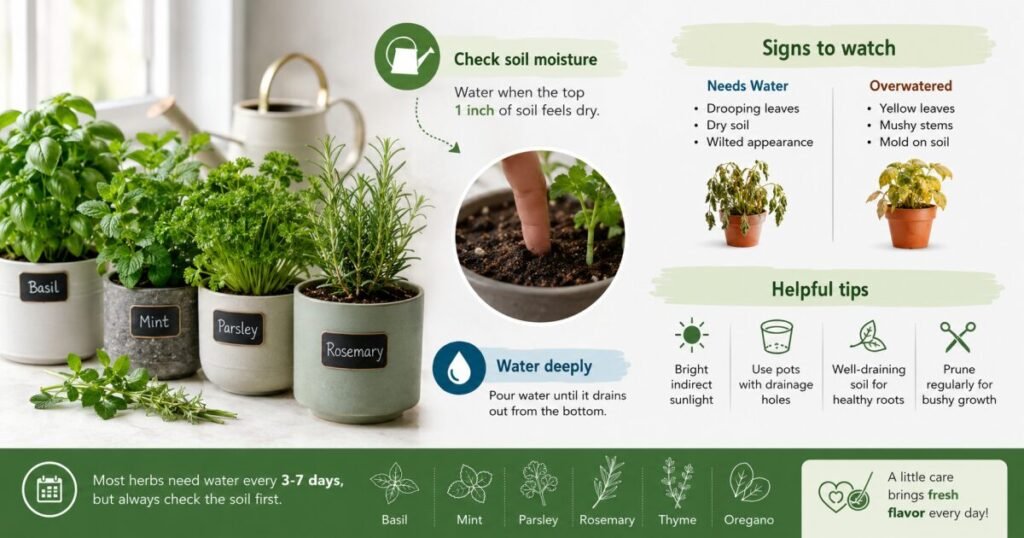
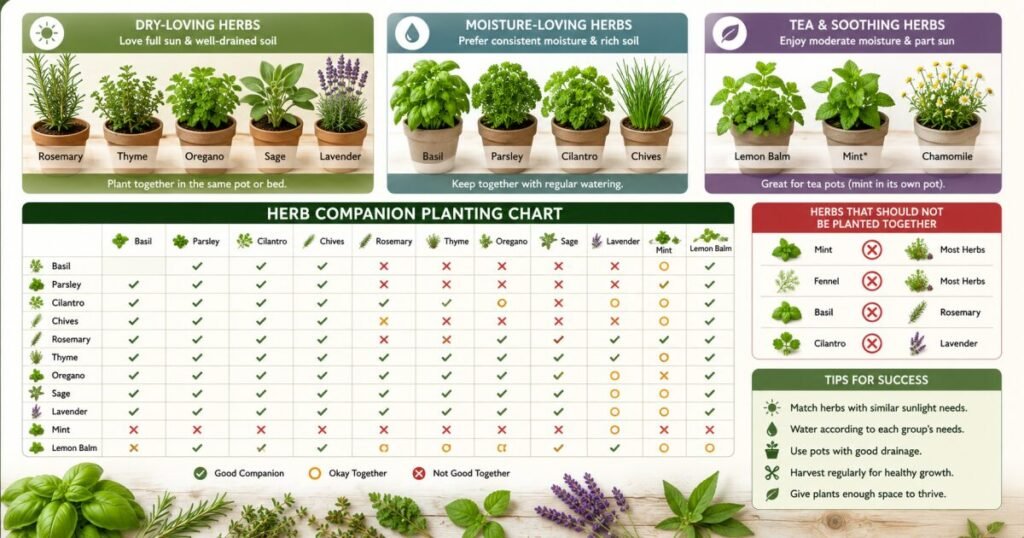
Indoor herbs usually benefit from consistent care rather than extreme feeding. Allow the soil to dry slightly between waterings for herbs such as rosemary, sage, oregano, and thyme. Keep basil and parsley more evenly supplied with moisture, while still avoiding soggy soil.
Fertilize cautiously and follow the product label. Heavy feeding is not a substitute for brighter light. For additional watering and care guidance, our herb gardening FAQs cover common indoor growing questions.
How to Fix Leggy Indoor Herbs
Step 1: Move the herb into brighter light
Start by moving the plant closer to the brightest suitable window. Place it near the glass, but avoid letting foliage touch cold glass during winter.
For most sun-loving culinary herbs:
- Aim for approximately six or more hours of direct sunlight.
- Use a south- or west-facing window when available.
- Remove heavy curtains or blinds during daylight.
- Rotate the pot every few days.
- Watch for heat buildup behind glass.
If the plant still stretches, add a full-spectrum LED grow light. Many herbs require roughly 12–16 hours under supplemental indoor lighting when natural light is inadequate.
Use the Indoor Herb Finder to match your herb with a more suitable window or supplemental-light setup.
Step 2: Prune the stretched stems
Do not simply cut every leggy stem down to the soil. First check whether the stem has healthy leaves and visible nodes.
For soft-stemmed herbs such as basil, mint, oregano, and parsley:
- Find a pair of healthy leaves.
- Cut just above the leaf node.
- Remove no more than about one-third of the plant at one time.
- Repeat the process after new side shoots develop.
Removing less than one-third at a time is a practical guideline for reducing stress while encouraging fuller growth.
For woody herbs such as rosemary, sage, and thyme, prune more conservatively. Avoid cutting far back into old, leafless wood because some woody stems may not produce new shoots easily. For more on rosemary propagation and care, see our guide to growing rosemary from cuttings.
Step 3: Rotate the pot
Plants near windows often grow toward the strongest light source. Rotate the pot a quarter turn every few days to encourage more even growth.
Rotation will not solve a serious light shortage, but it can prevent one-sided growth and help each side of the plant receive light.
Step 4: Improve air circulation
Good air movement helps reduce overly humid, stagnant conditions and may lower the risk of mildew and some pest problems. A small fan set on low can gently move air around the plants.
The fan should not blast the herbs continuously. You want mild movement, not wind stress.
Step 5: Space the plants properly
Give each herb enough room for light to reach its leaves. Crowded plants compete for light and may trap moisture around the foliage.
A useful arrangement is:
| Herb type | Good placement |
| Tall or fast-growing herbs | Back row or separate light zone |
| Compact herbs | Front row |
| Trailing herbs | Edge of the shelf |
| Woody Mediterranean herbs | Brightest, driest position |
| Shade-tolerant herbs | Slightly farther from the strongest light |
Can You Save a Very Leggy Herb?
Usually, yes, provided the stems are still alive and the roots are healthy.
A severely stretched herb may not return to its original shape immediately. The existing stems will not magically become shorter, but new growth can become more compact after you correct the lighting.
Use this recovery plan:
- Check the roots and remove any mushy or rotten material.
- Place the plant in brighter light gradually if it was previously in deep shade.
- Prune lightly above healthy nodes.
- Avoid heavy fertilizer for the first few weeks.
- Water according to the herb’s needs.
- Pinch new growth regularly.
- Remove weak or completely bare stems.
If the plant is badly damaged, take healthy cuttings from basil, mint, oregano, thyme, or similar herbs and root them in water or a suitable propagation medium. Our step-by-step guide to growing herbs from cuttings explains which herbs are easiest to propagate. Start the new cuttings under adequate light from the beginning.
How to Prevent Indoor Herbs From Getting Leggy
Prevention is easier than correcting stretched growth. Build light and pruning into your routine from the day you bring the herb indoors.
Choose herbs suited to your conditions
Some herbs are easier to grow indoors than others. Good choices include:
- Chives.
- Mint.
- Parsley.
- Oregano.
- Thyme.
- Rosemary.
- Sage.
- Lemon balm.
- Marjoram.
Basil can grow well indoors, but it needs warmth, bright light, and regular harvesting. Cilantro and dill can also be grown indoors, although they may bolt or become tall quickly.
Indoor herb guides commonly recommend rosemary, thyme, oregano, mint, parsley, chives, sage, and related herbs for indoor culture.
Check light before buying the plant
Place an empty pot where you plan to grow the herb and observe the area throughout the day. Notice how long direct sunlight reaches the pot and whether nearby buildings, trees, or curtains block it.
This simple test is more useful than judging brightness at a single moment.
Harvest frequently
Harvesting is a form of pruning. Take small amounts often instead of waiting until the herb becomes tall and overgrown. You can also learn more in our guide to harvesting indoor herbs without killing the plant.
For leafy herbs, cut just above a pair of leaves. Avoid stripping all the leaves from one branch because the plant still needs foliage to produce energy.
Avoid overfertilizing
If the plant is stretching, improve its light before adding more fertilizer. Extra nutrients may produce more soft growth without fixing the underlying problem.
Feed lightly during active growth and reduce feeding when light levels are low.
Inspect plants for pests
Weak, stressed herbs are more vulnerable to insect problems. Check the undersides of leaves and the newest growth for: See our guide to why basil turns black indoors for additional indoor pest, airflow, moisture, and plant-stress troubleshooting.
- Aphids.
- Spider mites.
- Whiteflies.
- Mealybugs.
- Scale insects.
Aphids may appear as small green, black, brown, or pale insects clustered around tender shoots. They can cause distorted leaves, sticky residue, and weakened growth.
How to Get Rid of Aphids on Indoor Herbs
If you notice aphids on herbs, isolate the affected plant first. This reduces the chance of spreading insects to the rest of your indoor garden.
Then:
- Rinse the plant gently with lukewarm water.
- Remove heavily infested leaves or shoots.
- Treat remaining insects with an insecticidal soap labeled for edible plants.
- Repeat treatment according to the product directions.
- Wash harvested herbs thoroughly before eating.
- Continue checking the plant every few days.
Do not apply a product to edible herbs unless the label specifically permits that use. Avoid homemade mixtures with concentrated dish soap, bleach, or essential oils, which can damage leaves or leave unsafe residues.
Indoor herbs can also develop spider mites, scale, and mealybugs. Good light, appropriate watering, and air circulation help reduce plant stress, but they will not eliminate an established infestation by themselves.
Which Herbs Grow Best Indoors?
The best indoor herbs depend on your available light, temperature, container space, and how often you want to harvest.
| Herb | Indoor growing notes |
| Chives | Compact and forgiving; harvest the outer leaves first. |
| Mint | Vigorous and easy to grow; use a separate pot. |
| Parsley | Productive in bright light and useful for frequent harvesting. |
| Oregano | Handles regular pruning and works well in containers. |
| Thyme | Compact and flavorful; prefers bright light and well-drained soil. |
| Rosemary | Needs strong light, excellent drainage, and careful watering. |
| Basil | Needs warmth, bright light, and frequent pinching. |
| Sage | Prefers bright light and soil that is not constantly wet. |
| Cilantro | Grows quickly but may bolt; succession planting helps. |
| Dill | Needs bright light and can become tall, so harvest early. |
What Herbs Make a House Smell Good?
Fragrant herbs can make a kitchen or sunny room smell fresh when you brush against their leaves. Good choices include:
- Mint.
- Lemon balm.
- Rosemary.
- Lemon verbena.
- Lavender.
- Scented geranium.
- Basil.
- Thyme.
Place strongly scented herbs where you will occasionally touch or harvest them, but do not sacrifice their light requirements for fragrance. A plant in a dim corner may smell pleasant briefly but will eventually become weak and leggy.
What Herbs Can I Grow on a Windowsill?
A bright windowsill can support chives, parsley, basil, mint, thyme, oregano, sage, rosemary, and lemon balm. For a broader list of options, see 25 culinary herbs you can easily grow indoors.
The most important factors are:
- A container with drainage.
- A suitable potting mix.
- Enough direct light.
- Space between plants.
- Regular harvesting.
- Protection from temperature extremes.
A narrow sill may work for two or three compact herbs, while taller herbs may need a nearby shelf or supplemental light. Use the Indoor Herb Finder + Light Tool to choose herbs that fit your window’s actual conditions instead of choosing plants based only on appearance.
Frequently Asked Questions
Why are my indoor herbs tall and thin?
Your herbs are probably stretching because they are not receiving enough usable light. Move them closer to a bright window, add a grow light, and prune above healthy leaf nodes to encourage branching.
Can leggy basil become bushy again?
Yes. Give basil stronger light and pinch the growing tips just above a pair of leaves. Avoid removing more than one-third of the plant at once, and harvest regularly as new branches develop.
Should I cut off leggy herb stems?
Cut leggy stems above healthy leaves or nodes rather than removing them randomly. For woody herbs, avoid cutting deeply into bare old wood unless you know the variety responds well to hard pruning.
Is a sunny window enough for indoor herbs?
Sometimes. A bright, unobstructed south- or west-facing window may provide enough light, but many homes have seasonal or obstructed light that is insufficient for vigorous growth. If your herbs continue stretching, use supplemental lighting.
How long should indoor herb grow lights stay on?
Many indoor herbs need approximately 12–16 hours of supplemental light when natural sunlight is limited. Follow the instructions for your specific light and provide a consistent dark period each day.
Can overwatering make herbs leggy?
Overwatering does not usually cause true legginess by itself, but it can damage roots and weaken the plant. Poor roots can lead to sparse growth, yellow leaves, wilting, and increased disease risk.
Should I throw away an extremely leggy herb?
Not necessarily. If the stems are green and the roots are healthy, improve the light and prune gradually. If the plant is mostly bare, diseased, or badly infested, propagating healthy cuttings may be faster than rehabilitating the original plant.
Are herbs safe to use for pregnancy, contraception, or parasites?
Do not use herbs as a substitute for contraception, pregnancy care, or treatment for suspected parasites. Claims about “Chinese herbs getting pregnant,” herbs that prevent pregnancy, or herbs for eliminating parasites can be unsafe because effects, dosages, interactions, and product quality vary. Speak with a qualified healthcare professional before using medicinal herbs, especially if you are pregnant, trying to conceive, taking medication, or treating a child.
Final Takeaway
Indoor herbs get leggy mainly because they are stretching toward inadequate light. Correct the light first, then prune above healthy nodes, rotate the pots, improve air circulation, avoid excess fertilizer, and harvest regularly.
A brighter location is often the difference between a weak, floppy windowsill herb and a compact plant that produces flavorful leaves. Use the Indoor Herb Finder + Light Tool to find a better match between your herbs, window, and grow-light setup.